• Skip to primary navigation
  • Skip to main content
  • Skip to primary sidebar
  • Skip to footer
Alexander Training personal trainer Austin Texas

Alexander Training - personal training in Austin, Texas

Personal training in Austin, Texas and customized strength programs in Austin, Texas.

  • Home
  • About Kathryn Alexander
  • Blog
  • Success Stories
  • Training Programs
  • Personal Training

Kathryn Alexander

My Favorite Fitness Prime Deals

July 10, 2025 by Kathryn Alexander

It’s Amazon Prime Days! Here are a few of my favorite fitness prime deals. Many of these are affiliate links, but I have used bought, used and loved all of these. So, here we go: the best fitness prime deals!

My Favorite Amazon Fitness Prime Deals

A handgrip dynamometer is one of my favorite tools for many reasons and purposes. It’s a quick, easy and safe strength test. It’ll give you insights to your nervous system, and it’s a fun party trick. I keep mine by my coffee maker and test it in the mornings.

I had a few people over to eat a few weeks ago, and I stepped outside to check the progress of the corn hole game. Came back in to everyone testing their handgrip strength 😂

handgrip amazon fitness prime deal

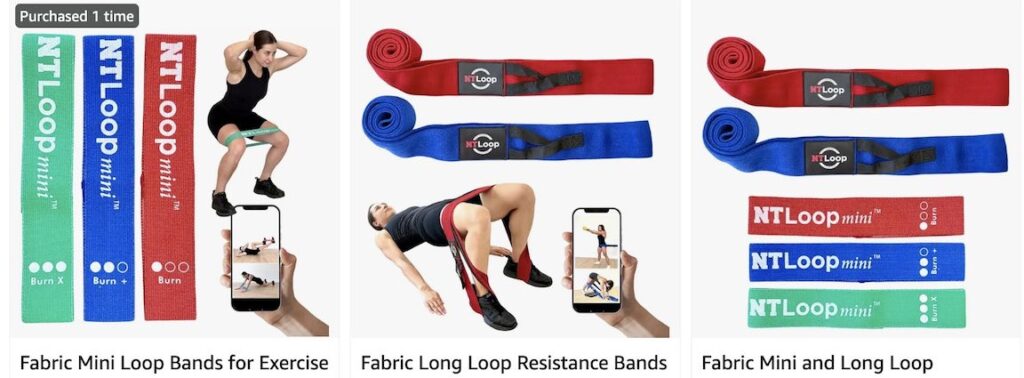
Resistance bands. These aren’t terribly expensive, somewhere around mid twenties, which is great because you’ll want to replace them every so often. I made a Texas mistake and left mine in my garage. It’s pretty hot. I’ll be ordering more, and they’ll live inside now. I also always have NT Loops, which I link to below.

resistance bands fitness prime deal
amazon prime resistance bands

Household Amazon Prime Finds

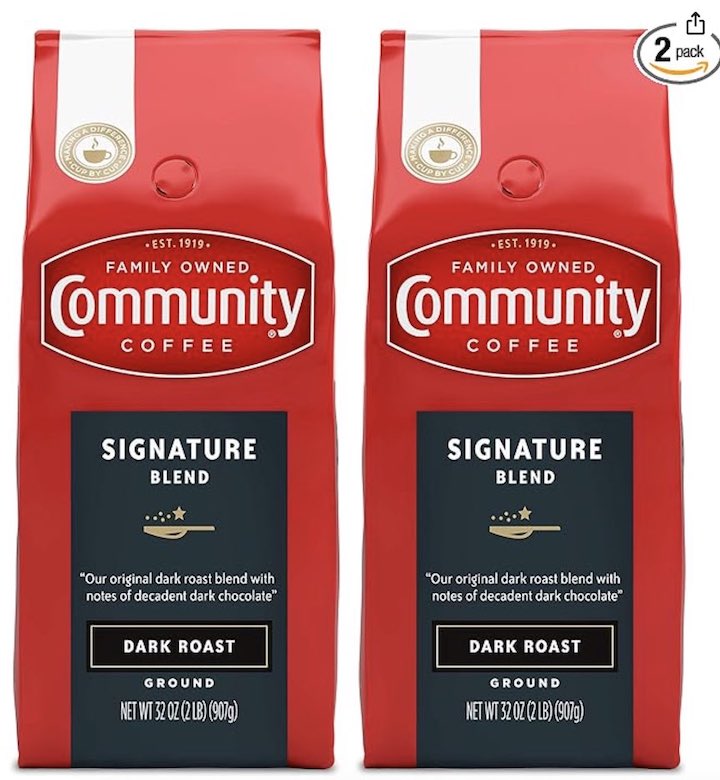
This isn’t technically a fitness find, but let’s be real: a fitness girl needs her caffeine. I have Community Coffee on subscription to my house. It’s my favorite coffee ever. Every time I branch out, I come back to my Louisiana roots.

community coffee prime deal
Community Coffee prime deal

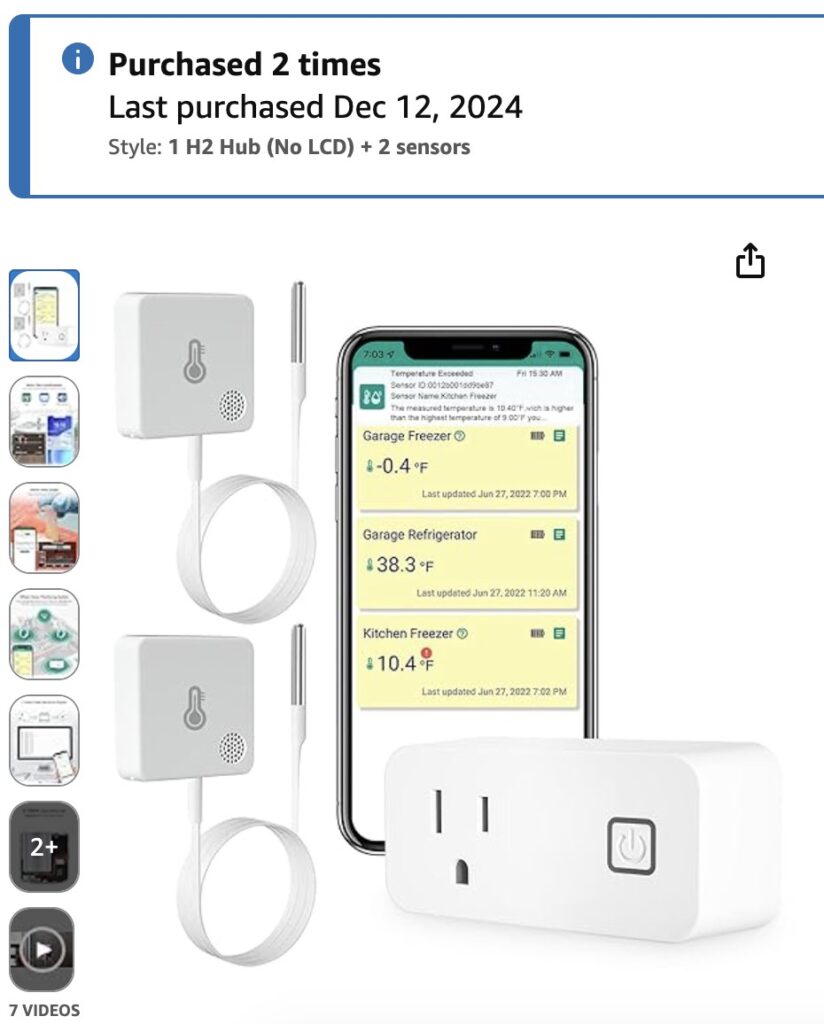
This WiFi Freezer Thermometer Alarm is brilliant. It will alert you if your freezer goes out of the range you set. There are no subscription fees, easy set up, I’m sold. It also works for refrigerators, hot tubs, etc.

thermometer for meat freezer
thermometer for meat freezer amazon

The Govee Bluetooth Hygrometer Thermometer is similar to the above temperature monitoring system. This one is bluetooth. It might seem like overkill to have both, but I appreciate how portable these are. I have two and rotate them. I’ve even used it for a guest room to make sure I know they are comfortable.

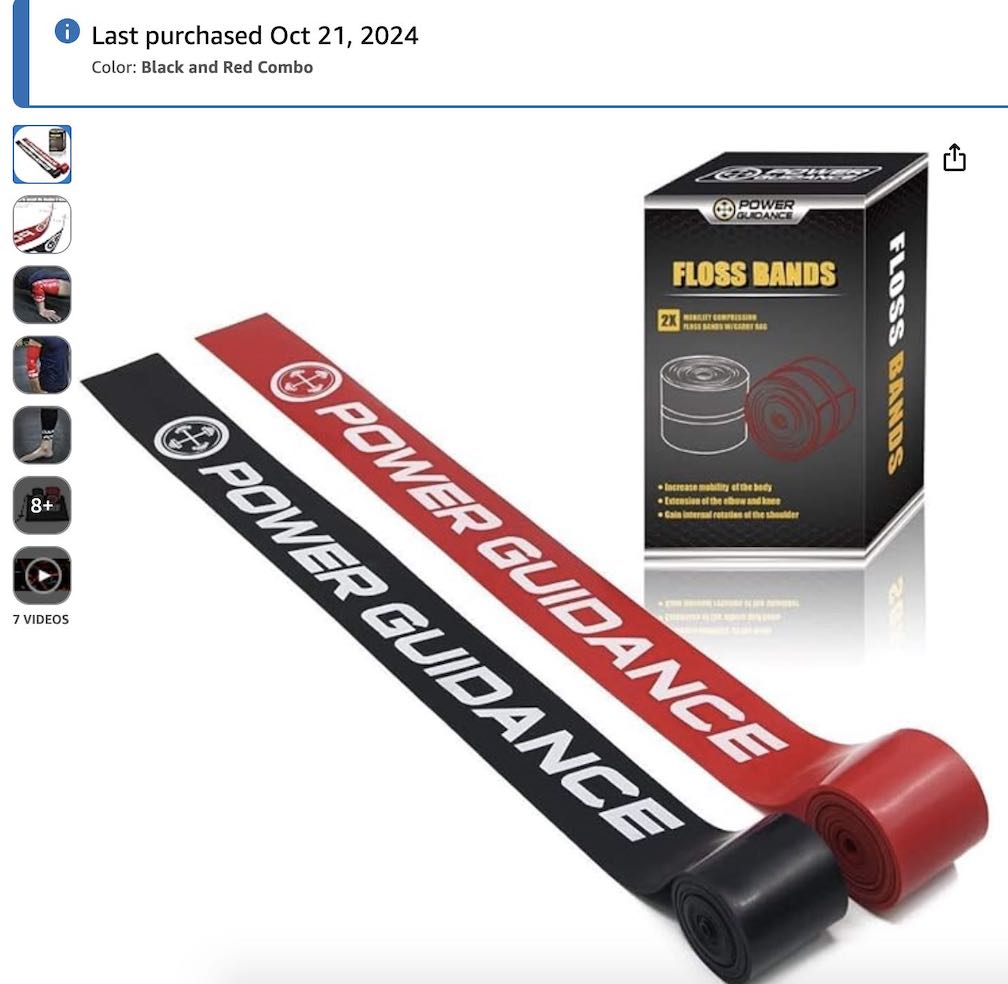
Muscle Floss Bands are great for increasing circulation, alleviating pain, and improving mobility and recovery. These have a really great upside with very little or no risk. I use them anytime I have a sore joint.

floss bands amazon prime deals

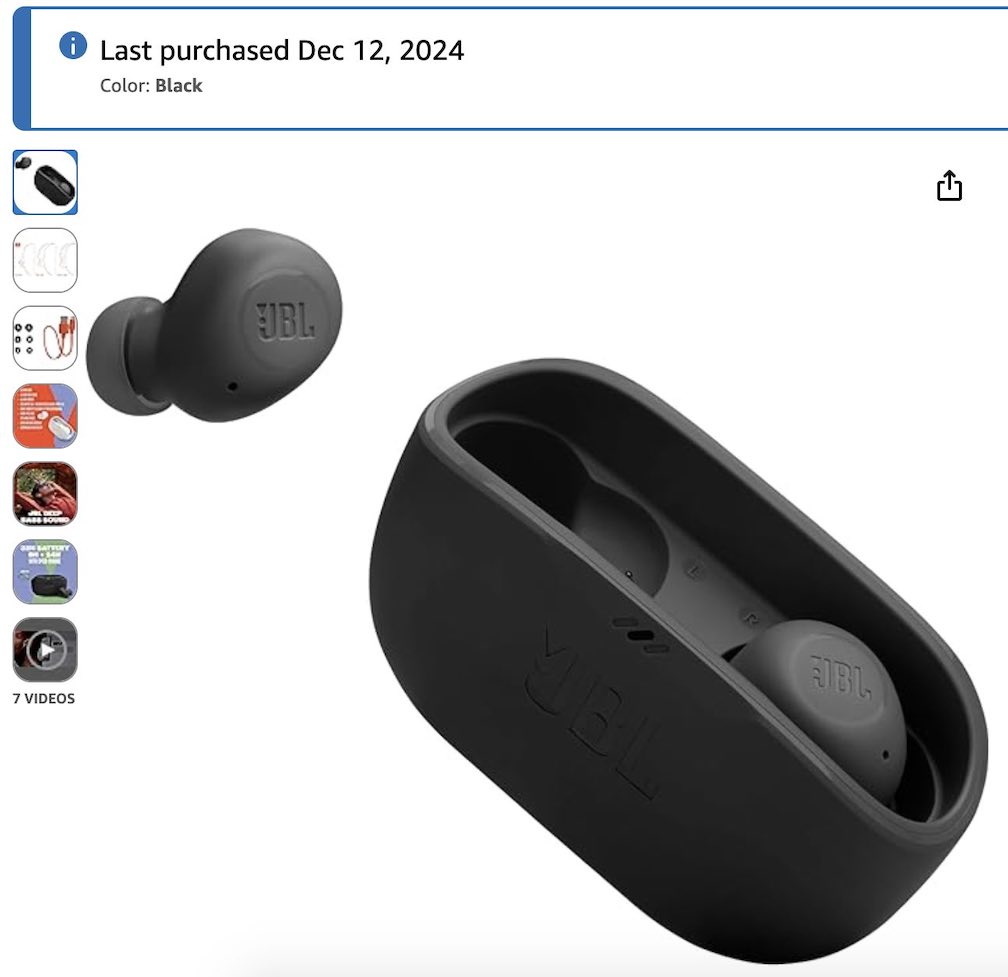
Ear buds totally save the day when you’re in a gym where the music isn’t right. Ain’t nobody got time for that. I use these in coworking spaces too, when I’m updating my clients’ workouts.

JBL fitness prime deal

My Non Prime Day Favorites

NT Loops Mini Bands. These are cloth bands that add resistance and enhance any exercise. Like I mentioned earlier, I had a solar event in my garage apparently, and had a band melt. It was NOT the NT Loops, which is another reason I’ll keep NT Loops around as a staple. They are hardy and so useful.

You can find the Long Loop Resistance Bands or the full set of both mini bands and long loop bands.

NT Loops by Nick Tumminello

Did I Miss Any Prime Finds?

Let me know if so! I’d love to hear about your favorites!

Work With Me!

If you are looking for a personal trainer in Austin, I’d love to talk with you! If you are not in Austin, Round Rock, or central Texas, let’s talk about online training.

Message me here for a free consult about personal training in Austin, Texas, or here for online personal training, and we’ll discuss your goals, background, equipment availability, schedule, and exercise preferences.

Let’s get you strong and healthy! 💪

About the author

Kathryn Alexander is a strength coach and personal trainer in Austin, Texas. She loves hiking, college football, and the feel of a perfectly knurled barbell. Read more about Kathryn here.


  • things to do outside in Austin. Food truck park near Barton Springs
    Things to Do Outside in Austin
  • Best At Home Bicep Workouts (db curls) with personal trainer Kathryn Alexander
    Best At Home Bicep Workouts: Build Bigger Biceps Without a Gym
  • Personal training in Austin, Texas, personal trainer in Austin
    February is for Friends! (Big Sale!)
  • New coach Chris Rios Alexander Training
    New Coach! Introducing Chris Rios
  • start exercising, new to gym
    If You’re New To The Gym, Read This
  • tailgate baby shower at the gym
    Love Notes, Volume 4. December Edition

Filed Under: Misc. Tagged With: amazon prime days

Love Notes, Volume 2

June 27, 2025 by Kathryn Alexander

Love Notes, Volume 2.

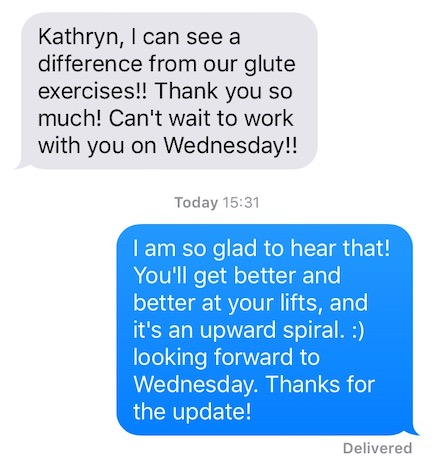
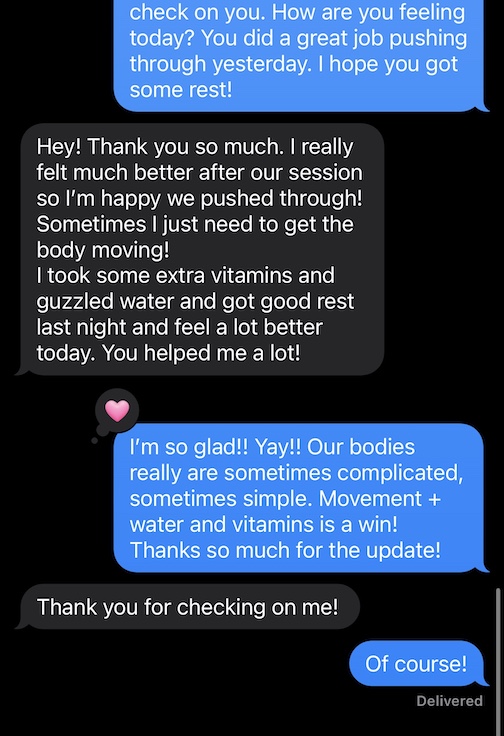
I call all my happy correspondence with clients “love notes”. No kidding, it makes me so happy to hear my clients’ happiness and success. 💕

I thought I’d share some of them with you.

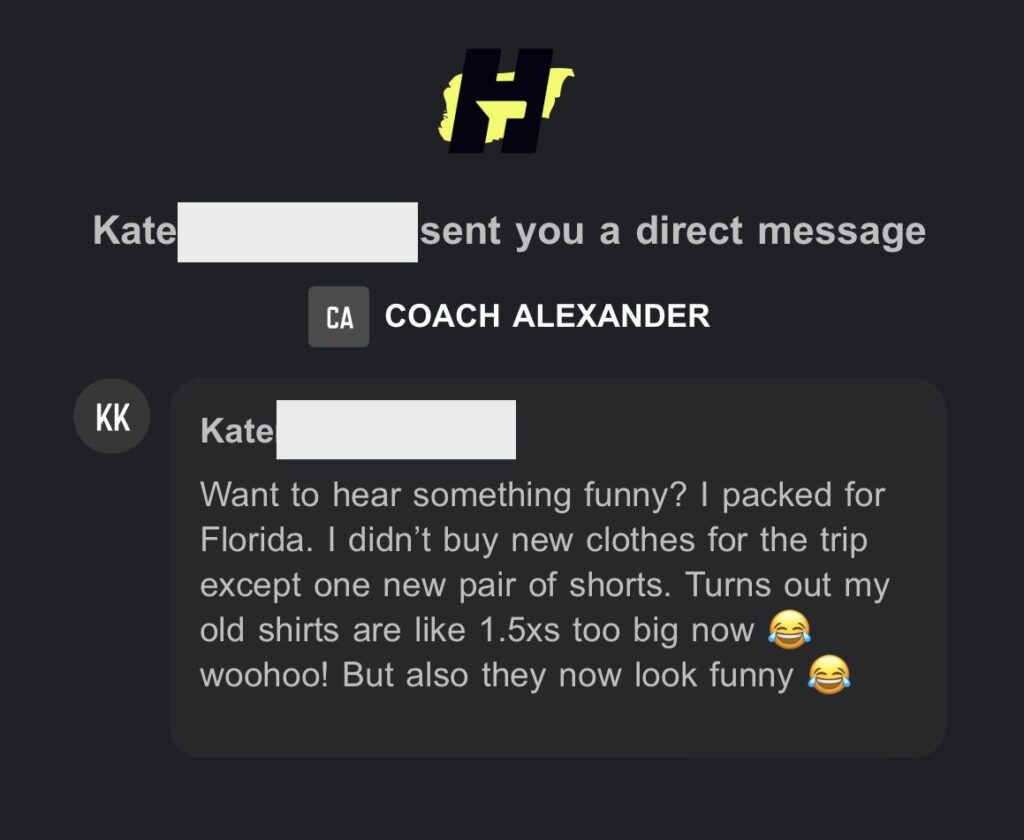
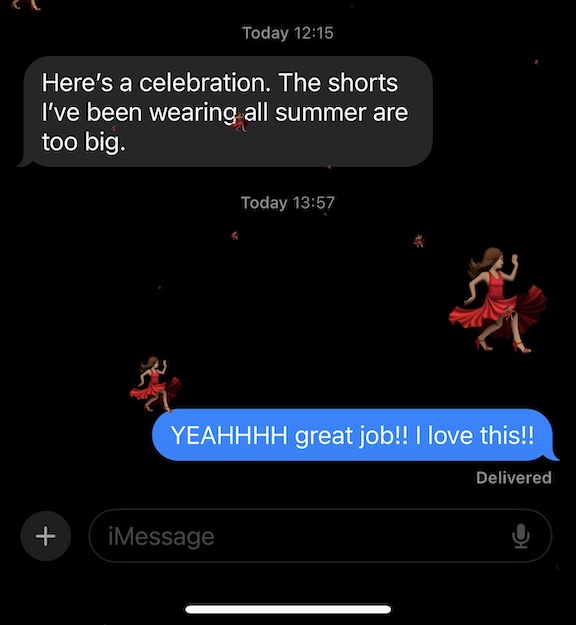
Vacation Oopsie; Clothes Too Big

Vacation Oopsie. Clothes too big. love notes. client success stories
Vacation oopsie! Oh well, now you get to go shopping!

This is one of my favorites. When packing for Disney, my client didn’t account for getting smaller, and packing only too-big clothes now. Oh well! Enjoy shopping, Kate!

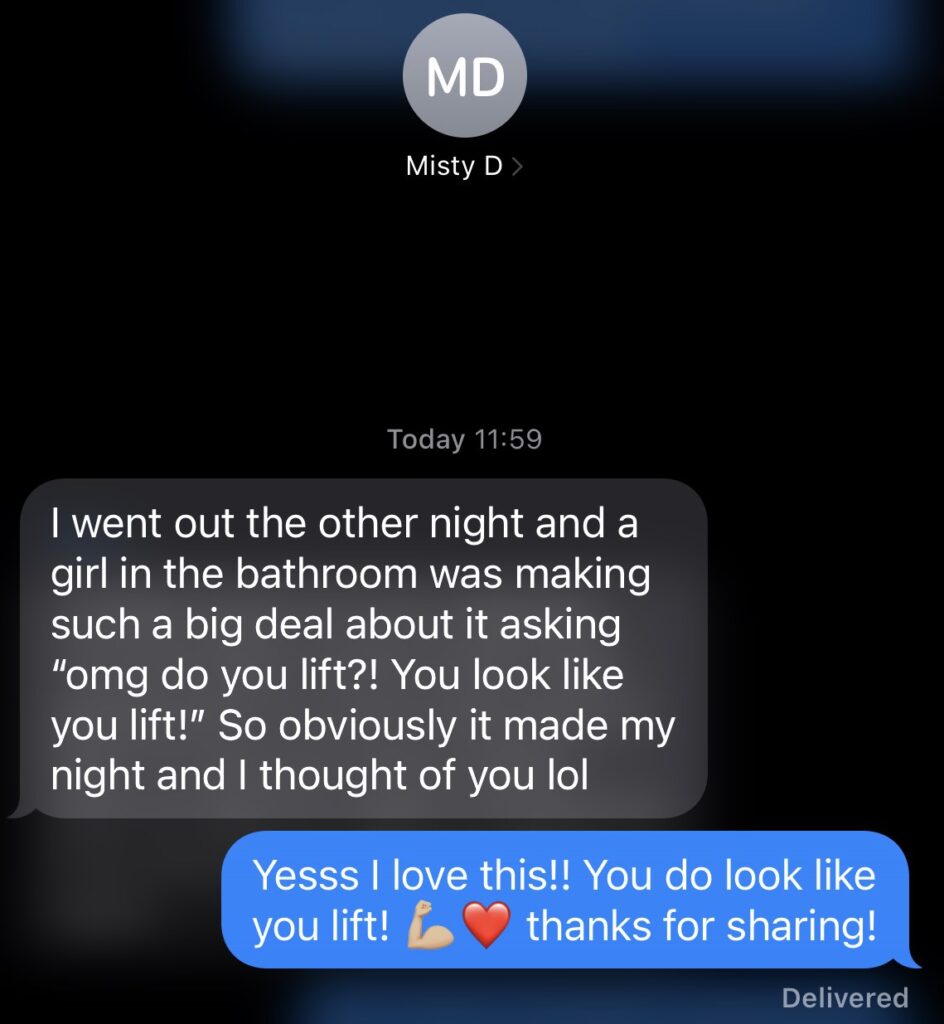
“OMG Do You Lift?”

omg do you lift? love notes. client success stories
OMG Do you lift?

Getting recognized for all the hard work you put in feels pretty sweet, not gonna lie! This one made me super happy to get! Way to earn it, Misty!

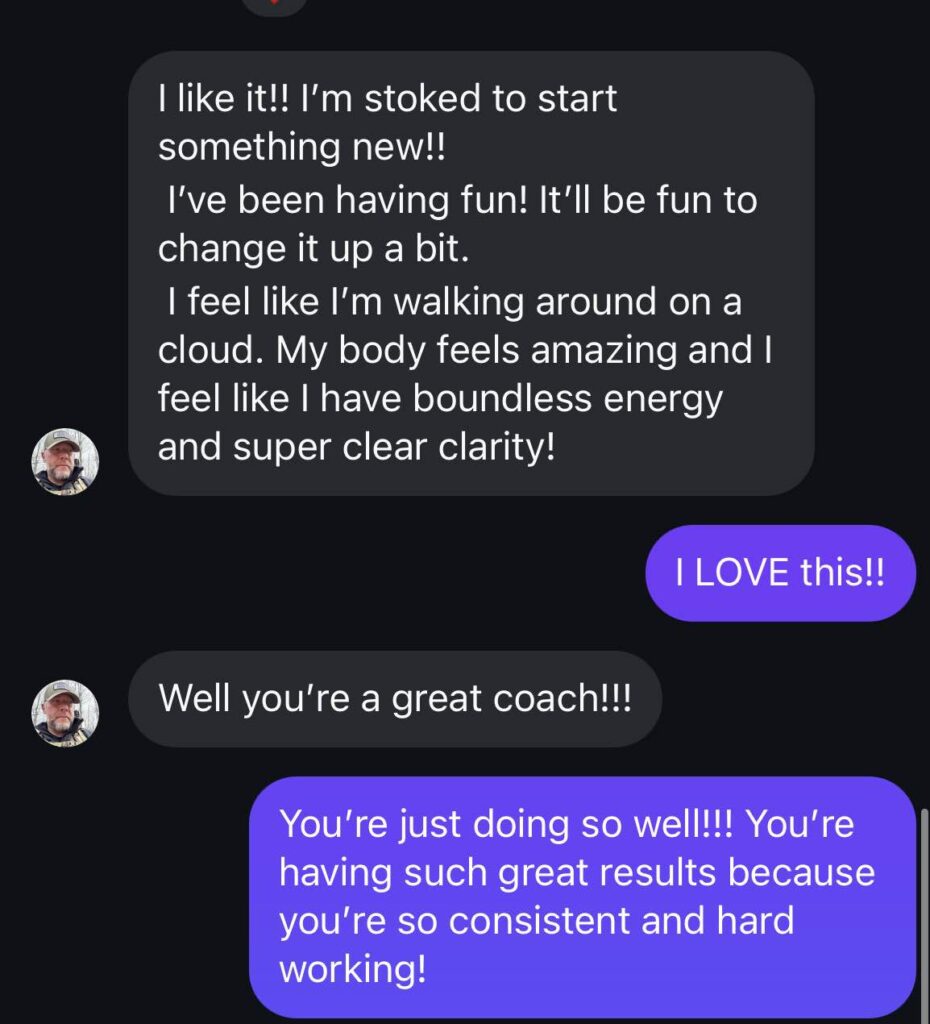
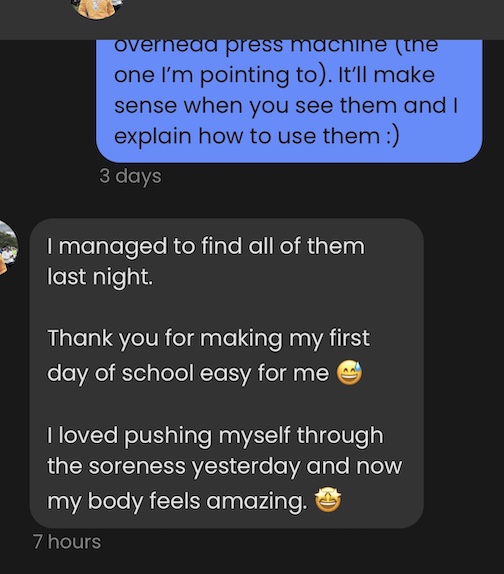
My Body Feels Amazing

love notes. client testimonials
I have boundless energy
love notes. client testimonials
Same client, same happy results!

My body feels amazing… and I have boundless energy. Yall, this one hit me! Isn’t that what we all want? This guy has been working so hard, so consistently, and prioritizing eating well. He eats enough protein, particularly steak, which is jam packed with nutrients and highly satiating.

I’m always super appreciative when clients give me credit like this, but the truth is, I can give anyone the best plan, but they do alllll the work. He did all the work and is reaping the benefits.

More Success Stories

If you’d like to check out more success stories, check out these client testimonials.

And here’s Love Notes, Volume 1.

Want to Write Your Own Success Story?

Let me help you! Let’s do a free consult and see if I can get you to where strangers in the bathroom compliment you! Start here!

  • tailgate baby shower at the gym
    Love Notes, Volume 4. December Edition
  • happy client of Kathryn Alexander, Austin personal trainer
    Love Notes, Volume 3
  • Vacation Oopsie. Clothes too big. love notes. client success stories
    Love Notes, Volume 2
  • Love notes volume 1
    Love Notes, Volume 1

About the author

Kathryn Alexander is a strength coach and personal trainer in Austin, Texas. She loves hiking, college football, and the feel of a perfectly knurled barbell. Read more about Kathryn here.

  • things to do outside in Austin. Food truck park near Barton Springs
    Things to Do Outside in Austin
  • Best At Home Bicep Workouts (db curls) with personal trainer Kathryn Alexander
    Best At Home Bicep Workouts: Build Bigger Biceps Without a Gym
  • Personal training in Austin, Texas, personal trainer in Austin
    February is for Friends! (Big Sale!)
  • New coach Chris Rios Alexander Training
    New Coach! Introducing Chris Rios
  • start exercising, new to gym
    If You’re New To The Gym, Read This
  • tailgate baby shower at the gym
    Love Notes, Volume 4. December Edition

Filed Under: Love Notes, Online Personal Training, Personal Training, Testimonials Tagged With: love notes, testimonials

The Best 5 Chest Exercises: Top 5 You Should Be Doing

June 23, 2025 by Kathryn Alexander

Announcing that you know the best 5 chest exercises might be met with some debate, and I generally refrain from telling people what they should do. BUT, in this case, I can tell you 5 of the best exercises you can be doing to build your chest! 

Kathryn Alexander Austin personal trainer

Working your chest is so fun! I really didn’t fully appreciate this until somewhere around 2018, when I had a minor disc injury. I took time off the deadlifts and squats, and focused on upper body, including bench press. It became my strongest lift. Turning a lift that was your nemesis into one of your strongest is FUN. 

Why Working Chest is Fun

Working your chest is fun! It’s classic, it’s primal, and it just feels good! After you get a great chest workout, you’ll get a nice pump. It’s immediate gratification – it tells you what you’ll look like in the future, if you keep going. 

When you do keep going, you get stronger, feel more powerful, have better posture, and healthier shoulders. It’s a win-win. A strong chest enhances your upper body strength and makes full-body workouts feel easier and builds confidence. 

Besides, the chest is a highly visible muscle group, and developing it creates that wide, strong upper body look that’s especially noticeable in T-shirts or at the beach. Let me tell ya, it’s water season in Austin. It’s hot here and people are jumping in lakes! 

Finally, everyone’s going to ask you, “how much ya bench?!” It’s the go to lifting question. Doesn’t matter if you’re a powerlifter, cross fitter, or recreational lifter. People will ask about your bench. It’s fun to have an answer you’re proud of!

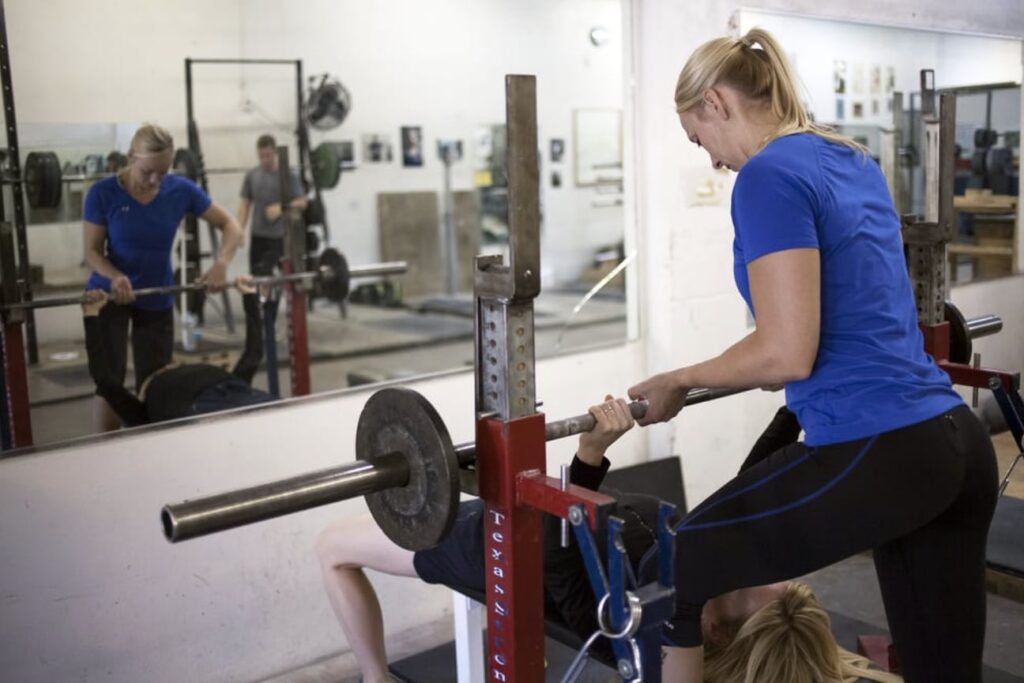
Kathryn Alexander spots bench press

The Best 5 Chest Exercises

At the bottom of this post, I’ll explain more about chest anatomy for you nerds. But for now, let’s get right into the top 5 chest exercises:

1. Flat Barbell Bench Press

Like I mentioned earlier, this is the daddy of all chest exercises. Maybe of all the classic lifts. Every one’s going to ask what you bench, it’s an easy metric as you’ll see it in weight rooms, at the NFL combine, etc. The barbell bench is a great exercise to work on. 

  • Targets: Mid chest muscles, pectoralis major, anterior deltoids, and triceps
  • Why it’s essential: A staple compound exercise for building overall strength and chest size. It’s one of the best ways to lift heavy weight and track progress. Classic compound exercise for building mass and strength; allows for heavy loading.

2. Incline Bench Press

  • Targets: Upper chest (clavicular head of the pectoralis major), anterior deltoids
  • Why it’s a best exercise: Pressing at an incline (30–45°) works the upper chest more directly than a flat bench press.
  • Tips: Keep your shoulder blades retracted, press in a straight line, and use heavier weights over time for strength training.
  • The incline bench press is going to be a bit harder than the flat bench. Know that going into it. It feels good! It feels powerful! It’s fun! But you won’t lift quite as heavy here as on your flat bench press. 

3. Dumbbell Press/Incline Dumbbell Press

  • Targets: Chest/Upper chest, anterior deltoids, and triceps assist
  • Why it works: A pair of dumbbells gives you a larger range of motion, which leads to better muscle growth and recruitment of the chest musculature. It builds the upper portion of the chest for a fuller look; dumbbells allow for a better range of motion.
  • Variation: Great for those who prefer resistance training with more control

4. Cable Chest Fly (High Cable Fly)

  • Targets: Inner and lower chest, pectoralis minor
  • Why it’s a favorite: Cable machines keep constant tension on the chest throughout the movement. Isolates the chest muscles while keeping constant tension. 
  • Tip: Adjust the cables to hit different angles and emphasize the full chest muscle groups.
  • the cable fly is sometimes hard to set up, depending on your gym. It might require you to use the spot of 2 exercises since you’re using 2 cable stacks. If this is the case, look for a cable fly machine, pec deck, or even grab dumbbells for your fly.

Need some great bicep home workout ideas?

5. Push-Ups (Incline, Decline, and Seal Push-Ups)

  • Targets: Full chest, core-strength exercises. Pushups are a great way to build upper body strength in full-body workouts. They are bodyweight, versatile, and effective. Easily modified for any fitness level.
  • Why it’s effective: Uses your own body weight, can be done anywhere—even on a park bench or tree branch!
    • Incline push-ups emphasize the lower chest
  • One-leg push-ups increase core and lower body engagement
  • Elevate your feet to target the upper chest, or add a weight plate or band for more resistance.
  • Here’s a comprehensive post on how to do pushups and pushup variations.

Bonus! Dips (Chest Version)

  • Target: Lower chest, triceps.
  • Why it’s great: Excellent bodyweight exercise for depth and strength in the lower pecs.
  • Tip: Lean forward slightly and flare your elbows a bit to target the chest more than the triceps.

Here are 5 of the best chest exercises for muscle growth, strength, and definition. These target the upper chest, lower chest, and the full chest muscles, and they are great choices for chest day, whether you’re training for aesthetics or performance.

Bonus Chest Training Tips for Best Results

Train chest 1–2 times per week in a full-body workout or split routine. Include both compound and isolation movements

Most importantly, use a progressive overload strategy in your strength training. You won’t make change without pushing progress.

Finally, use free weights and machines (like cable machines) on your accessory work for variety and constant tension.

best 5 chest exercises

What Muscles to Chest Exercises Work?

Chest presses, whether done with dumbbells, a barbell, or a machine, are a compound exercise that primarily works the pectoralis major, the large fan-shaped chest muscle responsible for pushing movements.

Here are the main muscle groups worked during a chest press:

Primary Muscles (Prime Movers):

  • Pectoralis Major
    • Clavicular head (upper chest) – more engaged in incline presses
    • Sternal head (middle/lower chest) – emphasized in flat and decline presses

Secondary Muscles (Synergists):

  • Anterior Deltoids (front shoulders)
    Help lift and stabilize the arms during the press.
  • Triceps Brachii (back of the upper arm)
    Assist in extending the elbow during the press.

Stabilizer Muscles:

  • Pectoralis Minor (beneath the major)
    Helps stabilize the shoulder joint.
  • Serratus Anterior
    Assists in scapular movement and stabilization.
  • Rotator Cuff Muscles (e.g., infraspinatus, teres minor)
    Help stabilize the shoulder joint during pressing.
  • Core Muscles (e.g., rectus abdominis, obliques, transverse abdominis)
    Especially engaged when doing chest presses on a weight bench or with free weights for good posture and balance.

The Best 5 Chest Exercises

There you have it! My 5 best chest exercise recommendations for building a strong chest, increasing upper body strength, and enhancing overall muscle growth. To get the best results, include different angles (flat, incline, decline), and focus on proper form and a full range of motion on these exercises.

Best Triceps Exercises for Women

Work With Me!

If you are looking for a personal trainer in Austin, I’d love to talk with you! If you are not in Austin, Round Rock, or central Texas, let’s talk about online training.

Message me here for a free consult about personal training in Austin, Texas, or here for online personal training, and we’ll discuss your goals, background, equipment availability, schedule, and exercise preferences.

Let’s get you strong and healthy! 💪

About the author

Kathryn Alexander is a strength coach and personal trainer in Austin, Texas. She loves hiking, college football, and the feel of a perfectly knurled barbell. Read more about Kathryn here.

  • things to do outside in Austin. Food truck park near Barton Springs
    Things to Do Outside in Austin
  • Best At Home Bicep Workouts (db curls) with personal trainer Kathryn Alexander
    Best At Home Bicep Workouts: Build Bigger Biceps Without a Gym
  • Personal training in Austin, Texas, personal trainer in Austin
    February is for Friends! (Big Sale!)
  • New coach Chris Rios Alexander Training
    New Coach! Introducing Chris Rios
  • start exercising, new to gym
    If You’re New To The Gym, Read This
  • tailgate baby shower at the gym
    Love Notes, Volume 4. December Edition

Filed Under: Training Tagged With: chest, training

Let’s Lift! Personal Training Spots Open at Big Tex Gym

June 8, 2025 by Kathryn Alexander

Kathryn Alexander Austin personal trainer

Hey y’all! Checking in from Big Tex Gym here in Austin, Texas—the best place to get strong, confident, and feel good in your body.

I’m a personal trainer with 20 years of experience, and yep… time flies when you love what you do! I work with clients one-on-one and in small group sessions (groups are capped at 5, so everyone gets attention—be sure to sign up – first come, first serve!).

I always offer a free consult because I want to make sure we’re a good fit and you feel comfortable from day one.

What I Do:

I specialize in helping people lift weights safely and effectively, with goals like:

  • Getting stronger
  • Changing body composition (a.k.a. “toning up”)
  • Building muscle + losing fat
  • Feeling confident in the gym

My Clients

Check out some of my client’s success stories!

Whether you’re new to lifting or just need help taking it to the next level, I’ve got your back (and biceps).

Hit me up to schedule your free consult—let’s get after those goals! 💪

Work With Me!

If you are looking for a personal trainer in Austin, I’d love to talk with you! If you are not in Austin, Round Rock, or central Texas, let’s talk about online training.

Message me here for a free consult about personal training in Austin, Texas, or here for online personal training, and we’ll discuss your goals, background, equipment availability, schedule, and exercise preferences.

Let’s get you strong and healthy! 💪

About the author

Kathryn Alexander is a strength coach and personal trainer in Austin, Texas. She loves hiking, college football, and the feel of a perfectly knurled barbell. Read more about Kathryn here.


  • things to do outside in Austin. Food truck park near Barton Springs
    Things to Do Outside in Austin
  • Best At Home Bicep Workouts (db curls) with personal trainer Kathryn Alexander
    Best At Home Bicep Workouts: Build Bigger Biceps Without a Gym
  • Personal training in Austin, Texas, personal trainer in Austin
    February is for Friends! (Big Sale!)
  • New coach Chris Rios Alexander Training
    New Coach! Introducing Chris Rios
  • start exercising, new to gym
    If You’re New To The Gym, Read This
  • tailgate baby shower at the gym
    Love Notes, Volume 4. December Edition

Filed Under: Austin Tagged With: Austin, training

Tubing Near Austin: Best Rivers in Texas (2025)

May 29, 2025 by Kathryn Alexander

Tubing near Austin: another way to get out and enjoy an active day in Central Texas!

This is kind of an atypical post for my business Alexander Training, but it’s not atypical for me. I’m a personal trainer here in Austin, Texas, and I love being outdoorsy, and I love when my clients get out and enjoy active fun. 

And yall, I love tubing! It might be the most fun you can have outdoors in Texas. The rivers here are gorgeous, comfortable, and safe. Of course there is always some inherent risk on the water, but these rivers are pretty calm; not rapid or turbulent.

Tubing Near Austin Best Rivers in Texas

I’m talking about the lazy river kind of floating a gorgeous day away tubing. Not being pulled behind a boat. For this kind of river tubing, you’ll want to head south a little bit out of Austin. The closest tubing trips to Austin will be on the San Marcos River, the Guadalupe River, and the Comal River.

Top River Tubing Near Austin

1. San Marcos River (Texas State Tubes)

  • Starting point: 2024 N Old Bastrop Hwy, a little over half an hour drive from Downtown Austin.
  • Known for: The spring-fed San Marcos River, offering a consistent flow and cooler temperatures.
  • Services: Tube rentals, cooler tubes, and life jackets included.
  • Experience: Ideal for bachelorette parties, large group outings, or just a relaxing experience in nature.

2. Comal River (Texas Tubes)

  • Location: In New Braunfels, about 45 -60 minutes from the Austin area. 250 Meusebach St., New Braunfels, TX 78130.
  • Known for: Clear water, a short but scenic loop, and a party type atmosphere
  • Extras: Offers rental tube options (or you can bring your own tube), public access points, and free street parking

3. Guadalupe River (Rockin R River Rides)

  • Where: Rockin’ R has 5 locations on the Guadalupe and Comal Rivers. Best way: Combines natural beauty, great brewery tours, and a bit of adventure
  • Popular venue: Canyon Lake area is nearby
  • Trip hosts: Great for types of tours from chill floats to party rides

Shuttle & Transportation Options

Some Austin tubing trips include roundtrip transportation, but it’s important to plan ahead since not all options offer this service. Pickup is often available from popular spots like East Riverside, downtown Austin, or other pre-arranged locations.

Larger groups or those booking private trips can often arrange for private pickup services as part of their package. Shuttle rides are fun and safe, so if you have a bachelorette float trip or bachelor party, this is a good way to go!

Whether you’re using your own bus or hopping on a provided shuttle, most tours include a ride back to the starting point after the float. Be sure to check your trip’s departure times and arrive at least 30 minutes in advance of the scheduled trip time to ensure a smooth experience.

What to Bring When You Go Tubing

  • Adult beverages allowed (no glass containers); bring your own cooler.
  • Water shoes, sun protection, and life vest are encouraged for the safest experience. 
  • Expect a brief safety presentation at the start of the float.
  • Waiver of liability required for every tubing/tour participant.
  • In the event of a cancellation, check your provider’s policy
  • Air temperatures and water levels affect the best time of year to float. May is going to be kinda chilly! The water will stay warm and comfortable through the later months, into August and early September. 
  • Holiday weekends are going to be crazy crazy! Expect a party on the river with lots of different crowds, speakers and characters around you. 

Float Trip Duration

  • Most floats are a 2-4 hour float, with options for a whole day of fun. When in doubt, I suggest the long float!
  • Float ends at designated end of the float drop-off near a parking lot. You’ll have a bus ride back to the parking lot.

Tubing Near Austin: Try It Out!

If you’re looking for the best tubing experience near Downtown Austin, you can’t go wrong with going south a little bit to Texas State Tubes, Texas Tubes or Rockin’ R. Whether you want a public option or a private option, there’s something for everyone—and it’s just a couple bucks more for extras like cooler tubes and shuttle perks.

I hope you get out and enjoy Austin this summer! If you have other fun, active ways you like to get out and spend your summertime, let me know! 

Need ideas for cheap fun, closer to (in) Austin? Or, want a core strength workout you can do with dumbbells to get river ready?

Work With Me!

If you are looking for a personal trainer in Austin, I’d love to talk with you! If you are not in Austin, Round Rock, or central Texas, let’s talk about online training.

Message me here for a free consult about personal training in Austin, Texas, or here for online personal training, and we’ll discuss your goals, background, equipment availability, schedule, and exercise preferences.

Let’s get you strong and healthy! 💪

About the author

Kathryn Alexander is a strength coach and personal trainer in Austin, Texas. She loves hiking, college football, and the feel of a perfectly knurled barbell. Read more about Kathryn here.

  • things to do outside in Austin. Food truck park near Barton Springs
    Things to Do Outside in Austin
  • Best At Home Bicep Workouts (db curls) with personal trainer Kathryn Alexander
    Best At Home Bicep Workouts: Build Bigger Biceps Without a Gym
  • Personal training in Austin, Texas, personal trainer in Austin
    February is for Friends! (Big Sale!)
  • New coach Chris Rios Alexander Training
    New Coach! Introducing Chris Rios
  • start exercising, new to gym
    If You’re New To The Gym, Read This
  • tailgate baby shower at the gym
    Love Notes, Volume 4. December Edition

Filed Under: Austin

Tricep Pushdown Alternative: 11 Other Triceps Exercises

May 24, 2025 by Kathryn Alexander

If you’re looking for tricep pushdown alternatives, you’re in luck—there are plenty of great exercises that target the triceps muscle and help build upper body strength. 

Whether your goal is to build strength, lose fat, tone up or just increase the density of your upper arm, working your triceps will help. Some people call their upper arms bat wings, bingo wings, chicken wings or just arm jiggle. Don’t do that. It’s triceps! 🙂 And here’s how to work them! 

tricep pushdown alternative

Why Do You Need Tricep Pushdown Alternatives?

While the cable tricep pushdown is a solid isolation exercise for the triceps brachii, especially when using a rope attachment or straight bar, not everyone has access to a cable machine.

Here’s a list of triceps pushdown alternative exercises that engage the back of your upper arm and can be done using free weights, bodyweight exercises, or resistance bands. Many of these can be done in a home gym.

What Are the Triceps Muscles?

Here’s a quick basic rundown of the triceps muscles:

Triceps Brachii

The triceps brachii is the large muscle located on the back of your upper arm. It’s main job is elbow extension—straightening your arm at the elbow joint. It’s an important muscle for pushing movements and contributes to overall upper body strength. It also makes up the majority of the muscle mass in your upper arm, so it’s important to work triceps. 

3 Heads of the Triceps

The triceps has three parts (or heads), which is why it’s called TRI-ceps. Tri= three. Each with slightly different roles:

  1. Long Head
    • Originates from the shoulder joint (scapula).
    • Involved in both shoulder and elbow movement.
    • Best activated with overhead triceps extensions or overhead tricep exercises.
  2. Lateral Head
    • Located on the outer side of the upper arm.
    • Gives the arm its “horseshoe” shape that looks so good.
    • Targeted by tricep pushdowns and triceps kickbacks.
  3. Medial Head
    • Lies deeper underneath the other two.
    • Assists with all triceps movements, especially during controlled elbow extension.
    • Activated well through full range of motion exercises like skull crushers.

Together, these muscle groups make up the triceps, playing a key role in pressing, stabilizing the arm, and building a strong, defined upper arm.

Kathryn Alexander Austin personal trainer

1. Close Grip Bench Press

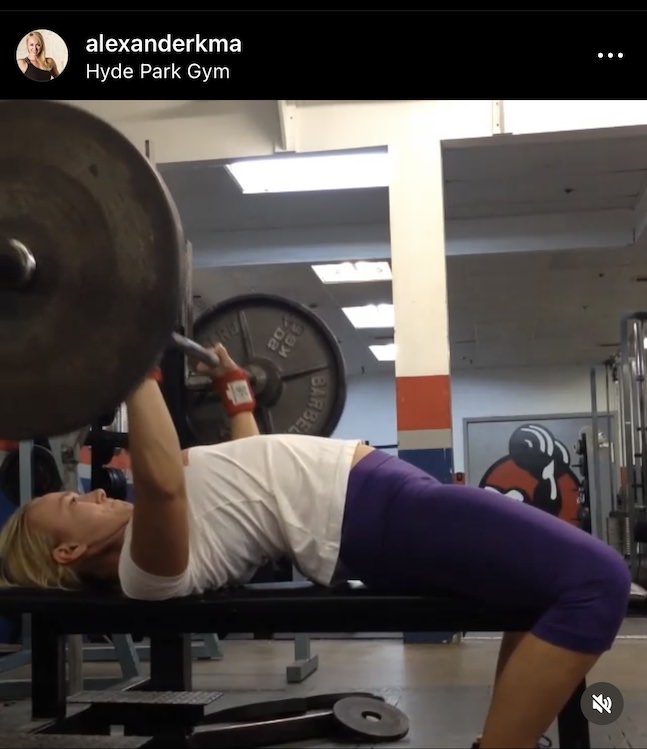
A compound exercise that targets the triceps, chest muscles, and shoulder muscles, the close-grip bench pressemphasizes elbow extension. It’s a great way to build muscle mass and works all three heads of the triceps.

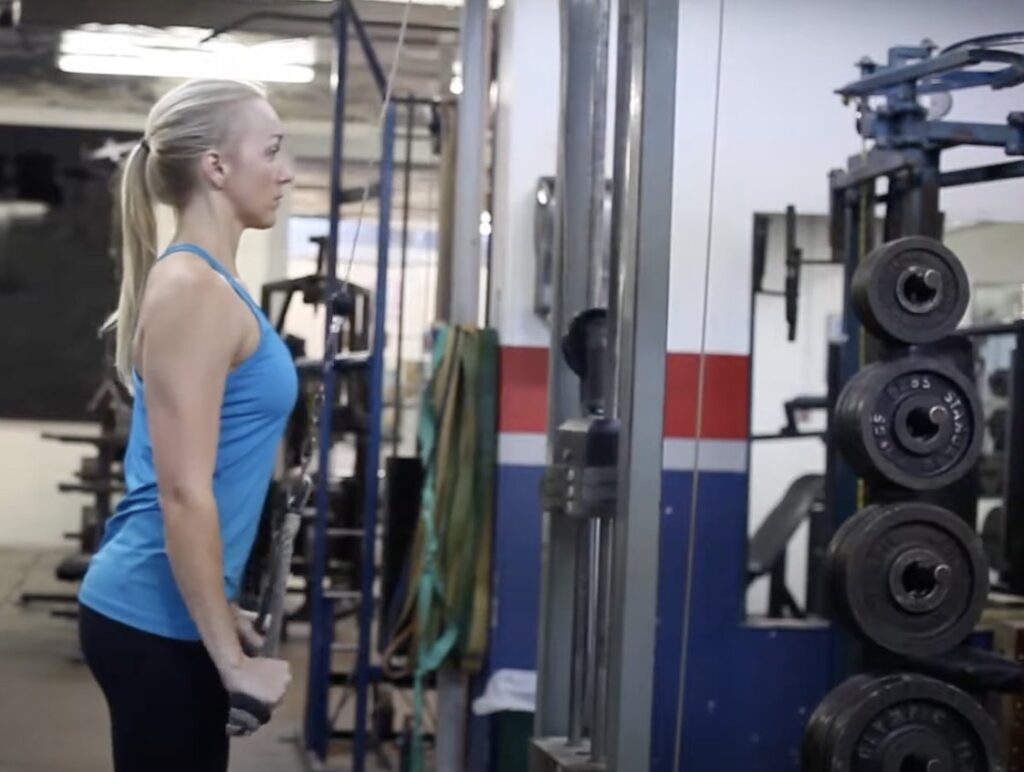
Close grip bench press. Filmed in like 2017, so don’t make fun of the capris, ok?
Close grip press with the cambered bar. This is also me, filmed at Hyde Park Gym in Austin, Texas.

2. Diamond Push-Ups / Diamond Pushups

This bodyweight exercise is a great alternative to the tricep pushdown exercise, especially for building strength at home. Position your hands under your chest in a diamond shape, hands close together. It heavily activates the triceps brachii, particularly the medial head and long head of the triceps. These are tough!! Practice practice, and don’t be hard on yourself if these are difficult at first.

3. Overhead Triceps Extension

Using a single dumbbell, ez curl bar, or resistance bands, this isolation exercise targets the long head of the triceps due to the movement at the shoulder joint. Focus on a full range of motion for best results with the overhead tricep extensions.

Dumbbell overhead triceps extensions
Cable overhead triceps extensions

4. Triceps Kickbacks / Dumbbell Kickbacks

Performed with lighter weights, triceps kickbacks isolate the triceps muscle and are ideal for honing triceps activationand improving good form. The triceps kickback is a good alternative when you don’t have much weight available.

This is a great tricep pushdown alternative, because it is very similar to the cable press down.

Make sure you get the angle just right on this one. Keep your upper arm parallel to the ground. If your elbows start to drift toward the ground, this becomes much more mechanically advantaged. That means easy, and you don’t want that.

Dumbbell triceps kickbacks. This was filmed at my home *studio during covid.
*Not really a studio. Just a sunroom.

5. Parallel Bar Dips

These are a compound movement that works the tricep muscles, chest muscles, and shoulders. Adding a weighted vestcan increase difficulty and help build muscle mass in the upper arms. This is an extremely effective exercise for upper body strength. It can be tough, so work on it consistently and patiently. 

6. Lying Tricep Extension / Dumbbell Skull Crushers

Also called the french press, this tricep exercise hits the lateral head and long head with precision. Using an ez curl bar or dumbbells can help tailor the movement for triceps strength.

Here’s a whole dumbbell arm workout you can do at home, if you want to add in biceps too!

7. Resistance Band Tricep Pushdown / Resistance Band Triceps Pushdown

If you don’t have a cable machine, this is the best way to mimic the cable tricep pushdown at home. Just attach a resistance band to a door anchor and use a rope handle or underhand grip for variation.

8. Bench Dips

This bodyweight exercise is a great exercise for beginners or for anyone working out in a home gym. Keep your starting position tight and avoid overextending the elbow joint.

9. Bodyweight Skull Crusher / Body Weight Skull Crushers

Using a bar at waist height or a sturdy surface, this exercise is a good alternative that requires only your own body weight and helps build strong triceps through elbow extension.

Skullcrushers for triceps

10. Dumbbell Tricep Extensions / Overhead Extension

These can be done seated or standing, and emphasize the triceps through controlled elbow joint movement. Extend the elbow, bend the elbow. Use heavier weights carefully, ensuring proper form and full extension.

This is a more simple movement, unlike the compound presses, so it is also a great tricep pushdown alternative.

Pro-tip for the ladies: If you have a ponytail, to keep from knocking it with the weight, put a little more pressure into your fingertips. This will angle the weight out away from your head.

I suppose that’s a tip for anybody who has a hair thing in.

Dumbbell overhead triceps extensions.

Bonus: Overhead Press

Though primarily for shoulders, the overhead press involves triceps activation, making it one of the most useful compound movements for general upper body strength.

Adding different exercises from this list to your training program can help you target the triceps brachii from a different angle and improve both triceps size and definition. Whether you’re training in a gym or a home gym, these best tricep pushdown alternatives will help round out your triceps workout effectively.

Work With Me!

If you are looking for a personal trainer in Austin, I’d love to talk with you! If you are not in Austin, Round Rock, or central Texas, let’s talk about online training.

Message me here for a free consult about personal training in Austin, Texas, or here for online personal training, and we’ll discuss your goals, background, equipment availability, schedule, and exercise preferences.

Let’s get you strong and healthy! 💪

About the author

Kathryn Alexander is a strength coach and personal trainer in Austin, Texas. She loves hiking, college football, and the feel of a perfectly knurled barbell. Read more about Kathryn here.

  • things to do outside in Austin. Food truck park near Barton Springs
    Things to Do Outside in Austin
  • Best At Home Bicep Workouts (db curls) with personal trainer Kathryn Alexander
    Best At Home Bicep Workouts: Build Bigger Biceps Without a Gym
  • Personal training in Austin, Texas, personal trainer in Austin
    February is for Friends! (Big Sale!)
  • New coach Chris Rios Alexander Training
    New Coach! Introducing Chris Rios
  • start exercising, new to gym
    If You’re New To The Gym, Read This
  • tailgate baby shower at the gym
    Love Notes, Volume 4. December Edition

Filed Under: Training Tagged With: training

SummerStrong 18 at Sorinex Headquarters

May 20, 2025 by Kathryn Alexander

SummerStrong is a strength reunion unlike any other!

Quick little update for yall: I headed out last week to SummerStrong, which is a clinic/conference/reunion/revival. It’s hard to pin down. But, it’s a blast! A weekend filled with learning, lifting, and catching up with old friends.

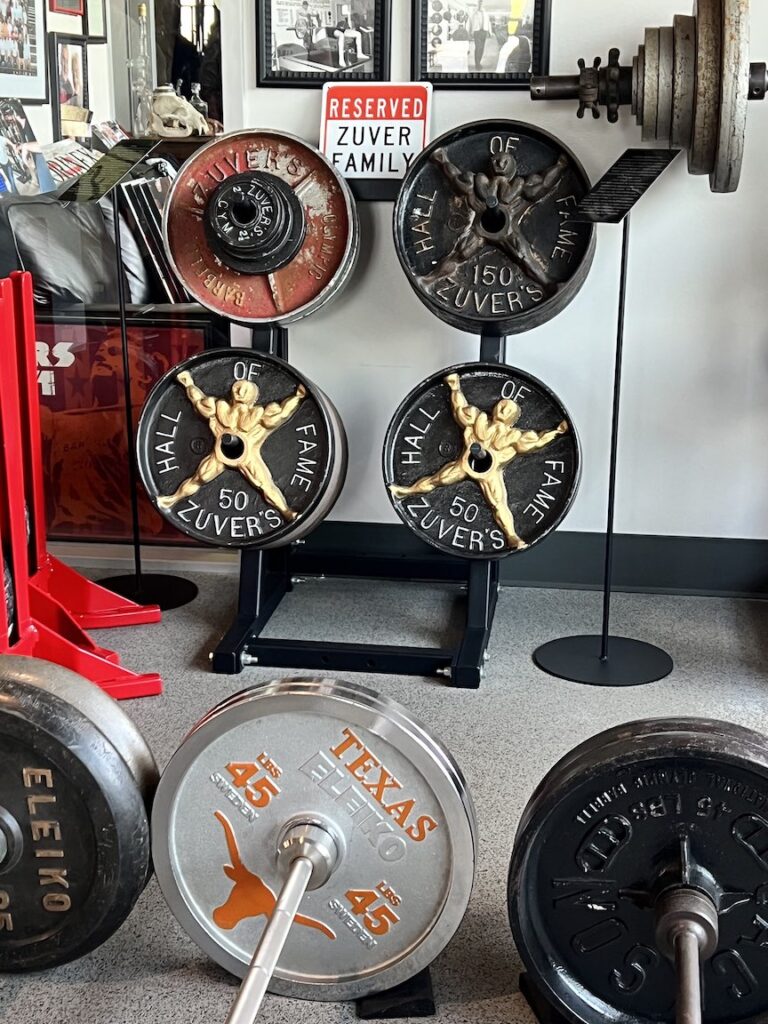
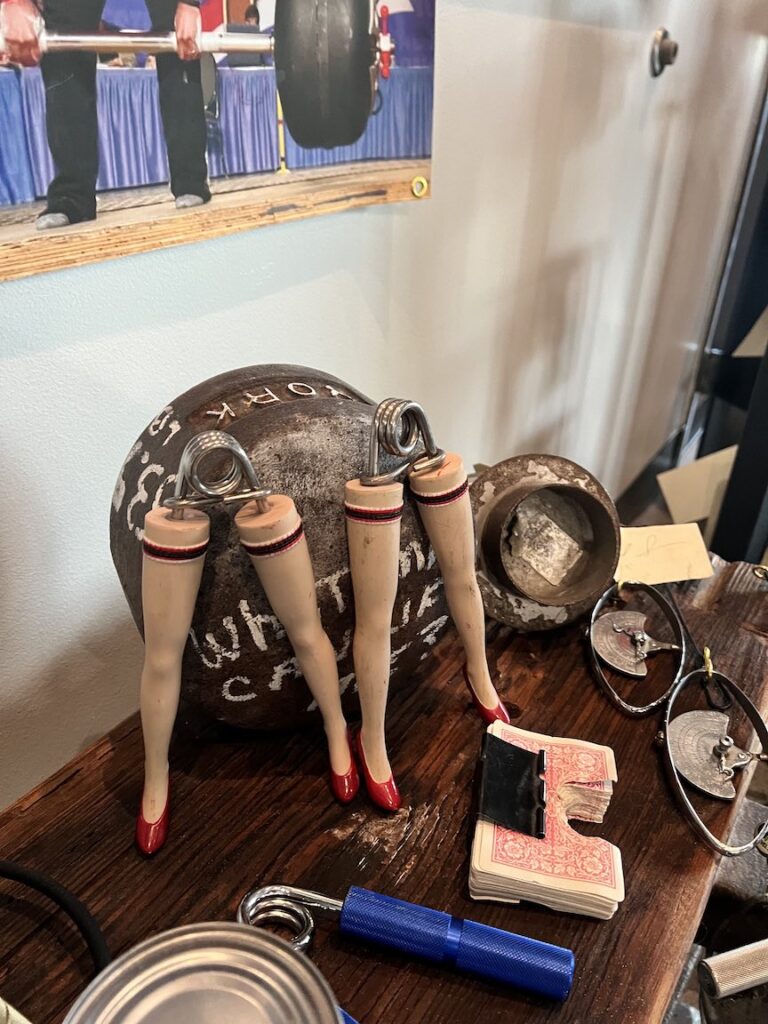
Zuver plates at Sorinex Summerstrong 18
Zuver plates at Sorinex, some of the many fascinating and unique gym pieces they have collected over the years.

What is SummerStrong?

As I alluded to above, SummerStrong is hard to categorize. It is academic: we get CEU’s as we learn from the lectures. We share ideas, swap stories, and coaching tips.

It is social: we see all our old strength coach buddies and friends. We catch up on what’s new in our lives, with our families, personal achievements and careers.

It is emotional: it really brings out the best people in my industry. I am so so lucky to have found this group of people. They love me and support me unconditionally.

This year was heavily in memory of Pops, Richard Sorinex, the business’s patriarch. Pops passed last year, and he is deeply missed.

Handgrip at Sorinex

SummerStrong in Pictures

I never do great at taking pictures at SummerStrong, because I’m too busy catching up with everyone to think about pulling out my phone. Here are a few though.

If you have questions about SummerStrong, let me know. Maybe I’ll see you there next year!

Summerstrong 18 Sorinex

About the author

Kathryn Alexander is a strength coach and personal trainer in Austin, Texas. She loves hiking, college football, and the feel of a perfectly knurled barbell. Read more about Kathryn here.


  • things to do outside in Austin. Food truck park near Barton Springs
    Things to Do Outside in Austin
  • Best At Home Bicep Workouts (db curls) with personal trainer Kathryn Alexander
    Best At Home Bicep Workouts: Build Bigger Biceps Without a Gym
  • Personal training in Austin, Texas, personal trainer in Austin
    February is for Friends! (Big Sale!)
  • New coach Chris Rios Alexander Training
    New Coach! Introducing Chris Rios
  • start exercising, new to gym
    If You’re New To The Gym, Read This
  • tailgate baby shower at the gym
    Love Notes, Volume 4. December Edition

Filed Under: Misc.

Cable Squats: Muscles Worked and How to do Them

April 12, 2025 by Kathryn Alexander

What Are Cable Squats

Cable squats: muscles worked, how to do them, and why you would do them. Cable squats are a great accessory exercise for your lower body. They are different than barbell squats, and are a great way to get in some extra volume. 

Cable squats are a variation of the traditional squat exercise, but they use a cable machine for resistance instead of a barbell. Instead of holding weights on your shoulders, like in a barbell squat, you hold a cable attachment (such as a rope or handle) in front of you and squat while pulling moving the cable stack.

cable squats muscles worked by Kathryn Alexander Austin personal trainer

Cable squats can help target the quads, glutes, and hamstrings, while also engaging your core to stabilize your body as you perform the movement. It’s a great option if you’re looking to add variety to your leg workouts or if you want to minimize stress on the spine compared to barbell squats. 

Let’s discuss what muscles are worked during the cable squats.

Cable Squats: Muscles Worked

Cable squats primarily work the following muscle groups:

  1. Quadriceps (Front of the Thigh): The quads are heavily engaged during the squatting motion, as they extend the knees when you drive up from the squat position.
  2. Glutes (Buttocks): The glutes are heavily involved in the hip extension that occurs when you return to the standing position from the squat.
  3. Hamstrings (Back of the Thigh): The hamstrings assist in controlling the movement during the downward portion of the squat and help with the hip extension as you drive back up.
  4. Core Muscles: Your abdominals and obliques are engaged to stabilize your torso and maintain proper posture throughout the movement, especially since the cable attachment adds an element of resistance pulling you forward. 
  5. Adductors (Inner Thighs): The adductors, or inner thigh muscles, help stabilize your legs as you squat, particularly if you perform the movement with a wider stance.
  6. Erector Spinae (Lower Back): While not the primary muscles, your lower back muscles work to help keep your spine in a neutral position, preventing you from rounding your back during the squat. The erector spinae muscles are particularly worked here, since the cable pulls you forward, unless gravity pulling you downward on traditional squats.

Overall, cable squats provide a full-body workout that primarily targets the lower body muscles, with an emphasis on the quads, glutes, and hamstrings, while also engaging your core for stability.

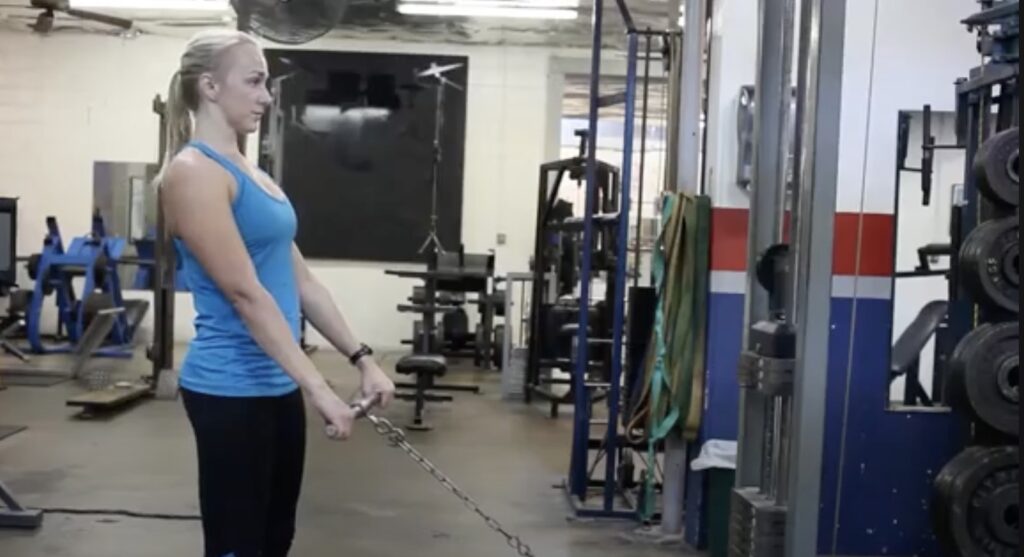
Please note this was like my 200th exercise to film. I was very tired 😅. Kathryn Alexander at Hyde Park Gym circle 2016

How Do You Do Cable Squats?

Here’s how you can perform cable squats for proper form:

  1. Set up the machine: Attach a rope or handle to the low pulley on a cable machine. Set the weight to an appropriate level. If you don’t know where to start, start with a few plates in.
  2. Position yourself: For your starting position, stand facing the machine, feet shoulder-width apart, with the cable attachment in both hands. Hold the rope or handle at chest height, keeping your arms extended in front of you.
  3. Squat: Lower your hips and bend your knees, keeping your chest up and back straight, just like in a regular squat. The cable should remain taut as you squat down.
  4. Stand up: Push through your heels to return to the standing position, resisting the pull of the cable as you go.

Common Mistakes on Cable Squats

Cable squats can be a killer move when done right, but there are definitely some common mistakes that can mess with your form or even lead to injury. Here are the most frequent ones:

1. Bending Your Elbows

  • Why it’s bad: Bad may be overkill, but if you bend your elbows too much, you’ll probably lose your balance. 
  • Fix: Keep your arms long with elbows straight. Think of your arms like a tether, so your lower body can do the work.

2. Letting the Knees Cave In (Knee Valgus)

  • Why it’s bad: Can lead to knee pain or injury.
  • Fix: Focus on keeping your knees as wide as your big toe or wider. This will help you use your glute muscles optimally and keep your knees tracking the way you want them to.

3. Rounding the Lower Back

  • Why it’s bad: Again, bad is situational here. The goal is to work your legs and glutes, with your upper body and core as supporting staff. If your back is rounded, you’ll have a lot of energy leakage there and you’re not exactly working what you’re aiming for.
  • Fix: Engage your core and keep a neutral spine. Stick your middle back engaged and maintain that posture throughout.

4. Not Going Low Enough (Shallow Squats)

  • Why it’s bad: You’re not working the full range of motion, so you’re leaving gains on the table.
  • Fix: Aim to get your thighs at least parallel to the floor, or lower if flexibility and control allow. 

5. Letting the Cable Control You

  • Why it’s bad: You lose tension, control, and the benefits of the exercise.
  • Fix: Actively control both the descent and the ascent. Don’t let the weight pull you. You can control this by using your core strength!

Cable Squat Variations

1. Cable Goblet Squats

  • How: Hold the cable handle (or rope attachment) close to your chest like a goblet.
  • Why: Encourages an upright torso, great for quad focus and core engagement.
  • Tip: Works well with a rope attachment for better grip and wrist comfort.

2. Cable Front Squat

  • How: Use dual cables, one in each hand, held at shoulder height like a barbell front squat.
  • Why: More upper body involvement, good for balance and posture.
  • Tip: Keep elbows up high to mimic barbell form.

3. Cable Zercher Squat

  • How: Hold the cable in the crook of your elbows (like a Zercher squat with a barbell).
  • Why: Torches your core, quads, and biceps all at once. Killer compound movement.
  • Tip: Use a towel or pad if it’s uncomfortable on the arms.

4. Cable Squat to Row

  • How: Squat down, then row the cable to your torso as you stand.
  • Why: Adds upper body pulling, making it a full-body movement.
  • Tip: Focus on rowing after completing the squat portion to avoid cheating the row.

5. Cable Split Squat / Bulgarian Split Squat

  • How: Stand in a lunge or split stance with cable in one or both hands.
  • Why: Emphasizes one leg at a time, great for fixing imbalances.
  • Tip: Try using the cable for balance and constant tension rather than max resistance.

6. Cable Sissy Squat

  • How: Lean back slightly as you squat down, letting knees travel forward.
  • Why: Massive quad burner—like a sissy squat but the cable gives balance and resistance.
  • Tip: Keep your hips forward and heels down for the full effect.

7. Cable Thruster

  • How: Do a full squat, then push the cable handles overhead like a shoulder press.
  • Why: Combo of legs + shoulders = spicy. Great for conditioning days.
  • Tip: Use lighter weight to maintain speed and control.

You’ve got a ton of room to play with cable squats, whether you’re chasing glute gains, building quads, or adding a little spice to your leg days. Here’s a deeper dive into how you can use each variation depending on your goal—and some sneaky pro tips too.

Goal-Based Cable Squat Variations

Since we’re talking about cable squats muscles worked, let’s discuss how you can focus on different muscle groups by adjusting your setup and form.

For Glute & Hamstring Focus

You want moves that shift tension to the back side (posterior chain):

  • Cable Pull-Through Squat (Hybrid)
    • Think: RDL meets squat. Set the cable low behind you, grab with both hands through your legs, and squat.
    • Glute Level: 10/10
    • Tip: Squeeze hard at the top. Slow tempo down = more gains.
  • Cable Bulgarian Split Squat (Rear Foot Elevated)
    • Isolates the glutes and hams more, especially if you keep your chest slightly leaned forward.
    • Tip: Let the front leg do all the work—don’t push off the back foot. Almost becomes single cable squats.

For Quad Dominance

You’ll want upright torso, knees forward, and deep range:

  • Cable Goblet Squat
    • Super quad-dominant when you go deep and keep tension at the bottom.
    • Tip: Add a pause at the bottom to crush your quads.
  • Cable Sissy Squat
    • Looks crazy, feels even crazier—in a good way. Pure quad annihilation.
    • Tip: Hold onto the cable for balance, lean back, and go slowww.

For Full-Body / Athletic Conditioning

These variations are great for circuits, supersets, or metabolic work for the entire body:

  • Cable Squat Row
    • Hits legs, core, and upper back. Keeps the heart rate up.
    • Tip: Think power on the row—shoulder blades together at the top.
  • Cable Thruster
    • Total-body push movement—legs to shoulders in one smooth flow.
    • Tip: Exhale as you press; helps keep your core tight and protect your back.

For Core Stability & Balance

These challenge your stabilizers and help with athletic control:

  • Cable Offset Squat
    • Hold the handle with one arm (off to the side), forcing your core to stabilize.
    • Tip: Keep hips square; don’t let the cable pull you off-center.
  • Cable Zercher Squat
    • Front-loaded = core is lit up the entire time.
    • Tip: Brace abs like a plank—super useful if you’re building towards barbell squats.

BONUS: Try This Cable Squat Finisher

 “10-10-10” Cable Squat Burnout:

  1. 10 slow tempo reps (4s down, 1s up)
  2. 10 pulse reps at the bottom
  3. 10 fast explosive reps

Your legs will be questioning everything.

Don’t have a cable for cable machine exercises? You can do many similar exercises with free weights or resistance bands. 

What Are The Best Leg Exercises

Historically, the best exercises for lower body strength are going to be traditional barbell squats, deadlifts, lunges, and some of their variations. If your goal is to gain muscle mass, especially mass in your legs, then include these on some or all of your leg days. But if you are looking for a change of pace and different exercises, add these cable machine squats to your fitness routine. 

How To Include Cable Squats In Your Fitness Routine

Keep the basics the basics. Traditional strength training with regular squats is a good idea. But, add in cable squats as one of your accessory exercises. In a nutshell, you’ll want to do your warm up, compound exercises and main lifts like back squats. Then add in cable squats to get more volume on your leg day before you wrap up. 

Are you looking for some upper body work? If so, try these great tricep pushdown alternatives and triceps exercises.

Work With Me!

If you are looking for a personal trainer in Austin, I’d love to talk with you! If you are not in Austin, Round Rock, or central Texas, let’s talk about online training.

Message me here for a free consult about personal training in Austin, Texas, or here for online personal training, and we’ll discuss your goals, background, equipment availability, schedule, and exercise preferences.

Let’s get you strong and healthy! 💪

About the author

Kathryn Alexander is a strength coach and personal trainer in Austin, Texas. She loves hiking, college football, and the feel of a perfectly knurled barbell. Read more about Kathryn here.

  • things to do outside in Austin. Food truck park near Barton Springs
    Things to Do Outside in Austin
  • Best At Home Bicep Workouts (db curls) with personal trainer Kathryn Alexander
    Best At Home Bicep Workouts: Build Bigger Biceps Without a Gym
  • Personal training in Austin, Texas, personal trainer in Austin
    February is for Friends! (Big Sale!)
  • New coach Chris Rios Alexander Training
    New Coach! Introducing Chris Rios
  • start exercising, new to gym
    If You’re New To The Gym, Read This
  • tailgate baby shower at the gym
    Love Notes, Volume 4. December Edition

Filed Under: How To

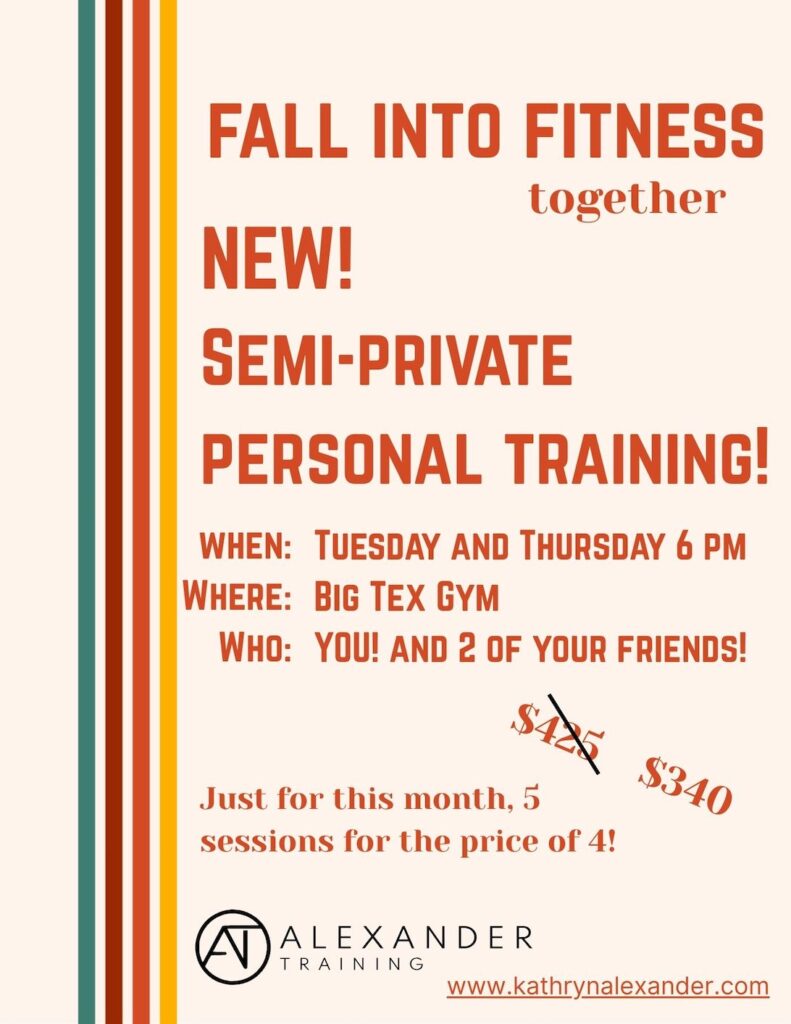
New Semi Private Personal Training in Austin, Texas!

April 2, 2025 by Kathryn Alexander

Hey there! I am happy to announce new semi-private personal training, live in Austin, Texas!

semi private personal training Austin Texas
New semi private personal training by Kathryn Alexander (Alexander Training) in Austin, Texas!

I have had some small group training going steadily for years, and my clients are seeing great results! They are getting stronger, leaner, and making friends in the process of sweating together.

They’re doing so great that they’re bringing their own friends, and more and more people are getting in on the training.

Because of that, I have opened new hours for groups of up to 4 clients at a time. This means you’ll still get custom plans tailored to your goals, and eyes on your training form and intensity.

What is Semi Private Personal Training?

Semi-private personal training is small group training. In this case, it is up to 4 clients. You have to rest when you’re strength training, so we do an “I go, you go” method, which means you lift the weight that is for you. When you are resting, your training partner lifts. We adjust the weights between lifters so you’re doing what’s appropriate for your ability.

This method allows several people to be training together at a time, without decreasing effort or results.

Does Semi-Private Personal Training Work?

Yes! Semi-private training is great for people who thrive in a group or social atmosphere. Now, don’t get it wrong: you have to put in the work for yourself. But having a coach and accountability buddies built in? That’s a recipe for success!

How Does Semi-Private Personal Training Work?

Inherently, some exercises require more instruction. Some exercises are easy to do on your own once you’ve had a little bit of instruction.

We do a full body training, but we do have a particular goal each session. We might do a more technical lift, or a lift that you need a spot for. In that case, I am with you during your lift.

You might superset that with a less technical lift that you are comfortable doing on your own, or stretches that you need, while you are resting.

It takes planning, but that’s my job! I’ll do the planning; you do the lifting!

We meet at Big Tex Gym, in Austin, Texas.

How Do I Join? Tell Me More!

Want to see if semi-private training is a good step for you? Send me a message here, and we’ll get on the phone or meet to discuss your goals and the best plan for you!

About the author

Kathryn Alexander is a strength coach and personal trainer in Austin, Texas. She loves hiking, college football, and the feel of a perfectly knurled barbell. Read more about Kathryn here.

  • things to do outside in Austin. Food truck park near Barton Springs
    Things to Do Outside in Austin
  • Best At Home Bicep Workouts (db curls) with personal trainer Kathryn Alexander
    Best At Home Bicep Workouts: Build Bigger Biceps Without a Gym
  • Personal training in Austin, Texas, personal trainer in Austin
    February is for Friends! (Big Sale!)
  • New coach Chris Rios Alexander Training
    New Coach! Introducing Chris Rios
  • start exercising, new to gym
    If You’re New To The Gym, Read This
  • tailgate baby shower at the gym
    Love Notes, Volume 4. December Edition

Filed Under: Austin, Personal Training

The Best Workouts for Health: Contributor for Epoch Times

February 24, 2025 by Kathryn Alexander

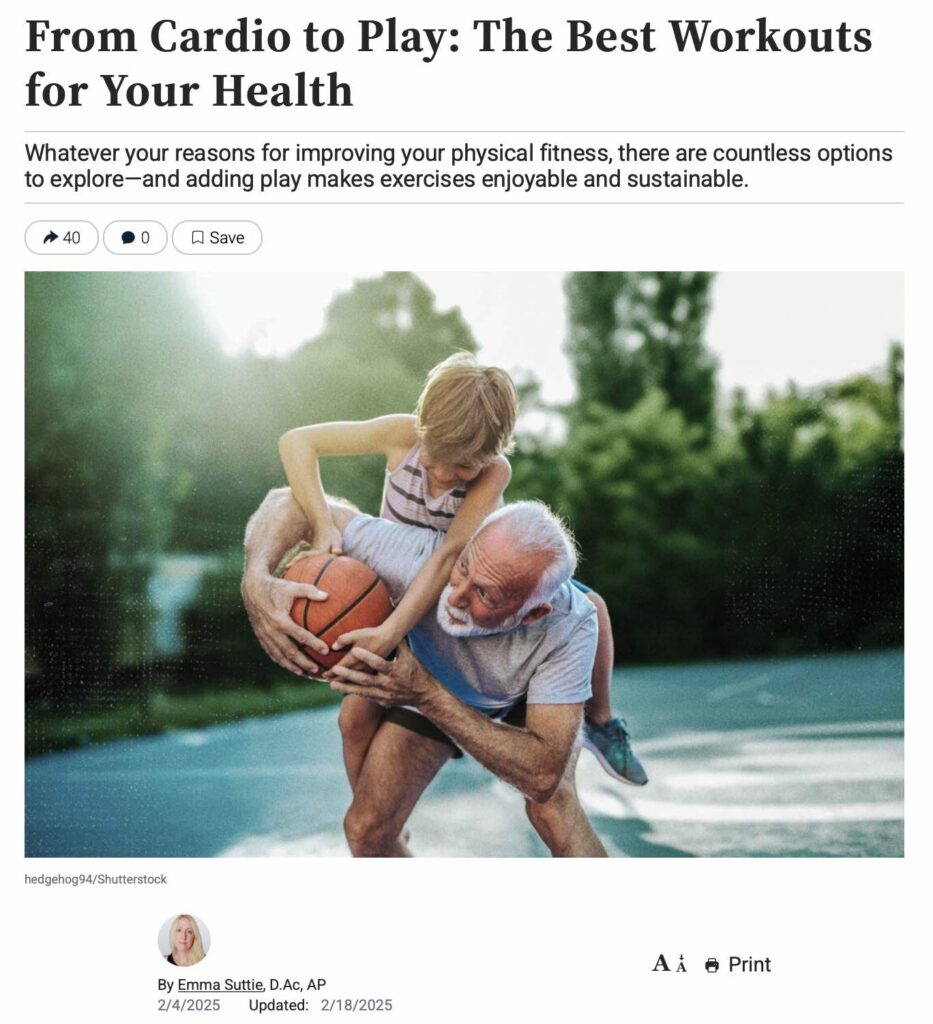
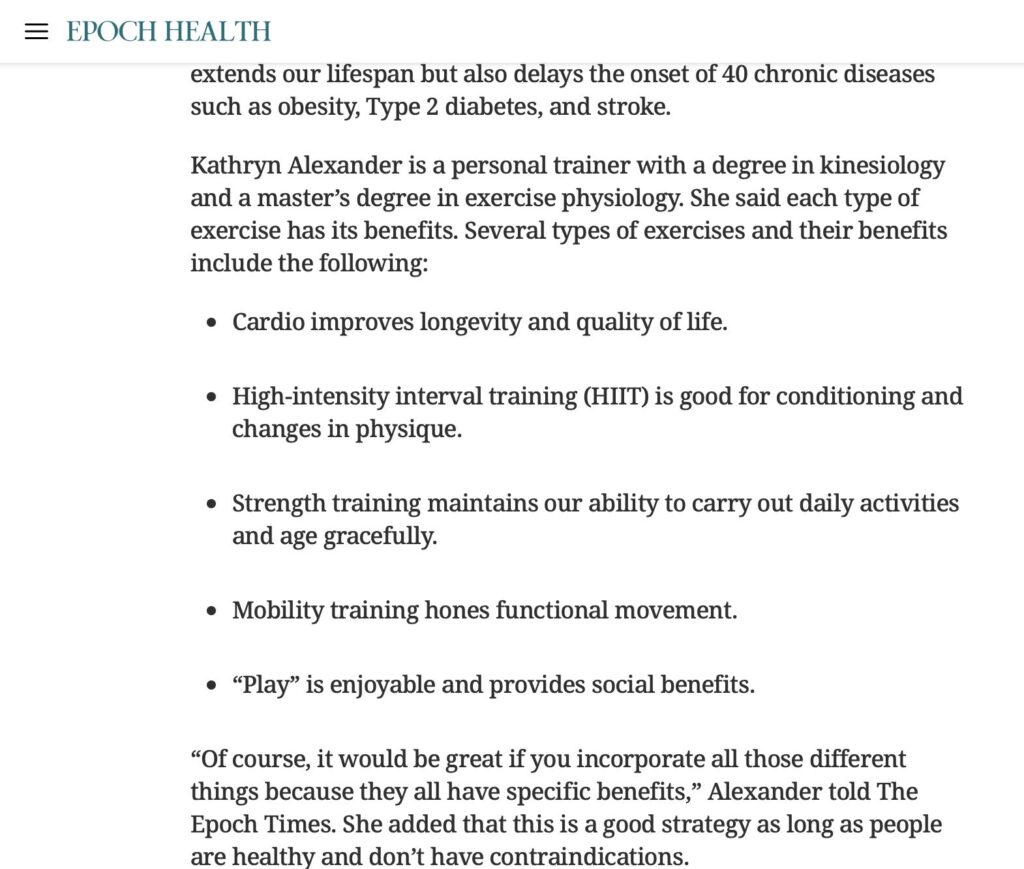
I was recently honored to help with an article written by Emma Suttie and published in the Epoch Times.

The article is called “From Cardio to Play: The Best Workouts for Your Health”, and covers multiple ways you can exercise and how those different ways of exercise help you.

The best workouts for healthy Emma Suttie Kathryn Alexander epoch Times
The best workouts for health, by Emma Suttie. Kathryn Alexander contributes. Published in Epoch Times.

Ms. Suttie, a health expert herself, consulted experts to discuss the benefits of cardio, high intensity interval training (HIIT), mobility, strength training and play.

Below is a snippet of the article. The rest is published here at The Epoch Times.

The best workouts for health Emma Suttie Kathryn Alexander epoch Times

Work With Me!

If you are looking for a personal trainer in Austin, I’d love to talk with you! If you are not in Austin, Round Rock, or central Texas, let’s talk about online training.

Message me here for a free consult about personal training in Austin, Texas, or here for online personal training, and we’ll discuss your goals, background, equipment availability, schedule, and exercise preferences.

Let’s get you strong and healthy! 💪

About the author

Kathryn Alexander is a strength coach and personal trainer in Austin, Texas. She loves hiking, college football, and the feel of a perfectly knurled barbell. Read more about Kathryn here.

  • things to do outside in Austin. Food truck park near Barton Springs
    Things to Do Outside in Austin
  • Best At Home Bicep Workouts (db curls) with personal trainer Kathryn Alexander
    Best At Home Bicep Workouts: Build Bigger Biceps Without a Gym
  • Personal training in Austin, Texas, personal trainer in Austin
    February is for Friends! (Big Sale!)
  • New coach Chris Rios Alexander Training
    New Coach! Introducing Chris Rios
  • start exercising, new to gym
    If You’re New To The Gym, Read This
  • tailgate baby shower at the gym
    Love Notes, Volume 4. December Edition

Filed Under: Featured In

Dumbbell Back Workout: The 5 Best Exercises

February 4, 2025 by Kathryn Alexander

Dumbbell back workouts are great complements to gym sessions for your upper body pulling days. If you’ve done much lifting in gyms, you know that the best back workouts are usually done with equipment you typically find in gyms.

Lat pulldowns, cable rows, and machine rows are easier to do with cable systems and equipment that you find in the gym. 

However, you can get a great dumbbell back workout done at home if you do the following exercise. 

dumbbell back workout Kathryn Alexander Austin pesonal trainer
dumbbell back workout with Kathryn Alexander Austin personal trainer. Hyde Park Gym circa 2014.

Why is a Strong Back Important?

Having a strong back is important for health, safety prevention, and for looking strong and athletic. This applies to men and women. A strong back means you’ll have good posture, lowered risk of injury, and and likely a pain free upper body. A muscular back will make your overall physique look strong and balanced. 

In this article, I am going to explain how to do the 5 best dumbbell back exercises. Back in this case refers mostly to the muscle groups that work on the humerus and shoulder blades, as opposed to exercises that work your lower back musculature. In other words, I am referring to your latissimus dorsi, trapezius muscles, and rhomboids.

The teres minor, teres major, infraspinatus, (rotator cuff) and rear deltoids will be involved too. (Note that I am not focusing on rear delts either, so the rear delt fly is categorized with shoulder work in my book).

The lower back muscles, or erector spinae muscles and exercises that them, like deadlifts and hinges, will be covered in another article. 

The Dumbbell Back Workout

Here it is: my favorite dumbbell back workout, and how to do these 5 best back exercises that you can do with a set of dumbbells. I’ll give a quick overview, then dive into each one.

pullovers dumbbell back workout

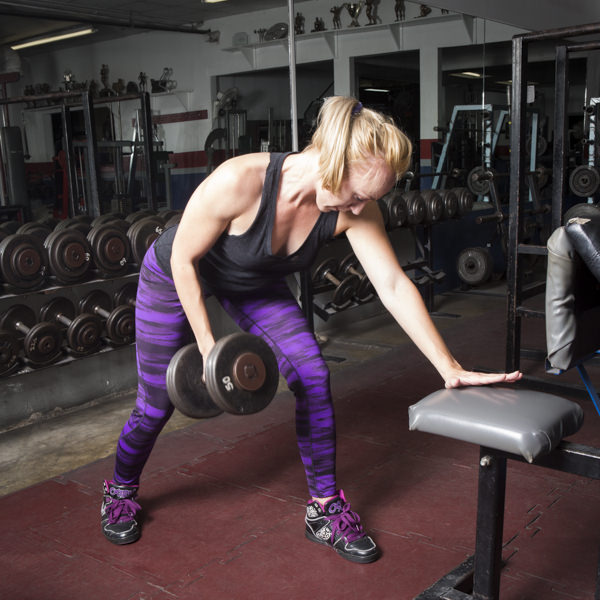
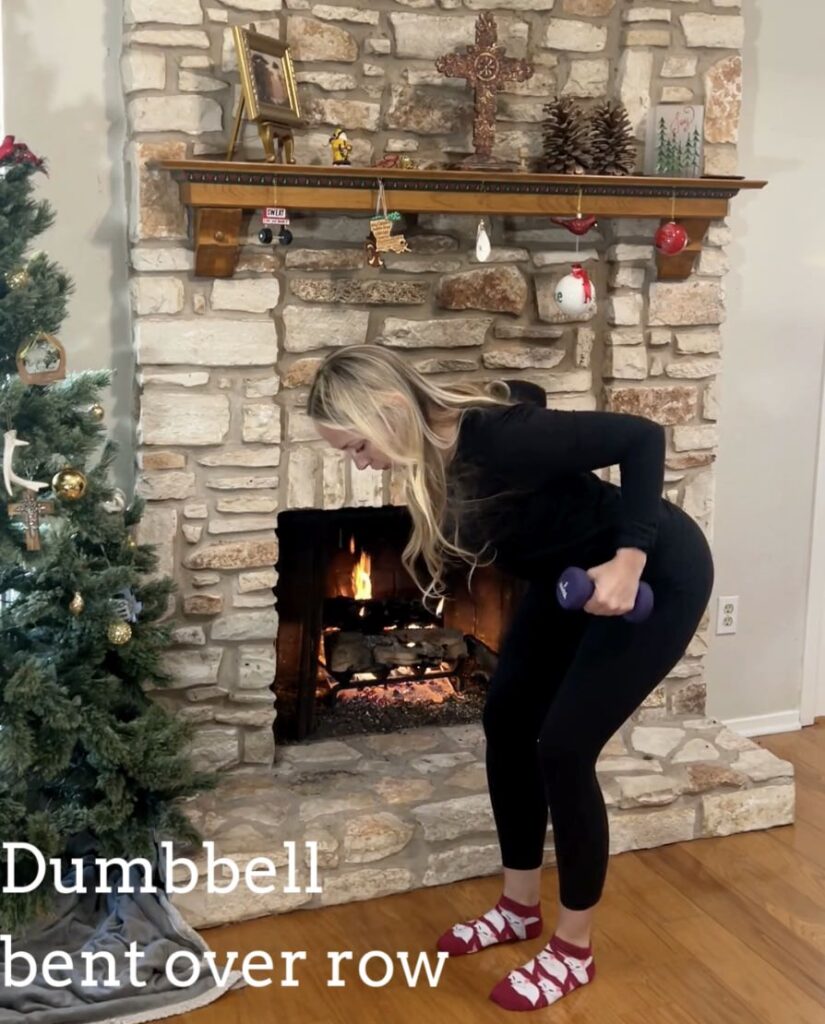
Bent-Over Row

The single-arm dumbbell row, or bent over row, is probably what first comes to mind when lifters think of dumbbell back exercises, and for good reason. It’s a classic!

2 Arm Dumbbell Row

The same movement, but with both arms at a time, is one of the most popular row variations. This does work the lower back a good bit too, in addition to the upper back muscles.

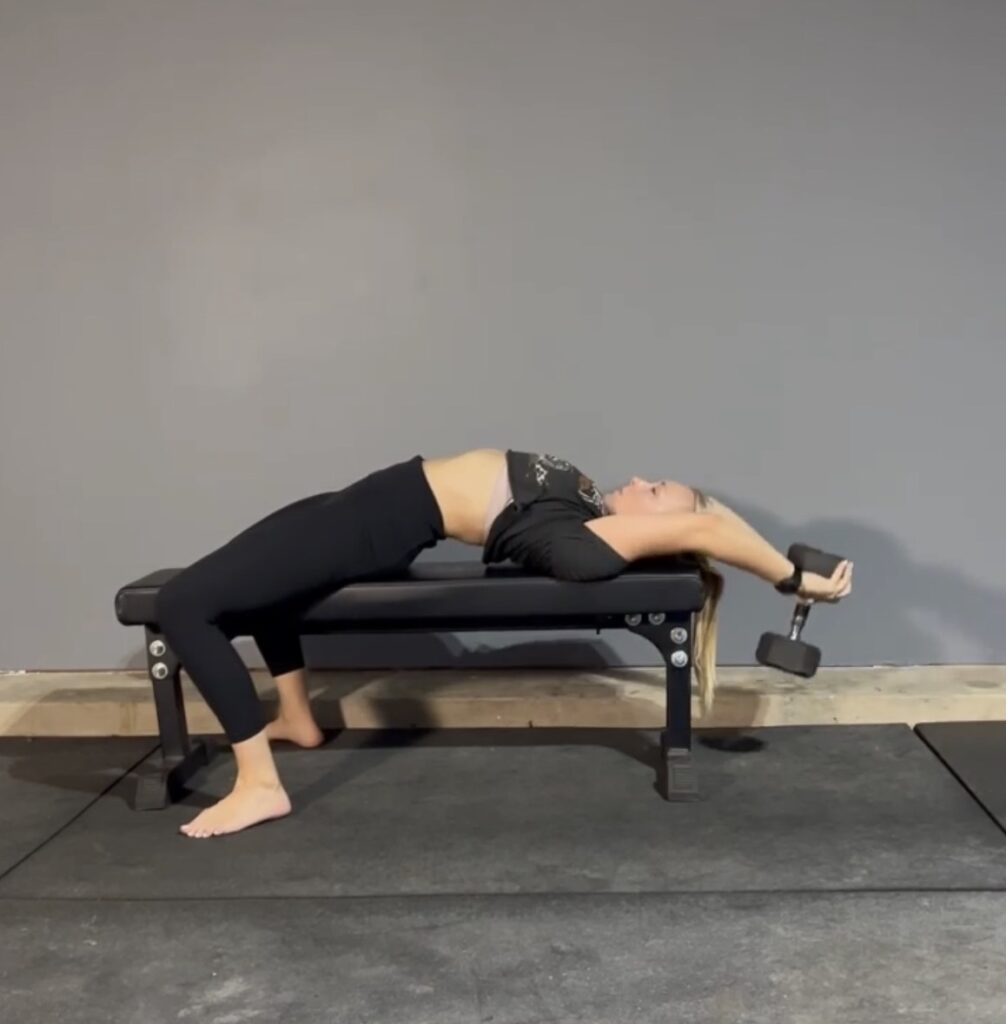
Dumbbell Pullover

The dumbbell pullover *might* be my favorite upper body exercises, certainly one of the best dumbbell exercises. It works so many things, and feels so good! 

Renegade Row

Full disclosure, not my favorite, but lots of people do them, so let me explain. The renegade row requires so much stability from the body that it really limits how much you can row, and the range of motion is not great. 

Good Mornings

I’m giving good mornings an honorable mention because I love them so much. They actually do involved a lot of low back, and they aren’t a row. They are a hinge. But, I make the rules around here so I’m adding them to the list. 

Bent Over Rows

Like I said, these are a fundamental movement to target the lats, traps, and rhomboids. I want my clients to learn proper form here, and then learn when to use a little more body English. Let’s start with ideal form. 

To do the one arm bent over dumbbell row:

  • stand with your legs staggered, with the leg holding the dumbbell behind the other
  • with a hinge in your hips and neutral, straight back, brace one arm on something sturdy in front of you
  • extend the dumbbell toward the floor, keeping your back straight, but letting your shoulder stretch slightly toward the floor
  • squeeze your shoulders back and immediately follow by pulling your elbow to your sides
  • extend your elbow first to return to your start position
  • allow your shoulders to again stretch toward the floor
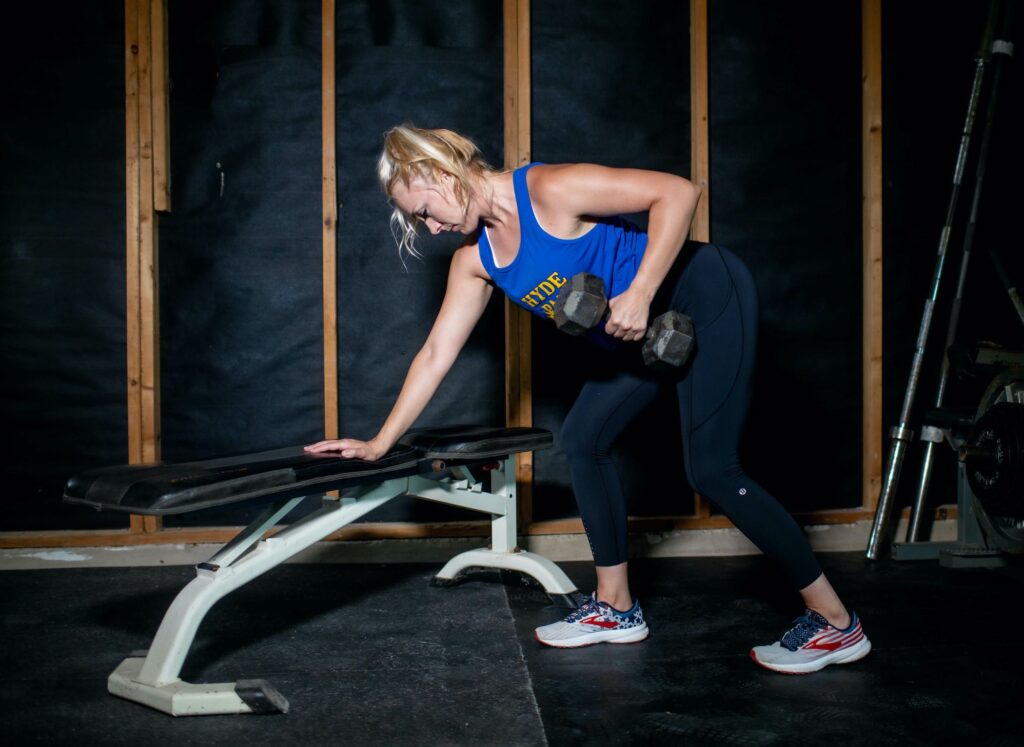
bent over row, by Kathryn Alexander Austin personal trainer

2 Arm Dumbbell Rows

This is essentially the same exercise as the 1 arm dumbbell row, except you are using a pair of dumbbells here. You are providing all the stability since you are not propping a hand or knee on any other surface. This is a great exercise for full back involvement.

To do the 2 arm dumbbell row:

  • hinge at the hips with your back straight and neutral
  • extend your elbows, keeping your back straight, but letting your shoulders stretch slightly toward the floor
  • squeeze your shoulders back and immediately follow by pulling your elbows to your sides
  • extend your elbows first to return to your start position
  • allow your shoulders to again stretch toward the floor
  • your pattern here is shoulders back, elbows back, elbows straight, shoulders stretch toward floor, repeat

Pullover

YASSS the pullover! Arnold (and a lot of other people) use these for chest development. It does work chest, and triceps, and abs. I just really like it for back. Grab a lighter weight until you get the feel for this. Also, if hurts your shoulder, skip it.

Note that I also do these a bit differently, as I like to lay on a bench like I would for bench press. Some people lay perpendicular and cross the bench. You can do either. Experiment to see which setup works best for you. 

To do dumbbell pullovers:

  • lay flat on ground or bench, and then build up an arch in your lower back. I don’t want a flat back here.
  • press your shoulders down toward your hip pockets and keep them there for the duration of this exercise
  • make a big arc over your head with the weight
  • keep elbows soft and ribcage up
  • press your arms back until your hands are over your face, not farther toward bellybutton
  • repeat

Renegade Row

As I mentioned, the renegade row works so much of the body that it doesn’t focus on a rowing pattern. It requires so much stability that you have to use lighter weights on your row. But, try it and see if you like it.

To do the renegade row:

  • start in a high plank position, gripping a dumbbell in each hand
  • keep feet hip-width apart (wider for stability, narrower for difficulty)
  • brace your core. engage your abs and keep your body straight (no sagging hips)
  • pull one dumbbell towards your ribs, keeping your elbow close to your body
  • avoid twisting your torso—keep your hips squared to the ground
  • slowly return the dumbbell to the ground without dropping it
  • maintain a stable plank position, neutral spine, throughout the movement
  • of course, do the other arm

Good Mornings

And here we have the good morning! These DO work the spinal erectors, glutes, and hamstrings. They are a lower body exercise and work the entire posterior chain. I heart them.

To do good mornings: 

  • hold the dumbbell at your chest
  • keep your torso tight and neutral, not bending or flexing the spine
  • keeping your whole feet flat on the ground, hinge at the hips and send your hips behind you
  • keep your torso tight and aim to feel a stretch in your hamstrings
  • squeeze your glutes to push your hips back under you
  • return to your starting position
  • repeat for as many reps as is your goal

Benefits of Using Dumbbells for Back Work

There are some really great benefits of dumbbell workouts that I don’t want to overlook. Among them, dumbbell work typically works both sides of your body independently, improving muscle imbalances. This unilateral work can also build balanced strength. 

Dumbbells allow a greater range of motion than barbells or machines, leading to greater involvement (muscle activation). A dumbbell back workout is also pretty joint friendly. Since you aren’t committed to a grip like you are with a barbell, dumbbells let your wrists, elbows, and shoulders move freely, reducing stress on the joints. You don’t have to commit to an overhand grip if a neutral grip feels better, for example.

Free weights are also so so versatile! You can work your entire body, and get not just good back workouts. For example, managing dumbbells works your grip, forearms, stabilizers mores than machines. 

1 arm dumbbell row in home garage gym

Back is such an important muscle group to work! Be sure to prioritize your good pulling movements, or your back day if you split it up like a bodybuilder. Add in the single-arm row, the bent-over dumbbell row, pullovers and some hinges. Building muscle mass and back strength will always serve you well! 

How To Work All Back Large Muscle Groups

To ensure muscle growth and development in all areas of your back, you’ll want to work a variety of angles to work upper traps, mid traps, lower traps, lats, rhomboids, and the teres minor and major.

Some other exercises that you can include in your dumbbell back workout routine are the reverse fly, dumbbell upright row, and dumbbell shrugs, high pulls, and upright rows. These are pulling type movements, but I mentally categorize them with shoulder work. 

Here are some other dumbbell arm exercises you can add in too.

Likewise, I suggest always categorizing deadlifts, dumbbell deadlifts, barbell deadlifts, etc, on leg day. Yes they do work your lower back, but they aren’t primarily lower back exercises. They are full body, but leg work. If you find you’re using your back most, then I really suggest you adjust your form. 

Want to lift heavier weights with barbell rows? Learn how in this comprehensive post.

Do you have questions about your dumbbell back workout, or your workout program in general?

Work With Me!

If you are looking for a personal trainer in Austin, I’d love to talk with you! If you are not in Austin, Round Rock, or central Texas, let’s talk about online training.

Message me here for a free consult about personal training in Austin, Texas, or here for online personal training, and we’ll discuss your goals, background, equipment availability, schedule, and exercise preferences.

Let’s get you strong and healthy! 💪

About the author

Kathryn Alexander is a strength coach and personal trainer in Austin, Texas. She loves hiking, college football, and the feel of a perfectly knurled barbell. Read more about Kathryn here.

  • things to do outside in Austin. Food truck park near Barton Springs
    Things to Do Outside in Austin
  • Best At Home Bicep Workouts (db curls) with personal trainer Kathryn Alexander
    Best At Home Bicep Workouts: Build Bigger Biceps Without a Gym
  • Personal training in Austin, Texas, personal trainer in Austin
    February is for Friends! (Big Sale!)
  • New coach Chris Rios Alexander Training
    New Coach! Introducing Chris Rios
  • start exercising, new to gym
    If You’re New To The Gym, Read This
  • tailgate baby shower at the gym
    Love Notes, Volume 4. December Edition

Filed Under: Training

Dumbbell Arm Workout At Home

January 13, 2025 by Kathryn Alexander

Doing a dumbbell arm workout at home can be simple and effective. Notice I didn’t say easy, but simple. You just need a pair of dumbbells, some lighter weights and maybe some heavier weights.

You don’t need fancy machines or big equipment that takes up a lot of floor space. Regardless of fitness level, you can get a lot done with even just one set of dumbbells.

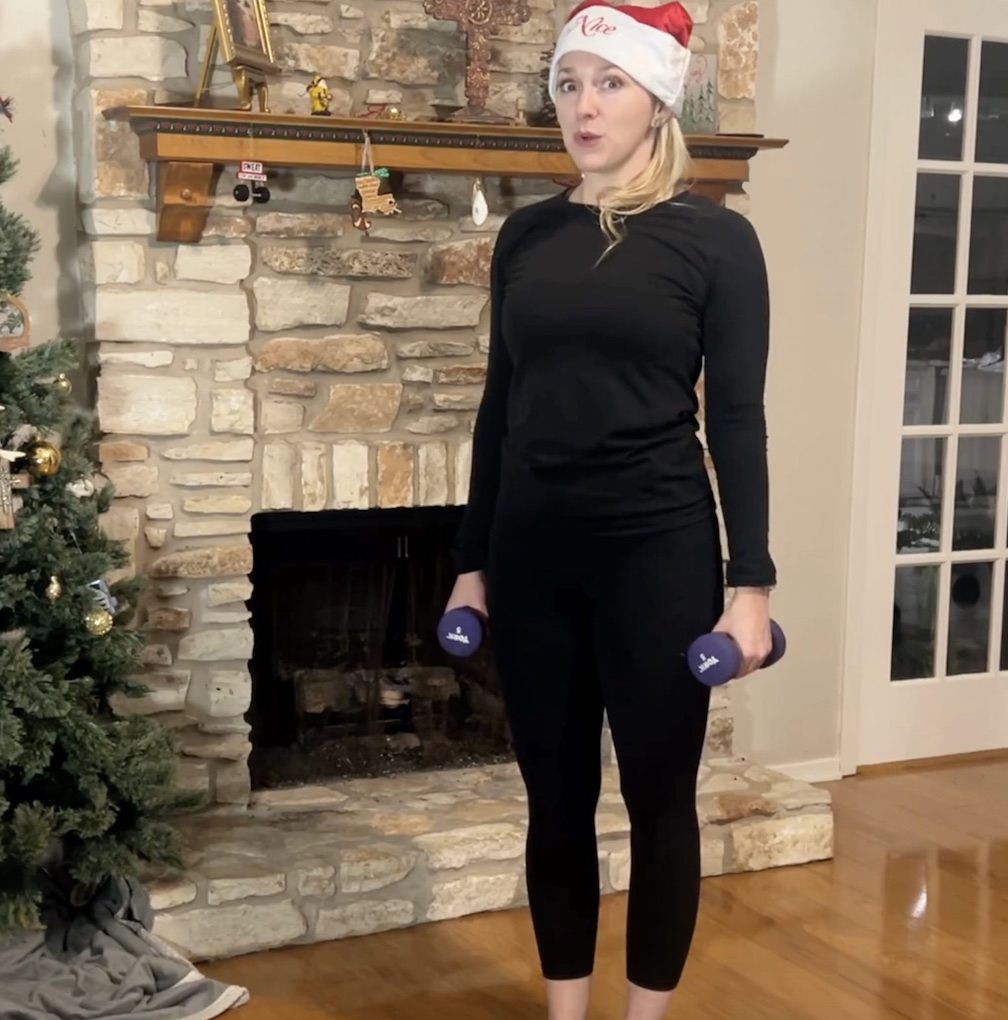
Dumbbell arm workout at home with Kathryn Alexander

With a few weights and a lot of focus, you can develop aesthetically pleasing and strong arms right from home.

Read on for 10 of the best dumbbell arm exercises.

Biceps and Triceps Exercises

Note that I am referring to true arm work, which involves the biceps brachii and triceps brachii. Most of these movements are biceps curls, and triceps extensions. They will work the forearm muscles, but are primarily for the upper arms. Additionally, this is not a full upper body workout. I am not referring to all the major upper body muscle groups, so I won’t be listing my favorite back chest or shoulder exercises. Bench press, pulldowns, etc, will all be covered in another post. This is just arms.

Ok grab your dumbbells! Here we go! 

Top 5 Dumbbell Biceps Exercises

  1. Dumbbell Biceps Curl – A classic exercise for the biceps. Hold a dumbbell in each hand and curl the weights towards your shoulders.
  2. Hammer Curl – Similar to bicep curls, but with your palms facing each other, working the brachialis muscle and forearms more.
  3. Concentration Curl – Seated with your elbow resting on your thigh, curl one dumbbell at a time to focus deeply on the biceps.
  4. Incline Dumbbell Curl – Lie back on an incline bench and curl the dumbbells. This variation adds a deeper stretch to the biceps.
  5. Zottman Curl – Curl the dumbbells up with a standard bicep curl, then rotate your wrists to a pronated grip (palms down) at the top before lowering. This targets both the biceps and forearms.

Top 5 Dumbbell Triceps Exercises

  1. Overhead Dumbbell Triceps Extension – Hold a dumbbell overhead with both hands and lower it behind your head, extending it back up to work the triceps.
  2. Dumbbell Triceps Kickback – Bend at the hips and extend your arm behind you while holding a dumbbell to isolate the triceps.
  3. Close-Grip Dumbbell Press – Similar to a chest press, but with your hands close together to engage the triceps more.
  4. Dumbbell Skull Crushers – Lie flat on a bench and lower the dumbbells towards your forehead, keeping your elbows steady to focus on the triceps.
  5. Dumbbell Tate Press – Lying on a bench, hold the dumbbells with your palms facing forward and lower them towards your chest, then press up.

Biceps Exercises:

  1. Dumbbell Biceps Curl:
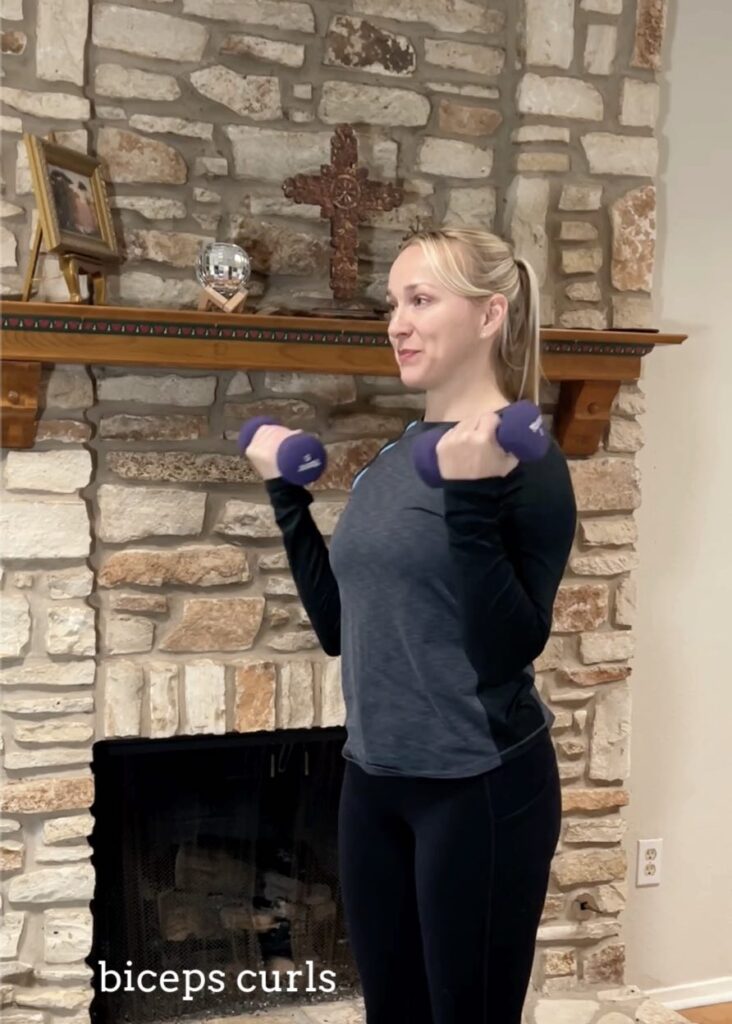
    • How to do it: Stand with a dumbbell in each hand, arms fully extended, and palms facing forward. Keep your elbows close to your torso and curl the dumbbells up towards your shoulders. Squeeze your biceps at the top, then slowly lower the weights back down to the starting position. If you’re standing, keep your feet shoulder-width apart and knees not locked out, slight bend.
    • As you do curls, think about using your latissimus dorsi (back) and other back/chest musculature to stabilize your shoulder joint and shoulder blades. In other words, don’t be swinging your shoulder all over the places to get the dumbbell moved.​
    • (There’s a joke meme that says, “any exercise can be a lower back exercise if you do it wrong enough!” 😂 don’t make this a lower back exercise! Learn how to do it well before you try to break the rules).
    • Muscles targeted: This exercise isolates the biceps brachii, the large muscle in the front of the upper arm, and engages the brachialis and brachioradialis for stabilization.
  2. Hammer Curl:
    • How to do it: Hold the dumbbells at your sides with your palms facing your torso. Curl the weights as you would in a regular curl but keep your palms in a neutral position (facing each other) throughout the movement. Slowly lower the dumbbells to the starting position. Same standing positioning as I mentioned above where you can and hip with or feet hip-width.
    • Muscles targeted: This movement emphasizes the brachialis, a muscle underneath the biceps, helping to add thickness to the arm. It also engages the brachioradialis in the forearm.
  3. Concentration Curl:
    • How to do it: Sit on a bench with your legs spread apart. Hold a dumbbell in one hand and rest your elbow on the inside of your thigh. Curl the dumbbell towards your shoulder, concentrating on squeezing the biceps at the top of the movement, and lower it slowly. If you stabilize well, you can really see how this is considered one of the most common isolation exercises.
    • Muscles targeted: This highly focused curl isolates the biceps brachii, minimizing the involvement of other muscles to help build peak contraction strength and enhance bicep definition.
  4. Incline Dumbbell Curl:
    • How to do it: Sit on an incline bench with your back fully supported and hold a dumbbell in each hand, allowing your arms to hang straight down. Curl the weights towards your shoulders, keeping your elbows tight to your body, and slowly lower them back down.
    • Muscles targeted: This exercise stretches the long head of the biceps, allowing for a greater range of motion and engagement. The incline position puts extra tension on the biceps throughout the curl.
  5. Zottman Curl:
    • How to do it: Perform a regular bicep curl by lifting the weights with your palms facing up. At the top, rotate your wrists so your palms face down, and slowly lower the weights in this pronated grip. Reverse the rotation on the way up.
    • Muscles targeted: This curl variation targets both the biceps and the forearms (specifically the brachioradialis), offering a balanced arm workout. The downward portion of the lift strengthens the forearms.
home dumbbell arm workout. Biceps curls with personal trainer Kathryn Alexander

Triceps Exercises:

  1. Overhead Dumbbell Triceps Extension:
    • How to do it: Stand or sit and hold one dumbbell with both hands overhead. Keep your elbows close to your ears, and lower the weight behind your head by bending your elbows. Extend your arms back up to the starting position.
    • Muscles targeted: This exercise targets all three heads of the triceps (long, medial, and lateral), with a particular focus on the long head due to the overhead position.
  2. Dumbbell Triceps Kickback:
    • How to do it: Bend at your hips with your torso nearly parallel to the ground and hold a dumbbell in one hand. Keeping your upper arm stationary and close to your torso, extend your forearm backward until your arm is fully straight. Slowly return to the starting position.
    • Muscles targeted: This movement isolates the triceps, especially the lateral head, and works on elbow extension, which is the primary function of the triceps.
  3. Close-Grip Dumbbell Press:
    • How to do it: Lie on a flat bench holding two dumbbells close together directly over your chest. Lower the weights towards your chest, keeping your elbows tucked in, and then press them back up.
    • Muscles targeted: The close grip emphasizes the triceps more than a regular chest press, particularly engaging the medial and lateral heads, while also working the chest and shoulders as secondary muscles.
  4. Dumbbell Skull Crushers:
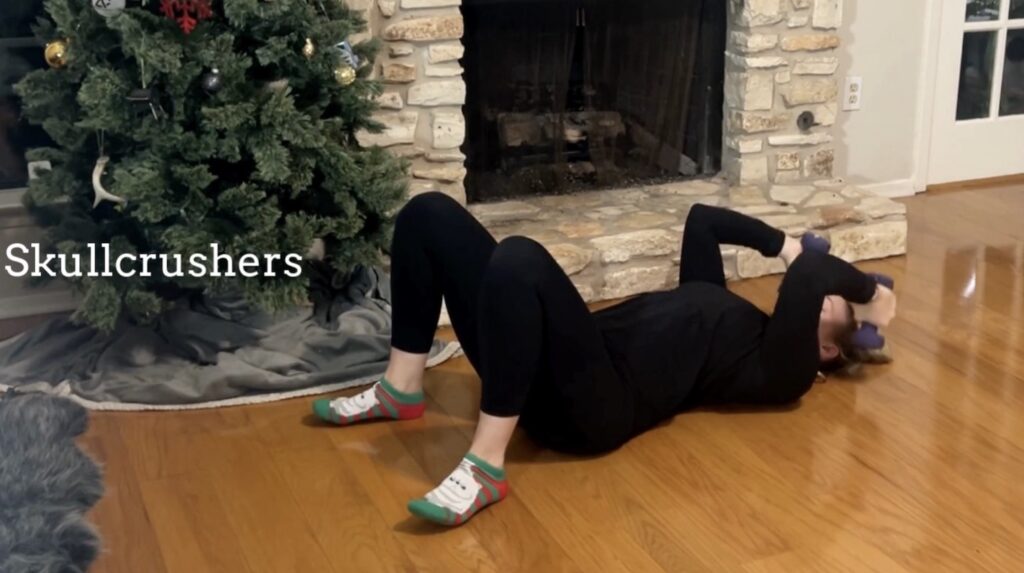
    • How to do it: Lie flat on a bench with a dumbbell in each hand. Extend your arms straight up toward the ceiling, then slowly lower the dumbbells towards your forehead by bending your elbows. Extend your arms back up to complete the rep. Your elbows will bend approximately in a 90-degree angle, give or take a few. 
    • Muscles targeted: This exercise targets the triceps brachii, especially the long head, and is excellent for building mass and strength in the upper arms.
  5. Dumbbell Tate Press:
    • How to do it: Lie on a flat bench with a dumbbell in each hand, palms facing forward. Bend your elbows and lower the dumbbells towards your chest while keeping them angled inward. Push them back up to the starting position.
    • Muscles targeted: The Tate Press is an effective isolation exercise for the triceps, emphasizing the medial head and improving overall arm definition.

How to Incorporate These Dumbbell Arm Exercises

First things first, aim for great mind-muscle connection and proper form. With arm work, you’ll sometimes hear people say, “make light weight feel heavy.” This means that you’re focused on the muscular connection and recruiting as many motor units (muscle fibers and they nerves that innervate them) as possible. The lifters who get the best arm workouts are really great at focusing on the muscles, not the movement. 

Next, remember to still add in other appropriate strength training for your arms. As you can, add in body weight exercises, resistance bands, and barbell work and machines. 

Remember also to get a full upper body strength program. Add in your chest, back and shoulder work to get your other upper-body muscles. Chest muscles and back muscles need love too, especially if you’re trying to fully develop your upper body.

home dumbbell arm workout. Skullcrushers for triceps with Austin personal trainer Kathryn Alexander

Dumbbell Arm Workout for Home Summary

There you have it! Some of the best dumbbell exercises for a well-rounded workout for your arms, hitting the major muscles and offering a variety of movements to build both strength and muscle tone.

If you are looking for specific shoulder exercises like the shoulder press, front raise, overhead press, lateral raise, check out this blog post for dumbbell shoulder workouts at home. 

Finally, don’t forget to also work lower body. For the best case muscular development and fitness, you’ll want to work your whole body. Here’s a great leg and glute workout that you can do with your home gym. 

Work With Me!

If you are looking for a personal trainer in Austin, I’d love to talk with you! If you are not in Austin, Round Rock, or central Texas, let’s talk about online training.

Message me here for a free consult about personal training in Austin, Texas, or here for online personal training, and we’ll discuss your goals, background, equipment availability, schedule, and exercise preferences.

Let’s get you strong and healthy! 💪

About the author

Kathryn Alexander is a strength coach and personal trainer in Austin, Texas. She loves hiking, college football, and the feel of a perfectly knurled barbell. Read more about Kathryn here.


  • things to do outside in Austin. Food truck park near Barton Springs
    Things to Do Outside in Austin
  • Best At Home Bicep Workouts (db curls) with personal trainer Kathryn Alexander
    Best At Home Bicep Workouts: Build Bigger Biceps Without a Gym
  • Personal training in Austin, Texas, personal trainer in Austin
    February is for Friends! (Big Sale!)
  • New coach Chris Rios Alexander Training
    New Coach! Introducing Chris Rios
  • start exercising, new to gym
    If You’re New To The Gym, Read This
  • tailgate baby shower at the gym
    Love Notes, Volume 4. December Edition

Filed Under: Home gyms

Plank Exercises for Beginners

January 4, 2025 by Kathryn Alexander

Plank exercises for beginners: a simple way to get started on core strength and endurance. Learn how to work abs with planks.

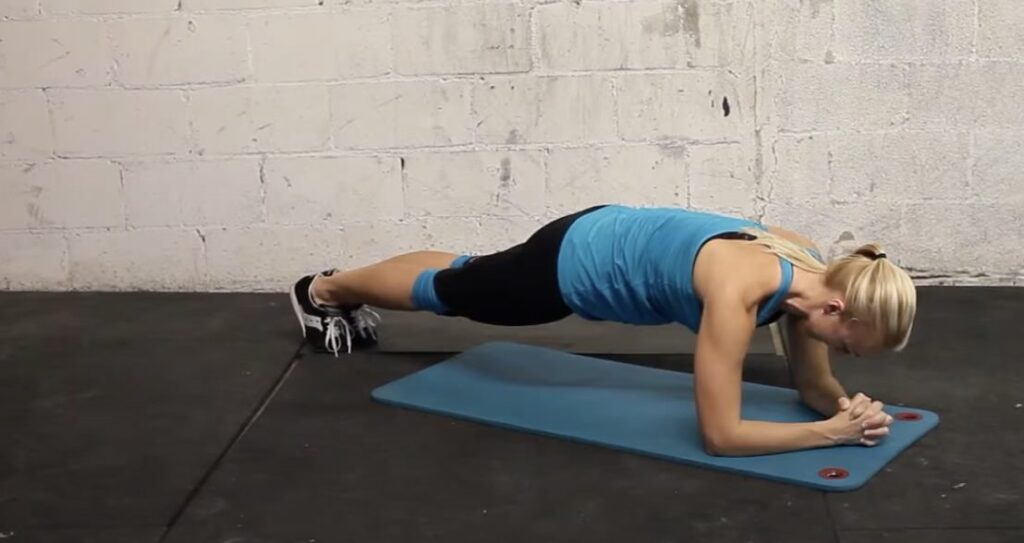
Plank exercises are isometric core strength exercises that involve resisting gravity and rotation. There are many plank variations, and they all work the abdominal muscles, back, shoulders, arms, and even glutes, quads, and other leg muscles.

plank exercises for beginners
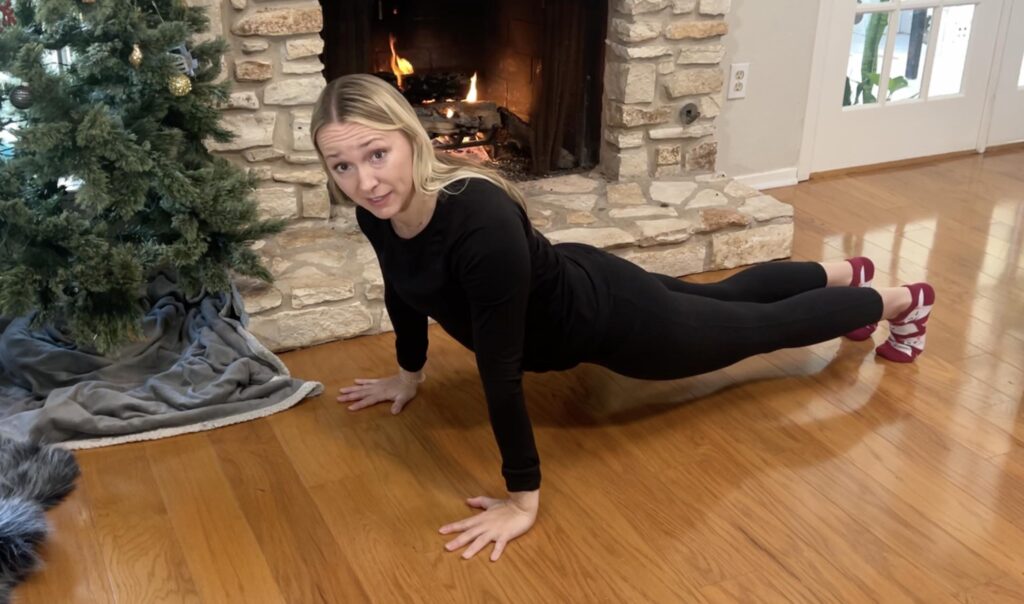
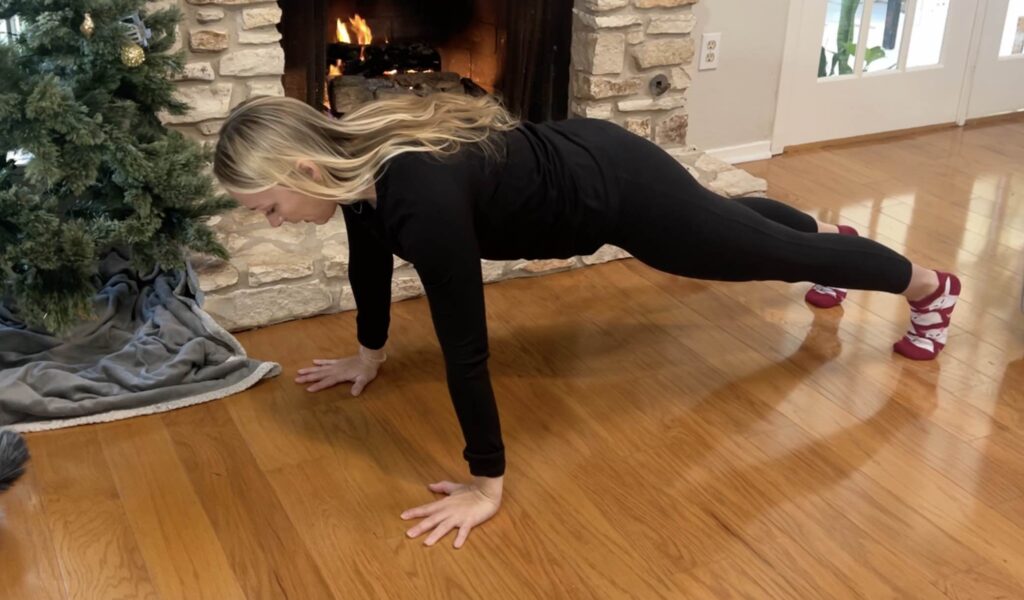
How not to do planks; I’ll explain below

I said they are simple, but they aren’t always easy. They are one of the best exercises to master as a beginner, because they teach you how to build a strong and stable torso. If you have a good plank, your whole body stabilizes.

You can do them anywhere, with no equipment, since it’s is a bodyweight exercise. Full body stability is great for any fitness level, too.

Let’s discuss how to do planks, variations of planks, proper form, and common mistakes. 

One Situation Where I Don’t Recommend Planks

Quick note on the risks of planks. Planks aren’t terribly risky, but one contraindication is having high blood pressure. If you have uncontrolled high blood pressure, isometrics aren’t recommended. An isometric exercise is one in which you are exerting muscular effort, but not moving. Think planks, static presses, etc. 

Other potential “risks” of planks include maybe some upper body discomfort like wrist or joint pain, but planks usually end pretty quickly. They’re usually pretty self limiting. If you have a medical condition or debilitating pain, please consult a doctor.

However – again, if you have high blood pressure, I’d rather you do other exercises that you move and breathe through, like pushups, crunches, lunges, etc. Message me or if you have specific questions!

This is a super exciting video of me holding a plank 🙂

Common Types of Plank Exercises

Planks are excellent for building stability, endurance, and overall strength. There are several variations of the plank, each working the body slightly differently. Here’s a quick rundown of the different variations of planks and what they work. 

  1. Forearm Plank (Standard Plank Position):
    • How to do it:
      • Start by lying face down on the ground.
      • Place your forearms on the floor, with elbows directly under your shoulders.
      • Lift your body up into a straight line from head to heels, maintaining a neutral spine.
      • Engage your core, glutes, and thighs to prevent your hips from sagging. I mean it, squeeze your butt! Squeeze your legs!
      • Hold this position for a set time, usually between 20 seconds to a few minutes.
      • Breathe the entire time you are holding your plank.
  2. High Plank (Push-up Position):
    • How to do it:
      • Start in a push-up position with your arms extended straight, hands placed under your shoulders.
      • Keep your body in a straight line from your head to heels. Don’t let your head sag, or shoulder blades squeeze together.                  
      • Engage your core, glutes, and quads.
      • Hold the position while keeping your body as still as possible.
      • This is also called a straight-arm plank. It is basically the top of push up position.
  3. Side Plank:
    • How to do it:
      • Lie on your side, stacking your feet on top of each other.
      • Place your forearm on the ground, keeping your elbow directly below your shoulder.
      • Lift your hips off the floor so your body forms a straight line from head to feet.
      • Side planks work your arms individually so they can even be tougher.
  4. Plank with Leg Lift:
    • How to do it:
      • Start in a forearm plank or high plank position.
      • While maintaining a stable body, lift one leg up off the ground a few inches, keeping it straight.
      • Hold briefly, then switch legs.
      • This variation challenges balance and increases intensity by incorporating more core and glute activation.
  5. Plank to Push-Up:
    • How to do it:
      • Begin in a forearm plank position.
      • One arm at a time, push yourself up into a high plank (push-up position).
      • Lower yourself back down to the forearm plank one arm at a time.
      • Repeat the movement, alternating arms.
  6. Plank Jacks:
    • How to do it:
      • Start in a high plank position.
      • Jump your feet outward and then back together, similar to a jumping jack, while keeping your core tight.
      • This adds a cardio element to the basic plank.
      • You can adjust plank jacks to be less dynamic but still challenging by doing one leg at a time.
Plank jacks

What Body Parts do Planks Work?

Planks really pull in much of the body’s musculature. Since you are using your own body weight, and no equipment is stabilizing you, you’ll feel how much they are whole body work. 

They primarily work the abs, transverse abdominis, rectus abdominis, which are considered the deepest abs muscles. They work internal and external obliques as well. People like to call them a lower back exercise, and you’ll definitely feel them working your low back when you are fighting for those last few seconds! 

Secondarily, planks work shoulders, arms, glutes, legs (quadriceps, hamstrings, calves), and neck.

Essentially, planks engage the entire body to maintain stability and prevent sagging or shifting. Because of this, planks are highly efficient for developing strength and endurance across a broad range of muscle groups. They also improve overall body coordination and posture.

planks and plank exercise variations

Plank Tips for Beginners

I want to further explain back positioning on the plank. You’ll hear people say to keep a flat back, or keep your back straight, but what this means is neutral position. Your spine has a natural curve; you can’t get away from that, and you wouldn’t want to.

Your goal is to think about tightening your core so that you don’t sag or pike. I tell my clients that you are not on either end of the twerking spectrum 😂 Google if you need more info. I will not be demonstrating that one.

How to Incorporate Planks Into Your Training

I like adding planks into the end of the session. I want you to be doing as many of the basic, compounds lifts as you can. By that I mean deadlifts, overhead presses, squats, bench presses and pull-ups. When you do these, I want your core to be strong and fresh. Finishing with a plank lets you add a little more work to your abs and core  before you’re done. 

I recommend adding one big plank into the end of your session 1-2 times a week, rather than doing a 30-day plank challenge or something like that. However, do what motivates you. For best results, aim to increase hold time over the weeks and months of practicing planks. A full minute is pretty solid, but you can even improve beyond that.

I love when people get their training partners or spouses involved, too. You can plank together. Get the kids in on it as well! Make it a friendly competition.

Plank Exercise Benefits

Planks are great for building core strength by engaging the abdominals, lower back, and obliques, which improves stability and posture by keeping the spine aligned. They also provide a full-body workout, activating the shoulders, arms, chest, and legs. Additionally, holding the plank position strengthens stabilizer muscles, enhancing overall balance and stability.

Planks with Kathryn Alexander, Austin personal trainer

Some Quick FAQs About Plank Exercises: 

Do planks work the entire body? 

Mostly. The full plank position works much of your abs. Side plank exercises work external obliques a little more. And yes, proper plank form works low back, upper back, butt muscles, back muscles. It’s a full-body move.

Do planks give you abs?

They don’t hurt the goal of getting abs, but no. To see visible abs, you need to work your entire core, the whole rest of your body, and maintain a low enough body fat percentage. Don’t let this discourage you though, because planks will help with many other goals, like easy of every day activities and improved posture.

Here’s a simple core workout you can do at home that will help your ab goals.

Do planks build muscle?

Planks don’t NOT build muscle, but they aren’t as much of a muscle builder as they are an endurance and stability exercise. This is because you aren’t moving through a full range of motion. If your goal is to build muscle, you’ll want to do other ab exercises like crunches, bicycle crunches, and even full body work like carries.

Do planks help you lose belly fat?

Eh, I’m sorry to be the bearer of bad news, but not really. Planks are quick, and beneficial, but they don’t burn a ton of calories. You just don’t do planks long enough for them to burn so many calories that you see your abs. however, if you have a solid exercise program or fitness routine and are eating a healthy amount of protein and calories for you, you’ll see progress toward your fat loss goals.

Do planks help with lower back pain?

They can, and they can help prevent lower back pain as yo strengthen a weak core. However, if they do hurt, ease into them. If they hurt you after doing them, you might back off of them and strengthen your back at other exercises. 

Plank Exercises for Beginners: A Summary

Planks are great for many goals, and can be easily modified to suit different fitness levels. Starting with shorter holds and gradually increasing the duration or adding variations is a great way to progress.

Try adding them at the end of your training sessions, and see how they work for you! 

Work With Me!

If you are looking for a personal trainer in Austin, I’d love to talk with you! If you are not in Austin, Round Rock, or central Texas, let’s talk about online training.

Message me here for a free consult about personal training in Austin, Texas, or here for online personal training, and we’ll discuss your goals, background, equipment availability, schedule, and exercise preferences.

Let’s get you strong and healthy! 💪


About the author

Kathryn Alexander is a strength coach and personal trainer in Austin, Texas. She loves hiking, college football, and the feel of a perfectly knurled barbell. Read more about Kathryn here.


  • things to do outside in Austin. Food truck park near Barton Springs
    Things to Do Outside in Austin
  • Best At Home Bicep Workouts (db curls) with personal trainer Kathryn Alexander
    Best At Home Bicep Workouts: Build Bigger Biceps Without a Gym
  • Personal training in Austin, Texas, personal trainer in Austin
    February is for Friends! (Big Sale!)
  • New coach Chris Rios Alexander Training
    New Coach! Introducing Chris Rios
  • start exercising, new to gym
    If You’re New To The Gym, Read This
  • tailgate baby shower at the gym
    Love Notes, Volume 4. December Edition

Filed Under: How To

Merry Christmas from Alexander Training

December 24, 2024 by Kathryn Alexander

Merry Christmas, yall!

I hope you are having a Christmas that fills your heart with peace. I hope you are able to take time and slow down, and enjoy family, friends, and reflection.

My greatest hope for my clients (and you!) is that they truly make fitness a lifestyle that will last their whole life. If you think about it like this, you’ll realize you are guaranteed to have busy times, slow times, sad times, good times.

Merry Christmas from Alexander Training

Even the Bible says there is a time for everything.

A Time for Everything

3 There is a time for everything,
    and a season for every activity under the heavens:

2     a time to be born and a time to die,
    a time to plant and a time to uproot,
3     a time to kill and a time to heal,
    a time to tear down and a time to build,
4     a time to weep and a time to laugh,
    a time to mourn and a time to dance,
5     a time to scatter stones and a time to gather them,
    a time to embrace and a time to refrain from embracing,
6     a time to search and a time to give up,
    a time to keep and a time to throw away,
7     a time to tear and a time to mend,
    a time to be silent and a time to speak,
8     a time to love and a time to hate,
    a time for war and a time for peace.

-Ecclesiastes 3:1-11

Time for Christmas

The verse above is so interesting to me, because it really helps me remember that I can’t just inflict my preferred schedule on every day of my life.

So – give yourself some grace if you are off your routine. If you can’t find the perfect gym while you are traveling, or if you have to just add in some walks, or even just rest, it’s ok.

Please take this time to enjoy, because this is the stuff life is made of.

I’ll be thinking of those of you that are having a tougher holiday.

Merry Christmas, and see you in 2025!


About the author

Kathryn Alexander is a strength coach and personal trainer in Austin, Texas. She loves hiking, college football, and the feel of a perfectly knurled barbell. Read more about Kathryn here.
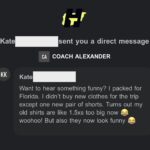

  • things to do outside in Austin. Food truck park near Barton Springs
    Things to Do Outside in Austin
  • Best At Home Bicep Workouts (db curls) with personal trainer Kathryn Alexander
    Best At Home Bicep Workouts: Build Bigger Biceps Without a Gym
  • Personal training in Austin, Texas, personal trainer in Austin
    February is for Friends! (Big Sale!)
  • New coach Chris Rios Alexander Training
    New Coach! Introducing Chris Rios
  • start exercising, new to gym
    If You’re New To The Gym, Read This
  • tailgate baby shower at the gym
    Love Notes, Volume 4. December Edition

Filed Under: Misc.

How to Heat a Garage Gym: The Best Tips and Equipment

December 11, 2024 by Kathryn Alexander

I am republishing this as of December 2024, because I’m another year in to experimenting on how to heat a garage gym. we are starting to get down into the 30s here in Austin, and it’s enough to make all the dumbbells and barbells cold.

So, let’s get to it: here are the best ways to heat a garage gym this winter.

Some links in this post are Amazon affiliate links to products that I love and regularly use.

Heat Your Garage Gym This Winter!

Whether you live in harsher environments with more extreme weather, or farther south, the cold can present a challenge for your garage gym workouts. This isn’t you being a wuss, either; cold weather changes the game, and it’s good for you to have options on how to heat your space to a more comfortable temperature.

personal trainer Austin Kathryn Alexander
Headlamps are a must for home improvement projects 🙂

To make my winter garage sessions more survivable, I have added insulation to my garage walls behind new sheetrock, I insulated the door, and bought an electric heater. Worth every bit of the investment! I’ll give you all the details below.

Ways to Heat a Garage Gym in Winter

Learning how to heat a garage gym for cold winter weather is one of the best things you can do to continue making progress on your health and strength goals. Don’t skip your garage gym workout because of the cold weather!

There are several heating methods for warming your cold garage gym to a comfortable temperature in the winter months, the best way to warm your home gym this winter. Check them out below. 

Propane Heaters

Propane heaters are one of the most effective options for heating a garage in the cold weather, but they do come with down sides. 

A propane heater will put out a lot of heat and can create warm air in a large space like the whole garage, not just a corner. Most propane heaters are forced air heaters, meaning they propel air out instead of simply heating in a radiant fashion. 

Examples of propane heaters are the torpedo heaters you have probably seen in warehouse style gyms, and at the front of The Home Depot and Lowe’s in cooler months. 

You’ll need a fuel source such as a propane tank if you don’t have a gas line in your garage. 

However, the byproduct of a burning propane is carbon monoxide, so you must have proper ventilation. This part is crucial! 

You must leave the garage doors somewhat open and/or a window partially open to safely operate a propane heater. 

You should also have a carbon monoxide detector. You should have this anyway! But you should especially have it if you are using a propane heater. 

If you go this route, please research it further. It would also be a good idea to consult your local HVAC specialist first. 

If this concerns you, a better option might be a radiant heater.

Radiant Heaters and Infrared Heaters

Radiant heaters are a great heat source during the cold season. They can warm a small space or pocket of a room. Since they only radiate and do not force air out, they heat smaller areas. Infrared heaters are examples of radiant heaters. Infrared heaters can be free standing portable heaters or mounted to the ceiling to save floor space. They heat objects and people instead of heating the air around them. Depending on the size of your garage, radiant heaters might be a great option. 

Electric Heaters

Electric heaters are one of the easiest ways to heat a garage on cold days. I use an electric heater in my garage gym. It is an oil filled space heater which I put it near my squat rack, where I’ll be doing most of the work. It doesn’t dramatically heat the whole garage, but it makes the cold bearable. 

I use a DeLonghi oil filled radiator heater, which is about $100 – $150. Worth it to me. (Affiliate link).

I have two of these, one in my garage gym, and I use one inside too. It makes a room nice and cozy warm without having to raise the heat in the whole house.

You can google “best electric space heaters” to see which fits your space and budget. There will be many options and you should find many that will comfortably heat small garages. 

Mini Split Ductless Heaters

One of the most effective and convenient solutions for heating your garage gym in winter is installing a mini split. A mini split is an electric ductless heating system. They run about $1,000 and will need to be installed by a professional. These might be the best heaters, as they provide both heating and cooling, and are effective enough to combat the most extreme temperatures in cold climates, and fight off the heat in the summer. 

Mini splits will probably come with a fancy little remote control and put out all the hot air you’d like. 

Consider a mini split a complete and full heat and cold solution. It will affect your electric bill more than the smaller heaters and heating solutions, but it will be a permanent solution that will last a long time.

Other Ways to Heat a Garage Gym

There are of course other ways to heat a garage gym, including a wood stove, pellet stove or natural gas heaters. These are less convenient in a garage and more suitable for finished rooms. You would of course have to take care with these, as they have open flame. Generally I would suggest the above solutions before you use a wood or pellet stove, but if you have experience with these and can tell me otherwise, please let me know! I have admittedly lived pretty far south my whole life, and the portable electric heaters have been plenty for me. 

Insulation for Walls, Doors and Floors of Garage Gyms

One of the most effective, easy and cost saving ways to keep the cold air out is to ensure your garage is well insulated. Proper insulation on the walls, doors and floors can go a long way in holding heat in and reducing the cost of heating the garage. 

And, speaking of essentials, here are some home gym equipment essentials.

Floor Insulation

Concrete floors become brutally cold in the winter, bringing all that cold in via the floor. Laying down a solid flooring foundation is smart for any gym, for safety, preservation of your floor and sport performance.

One often overlooked benefit is that a thick floor covering will help with insulation. I recommend horse stall mats like the ones that can be found at Tractor Supply. These are 3/4 – 1” thick and do a great job of buffering the temperature of the cold floor.

You might want different thicknesses if you’re using your garage gym for different purposes. Here are more factors to consider when you are deciding how thick your gym flooring needs to be.

floors mats for heat retention in garage
Approximately 12 floor mats cover my garage gym floor to cushion and protect the floor, and insulate.

In the harsher winter of colder climates, some people elect to heat their garage floor. This is a more expensive and comprehensive solution, as it involves installing the heating elements into the floor. If you are considering this, do further research in finding reputable companies who specialize in heating floors.

Wall Insulation

If you are renovating the garage walls and have the opportunity to install sheet insulation, take it. That will help tremendously to keep heat from escaping in the winter. The Home Depot gives a great idea of what kind of insulation level you need, including R-values by region of the US.  Check this out if you are adding insulation. 

How to heat a garage gym and use insulation to retain heat
This is the fiberglass I used in the garage gym walls, and you can see the garage door insulation packed into the panels.
fiberglass insulation in garage gym walls
Fiberglass insulation in the garage gym walls, trimmed to fit between studs.

If you aren’t redoing the walls anytime soon, the next best thing is to insulate the garage door. 

Garage Door Insulation

There are several ways to insulate an existing garage door. The two most common are fiberglass insulation, which comes in blankets, and foam panel insulation. I bought a garage door insulation kit with sheets of fiberglass insulation and installed it myself. It was around $200 from Home Depot for my two garage doors, and was fairly easy to do. It required fitting the insulation between the garage door panels, sealing the edges with tape clips. 

Garage door insulation for heating garage gym in winter.
Garage door insulation for heating my garage gym in winter. Excuse the markups.

I have since learned that this can get heavy because of accumulation of moisture in the fiberglass insulation, so foam panels might be a better option. Again, contact a trusted HVAC professional to help you make the right decision. Foam panel insulation also looks a bit sharper.

I don’t regret my insulation at all, and it’s effective. But, I might do it differently in the future to heat my next garage gym.

Finally, you can add weatherstripping or seal to the bottom of your garage door if you have large gaps that allow heat loss.

Related: Top 10 Benefits of a Home Gym

Dress for Cold Weather

The last thing you can do, which doesn’t involve modifying your garage, is dressing yourself for the cold weather. Invest in cold gear in layers: a base layer, an insulating layer, and an outer layer. I swear by REI merino wool socks, and thermal middle layers. 

To be fully honest with you, you need to ask your cold weather friends or google how to dress for winter weather. I do not know how, and my strategy is to avoid harsh winters. I’ve been skiing once and boy, was it a bad time. 

I was cold cold! I try every year to find better gear, but I still get cold, which is the reason I have added insulation behind my sheet rock, the garage door insulation, and a heater to my garage. 

Read also my favorite home gym organization ideas and storage solutions.

Make a Plan for Cold Weather Lifting

Make a cold weather plan so you continue getting your lifting in this winter. By adding a bit of weather stripping, insulation, and investing in the right type of heater, you can create a comfortable environment. 

You can also be strategic by warming up inside to begin the warming up/sweating process, and moving to the garage while it has had to for you, and it, to warm up.

In summary, to keep warm in your garage gym in the cold winter:

  • Identify leaks in your garage
  • Add weather stripping and insulation
  • Purchase a good heater for your space
  • Dress in layers in cold weather gear
  • Start your heater in the garage gym
  • Warm up inside
  • Go dominate your training session!

Cold Weather Not For You?

Join me in a heated gym with infrared saunas! You can’t always out run the cold. If this is the case for you, do the next best thing and meet me at Big Tex Gym in Austin, Texas for some climate controlled personal training! 

Check out these training options here and let me know how I can help you!

About the author

Kathryn Alexander is a strength coach and personal trainer in Austin, Texas. She loves hiking, college football, and the feel of a perfectly knurled barbell. Read more about Kathryn here.


  • things to do outside in Austin. Food truck park near Barton Springs
    Things to Do Outside in Austin
  • Best At Home Bicep Workouts (db curls) with personal trainer Kathryn Alexander
    Best At Home Bicep Workouts: Build Bigger Biceps Without a Gym
  • Personal training in Austin, Texas, personal trainer in Austin
    February is for Friends! (Big Sale!)
  • New coach Chris Rios Alexander Training
    New Coach! Introducing Chris Rios
  • start exercising, new to gym
    If You’re New To The Gym, Read This
  • tailgate baby shower at the gym
    Love Notes, Volume 4. December Edition

As an Amazon Associate I earn from qualifying purchases.

Filed Under: Garage Gym, Home gyms Tagged With: garage gym, home gym, home workouts

Home Leg Workouts With Dumbbells

November 26, 2024 by Kathryn Alexander

Home leg workouts with dumbbells are simple, accessible, and so beneficial! Leg day is the big one! The toughest, hardest, most gut checking day of the week! In the gym, you can load up a heavy bar for barbell squats or deadlifts, or load up machines for a crushing leg workout.

But, you can also get a great leg workout by strength training from home. A dumbbell leg workout done with focus on movements can build and strengthen your legs (quads, hamstrings, calves), glutes, and lower back. And truly, your whole body. Grab some dumbbells and get to building strong legs.

home leg workouts with dumbbells

Equipment

Of course, for home workouts with dumbbells, you’ll want dumbbells. You can do so much great work with body weight, and a little bit of equipment. Free weights are expensive, so you can be strategic about getting a medium pair of dumbbells, and maybe 1 or 2 heavy dumbbells or kettlebells. If you have read much about my recommendations for home equipment, you know I suggest a pair of light dumbbells, medium dumbbells, one heavier dumbbell (or kettlebell), and some resistance bands. 

If you have the space and budget for a bench, that’s great too. This is plenty of equipment to build leg strength at home. Get you a good mat to protect yourself and the floor, and you are good to go!

Speaking of equipment, are you shopping for a powerlifter? If so, here are the best gifts for powerlifters and one that I would absolutely not recommend.

The Exercises

There are SO many dumbbell leg exercises; you are really only limited by your imagination. I will run through the basics, my favorites, and a few weird ones. Here is a list first so you can see the bird’s eye view, and I will explain how to do each one below. 

  • Goblet squats (front squat)
  • Dumbbell squats
  • Lunges (dumbbell lunges)
  • Romanian deadlifts
  • Single leg deadlift (or B stance deadlift) single-leg deadlift
  • Bulgarian split squat
  • Dumbbell deadlift
  • Curtsy lunges
  • Glute bridge /hip thrust
  • Dumbbell step-ups
  • Farmer’s walk/Farmer’s carry

How to Organize Your Home Leg Workout With Dumbbells

  • Goblet squats
  • Dumbbell Squats
  • Dumbbell deadlifts
  • Lunges
  • Curtsy lunges
  • Dumbbell step ups
  • Bulgarian split squat
  • Romanian deadlifts
  • Single leg deadlifts

*glute bridge/hip thrust

*Farmer’s walk/farmer’s carry

Pick one exercise from each of the above columns. Add in one or both of the glute bridge/hip thrust, or a farmer’s carry. With each exercise, you’ll warm up well, do some increasingly heavy sets, until you reach 3 work sets.

These 3 work sets can be between 5 and 12 reps that are challenging, where you have 1-2 reps left in reserve. I’d suggest you do two of these workouts each week, sticking to the same exercises. From there, utilize the concept of progressive overload, which means you try to overload from the last week, assuming you get all green lights (feeling good, getting good quality reps, etc.).

For example, your leg session A might be dumbbell squats, lunges, RDL’s and a farmer’s walk. Your B session that week could be goblet squats, dumbbell step ups, B stance RDL’s, and a glute bridge.

Record your sets, reps and weight, and the next week, try to do a little heavier. If you continue this way, you will see progress.

Goblet Squats/Front Squats

To do a goblet squat, start by holding a dumbbell vertically with both hands at chest level, gripping it by one end (like a goblet). Stand with your feet shoulder-width apart, toes slightly turned out. Keeping your chest upright and your core engaged, lower your body into a squat by bending your knees and pushing your hips back, as if sitting into a chair. Go as low as your flexibility allows, ideally until your thighs are parallel to the floor.

Grip the ground with your whole foot (and toes) and squeeze your glutes to drive yourself back up to the starting position. Maintain good form by keeping your back straight (no twerking) and avoiding letting your knees cave inward.

goblet squats

Dumbbell Squats

To do a dumbbell squat, start by standing with your feet shoulder-width apart, holding a dumbbell in each hand by your sides with your arms fully extended. Keep your chest upright, your core engaged, and your shoulders relaxed. Slowly lower your body into a squat by bending your knees and pushing your hips back, as if sitting into a chair. Keep the dumbbells steady by your sides throughout the movement.

Lower until your thighs are parallel to the floor or as low as your mobility allows. Grip the ground with your whole foot (and toes) and squeeze your glutes to drive yourself back up, ensuring your knees track over your toes and your back remains straight. Repeat for the desired number of reps. 

Lunges

To do walking dumbbell lunges, start by standing tall with a dumbbell in each hand, arms extended at your sides. Step forward with one leg, lowering your hips until both knees are bent at about 90 degrees. On your front leg, ensure your front knee stays directly above your ankle, and your back knee hovers just above the floor. Keep your chest upright and your core engaged throughout the movement. Push through your whole foot to return to the starting position, then alternate legs. 

You can do a reverse lunge, where you are stepping back with one leg. You can do a forward lunge, where you step forward, then back. With these, as you step back with your back leg, most of your weight stays on, and most of the work is done, by your front leg. Whichever way you do these, keep your feet hip-width apart, like you are walking on railroad tracks, not a tight tope. Lunges are fantastic for your whole posterior chain.  

One other option is a lateral lunge, or side lunges. With these, you’ll step out to your side with one leg, bending into that leg. For example, you’ll step out with your right leg, plant your right foot, and bend your right knee. Your leg leg with be mostly straight, and your torso will hinge forward. From here, press into the ground with your right foot, and stand back up into position. Repeat the exercise on the other side, stepping out with your left leg. Lateral lunges help with strength and hip mobility. 

walking lunges, Kathryn Alexander at her home garage gym

Romanian Deadlifts

To do Romanian deadlifts with dumbbells, start by standing with your feet hip-width apart, holding a dumbbell in each hand in front of your thighs with your palms facing you. Keep your chest lifted, shoulders back, tight upper back, and a slight bend in your knees. Hinge at the hips by pushing them backward, lowering the dumbbells along the front of your legs while maintaining a straight back and tight core.

Lower until you feel a stretch in your hamstrings or the dumbbells reach about mid-shin level, grab the ground with your whole foot, and squeeze your glutes back under you to return to the starting position. Keep the movement controlled and avoid rounding your back. Everyone’s range of motion is different, depending your your hamstrings flexibility, among other things. Big glute squeeze with all variations! 

B Stance RDLs

To do B-stance Romanian deadlifts (RDLs), start by standing with a dumbbell in each hand, arms extended by your side or in front of your body. Position one foot slightly behind the other with just the ball of the back foot touching the ground for balance, while your front foot bears most of the weight.

Keeping your chest upright and back straight, hinge at the hips, lowering the dumbbells along the front leg until you feel a stretch in your hamstrings. Maintain a slight bend in the front knee and keep your back leg straight. Return to your upright position and repeat on one side for the desired number of reps, then switch legs.

Bulgarian Split Squats

To do Bulgarian split squats, start by standing a few feet in front of a sturdy bench or elevated surface. Hold a dumbbell in each hand by your sides and place the top of one foot on the bench behind you. With your chest upright and core engaged, lower your body by bending your front knee until your thigh is parallel to the floor or as low as your mobility allows.

There are different ways to do these, but I prefer to slightly shift my weight so that most of my weight is on my front leg. Complete the desired reps on one leg, then switch sides. You can do a good bit of weight on split squats, so as you feel comfortable, don’t be afraid to move into heavier weights. BSS’s are one of the best single-leg exercises. They’ve even been the subject of many memes, lamenting how challenging they are. 

Dumbbell Deadlift

To do dumbbell deadlifts, start by standing with your feet hip-width apart, holding a dumbbell in each hand with your palms facing your body. Keep your chest upright, shoulders back, and torso tight. Hinge at your hips and bend your knees slightly, lowering the dumbbells down the front of your legs. Keep your back straight and lower until the dumbbells are near your shins or you feel a stretch in your hamstrings.

Grab the ground with your toes, push through your whole foot, squeeze your glutes, and return to the starting position, ensuring you maintain proper posture throughout. Repeat for the desired number of reps. Keep straight arms here; no elbow bending.

These are a staple for home leg workouts with dumbbells.

Curtsy Lunges

To do curtsy lunges, start by standing tall with a dumbbell in each hand, arms extended at your sides. Step one leg diagonally behind the other, crossing it as if performing a “curtsy,” and lower your hips until your front knee forms a 90-degree angle. Keep your torso upright and your back straight throughout the movement.

Push through your front foot to return to the starting position, then repeat on the opposite leg. Alternate legs for the desired number of reps, focusing on controlled movements to engage your glutes and inner thighs.

Glute Bridge /Hip Thrust

To do a hip thrust with a dumbbell, sit on the ground with your upper back resting against a sturdy bench or elevated surface. Roll a dumbbell onto your lap, holding it securely with both hands. You can put a towel or cushion here to protect your hip bones. Bend your knees and plant your feet flat on the ground, hip-width apart.

Drive through your heels and lift your hips until your body forms a straight line from your shoulders to your knees, squeezing your glutes at the top. Lower your hips back down in a controlled motion and repeat for the desired number of reps. These are a great addition to your lower-body workout, especially if they are new to you. Give them a try!

Dumbbell Step-ups

To do dumbbell step-ups, start by standing in front of a sturdy bench or platform that’s about knee height. Hold a dumbbell in each hand by your sides with your arms extended. OR hold just one dumbbell, and hold on to something for balance. The #1 rule is no falling! Step up onto the platform with one foot, pressing through your heel to lift your body until your standing leg is fully extended.

Bring your other foot up to meet the first, then step back down one foot at a time. If you started on your left foot, repeat all reps on your left foot before switching to your right, keeping your chest upright and core engaged throughout the movement. Adjust the platform height and dumbbell weight as needed for your fitness level. Step ups are one of my favorite compound exercises to do with dumbbells (or even without!).

Step ups at Hyde Park Gym, Austin, Texas

Farmer’s Walk/Farmer’s carry

To do a farmer’s walk with dumbbells, start by standing tall with a dumbbell in each hand, arms fully extended at your sides, and palms facing in. Keep your chest upright, shoulders back, and core engaged. Walk forward in a straight line, taking controlled steps, and focus on maintaining good posture throughout.

Avoid letting the dumbbells sway or pulling you off balance. Continue walking for a set distance or time, then set the dumbbells down carefully. This exercise builds grip strength, core stability, and overall endurance. Since it allows you to carry a good bit of heavy weight, it also works core strength and upper body. 

Farmer’s carry march

Benefits of Home Gym Workouts

Home workouts are convenient, time saving, and can be* cost effective. A single pair of dumbbells can provide a wide range of exercises, making them an affordable and versatile investment. Adjustable dumbbells aren’t inexpensive, but they are much cheaper than a whole set of dumbbells. They save space too. In theory, home workouts save you money on gym memberships and expensive equipment.

*Unless you get bit by the garage gym or home gym bug, then you’ll probably blow your budget on more fun things for your gym. But there are way worse ways to spend your money! 

Remind yourself you aren’t commuting to the gym, dealing with Austin traffic, or wherever you life. You can workout any time that you are home and don’t have to worry about compatible schedules with training partners or your personal trainer.

You can practice new or weird things in the privacy of your own home. You don’t have to worry about sharing space or what you’re wearing. Blare your own music and fly your own flags! Working out at home is the best! 

Home workouts are family-friendly. Everyone in the household, including kids, can join in, making it a fun and healthy activity. Exercises can be scaled for children or beginners using lighter weights or bodyweight options. I don’t have kids but I write programs for my niece and nephew, and I think it’s amazing that they see their whole family exercise together. 

Benefits of Leg Workouts With Dumbbells

Leg workouts improve lower-body strength, which is essential for everyday activities like walking, climbing stairs, and lifting objects. They enhance functional fitness, helping you move better in daily life and reducing the risk of injury. 

Additionally, the large muscle groups in the legs burn more calories during and after exercise compared to smaller muscle groups. Strengthening your legs can support weight management and increase overall energy expenditure. This improves your balance, stability and strength. Home leg workouts with dumbbells can improve all of these.

Here’s a great exercise to do on a cable stack: cable squats.

Do you need an arm dumbbell workout at home? I got you! Or, are you looking for some great tricep pushdown alternatives and triceps exercises.

Home Leg Workouts With Dumbbells: Try It Now!

Home leg workouts are a great way to develop leg strength, balance, and athletic performance. You’ll see muscle growth, increases in overall health, and maybe even improvements in body composition with challenging lower body workouts. Additionally, the benefits are unique to lifting. You can’t replicate these benefits with walking, jogging, or other forms of cardio.

If these are new to you, start very lightly and just go through the motions, learning and perfecting the form. After a few weeks, you can employ progressive overload, which means that you increase the challenge over time. You can do this by going heavier, doing more reps, more sets, or shortening the rest times. 

It can be confusing to pick the best exercises and the most effective way to add these in to your lower body workout. If you have questions, please reach out! You can leave a comment on this post, or message me. Let me know how your home leg workouts with dumbbells are going! Don’t be scared to try anything! Be curious and have fun with your training! 


Work With Me!

If you are looking for a personal trainer in Austin, I’d love to talk with you! If you are not in Austin, Round Rock, or central Texas, let’s talk about online training.

Message me here for a free consult about personal training in Austin, Texas, or here for online personal training, and we’ll discuss your goals, background, equipment availability, schedule, and exercise preferences.

Let’s get you strong and healthy! 💪


About the author

Kathryn Alexander is a strength coach and personal trainer in Austin, Texas. She loves hiking, college football, and the feel of a perfectly knurled barbell. Read more about Kathryn here.

  • things to do outside in Austin. Food truck park near Barton Springs
    Things to Do Outside in Austin
  • Best At Home Bicep Workouts (db curls) with personal trainer Kathryn Alexander
    Best At Home Bicep Workouts: Build Bigger Biceps Without a Gym
  • Personal training in Austin, Texas, personal trainer in Austin
    February is for Friends! (Big Sale!)
  • New coach Chris Rios Alexander Training
    New Coach! Introducing Chris Rios
  • start exercising, new to gym
    If You’re New To The Gym, Read This
  • tailgate baby shower at the gym
    Love Notes, Volume 4. December Edition

Filed Under: Home gyms, Training Tagged With: home gym, home workouts

Horizontal Pressing Exercises

November 16, 2024 by Kathryn Alexander

Horizontal pressing exercises for upper body strength are some of the most common and fun exercises there are. Think bench presses and dumbbell presses and pushups. 

You might not categorize exercises in your head as horizontal pressing or horizontal pushing exercises, or even vertical push, etc., but knowing the fundamental movement patterns is a great way make sure you are working all planes of motion. 

And besides, no one ever says, “hey, how much do you horizontal press?” Lol but people definitely ask, “how much ya bench?”

horizontal pressing exercises: pushups, by Kathryn Alexander Austin personal trainer
horizontal pressing exercises: pushups, Kathryn Alexander Austin personal trainer

Horizontal Pressing Exercises as Fundamental Moves

When I say horizontal press, I mean a horizontal exercise in relation to your body. This is one of the most basic movement patterns the body does, so it is worth practicing. You can be on your back doing a horizontal press, as you press a barbell upward toward the ceiling. You can be doing a horizontal press while seated upright, pushing into a machine or bands. You can really be facing any direction, as long as the resistance allows you to push outward from your chest into the resistance. 

horizontal pressing exercises: bench press, by Kathryn Alexander Austin personal trainer
horizontal pressing exercises: bench press, Kathryn Alexander Austin personal trainer

You might hear some people split their training into a push-pull workout. The target muscle group during a push day is usually chest and/or shoulders. Horizontal pressing exercises will be a large part of that push day.

Horizontal presses are fundamental for building upper body strength, particularly in the chest, shoulders, and triceps. If you want any width on your shoulders or depth to your upper body, you’ve got to include these exercises. Your entire body will look strong and balanced when you do. This post covers how to incorporate this basic movement pattern into your workout, no matter what level you are at.

Eight of My Favorite Horizontal Pressing Exercises

1. Barbell Bench Press

  • Muscles Targeted: Chest (pectoralis major), shoulders (anterior deltoids), triceps.
  • Benefits: Allows for heavy loading, great for overall upper body strength, and foundational for powerlifting.
  • Variation: Incline bench press and decline bench press to target different parts of the chest. 
  • muscle mass, shoulder blades

The bench press is a foundational upper-body strength exercise that primarily targets the chest, shoulders, and triceps. This compound movement is what you think of when you think of a regular bench press. It is performed by lying on a bench and pressing a barbell or dumbbells upward from chest level.

The movement involves lowering the weight to the chest and then pushing it back to the starting position. The prime movers during the bench press are the pectoralis major (chest muscles), anterior deltoids (front shoulders), and triceps brachii (back of the upper arms). Supporting muscles like the serratus anterior, rotator cuff, and lats also play a role in stabilizing the movement.

The bench press is a staple in strength training because of its versatility and effectiveness. It helps build muscle mass, increase upper-body strength, and improve overall pressing power, which is beneficial for sports performance and daily activities.

Additionally, incorporating the bench press into your workout routine can enhance posture and boost bone density in the upper body due to the load-bearing nature of the exercise. Whether you’re aiming to gain muscle, improve athletic performance, or maintain functional strength, the bench press is a valuable addition to nearly every training program.

For the bench press haters: remember, you don’t have to max all the time! In fact, please don’t max all the time! The bench press is one of the best exercises for upper body strength, which is hugely beneficial, not just for powerlifters, but especially people who need to build upper body strength, muscle mass and bone mass. Like all of these exercises, you can reap great benefits from it in sub max work. 

2. Dumbbell Bench Press

  • Muscles Targeted: Chest, shoulders, triceps.
  • Benefits: Increased range of motion compared to the barbell bench press, improves muscle imbalances, and enhances shoulder stability. 
  • If you want to work more of your upper chest muscles, you can set up your bench at an incline, so this becomes an incline dumbbell bench press. 

The dumbbell bench press is a versatile upper-body exercise that primarily targets the pectoralis major (chest muscles), anterior deltoid (front shoulders), and triceps brachii (back of the arms). Performed by lying on a bench and pressing dumbbells upward from chest level, it involves lowering the weights to the sides of the chest and pushing them back up.

Unlike the barbell bench press, the dumbbell variation allows for a greater range of motion, engaging stabilizing muscles more effectively and promoting balanced muscle development between both sides of the body. This exercise helps build chest strength, improves shoulder stability, and enhances overall pressing power, making it an excellent addition to strength training for improved functional strength and aesthetics.

Incline Horizontal Pressing

A note about incline work here. So far, we’ve covered the best horizontal push exercises and quickly mentioned incline work. If you picture an overhead press, that is strictly a vertical exercise where you press weight overhead. Of course, the flat bench press is a horizontal press. The incline dumbbell bench press or bench press will be some degree between those two.

We can really split work into the basic movements, but the truth is life doesn’t always work strictly on planes of movement. Therefore, you will benefit from working at inclines between totally horizontal and vertical presses. The best way to get full pectoral development and strength is to work these different angles.

Incline dumbbell pressing; a different way to horizontal press

3. Push-Up

  • Muscles Targeted: Chest, shoulders, triceps, core.
  • Benefits: Bodyweight exercise that can be done anywhere, scalable with variations like incline push-ups, decline push-ups, and weighted push-ups.

Push ups are a classic bodyweight exercise that, like other pushing movements, work the pecs, shoulders and triceps. I LOVE pushups! They also work abs, back, all of your core and stabilizing muscles. As a horizontal pressing movement, push-ups are one of the best exercises due to their accessibility—requiring no equipment—and scalability for all fitness levels. 

They’re fantastic for your abs and core, too. The top of push up position is just a high plank position. Then, a pushup is a moving plank!

Pushup negatives, which are a great way to work into pushups if you can’t do full length pushups yet. They are also a way to make pushups tougher if you slow down the pace.

You can do them anywhere, anytime! They build functional strength by working natural movement patterns and train the body to work as a unit, improving stability and coordination. Push-ups also offer versatility, with variations to increase difficulty or target specific muscles, making them ideal for building strength, enhancing endurance, and supporting overall upper-body development.

If you get really good at pushups and want to get crazy, you can move from a stable surface to something that moves and challenges you more. You can add pauses, tempo work, or even plyometric pushups if you’re very powerful.

Here’s a whole tutorial on how to do pushups.

Pushups modified. You can do these from anything sturdy. Pushups like this are a great use of a Smith machine.

4. Close-Grip Bench Press

  • Muscles Targeted: Triceps, chest, shoulders.
  • Benefits: Emphasizes the triceps more than the traditional bench press, good for building arm strength.

Like the other horizontal pressing movements, the main muscles close grip bench presses work are chest, shoulders and triceps. However, since the close grip bench press allows for much more elbow flexion, it uses more triceps. Some people find this grip is kinder to their shoulder joint, and some people use as an elbow extension exercise to focus on triceps.

Kathryn Alexander, personal trainer in Austin

We’re halfway through! Is this more than you want to think about? If so, talk to a quality personal trainer about your workout program. Sometimes, even with lots of training experience, it’s just helpful to have someone plan your training. Message me if you’d like to talk about your exercise selection or training program.

5. Chest Press Machine

  • Muscles Targeted: Chest, shoulders, triceps.
  • Benefits: Provides stability and can be safer for beginners or those with shoulder issues, allows for controlled movement and isolation.
  • This is one of the most intuitive horizontal pushes, because the lifter is usually seated, and pushing horizontally.

6. Floor Press

  • Muscles Targeted: Chest, shoulders, triceps.
  • Benefits: Reduced range of motion helps protect the shoulders, great for focusing on the lockout phase of the press.

7. Dumbbell Floor Press

  • Muscles Targeted: Chest, shoulders, triceps.
  • Benefits: Similar benefits to the floor press but allows for individual arm work, improving unilateral strength.

8. Resistance Band Press

  • Muscles Targeted: Chest, shoulders, triceps.
  • Benefits: Provides variable resistance throughout the range of motion, good for shoulder health and can be done anywhere.

More Tips for Horizontal Push Work

As you can see, the main types of horizontal push exercises are barbell, dumbbell, and machine presses. Include both a machine chest press and free weight press (dumbbell and barbell presses) in your training. Varying your chest presses will benefit you. 

Including a mix of these exercises in your routine can help you build a strong, balanced upper body.

I suggest you start with pushups and dumbbell presses. If you can handle the barbell, that is a good starting point too. I’m generally not a smith machine fan, but they are super helpful for doing pushups from if you’d like that modification. 

Final Notes About Horizontal Presses

There are very few true isolation exercises. Your horizontal pushing exercises will be compound exercises. Whether your grip is shoulder width, wide, close grip, whether your hands are neutral grip or overhand, will not work different muscle groups. With all these horizontal press exercises, you’re working pectoral muscles, shoulder muscles, and triceps. These are compound movements. 

You’ll also want to do horizontal pulling exercises too, to have a balanced body.

Of course, you’ll want to work lower body too. You can expand the push-pull routines into your lower body as well with a push-pull-squat workout. There are many different exercises and workout splits. If you’d just like to follow a plan that works your whole body in balanced proportions, check out The Works, a full-body strength training program that includes resistance training, cardio, abs and stretching. This program can be done at a gym or at home and will take into account what available equipment you have. 

Of course, message me or leave a comment with any questions. Happy horizontal pressing! 😊 💪


About the author

Kathryn Alexander is a strength coach and personal trainer in Austin, Texas. She loves hiking, college football, and the feel of a perfectly knurled barbell. Read more about Kathryn here.

  • things to do outside in Austin. Food truck park near Barton Springs
    Things to Do Outside in Austin
  • Best At Home Bicep Workouts (db curls) with personal trainer Kathryn Alexander
    Best At Home Bicep Workouts: Build Bigger Biceps Without a Gym
  • Personal training in Austin, Texas, personal trainer in Austin
    February is for Friends! (Big Sale!)
  • New coach Chris Rios Alexander Training
    New Coach! Introducing Chris Rios
  • start exercising, new to gym
    If You’re New To The Gym, Read This
  • tailgate baby shower at the gym
    Love Notes, Volume 4. December Edition

Filed Under: Training

Restaurants Near Domain Austin

November 12, 2024 by Kathryn Alexander

Restaurants near the Domain Austin are plentiful! The Domain Northside is the most happening place in North Austin. I love the Domain! It’s convenient to where I work (Big Tex Gym), and I go frequently. It’s the perfect place for food, drinks, shopping and fun.

Whether you’re looking for the best restaurants, craft cocktails, high fashion, or even a new Mac, you can find it all at the Domain. The Domain has residential areas, an outdoor shopping mall, and tons of restaurants. 

You can find a daily happy hour if you just want to grab a drink, or a restaurant for great food, or window shop all the high-end boutiques if you want to walk a little bit after you eat. If you’re on a first date that went great, you can go putt putt at Dirdie Birdie or watch a movie at iPic Theaters.

Eating Well and Eating Healthy

It’s really too much to focus on in one blog post, so let’s just cover the restaurants at The Domain. 

For some background info, I am an personal trainer, exercise coach and I teach people how to lift weights. I am NOT a dietitian and I don’t put people on diets. I am a big believer in eating well most of the time. That way you can splurge, and have room to not obsess over food choices. Additionally, you’ll feel great if you’re eating well, getting all the nutrients you need, and not over indulging. Then when you want to indulge, it’s enjoyable and won’t set you back.

Related: Check out these Austin gift ideas for those on your Christmas list this year.

That said, at most of these restaurants, you an find something healthy. Remember that even on special event meals or splurges, you want to get protein. Look for steak, chicken or other proteins to, add in fruits and/or vegetables, and then add in the splurgy sides if that’s what you’re going for. Bottom line, most restaurants have plenty of healthy menu items.

restaurants near domain Austin

Restaurants of The Domain

  • Perry’s Steakhouse & Grille – Steakhouse
  • Flower Child – Health-focused American
  • Xian Sushi and Noodle – Sushi and Asian cuisine
  • Houndstooth Coffee – Coffee shop
  • Thai Kun – Thai street food
  • Culinary Dropout – Gastropub
  • North Italia – Italian
  • Bakery Lorraine – Bakery
  • Taverna – Italian
  • True Food Kitchen – Mediterranean and health-conscious
  • Plank Seafood Provisions – Seafood and oyster bar
  • Shake Shack – Burgers
  • Gloria’s Latin Cuisine – Salvadorian and Tex-Mex
  • Maggiano’s – Italian-American
  • Sweet Paris Crêperie & Café – Crêpes
  • The Yard Milkshake Bar – Ice cream and milkshakes
  • Punch Bowl Social – Bar and entertainment venue
  • Fleming’s Prime Steakhouse & Wine Bar – Steakhouse and wine bar
  • JINYA Ramen Bar – Ramen
  • Velvet Taco – Tacos
  • Beirut – Lebanese
  1. Perry’s Steakhouse & Grille – Known for its upscale, classic steakhouse vibes, Perry’s serves prime cuts and creative dishes in a refined atmosphere. Their famous pork chop is a must-try, along with an extensive wine list for pairing. Perry’s is one of my favorites for special occasions.
  2. Flower Child – A health-conscious eatery offering flavorful dishes with options for vegan, vegetarian, and gluten-free diets. The menu emphasizes fresh ingredients, perfect for those seeking a nourishing meal in a bright, casual setting.
  3. Xian Sushi and Noodle – Specializing in hand-pulled noodles and freshly prepared sushi, Xian offers authentic Asian cuisine with a focus on quality and unique flavors. This spot is great for sushi lovers and noodle enthusiasts alike.
  4. Houndstooth Coffee – A specialty coffee shop with a pretty but minimal vibe, Houndstooth is dedicated to serving high-quality brews made with carefully sourced beans. It’s a great place to people watch or work, but be aware there aren’t outlets. If your computer is dead like mine was last time, you might want to go somewhere else. 
  5. Thai Kun – A vibrant spot that brings bold, authentic Thai street food flavors to Austin. Known for its spicy dishes and lively atmosphere, it’s a go-to for fans of flavorful, Southeast Asian cuisine.
  6. Culinary Dropout – This trendy restaurant serves up classic American fare with a twist, along with creative cocktails. Culinary Dropout includes a bar, restaurant, and sometimes live music, making it perfect for social gatherings. A good bit of it is outside seating too, which is fun for much of the year in Austin. 
  7. North Italia – A modern Italian restaurant offering handcrafted pizzas, fresh pasta, and an inviting ambiance. North Italia is perfect for fans of traditional Italian food with a contemporary twist.
  8. Bakery Lorraine – A charming artisan bakery that’s loved for its delicate pastries, freshly baked breads, and breakfast items. It’s a delightful spot for breakfast, brunch, or an afternoon coffee and pastry break.
  9. Taverna – Known for its authentic Italian cuisine, Taverna serves up delicious risotto, pasta, and wood-fired pizzas in a warm, cozy setting. It’s a great spot for a relaxed meal with a taste of Italy.
  10. True Food Kitchen – With a menu that focuses on seasonal, health-conscious dishes, True Food Kitchen caters to many kinds of diets, making it ideal for meeting people with different taste buds and preferences. They have a variety of salads, vegetarian dishes, and gluten-free options. The ambiance is casual, making it a good choice for an easy, wholesome meal.
  11. Plank Seafood Provisions – A coastal-inspired seafood restaurant and oyster bar, Plank offers a fresh take on seafood classics with a relaxed, beachy atmosphere. Fresh oysters might be the most popular item on the menu. Overall, this feels like a classy seafood grill with great cocktails.
  12. Shake Shack – A casual burger joint offering all-natural Angus beef burgers, hot dogs, and creamy frozen custard. This modern roadside stand is the perfect place for a quick, satisfying bite.
  13. Gloria’s Latin Cuisine – A lively Tex-Mex and Salvadorian restaurant known for its flavorful dishes and award-winning margaritas. They have amazing tortilla chips & salsa, but the winner is the bean dip. It’s my favorite. If you’re looking for late night fun, don’t miss salsa dancing with a live DJ at Gloria’s every Saturday from 11:00 pm – 2:00 am. 
  14. Maggiano’s Little Italy – This Italian-American restaurant serves classic Italian favorites, including pasta, flatbreads, and house-made sauces, in a family-style setting. The menu and ambiance make it ideal for group dining.
  15. Sweet Paris Crêperie & Café – Specializing in both sweet and savory crêpes, Sweet Paris offers a charming, Parisian-inspired dining experience. It’s perfect for brunch or a light meal with a touch of elegance.
  16. The Yard Milkshake Bar – Known for its extravagant milkshakes and decadent ice cream creations, The Yard is a hit with dessert lovers and those looking for a sweet treat with a playful twist. It has a tiny little dining room, so head to The Yard on a pretty day and take your dessert outside.
  17. Punch Bowl Social – This expansive venue offers classic American dishes and cocktails alongside a range of entertainment options, like bowling and karaoke, making it ideal for a fun night out with friends. 
  18. Fleming’s Prime Steakhouse & Wine Bar – A luxurious steakhouse with a reputation for perfectly cooked steaks and an award-winning wine list. It’s an ideal choice for a fine dining experience and delectable dishes.
  19. JINYA Ramen Bar – An authentic Japanese ramen bar with a modern touch, JINYA specializes in rich, flavorful ramen bowls and a variety of toppings. It’s a cozy spot for ramen enthusiasts seeking bold flavors.
  20. Lone Star Court – The Lone Star Court is a super cute area that has a hotel, pool, fire pit and a bar called The Water Trough. If you’re hungry, grab food from a food truck in their outside dining area too.
  21. The Velvet Taco – Located just north of Esperanza Crossing and Rock Rose Ave, The Velvet Taco makes unusually delicious tacos. They open at 11:00 so it’s more of a brunch than breakfast tacos type place, but I recommend trying a few of their unique tacos.
  22. Beirut – Beirut, a Lebanese food trailer, is located near the Lawn, on the south side of the Domain. I’ve never been here, but I’ve heard the French fry-stuffed shawarma is a favorite menu item.

Honorable Mentions

Dos Salsas is a delicious Tex Mex restaurant just east of Burnet Road, across from the Domain. Dos Salsas is big and fun and often has a mariachi band. I like their margaritas too. It always feels like a festival in there.

Chi’Lantro is in a little strip just a quarter mile south of Dos Salsas. Chi’Lantro is Korean bbq known for it’s bowls and kim chi fries. I often meet friends here because there are so many options.

Yard House, on the north side of the Domain, has great food, a bar with tons of tvs for watching sports, and is generally a good time. 

Restaurants Near Domain Austin for Your Next Adventure

Next time you’re in the North Austin area, stop into the domain. You’ll find a delicious meal and plenty of stuff to do on Domain Dr. Let me know if I missed your favorite! 

If you’re looking for more outdoorsy stuff in Austin, here are my favorite parks in Austin. If you’re looking for more budget friendly things, here’s a comprehensive guide to cheap, fun things to do in Austin.


Work With Me!

If you are looking for a personal trainer in Austin, I’d love to talk with you! If you are not in Austin, Round Rock, or central Texas, let’s talk about online training.

Message me here for a free consult about personal training in Austin, Texas, or here for online personal training, and we’ll discuss your goals, background, equipment availability, schedule, and exercise preferences.

Let’s get you strong and healthy! 💪


About the author

Kathryn Alexander is a strength coach and personal trainer in Austin, Texas. She loves hiking, college football, and the feel of a perfectly knurled barbell. Read more about Kathryn here.
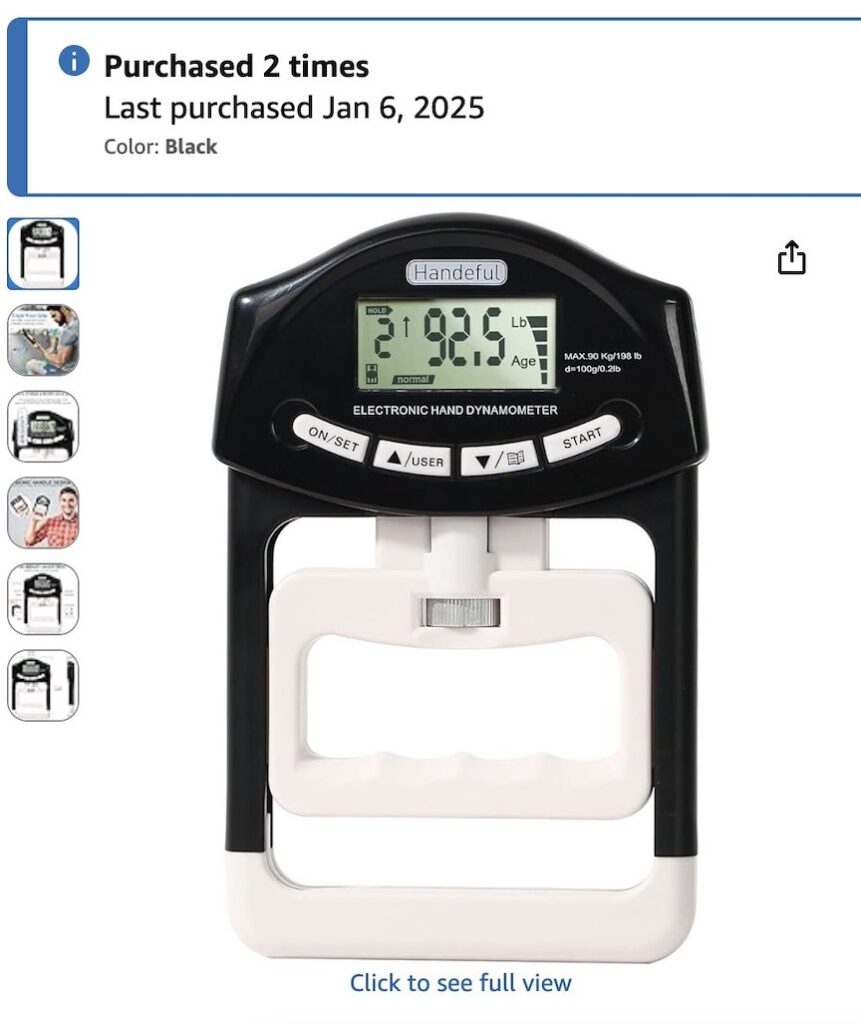

  • things to do outside in Austin. Food truck park near Barton Springs
    Things to Do Outside in Austin
  • Best At Home Bicep Workouts (db curls) with personal trainer Kathryn Alexander
    Best At Home Bicep Workouts: Build Bigger Biceps Without a Gym
  • Personal training in Austin, Texas, personal trainer in Austin
    February is for Friends! (Big Sale!)
  • New coach Chris Rios Alexander Training
    New Coach! Introducing Chris Rios
  • start exercising, new to gym
    If You’re New To The Gym, Read This
  • tailgate baby shower at the gym
    Love Notes, Volume 4. December Edition

Filed Under: Austin

How Much Does a Barbell Weigh?

November 5, 2024 by Kathryn Alexander

How much does a barbell weigh? There’s a short answer and a long answer, and I’ll tell you both.

(Nerd alert, I’m going to get in the weeds about barbells here! I love barbells. I collect barbells. I had a dream I had 7 more barbells as I was writing this post lol)

  • Short answer: 45 pounds, or 20 kilograms. 
  • Long answer: 10 pounds, 15 pounds, 35 pounds, 10 kilos, 20 kilos, 45 pounds, 70 pounds, and more. 

If you’ve ever been new in a gym, you know you have to familiarize yourself with the equipment. You’ll usually see what you consider standard barbells, and you can assume they weight 45 pounds. Most barbells do. But, there are so many specialty bars, and it seems like there are more being made every day. They’re pretty fun, too! If you’re lucky, you’re in a gym that has many of these barbells, so you can play with them all. 

Gym Cat and barbell during garage gym workout
Gym Cat and barbell during garage gym workout. For reference, the bar is loaded to 95 and Cat weights about 14 pounds here.

Check out this guide so that you can distinguish different types of bars and know the weight of the barbell you’ll be training with.

How Much Does a Standard Barbell Weigh?

As I mentioned above, the most common barbell weighs 45 pounds, which is about 20 kilograms. Twenty kilograms equals 44.1 pounds, but most everybody says 45. Most Olympic barbells and power bars weigh this. If you’re in commercial gyms or mainstream big box gyms, this is probably what you’ll encounter. Unless it is notably different in size or is marked, you can probably safely assume a bar is 45 pounds. 

Note that sometimes a bar is called a standard bar, and this is the skinny bar that you can buy from Academy or Dick’s Sporting Goods. These have a small diameter and don’t weight 45.

When you hear people colloquially say “standard bar”, it usually means what is generally found in gyms. Those are 45 pounds.

Marking Barbells

You’ll see that some gyms mark barbells with different colored tape on the collars. This helps distinguish which bar is which. I don’t think there is a standard across gyms in America for barbells colors, but please correct me if I’m wrong. 

For example, at Big Tex Gym where I train my clients now, the squat bar is labeled in yellow tape. The deadlift bars are labeled red, power barbells are labeled blue. Bent or damaged bars are labeled with gray. These are nice to keep around too, in case you are doing rack pulls or other lifts that are hard on the bar. This way you can use the gray bar and not ruin a $850 Eleiko. 

How Much Does a Barbell Weigh? Olympic and power bars

If you’re doing a heavy bench press or squat though, you do NOT want the bar to rotate in your hand because you unknowingly loaded up a bent bar. This is also why I chase down people who are abusive to bars in the gym. If I’ve done that to you, sorry not sorry. 

Different Types of Barbells

There are sooo many different types of barbells! I LOVE this, because it’s cool for the barbell to fit your specific lift and your specific goals. There are squat bars, deadlift bars, training bars, cambered and bent bars, bars in other atypical shapes, and many more. They began as a straight metal bar, but there are so many variations now! Each of these bars has a different purpose and was created for a specific reason. It makes sense to know the use of a bar and the weight of a barbell before you get started training with it.

Olympic Barbells

A standard Olympic barbell is 45 pounds, typically has knurling for your grip but no center knurling, and spins really well. This is crucial for the Olympic lifts, since the clean requires the bar come into contact with the skin around the collarbones, neck and shoulders. An exception to this weight is that women’s bars for Olympic lifting are 15 kilos, which is about 33 pounds. Women’s bars are a bit thinner diameter too (25mm verses the men 28mm), which allows people with smaller hands to grip it better. Women can choose to train with a standard weight bar, but should train with the women’s barbell if they are training to compete. The International Weightlifting Federation uses women’s bars in all competitions.

Powerlifting Barbells

A straight barbell with good knurling, a power bar is probably the most common type of barbell outside of just regular barbells that are sold en masse from Amazon, etc. Power bars have great knurling both for grip, and center knurling for back squats. 

To my knowledge, no powerlifting federations use different bars for men and women. The International Powerlifting Federation, USA Powerlifting (USAPL), and others do not use gender specific bars. 

Here’s a list of various types of barbells commonly found in gyms and their uses:

1. Olympic Barbell

  • Weight: 20 kg (44 lbs) for men, 15 kg (33 lbs) for women.
  • Length: Typically 7 feet (84 inches).
  • Use: Designed for Olympic weightlifting movements like the snatch and clean & jerk. The barbell has rotating sleeves for smoother lifts. It should go with out saying, but Olympic-style lifts should be performed with Olympic bars and Olympic plates.
  • Features: Knurling for grip, whip (flexibility), and rotating sleeves for dynamic lifts.

2. Powerlifting Barbell

  • Weight: Typically 20 kg (44 lbs).
  • Use: A power bar is specifically for the big three lifts in powerlifting—squats, deadlifts, and bench presses.
  • Features: Stiffer (less whip), more aggressive knurling, and usually no rotating sleeves (or less rotation).

3. Trap Bar / Hex Bar

  • Weight: Typically 45-70 lbs, depending on the model.
  • Use: Primarily used for deadlifts, shrugs, and farmer’s carries. The lifter stands inside the bar, allowing for a more neutral grip and upright posture during lifts. This makes the deadlift a bit less of a hinge, and slightly more like a squat. This uses your lower back a little less since you won’t have to hinge as much. Some people find they can use heavier weights here too.
  • Features: Hexagonal or trapezoidal shape with handles on either side. There are many different manufacturers of these and they all have a unique shape.

4. EZ Curl Bar

  • Weight: Typically 10-15 lbs.
  • Use: Primarily used for biceps curls, triceps extensions, and other arm exercises. The wavy design of ez-curl bars reduces strain on wrists.
  • Features: Shorter length and wavy shaft. The EZ bar is easy to grip. Since it’s not as long, it doesn’t hold as much weight. That’s typically not a limitation on biceps curls, though.

5. Swiss Bar (Multi-Grip Bar, Football bar)

  • Weight: Typically 35-55 lbs.
  • Use: Allows for multiple neutral grip positions, used for pressing movements (bench press, overhead press), and rows. Great for reducing stress on shoulders and wrists. This is pretty much a press and bench press bar. You won’t do lower body lifts with this.
  • Features: Multiple parallel handles for different grip options. 
Football bar and rack belonging to Kathryn Alexander, Austin personal trainer

6. Safety Squat Bar

  • Weight: Typically 60-70 lbs.
  • Use: Designed for squatting, especially for those with shoulder mobility issues. The bar has padded shoulder rests and handles for easier squatting without shoulder strain.
  • Features: The weight distribution is more forward, making the squat more quad-dominant.

7. Deadlift Bar

  • Weight: 20 kg (44 lbs).
  • Use: Specifically designed for deadlifting, this barbell has more flex (whip), allowing the lifter to pull more weight before the plates leave the ground.
  • Features: Longer and thinner than a standard bar, with aggressive knurling for a better grip. The longer sleeve on this bar (the end of the bar) allows for very heavy loads, and can stand up to a huge total weight. The length of the barbell is something to consider if you have a home gym or garage gym. I love the whippy bar though. It’s fun to pull with!

8. Cambered Bar

  • Weight: Typically 60-70 lbs.
  • Use: Primarily used for squats and good mornings. The cambered shape of the bar shifts the weight distribution, making the movement more challenging for stabilizers.
  • Features: A distinctive downward curve on the barbell, often with handles.

9. Log Bar (Log Press Bar)

  • Weight: Typically 70-100 lbs.
  • Use: Common in strongman training for overhead pressing movements.
  • Features: Large, cylindrical shape with neutral grip handles in the center.

10. Axle Bar (Fat Bar)

  • Weight: Varies, often around 45 lbs.
  • Use: Used for grip strength training, overhead presses, deadlifts, and rows.
  • Features: Thicker diameter than a standard barbell (usually 2 inches or more), making it harder to grip.

11. Technique Bar

  • Weight: Typically 5-15 lbs.
  • Use: Used to teach and practice proper lifting technique, especially for beginners or those recovering from injury.
  • Features: Lighter weight than standard barbells, with the biggest difference being that they are often made from aluminum or other lightweight materials.

12. Women’s Olympic Barbell

  • Weight: 15 kg (33 lbs).
  • Length: Typically 6.5 feet (79 inches).
  • Use: Designed for Olympic lifting for women, with slightly smaller diameter and length compared to the men’s version. 
  • Features: Same rotating sleeves and knurling as the men’s barbell but with smaller dimensions. The diameter of the bar helps with grip.

13. Squat Bar

  • Weight: 25 kg (55 lbs).
  • Use: Specifically designed for squats. These bars are stiffer and usually longer to accommodate wider grip positions. 
  • Features: Stiff bar, aggressive knurling, and a thicker diameter. A squat barbell can accommodate a huge amount of weight; load capacity is insane.

14. Buffalo Bar (Bowed Bar)

  • Weight: Typically 45-55 lbs.
  • Use: Mostly used for squatting, this bar has a slight curve that reduces strain on the shoulders and elbows, making it ideal for lifters with shoulder mobility issues.
  • Features: A curved barbell that allows for more comfortable squatting or bench pressing.

15. Short Barbell

  • Weight: 25-35 lbs.
  • Use: Used in smaller spaces or for specific exercises like curls or presses where a full-length barbell is unnecessary. These are also great for home gyms or garage gyms when you don’t have a ton of room and don’t want to put holes in your walls.
  • Features: Shorter than a standard barbell, often around 5 feet in length.

16. Youth Barbell

  • Weight: Typically 10-15 lbs.
  • Use: Designed for younger or smaller lifters to practice technique and build strength. This allows training plates and lighter loads to be used. Training plates are important because they are the same size as 45 pound weight plates, so people who can’t quite deadlift 135 (bar + two 45 pound plates) can still learn the deadlift with the exact same form.
  • Features: Lighter and shorter than a standard barbell, often made of lightweight materials like aluminum. The lifter can develop strength here and add additional weight until they are able to use a standard barbell weight.

​What Weight Barbell Should You Use?

Probably 45 pounds. If that is challenging for you, use a shorter barbell or training bar. Find the right weight for you, one where you can lift well for 8+ reps. If you have general fitness goals like getting stronger, toning up, losing weight and getting fitter, you can use pretty much any kind of bar. Traditional barbells are a great tool for so many uses, and various exercises. Don’t feel like you can’t make progress without all the fancy bars! Use proper form and work hard, and you’ll go far on your fitness journey. 

If you have a home gym or garage gym, check out this article about how to maximize your gym organization, and how to store barbells.

One more common question I get is about smith machine bars and how much they weight. Smith machines, where the bar is on a guided track, vary widely. The Smith machine bar can be completely counterbalanced so that it weights nothing, or it can be closer to 45. Know this as you approach any smith machine, and be prepared for it to be heavy just in case. If that makes you nervous, just ask someone who works there. Most of us who work in gyms are equipment nerds and fitness enthusiasts who would be so happy to help you. 

However. It’s more FUN to use specific bars 🙂 but you can use any. If you have sport specific goals like competing in Olympic lifting competitions or powerlifting, then I would suggest finding a local gym or power gym for your strength and conditioning goals. The wide variety of specialty barbells allows for specific training adaptations depending on your goals and needs. Each barbell type is designed to optimize performance and comfort for specific lifts and training styles.

Work With Me!

If you are looking for a personal trainer in Austin, I’d love to talk with you! If you are not in Austin, Round Rock, or central Texas, let’s talk about online training.

Message me here for a free consult about personal training in Austin, Texas, or here for online personal training, and we’ll discuss your goals, background, equipment availability, schedule, and exercise preferences.

Let’s get you strong and healthy! 💪


About the author

Kathryn Alexander is a strength coach and personal trainer in Austin, Texas. She loves hiking, college football, and the feel of a perfectly knurled barbell. Read more about Kathryn here.
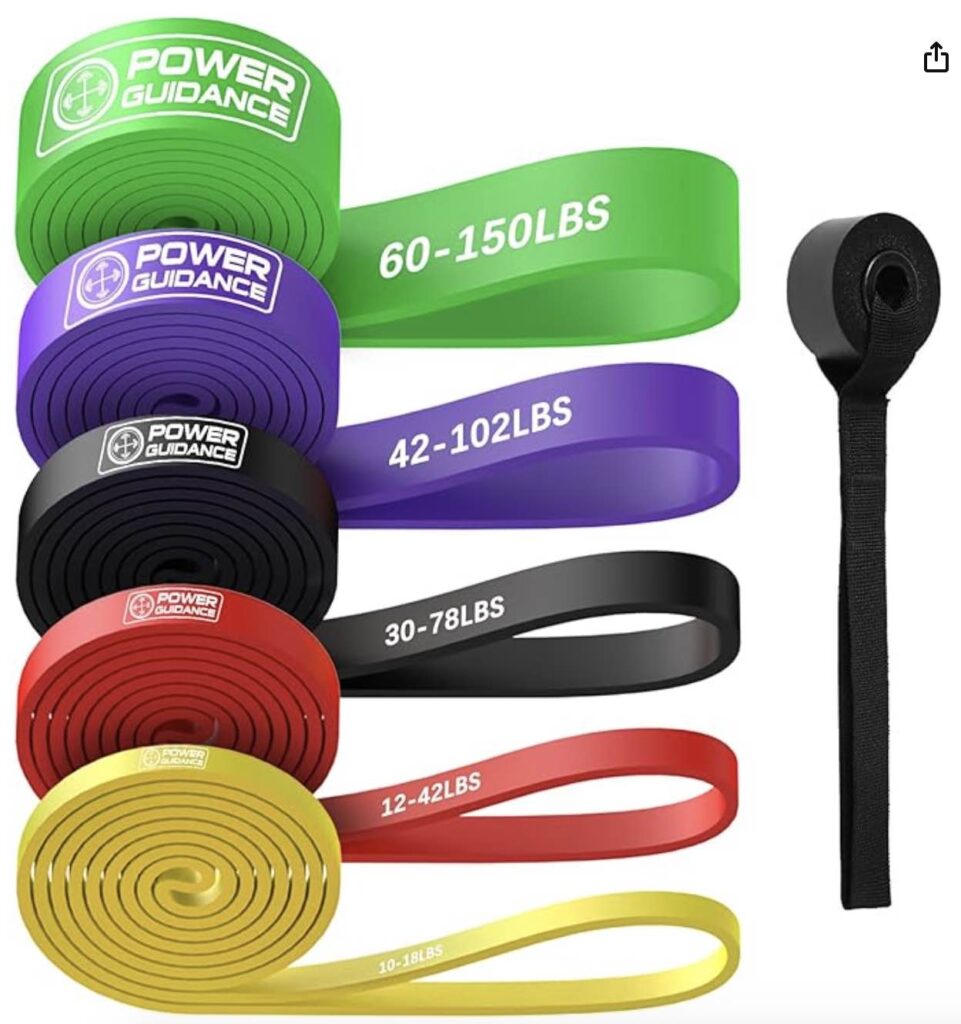

  • things to do outside in Austin. Food truck park near Barton Springs
    Things to Do Outside in Austin
  • Best At Home Bicep Workouts (db curls) with personal trainer Kathryn Alexander
    Best At Home Bicep Workouts: Build Bigger Biceps Without a Gym
  • Personal training in Austin, Texas, personal trainer in Austin
    February is for Friends! (Big Sale!)
  • New coach Chris Rios Alexander Training
    New Coach! Introducing Chris Rios
  • start exercising, new to gym
    If You’re New To The Gym, Read This
  • tailgate baby shower at the gym
    Love Notes, Volume 4. December Edition

Filed Under: Home gyms

Lat Pulldown Machine Exercises and Variations

October 21, 2024 by Kathryn Alexander

Lat pulldown machine exercises and variations: how to execute and implement them for your best back development.

Lat pulldown machines are a fantastic tool for back exercises. There are many different ways to use the lat pulldown machine and all it’s variations. Lat pulldown exercises can be varied by grip width, grip type, hand positioning, and angle of the pull. Even if you can do pull-ups and don’t technically need a lat pulldown machine, it can be a very great tool for back strength, size and development. 

pulldown machine exercises

What are Lat Pulldowns?

Lat pulldowns are typically a seated pulling motion that mimics a pull-up. Because pull-ups are basically all or nothing; binary; you can do one or you cannot, they are tough to practice well. If you cannot pull up your own body weight, you need to build strength at that angle first. Resistance bands and machine lat pulldowns allow you to do this. 

Lat pulldowns allow you to practice this movement well, using full control of the muscles around your shoulder blades and perfecting your form. Don’t get me wrong: to achieve the ability to do pull-ups, you have to do some ugly pull-ups. But, along the way, lat pulldowns are a great way to take steps toward pull-ups.

Why Are Lat Pulldown Exercises Important to Do?

Strong lats are crucial to building and maintaining good posture, significant upper body strength, and preventing biomechanical stress from muscular imbalances. Lats are one of the most interesting muscle groups, and one of the largest contributors to full body strength.

A strong back makes a statement; it is undeniable that a person with an impressive back lifts, and pulldowns are one of the best exercises to help with this. In men, this looks strong and powerful. In women, this looks strong and graceful. I often hear my clients tell me their goals include having a strong, pain free, and aesthetically pleasing back. 

Finally, if you are a bench only type of person, you’ll develop imbalances that the lat pulldown can help you fix. Excessive stress on the shoulders from a heavy bench routine can be helped by balancing out the chest work with back work. 

Are you shopping for Austin gift ideas? Check out my favorites!

Why Are Lat Pulldown Exercises Important to Do?

Lat pulldowns work the whole back: lower back, middle back, upper back, and even arms. We don’t really want this to be an isolation exercise, but the pull up does not work your back in isolation. The muscles used from doing the lat pulldown exercise are the latissimus dorsi muscles, rhomboids, upper and lower trapezius muscles, and rear deltoids. The grip muscles of the hands and fingers, and forearm flexors, and biceps also assist in these exercises.

Fun fact: the first time I achieved a pull up, my abs were the most sore of all my muscles. Isn’t that wild? I had prepared my back muscles well and built stronger lats by doing a solid strength training program and pull-down exercises, but my abdominal muscles had not fully joined the game until I did full range of motion, unassisted pull-ups. I point this out just to highlight how pulls are not an isolation exercise.

How to do the Classic Machine Lat Pulldown (Regular Grip)

  • Adjust the Seat and Knee Pads:
    • Sit on the pulldown machine and adjust the seat height so that your feet are flat on the floor.
    • Position the knee pads so they sit comfortably on your thighs, holding you in place during the exercise. (This helps a ton! Don’t skip this!)
    • You’ll stand back up and start in a standing position while you get your grip on, next.
  • Grip the Bar:
    • Reach up and grab the bar with an overhand grip (palms facing away from you), slightly wider than shoulder-width apart. Not a super close grip or very wide yet.
    • Make sure your hands are evenly spaced on the bar. Don’t set up crooked, ain’t nobody got time for that.
  • Starting Position:
    • Sit down with your arms fully extended and your torso upright. Think chest up, and allow your shoulders to stretch up.
    • Pull your shoulder blades down and move smoothly into driving your elbows down, into your hips.
  • Pull the Bar Down:
    • Pull the bar to your upper chest or just below your chin, keeping your torso steady and your core engaged.
    • As mentioned above, think about your elbows retracting into your hips, not pointing back behind you. 
  • Return to Starting Position:
    • Return the bar overhead. Control your movement upwards, extending the elbow joint first, and then letting the bar pull you back into the stretched position.
    • Keep your chest up as you are stretched back into your initial position. 

Lat Pulldown Variations

The classic lat pull-down, described above, is one you should practice first. It’s symmetrical and balanced, and will help you learn to recruit and connect to your lat muscles. From there, experiment with different variations on the pulldown machine so that you can truly begin to feel how you can use your lats to control your shoulder joint and your arms. Then, try to feel, individually, your lower lats*, upper back muscles, mid back muscles. 

Focus on learning this scapular depression and elevation first:

Scapular elevation and depression, demonstrated by Austin personal trainer Kathryn Alexander.

Start with light weights so you can learn that mind muscle connection. Don’t be afraid to go heavier though; the pulldown is pretty forgiving. It’s not dangerous to increase the weight as you’re learning. 

*There’s truly no “lower lats” because the lats are one muscle group that originates from the thoracic and lumbar vertebrae and fascia, ninth to twelfth ribs, and posterior half of the iliac crest. This means your lower back, and hip bones. From there, imagine the muscles attaching to your upper arm. 

Note that you do not have to MASTER the basic lat pulldown to move on to any other pulldown variations. Do your best to practice good form on all of them, and you’ll learn from each exercise to the next. For best results in building muscle and just learning the exercise, practice many variations doing the best you can.

Single Arm Lat Pulldown

The single arm lat pulldown is an excellent variation of the first exercise. In this exercise, you’ll use a single handle or ring instead of a straight bar attachment. You’ll perform your pull one side at a time. I like to stretch the whole side that I’m working. For example, if I’m pulling with my right side, I’ll grip the ring or handle with my right hand, and then skooch over in the seat, dropping my right leg closer to the floor. This creates a straight line stretch all the way down my right side, from my right arm, all the way down to my right knee, which is either close to or resting on the floor. 

This is a great exercise to feel one side at a time, and to make sure your arms are being worked symmetrically. 

Here are some barbell and dumbbell back exercises if you are looking to expand your workouts.

Wide Grip Lat Pulldown

The wide grip lat pulldown is an excellent variation of the first exercise. For this exercise, you’ll set up just like you would for the class pulldown, except you’ll take a wider grip. You can think about doing the top of the “Y” in the “YMCA”. This variation might feel a little tougher, so start light again. This is an excellent exercise to focus on that mind muscle connection, and really feel your lats. This is a great option to really challenge yourself to move into pulling heavy weights.

Neutral Grip Lat Pulldown

Neutral grip means that your hands face each other the whole time. You might not use a typical lat pulldown bar for this exercise. You can do this with a bar attachment that places your hands facing each other, or you can use two separate attachments like rings or handles that you can control yourself. For these neutral grip lat pulldowns, the primary difference is just hand placement. Focus also on the main technical points of the classic lat pulldown, above. 

This is a neutral grip lat pulldown with a MAG grip attachment.

Underhand Grip Lat Pulldown

Also called a reverse grip lat pulldown, this is also like a chin up. In this case, you’ll use an underhand position, meaning your palms are facing you. For wrist comfort, you’ll probably have a shoulder width grip, or even closer. This is one of the best pullup options to begin, because you’ll find you can progress on these faster than on a wide grip lat pulldown. Your biceps will really get a workout and help out with this movement. 

reverse grip lat pulldown; Hyde Park Gym in Austin, Texas.

Pulldown Machine Exercises and Variations: Execution

With a couple of different attachments (tricep rope, straight bar attachment), the pulldown machine can be used like a cable machine for other exercises. These include cable face pulls, tricep pushdowns, the straight-arm pulldown, seated row and low rows (if it is a lat pulldown low row machine). Every weight machine is different, and you’ll typically find better options at a gym than at a home gym. So if you are a hybrid home gym/gym gym athlete, be strategic and take advantage of a few of these pulldown machine exercises while you have gym access!

Learning the basic exercises, working your whole body (full body push pull upper style), eating healthy cooking, and lifting with good technique will drive you to your goals the fastest you can go!


Work With Me!

If you are looking for a personal trainer in Austin, I’d love to talk with you! If you are not in Austin, Round Rock, or central Texas, let’s talk about online training.

Message me here for a free consult about personal training in Austin, Texas, or here for online personal training, and we’ll discuss your goals, background, equipment availability, schedule, and exercise preferences.

Let’s get you strong and healthy! 💪


About the author

Kathryn Alexander is a strength coach and personal trainer in Austin, Texas. She loves hiking, college football, and the feel of a perfectly knurled barbell. Read more about Kathryn here.
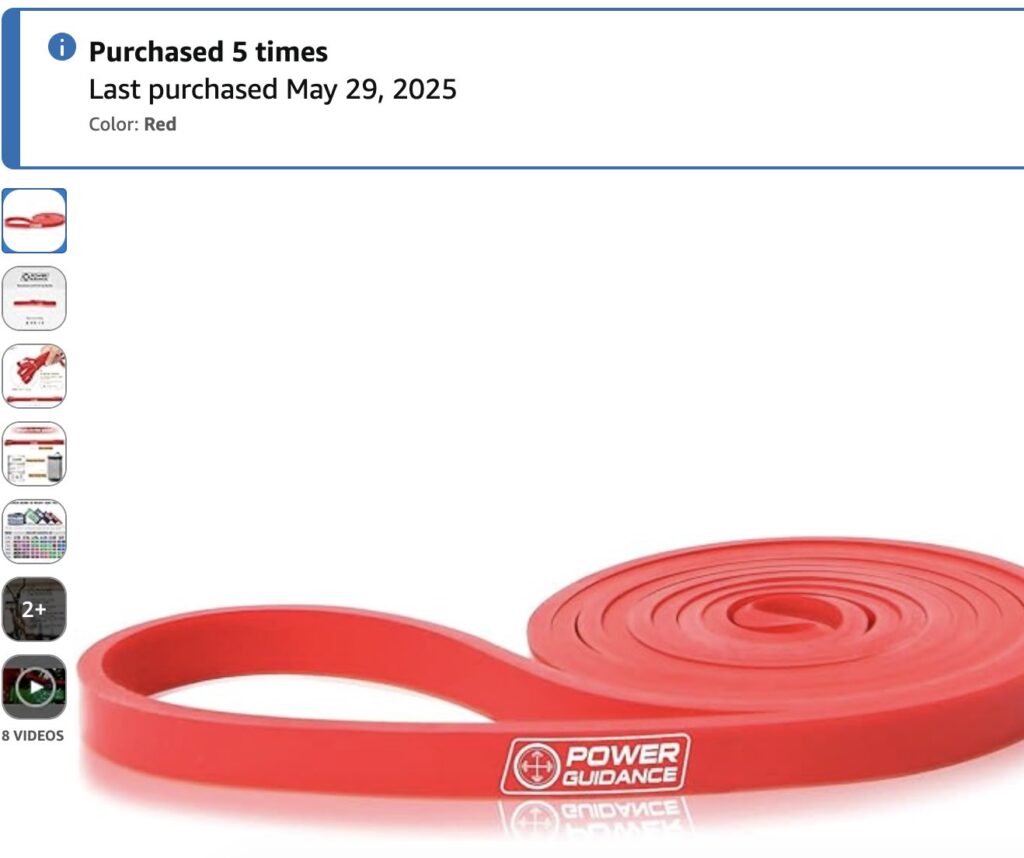

  • things to do outside in Austin. Food truck park near Barton Springs
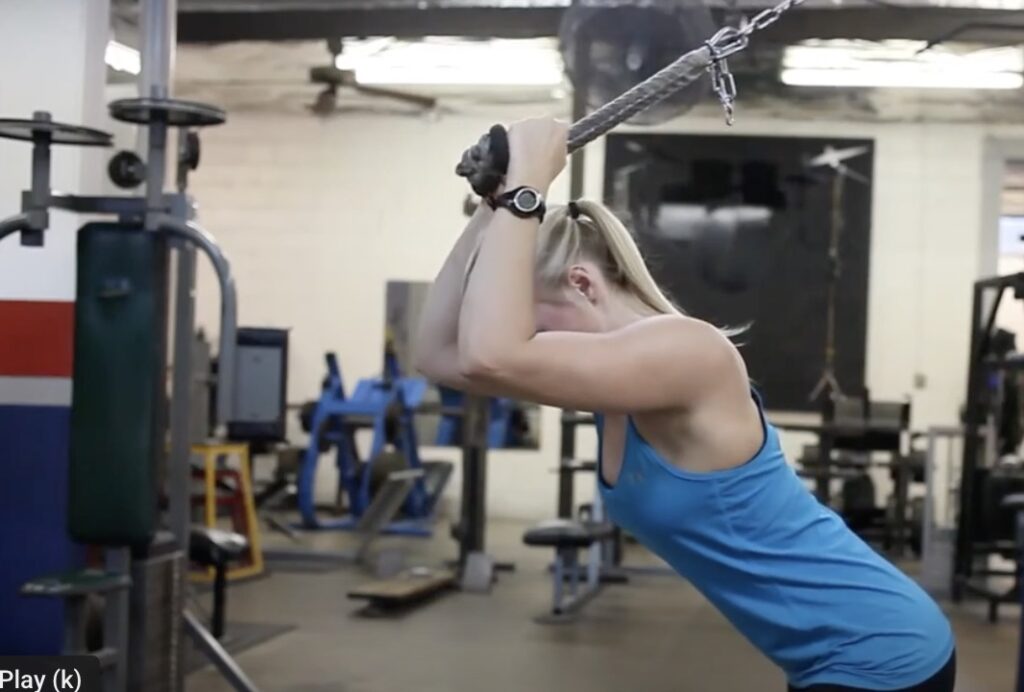
    Things to Do Outside in Austin
  • Best At Home Bicep Workouts (db curls) with personal trainer Kathryn Alexander
    Best At Home Bicep Workouts: Build Bigger Biceps Without a Gym
  • Personal training in Austin, Texas, personal trainer in Austin
    February is for Friends! (Big Sale!)
  • New coach Chris Rios Alexander Training
    New Coach! Introducing Chris Rios
  • start exercising, new to gym
    If You’re New To The Gym, Read This
  • tailgate baby shower at the gym
    Love Notes, Volume 4. December Edition

Filed Under: Training Tagged With: training

  • « Go to Previous Page
  • Go to page 1
  • Go to page 2
  • Go to page 3
  • Go to page 4
  • Interim pages omitted …
  • Go to page 7
  • Go to Next Page »

Primary Sidebar

Kathryn Alexander, personal trainer in Austin
Hi, and welcome here! -Kathryn

Recent Posts

  • Things to Do Outside in Austin
  • Best At Home Bicep Workouts: Build Bigger Biceps Without a Gym
  • February is for Friends! (Big Sale!)
  • New Coach! Introducing Chris Rios
  • If You’re New To The Gym, Read This

Did you know I make custom training plans? Tell Me More!

Footer

Follow

  • Email
  • Instagram
  • YouTube

Affiliate disclaimer

As an Amazon Associate I earn from qualifying purchases.

Newsletter sign up

  • Home
  • About Kathryn Alexander
  • Blog
  • Success Stories
  • Training Programs
  • Personal Training

Copyright © 2026 · Genesis Sample on Genesis Framework · WordPress · Log in

  • Featured In
  • Privacy Policy
  • Resources
  • Online Personal Training
  • Personal Training
  • Training Programs