• Skip to primary navigation
  • Skip to main content
  • Skip to primary sidebar
  • Skip to footer
Alexander Training personal trainer Austin Texas

Alexander Training - personal training in Austin, Texas

Personal training in Austin, Texas and customized strength programs in Austin, Texas.

  • Home
  • About Kathryn Alexander
  • Blog
  • Success Stories
  • Training Programs
  • Personal Training

home workouts

Best At Home Bicep Workouts: Build Bigger Biceps Without a Gym

February 14, 2026 by Kathryn Alexander

If you’re looking for the best at home bicep workouts, you don’t need a gym membership or a full weight rack to see serious results.

With the right exercise selection, proper form, and smart programming, you can build strong biceps using minimal equipment, even household items like water bottles or heavy objects.

Best At Home Bicep Workouts (db curls) with personal trainer Kathryn Alexander
showing you how to squeeze your biceps for great quality curls at home

In this complete guide, you’ll learn:

  • How the biceps work
  • The best biceps exercises for home workouts
  • How to structure the best biceps workout
  • How to build muscle mass with progressive overload

Understanding the Biceps and Key Muscle Groups

The main muscle responsible for arm size at the front of your upper arms is the biceps brachii.

It has two heads: the long head and the short head.

Both play a crucial role in:

  • Elbow flexion
  • Stabilizing the shoulder joint
  • Supporting upper body pulling strength

Strong bicep muscles assist in back workouts, improve grip strength, and protect the elbow joint during resistance training.

If your goal is bigger biceps, you need to train both heads through a full range of motion using proper form.

Why Train Biceps at Home?

The good news, you can absolutely do strength training from home.

You don’t need machines from a sports performance factory llc production studio to grow strong arms.

With a resistance band, pull-up bar, dumbbells, or even random heavy objects you have around your home, you have enough for a viable minimal equipment workout.

You can stimulate muscle activation and build real muscle.

The best way to see results is by combining:

  • Compound pulling movements
  • Isolation exercises
  • Progressive overload
  • Consistency

The Best Bicep Exercises for Home Workouts

Below are the best exercises for building strong biceps at home.

1. Dumbbell Bicep Curls

One of the best bicep exercises for building muscle mass.

How to Perform:

  1. Stand with feet shoulder-width apart.
  2. Start in a strong starting position.
  3. Hold dumbbells with palms facing forward.
  4. Keep elbows tucked.
  5. Curl through elbow flexion.
  6. Lower slowly in a straight line.

Focus on proper form. If you don’t have dumbbells, use water bottles or heavy objects as additional weight.

2. Incline Dumbbell Curl

The incline dumbbell curl emphasizes the long head for better peak development.

  • Perform from a seated position.
  • Let arms hang fully.
  • Use a lighter weight and control the tempo.

This increases stretch and muscle activation. Start with a lighter weight here than you normally do for curls.

3. Concentration Curls

Concentration curls are powerful isolation exercises that emphasize the short head.

  • Sit in a seated position.
  • Brace your elbow against your thigh.
  • Curl slowly for maximum tension.

Great for building stronger biceps and improving mind-muscle connection.

4. Dumbbell Hammer Curls

Dumbbell hammer curls use a neutral position with palms facing each other.

They build muscle and improve grip strength.

Excellent addition to any arm day workout.

5. Zottman Curls

Zottman curls combine:

  • Underhand grip on the way up
  • Overhand grip on the way down

They strengthen both arm muscles and connective tissue around the elbow joint. To do Zottman curls, curl with supinated palms on the way up (palms up), and at the top, twist your arms to where your palms face downward for the return to the start position.

Best At Home Bicep Workouts with personal trainer Kathryn Alexander
Don’t make fun of my fashion… capris were in. And bicep curls never go out of style.

6. Reverse Curls

Reverse curls use an overhand grip to strengthen forearms and support stronger arms overall.

Great for elbow joint health and balanced development.

7. Chin Ups

Chin ups are among the best body weight exercises for biceps strength.

  • Use an underhand grip.
  • Lower with control.
  • Focus on full range of motion.

A pull-up bar makes this one of the best at-home bicep workouts available.

8. Diamond Push-Ups

Yes, these are considered a “push” exercise, and not a biceps curl, or pull. But, you want to round out your upper arm by working triceps as well. Performed in a high plank position, diamond push-ups complement biceps training by strengthening supporting arm muscles.

Traditional push-ups are also excellent for upper body balance.

9. Resistance Band Curls

A resistance band creates constant tension.

  • Stand with feet shoulder-width apart.
  • Keep elbows stable.
  • Curl under control.

This is a great way to add resistance training without needing a heavier weight.

10. Preacher Curl (Home Version)

Use a couch arm or sturdy dining chairs to mimic a preacher curl setup.

This isolates the biceps and minimizes cheating.

Sample Best Bicep Workout (At Home)

Here’s a simple but effective training session:

Arm Day Workout Example:

  • Chin ups – 4 sets
  • Dumbbell bicep curls – 3 sets
  • Incline dumbbell curl – 3 sets
  • Zottman curls – 2 sets
  • Resistance band curls – burnout

This hits the short head and long head for balanced muscle growth.

How to Build Bigger Biceps at Home

To build bigger biceps and stronger arms, apply progressive overload:

  • Increase reps
  • Add additional weight
  • Slow tempo
  • Extend time under tension
  • Add isometric exercises

Advanced lifters can incorporate:

  • 21s
  • Paused reps
  • Slow negatives

Even without an ez bar curl or full weight rack, you can still create serious muscle mass.

Many personal trainers emphasize that strict technique beats ego lifting every time. This is true most of the time. But, as you become more experienced and have some training age, you can experiment with momentum and “cheating” on some of your curls.

Working with a certified personal trainer (even virtually) can help perfect your form and help you make the most of your biceps training.

Common Mistakes to Avoid

Avoid these errors:

  • Swinging the weight
  • Ignoring the starting position
  • Using too heavy of a heavier weight
  • Cutting the full range of motion short
  • Neglecting back muscles and back workouts

Remember: muscle gain requires consistency and proper resistance training principles.

Combine Biceps Training With Full-Body Workouts

While isolation exercises are important, compound movements stimulate multiple muscle groups.

Pair biceps curls with:

  • Pulling exercises
  • Back workouts
  • Full-body workouts

This improves sports performance, supports the shoulder joint, and builds stronger biceps over time.

Frequently Asked Questions

What is the best at home bicep workout?

The best bicep workout combines chin ups, dumbbell hammer curls, incline dumbbell curl variations, and resistance band finishers using progressive overload. These simple exercises give you the best results.

Can you build strong biceps with minimal equipment?

Yes. Using resistance bands, water bottles, bodyweight exercises, and heavy objects can effectively stimulate muscle growth from a good workout.

How often should I train biceps?

2–3 times per week works well for most people, depending on overall training volume.

What’s the best way to grow bigger biceps?

Train both the short head and long head, use full range of motion, prioritize proper form, and apply progressive overload.

Final Thoughts

The best at home bicep workouts focus on:

  • Smart exercise selection
  • Proper form
  • Progressive overload
  • Consistency

You don’t need fancy machines to build strong arms.

With minimal equipment and disciplined biceps training, you can develop impressive arm muscles, stronger biceps, and noticeable upper body strength from home.

Work With Me!

If you are looking for a personal trainer in Austin, I’d love to talk with you! If you are not in Austin, Round Rock, or central Texas, let’s talk about online training.

Message me here for a free consult about personal training in Austin, Texas, or here for online personal training, and we’ll discuss your goals, background, equipment availability, schedule, and exercise preferences.

Let’s get you strong and healthy! 💪
About the author

Kathryn Alexander is a strength coach and personal trainer in Austin, Texas. She loves hiking, college football, and the feel of a perfectly knurled barbell. Read more about Kathryn here.

  • things to do outside in Austin. Food truck park near Barton Springs
    Things to Do Outside in Austin
  • Best At Home Bicep Workouts (db curls) with personal trainer Kathryn Alexander
    Best At Home Bicep Workouts: Build Bigger Biceps Without a Gym
  • Personal training in Austin, Texas, personal trainer in Austin
    February is for Friends! (Big Sale!)
  • New coach Chris Rios Alexander Training
    New Coach! Introducing Chris Rios
  • start exercising, new to gym
    If You’re New To The Gym, Read This
  • tailgate baby shower at the gym
    Love Notes, Volume 4. December Edition

Filed Under: Training Tagged With: home gym, home workouts

Fun Workouts at Home Without Equipment

September 15, 2025 by Kathryn Alexander

Fun workouts at home without equipment are entirely possible with a little bit of creativity and a little bit of energy. If you have followed me for any length of time, you know that I am a big advocate of doing exercise however you can. I love it when my clients have a gym membership but also get workouts at home. 

Fun workouts at home without equipment with Kathryn Alexander personal Trainer
Fun workouts at home without equipment

The thing is, you can get effective work done at home with just your bodyweight. If you are interested in a bodyweight workout at home, this post is for you! 

Why Home Workouts Work

At-home workout routines are a great way to add more physical activity into your day without leaving the comfort of your living room. Home bodyweight workouts can strengthen your entire body, raise your heart rate, and help you live a healthier, happier life.

The good news is, home workouts have numerous benefits: they save money, save time, and let you exercise in the comfort of your home. Using your own body weight is one of the best ways to challenge your entire body.

  • Perfect for any fitness level
  • Easy to adapt into a simple routine
  • Great for young athletes and adults alike who need to practice and reinforce fundamental movement skills

The best part? You don’t need anything except space to move and a willingness to start.

Full-Body Workout with Bodyweight Exercises

A full-body workout is possible without equipment—you just need proper form and attention to body position. Here are some strength-building moves you can try:

Bodyweight Squats

  • Starting position: feet shoulder-width apart.
  • keep your back straight and spine neutral
  • arms in front of you
  • break at the hips to initiate squat
  • sit deep into heels
  • squeeze big toe into the ground as you stand
squat, no weight added

Advanced: Jump Squats

  • do bodyweight squats first to warm up! Don’t skip this.
  • with your arms in front of your chest, do a quick squat: bend at hips, sink back into heels
  • drive up and jump from this position
  • arms can stay where they are or extend toward ceiling
  • do not throw your arms down as you jump up
  • land softly
Squat jump! Kathryn from Alexander Training

Reverse Lunges

  • from a tall standing position, step one foot behind you
  • step as if you are on railroad tracks, not a tight rope
  • aim to land with a 90 degree angle in both knees
  • knee should be close to the floor but not touching
  • press into the ground through your heel and big toe, and squeeze your glute to return to your start position
  • it is up to you if you’d like to complete all on your right leg and then switch to your left, or alternate
  • reverse lunges are great for building strong legs
reverse lunges, done at home with no extra workout equipment

Plank Walk Out

  • from a standing position, reach down to touch the floor
  • walk your hands out away from your feet, until you are in plank or pushup position
  • the farther the you walk your hands out, the tougher this is
  • walk your hands back in close to your feet
  • stand all the way up
plank walk outs, harder than they look!

Good Morning

  • Optionally, you can hold a dumbbell, book, backpack, willing pet or small child at your chest
  • keep your torso tight and neutral, not bending or flexing the spine
  • keeping your whole feet flat on the ground, hinge at the hips and send your hips behind you
  • keep your torso tight and aim to feel a stretch in your hamstrings
  • squeeze your glutes to push your hips back under you
  • repeat for as many reps as is your goal
  • good mornings are mostly posterior, as they work your hamstrings, glutes back and core
Good mornings, done by Kathryn Alexander, Austin personal trainer

These moves work nearly every muscle group and give you a good workout at home with no equipment.

If you do want to start a home gym and need ideas for where to start, check out my list of home gym essentials.

Here’s a full body band workout at home if you are looking for more ideas. And here are the best biceps home workout ideas.

A Simple 20-Minute Home Workout

Using those exercises, try this quick 20-minute home workout you can do in the comfort of your home:

Warm-Up (3 minutes)

  • March in place, do body weight squats, easy lunges. You can dance around, hop side to side. I’ve even known clients to do belly dancing or Zumba to get moving.
  • Add dynamic stretches to prepare your muscle groups.

Strength Circuit (12 minutes)

Complete 3 rounds of:

  • 10 squats
  • 10 jump squats – OPTIONAL because these are advanced
  • 10 jump lunges per right leg and left leg
  • 10 plank walk outs
  • 12 good mornings

Core Work (3 minutes)

Side plank variations (breathe!) or bicycle crunches.

Cool Down (2 minutes)

Stretch the entire body, breathing deeply to lower your heart rate. Do some diaphragmatic breathing.

Adjust intensity with more or fewer reps depending on your fitness level. The best way to improve is to master proper form before adding speed or volume.

Creative and Fun At-Home Options For Workouts

Not every exercise routine has to feel like “exercise.” Here are plenty of ways to make it fun:

  • Build a family obstacle course in the comfort of your living room. I remember couch cushion forts growing up.
  • Dance! Put on good music and dance. I always recommend Britney Spears. A fun way to engage your entire body.
  • Use resistance bands if you want variety without bigger gym equipment.
  • Turn everyday movements into a good workout—stairs, balance drills, or dance breaks.

Pro Tips for Success

  • Aim for ideal form. it’s the safest way to train, avoid injury and avoid wasting time. 
  • BUT do not be scared to move. Don’t let fear of not being perfect stop you.
  • I’ve spent 20 years in the fitness industry now, and I can tell you that steady work done consistently beats crazy bouts of exercise (getting beach ready!) in the long run.
  • Even a little bit of movement daily leads to long-term success.

Get Your Workout In!

You don’t need all the gym equipment or a gym membership to stay fit. I mean, it’s fun and I encourage it. BUT do not let it stop you if you don’t make it to the gym frequently!

With just your own body weight, a simple routine, and a little creativity, you can train your entire body right at home. From strength-building moves like jump squats and lunges to stretches and cooling down, there are plenty of ways to enjoy workouts in the comfort of your home.

Start today, stay consistent, recruit your family, and enjoy stronger muscles, a healthier heart rate, and ultimately, happier lives.

Work With Me!

If you are looking for a personal trainer in Austin, I’d love to talk with you! If you are not in Austin, Round Rock, or central Texas, let’s talk about online training.

Message me here for a free consult about personal training in Austin, Texas, or here for online personal training, and we’ll discuss your goals, background, equipment availability, schedule, and exercise preferences.

Let’s get you strong and healthy! 💪

About the author

Kathryn Alexander is a strength coach and personal trainer in Austin, Texas. She loves hiking, college football, and the feel of a perfectly knurled barbell. Read more about Kathryn here.

  • things to do outside in Austin. Food truck park near Barton Springs
    Things to Do Outside in Austin
  • Best At Home Bicep Workouts (db curls) with personal trainer Kathryn Alexander
    Best At Home Bicep Workouts: Build Bigger Biceps Without a Gym
  • Personal training in Austin, Texas, personal trainer in Austin
    February is for Friends! (Big Sale!)
  • New coach Chris Rios Alexander Training
    New Coach! Introducing Chris Rios
  • start exercising, new to gym
    If You’re New To The Gym, Read This
  • tailgate baby shower at the gym
    Love Notes, Volume 4. December Edition

Filed Under: Training Tagged With: home workouts

How to Heat a Garage Gym: The Best Tips and Equipment

December 11, 2024 by Kathryn Alexander

I am republishing this as of December 2024, because I’m another year in to experimenting on how to heat a garage gym. we are starting to get down into the 30s here in Austin, and it’s enough to make all the dumbbells and barbells cold.

So, let’s get to it: here are the best ways to heat a garage gym this winter.

Some links in this post are Amazon affiliate links to products that I love and regularly use.

Heat Your Garage Gym This Winter!

Whether you live in harsher environments with more extreme weather, or farther south, the cold can present a challenge for your garage gym workouts. This isn’t you being a wuss, either; cold weather changes the game, and it’s good for you to have options on how to heat your space to a more comfortable temperature.

personal trainer Austin Kathryn Alexander
Headlamps are a must for home improvement projects 🙂

To make my winter garage sessions more survivable, I have added insulation to my garage walls behind new sheetrock, I insulated the door, and bought an electric heater. Worth every bit of the investment! I’ll give you all the details below.

Ways to Heat a Garage Gym in Winter

Learning how to heat a garage gym for cold winter weather is one of the best things you can do to continue making progress on your health and strength goals. Don’t skip your garage gym workout because of the cold weather!

There are several heating methods for warming your cold garage gym to a comfortable temperature in the winter months, the best way to warm your home gym this winter. Check them out below. 

Propane Heaters

Propane heaters are one of the most effective options for heating a garage in the cold weather, but they do come with down sides. 

A propane heater will put out a lot of heat and can create warm air in a large space like the whole garage, not just a corner. Most propane heaters are forced air heaters, meaning they propel air out instead of simply heating in a radiant fashion. 

Examples of propane heaters are the torpedo heaters you have probably seen in warehouse style gyms, and at the front of The Home Depot and Lowe’s in cooler months. 

You’ll need a fuel source such as a propane tank if you don’t have a gas line in your garage. 

However, the byproduct of a burning propane is carbon monoxide, so you must have proper ventilation. This part is crucial! 

You must leave the garage doors somewhat open and/or a window partially open to safely operate a propane heater. 

You should also have a carbon monoxide detector. You should have this anyway! But you should especially have it if you are using a propane heater. 

If you go this route, please research it further. It would also be a good idea to consult your local HVAC specialist first. 

If this concerns you, a better option might be a radiant heater.

Radiant Heaters and Infrared Heaters

Radiant heaters are a great heat source during the cold season. They can warm a small space or pocket of a room. Since they only radiate and do not force air out, they heat smaller areas. Infrared heaters are examples of radiant heaters. Infrared heaters can be free standing portable heaters or mounted to the ceiling to save floor space. They heat objects and people instead of heating the air around them. Depending on the size of your garage, radiant heaters might be a great option. 

Electric Heaters

Electric heaters are one of the easiest ways to heat a garage on cold days. I use an electric heater in my garage gym. It is an oil filled space heater which I put it near my squat rack, where I’ll be doing most of the work. It doesn’t dramatically heat the whole garage, but it makes the cold bearable. 

I use a DeLonghi oil filled radiator heater, which is about $100 – $150. Worth it to me. (Affiliate link).

I have two of these, one in my garage gym, and I use one inside too. It makes a room nice and cozy warm without having to raise the heat in the whole house.

You can google “best electric space heaters” to see which fits your space and budget. There will be many options and you should find many that will comfortably heat small garages. 

Mini Split Ductless Heaters

One of the most effective and convenient solutions for heating your garage gym in winter is installing a mini split. A mini split is an electric ductless heating system. They run about $1,000 and will need to be installed by a professional. These might be the best heaters, as they provide both heating and cooling, and are effective enough to combat the most extreme temperatures in cold climates, and fight off the heat in the summer. 

Mini splits will probably come with a fancy little remote control and put out all the hot air you’d like. 

Consider a mini split a complete and full heat and cold solution. It will affect your electric bill more than the smaller heaters and heating solutions, but it will be a permanent solution that will last a long time.

Other Ways to Heat a Garage Gym

There are of course other ways to heat a garage gym, including a wood stove, pellet stove or natural gas heaters. These are less convenient in a garage and more suitable for finished rooms. You would of course have to take care with these, as they have open flame. Generally I would suggest the above solutions before you use a wood or pellet stove, but if you have experience with these and can tell me otherwise, please let me know! I have admittedly lived pretty far south my whole life, and the portable electric heaters have been plenty for me. 

Insulation for Walls, Doors and Floors of Garage Gyms

One of the most effective, easy and cost saving ways to keep the cold air out is to ensure your garage is well insulated. Proper insulation on the walls, doors and floors can go a long way in holding heat in and reducing the cost of heating the garage. 

And, speaking of essentials, here are some home gym equipment essentials.

Floor Insulation

Concrete floors become brutally cold in the winter, bringing all that cold in via the floor. Laying down a solid flooring foundation is smart for any gym, for safety, preservation of your floor and sport performance.

One often overlooked benefit is that a thick floor covering will help with insulation. I recommend horse stall mats like the ones that can be found at Tractor Supply. These are 3/4 – 1” thick and do a great job of buffering the temperature of the cold floor.

You might want different thicknesses if you’re using your garage gym for different purposes. Here are more factors to consider when you are deciding how thick your gym flooring needs to be.

floors mats for heat retention in garage
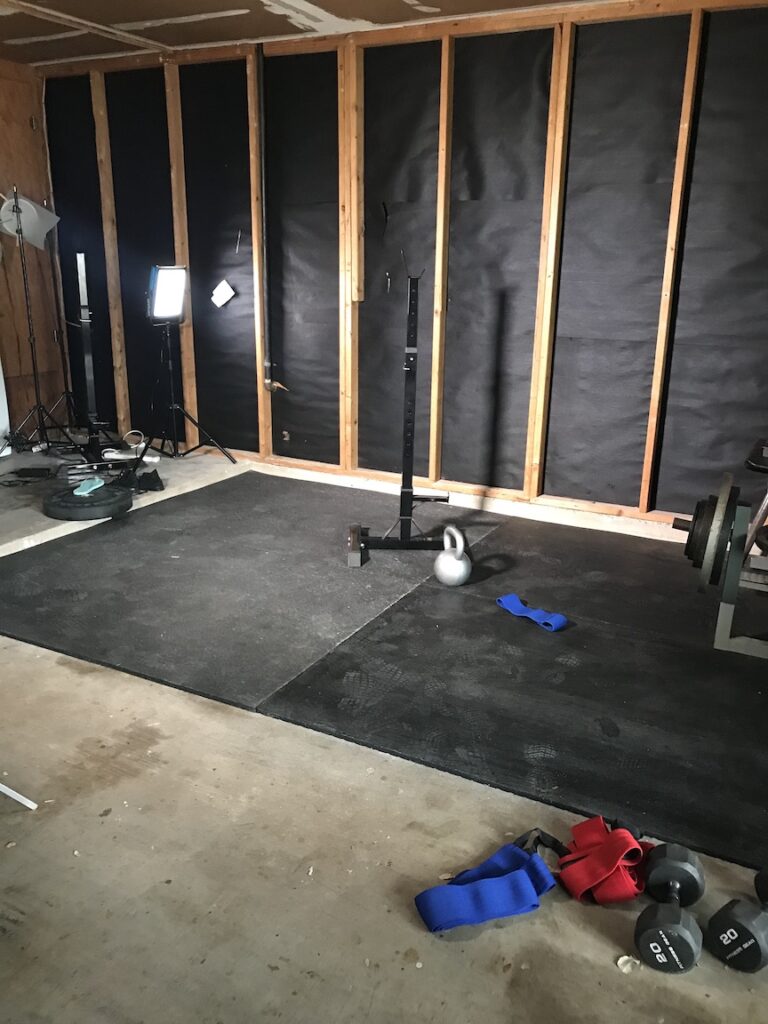
Approximately 12 floor mats cover my garage gym floor to cushion and protect the floor, and insulate.

In the harsher winter of colder climates, some people elect to heat their garage floor. This is a more expensive and comprehensive solution, as it involves installing the heating elements into the floor. If you are considering this, do further research in finding reputable companies who specialize in heating floors.

Wall Insulation

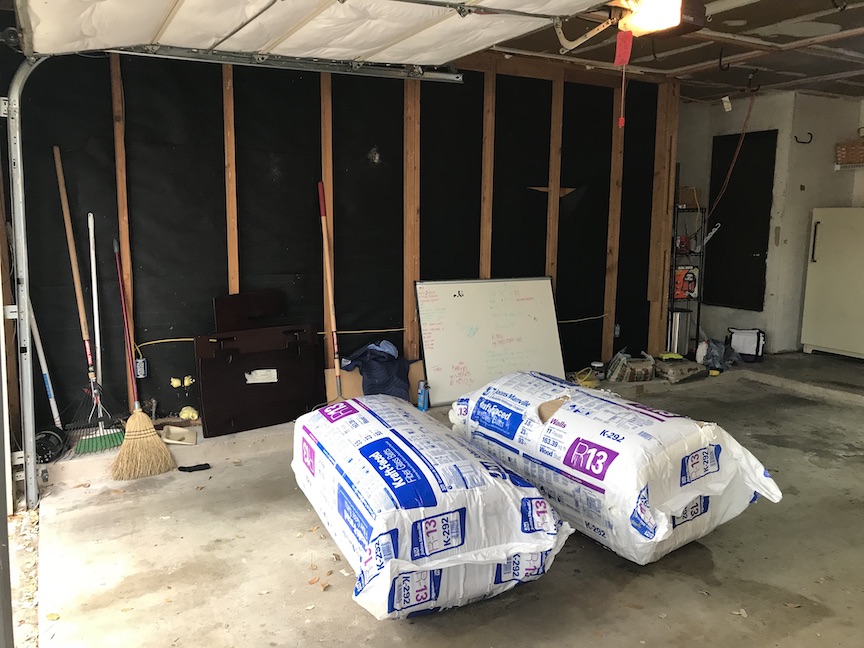
If you are renovating the garage walls and have the opportunity to install sheet insulation, take it. That will help tremendously to keep heat from escaping in the winter. The Home Depot gives a great idea of what kind of insulation level you need, including R-values by region of the US.  Check this out if you are adding insulation. 

How to heat a garage gym and use insulation to retain heat
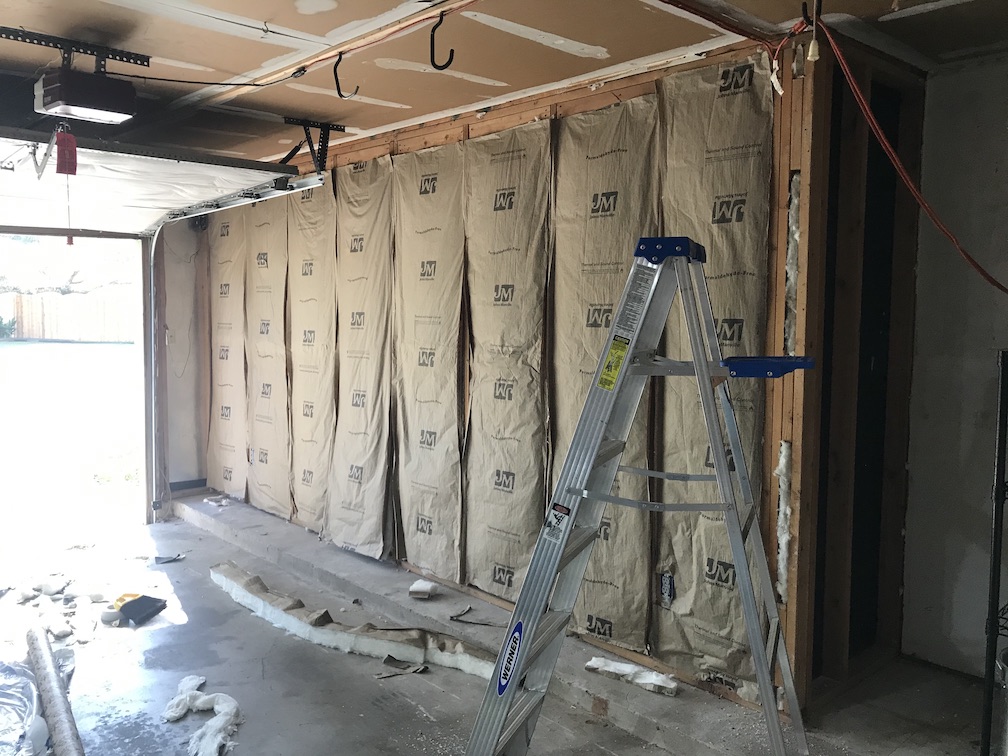
This is the fiberglass I used in the garage gym walls, and you can see the garage door insulation packed into the panels.
fiberglass insulation in garage gym walls
Fiberglass insulation in the garage gym walls, trimmed to fit between studs.

If you aren’t redoing the walls anytime soon, the next best thing is to insulate the garage door. 

Garage Door Insulation

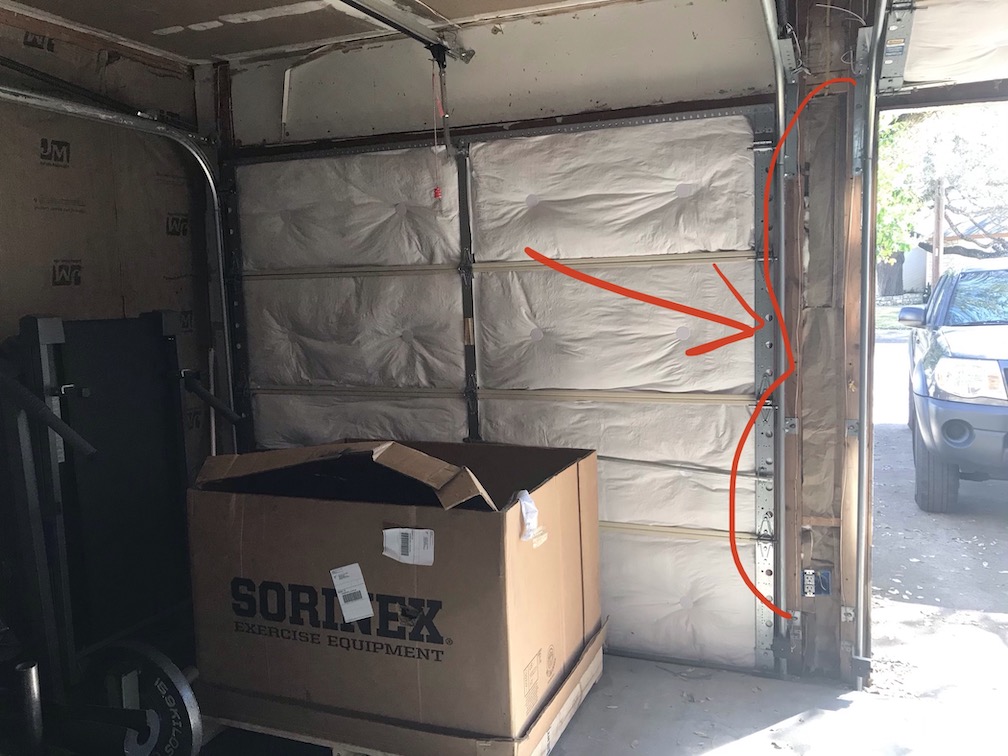
There are several ways to insulate an existing garage door. The two most common are fiberglass insulation, which comes in blankets, and foam panel insulation. I bought a garage door insulation kit with sheets of fiberglass insulation and installed it myself. It was around $200 from Home Depot for my two garage doors, and was fairly easy to do. It required fitting the insulation between the garage door panels, sealing the edges with tape clips. 

Garage door insulation for heating garage gym in winter.
Garage door insulation for heating my garage gym in winter. Excuse the markups.

I have since learned that this can get heavy because of accumulation of moisture in the fiberglass insulation, so foam panels might be a better option. Again, contact a trusted HVAC professional to help you make the right decision. Foam panel insulation also looks a bit sharper.

I don’t regret my insulation at all, and it’s effective. But, I might do it differently in the future to heat my next garage gym.

Finally, you can add weatherstripping or seal to the bottom of your garage door if you have large gaps that allow heat loss.

Related: Top 10 Benefits of a Home Gym

Dress for Cold Weather

The last thing you can do, which doesn’t involve modifying your garage, is dressing yourself for the cold weather. Invest in cold gear in layers: a base layer, an insulating layer, and an outer layer. I swear by REI merino wool socks, and thermal middle layers. 

To be fully honest with you, you need to ask your cold weather friends or google how to dress for winter weather. I do not know how, and my strategy is to avoid harsh winters. I’ve been skiing once and boy, was it a bad time. 

I was cold cold! I try every year to find better gear, but I still get cold, which is the reason I have added insulation behind my sheet rock, the garage door insulation, and a heater to my garage. 

Read also my favorite home gym organization ideas and storage solutions.

Make a Plan for Cold Weather Lifting

Make a cold weather plan so you continue getting your lifting in this winter. By adding a bit of weather stripping, insulation, and investing in the right type of heater, you can create a comfortable environment. 

You can also be strategic by warming up inside to begin the warming up/sweating process, and moving to the garage while it has had to for you, and it, to warm up.

In summary, to keep warm in your garage gym in the cold winter:

  • Identify leaks in your garage
  • Add weather stripping and insulation
  • Purchase a good heater for your space
  • Dress in layers in cold weather gear
  • Start your heater in the garage gym
  • Warm up inside
  • Go dominate your training session!

Cold Weather Not For You?

Join me in a heated gym with infrared saunas! You can’t always out run the cold. If this is the case for you, do the next best thing and meet me at Big Tex Gym in Austin, Texas for some climate controlled personal training! 

Check out these training options here and let me know how I can help you!

About the author

Kathryn Alexander is a strength coach and personal trainer in Austin, Texas. She loves hiking, college football, and the feel of a perfectly knurled barbell. Read more about Kathryn here.


  • things to do outside in Austin. Food truck park near Barton Springs
    Things to Do Outside in Austin
  • Best At Home Bicep Workouts (db curls) with personal trainer Kathryn Alexander
    Best At Home Bicep Workouts: Build Bigger Biceps Without a Gym
  • Personal training in Austin, Texas, personal trainer in Austin
    February is for Friends! (Big Sale!)
  • New coach Chris Rios Alexander Training
    New Coach! Introducing Chris Rios
  • start exercising, new to gym
    If You’re New To The Gym, Read This
  • tailgate baby shower at the gym
    Love Notes, Volume 4. December Edition

As an Amazon Associate I earn from qualifying purchases.

Filed Under: Garage Gym, Home gyms Tagged With: garage gym, home gym, home workouts

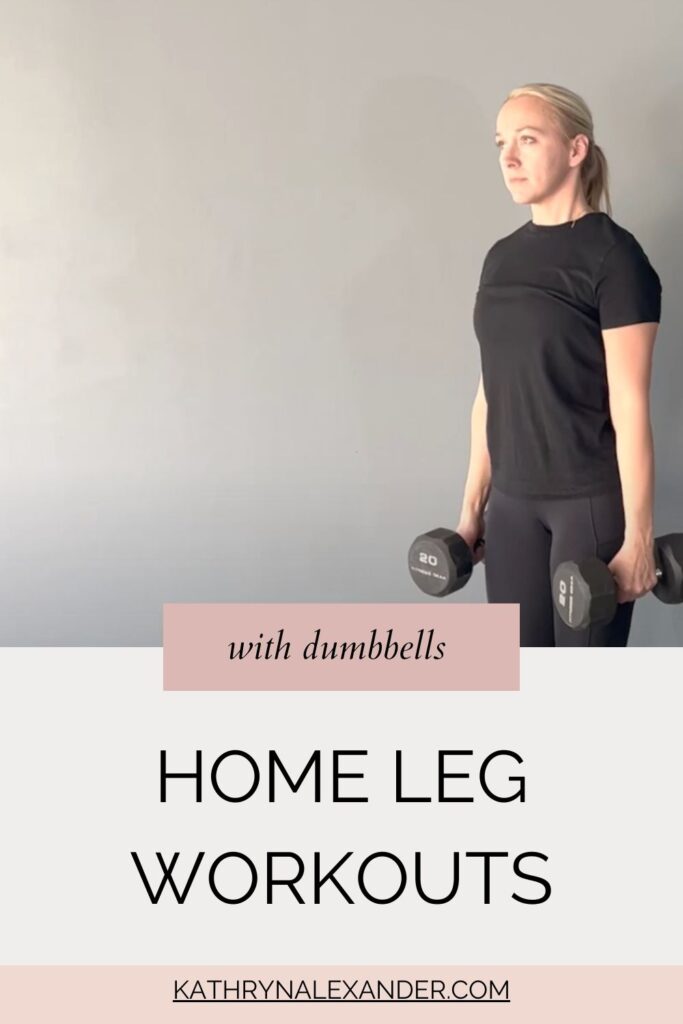
Home Leg Workouts With Dumbbells

November 26, 2024 by Kathryn Alexander

Home leg workouts with dumbbells are simple, accessible, and so beneficial! Leg day is the big one! The toughest, hardest, most gut checking day of the week! In the gym, you can load up a heavy bar for barbell squats or deadlifts, or load up machines for a crushing leg workout.

But, you can also get a great leg workout by strength training from home. A dumbbell leg workout done with focus on movements can build and strengthen your legs (quads, hamstrings, calves), glutes, and lower back. And truly, your whole body. Grab some dumbbells and get to building strong legs.

home leg workouts with dumbbells

Equipment

Of course, for home workouts with dumbbells, you’ll want dumbbells. You can do so much great work with body weight, and a little bit of equipment. Free weights are expensive, so you can be strategic about getting a medium pair of dumbbells, and maybe 1 or 2 heavy dumbbells or kettlebells. If you have read much about my recommendations for home equipment, you know I suggest a pair of light dumbbells, medium dumbbells, one heavier dumbbell (or kettlebell), and some resistance bands. 

If you have the space and budget for a bench, that’s great too. This is plenty of equipment to build leg strength at home. Get you a good mat to protect yourself and the floor, and you are good to go!

Speaking of equipment, are you shopping for a powerlifter? If so, here are the best gifts for powerlifters and one that I would absolutely not recommend.

The Exercises

There are SO many dumbbell leg exercises; you are really only limited by your imagination. I will run through the basics, my favorites, and a few weird ones. Here is a list first so you can see the bird’s eye view, and I will explain how to do each one below. 

  • Goblet squats (front squat)
  • Dumbbell squats
  • Lunges (dumbbell lunges)
  • Romanian deadlifts
  • Single leg deadlift (or B stance deadlift) single-leg deadlift
  • Bulgarian split squat
  • Dumbbell deadlift
  • Curtsy lunges
  • Glute bridge /hip thrust
  • Dumbbell step-ups
  • Farmer’s walk/Farmer’s carry

How to Organize Your Home Leg Workout With Dumbbells

  • Goblet squats
  • Dumbbell Squats
  • Dumbbell deadlifts
  • Lunges
  • Curtsy lunges
  • Dumbbell step ups
  • Bulgarian split squat
  • Romanian deadlifts
  • Single leg deadlifts

*glute bridge/hip thrust

*Farmer’s walk/farmer’s carry

Pick one exercise from each of the above columns. Add in one or both of the glute bridge/hip thrust, or a farmer’s carry. With each exercise, you’ll warm up well, do some increasingly heavy sets, until you reach 3 work sets.

These 3 work sets can be between 5 and 12 reps that are challenging, where you have 1-2 reps left in reserve. I’d suggest you do two of these workouts each week, sticking to the same exercises. From there, utilize the concept of progressive overload, which means you try to overload from the last week, assuming you get all green lights (feeling good, getting good quality reps, etc.).

For example, your leg session A might be dumbbell squats, lunges, RDL’s and a farmer’s walk. Your B session that week could be goblet squats, dumbbell step ups, B stance RDL’s, and a glute bridge.

Record your sets, reps and weight, and the next week, try to do a little heavier. If you continue this way, you will see progress.

Goblet Squats/Front Squats

To do a goblet squat, start by holding a dumbbell vertically with both hands at chest level, gripping it by one end (like a goblet). Stand with your feet shoulder-width apart, toes slightly turned out. Keeping your chest upright and your core engaged, lower your body into a squat by bending your knees and pushing your hips back, as if sitting into a chair. Go as low as your flexibility allows, ideally until your thighs are parallel to the floor.

Grip the ground with your whole foot (and toes) and squeeze your glutes to drive yourself back up to the starting position. Maintain good form by keeping your back straight (no twerking) and avoiding letting your knees cave inward.

goblet squats

Dumbbell Squats

To do a dumbbell squat, start by standing with your feet shoulder-width apart, holding a dumbbell in each hand by your sides with your arms fully extended. Keep your chest upright, your core engaged, and your shoulders relaxed. Slowly lower your body into a squat by bending your knees and pushing your hips back, as if sitting into a chair. Keep the dumbbells steady by your sides throughout the movement.

Lower until your thighs are parallel to the floor or as low as your mobility allows. Grip the ground with your whole foot (and toes) and squeeze your glutes to drive yourself back up, ensuring your knees track over your toes and your back remains straight. Repeat for the desired number of reps. 

Lunges

To do walking dumbbell lunges, start by standing tall with a dumbbell in each hand, arms extended at your sides. Step forward with one leg, lowering your hips until both knees are bent at about 90 degrees. On your front leg, ensure your front knee stays directly above your ankle, and your back knee hovers just above the floor. Keep your chest upright and your core engaged throughout the movement. Push through your whole foot to return to the starting position, then alternate legs. 

You can do a reverse lunge, where you are stepping back with one leg. You can do a forward lunge, where you step forward, then back. With these, as you step back with your back leg, most of your weight stays on, and most of the work is done, by your front leg. Whichever way you do these, keep your feet hip-width apart, like you are walking on railroad tracks, not a tight tope. Lunges are fantastic for your whole posterior chain.  

One other option is a lateral lunge, or side lunges. With these, you’ll step out to your side with one leg, bending into that leg. For example, you’ll step out with your right leg, plant your right foot, and bend your right knee. Your leg leg with be mostly straight, and your torso will hinge forward. From here, press into the ground with your right foot, and stand back up into position. Repeat the exercise on the other side, stepping out with your left leg. Lateral lunges help with strength and hip mobility. 

walking lunges, Kathryn Alexander at her home garage gym

Romanian Deadlifts

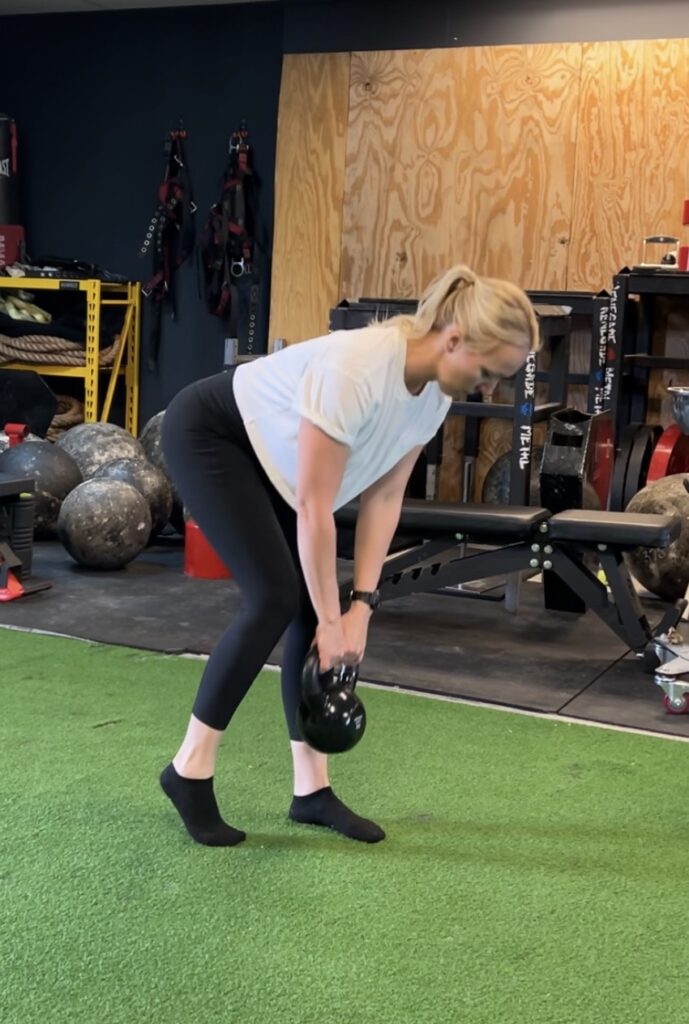
To do Romanian deadlifts with dumbbells, start by standing with your feet hip-width apart, holding a dumbbell in each hand in front of your thighs with your palms facing you. Keep your chest lifted, shoulders back, tight upper back, and a slight bend in your knees. Hinge at the hips by pushing them backward, lowering the dumbbells along the front of your legs while maintaining a straight back and tight core.

Lower until you feel a stretch in your hamstrings or the dumbbells reach about mid-shin level, grab the ground with your whole foot, and squeeze your glutes back under you to return to the starting position. Keep the movement controlled and avoid rounding your back. Everyone’s range of motion is different, depending your your hamstrings flexibility, among other things. Big glute squeeze with all variations! 

B Stance RDLs

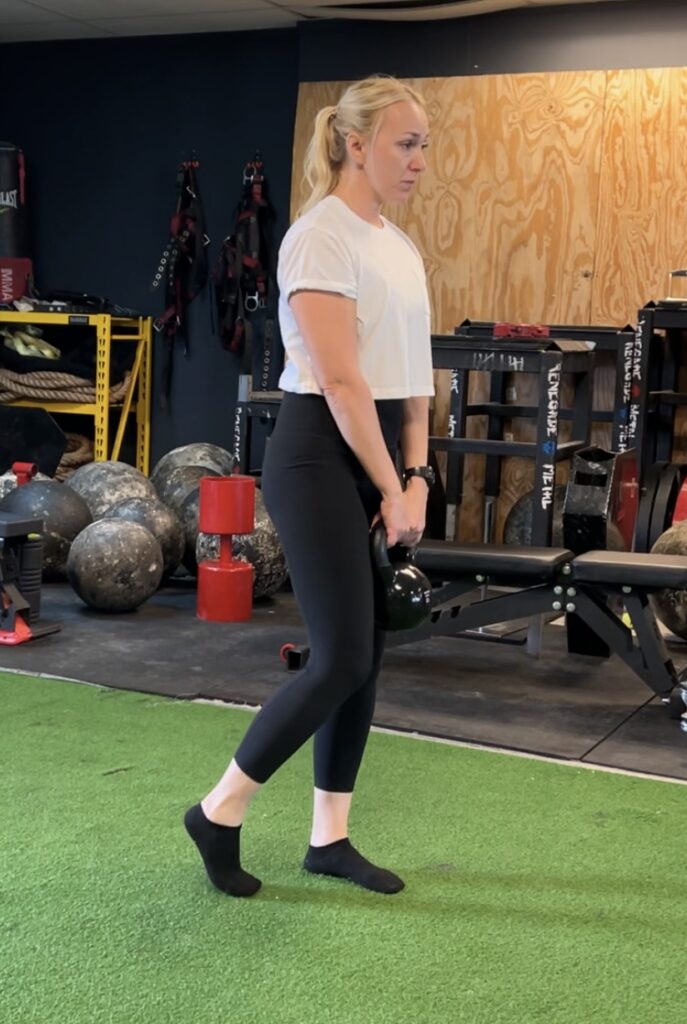
To do B-stance Romanian deadlifts (RDLs), start by standing with a dumbbell in each hand, arms extended by your side or in front of your body. Position one foot slightly behind the other with just the ball of the back foot touching the ground for balance, while your front foot bears most of the weight.

Keeping your chest upright and back straight, hinge at the hips, lowering the dumbbells along the front leg until you feel a stretch in your hamstrings. Maintain a slight bend in the front knee and keep your back leg straight. Return to your upright position and repeat on one side for the desired number of reps, then switch legs.

Bulgarian Split Squats

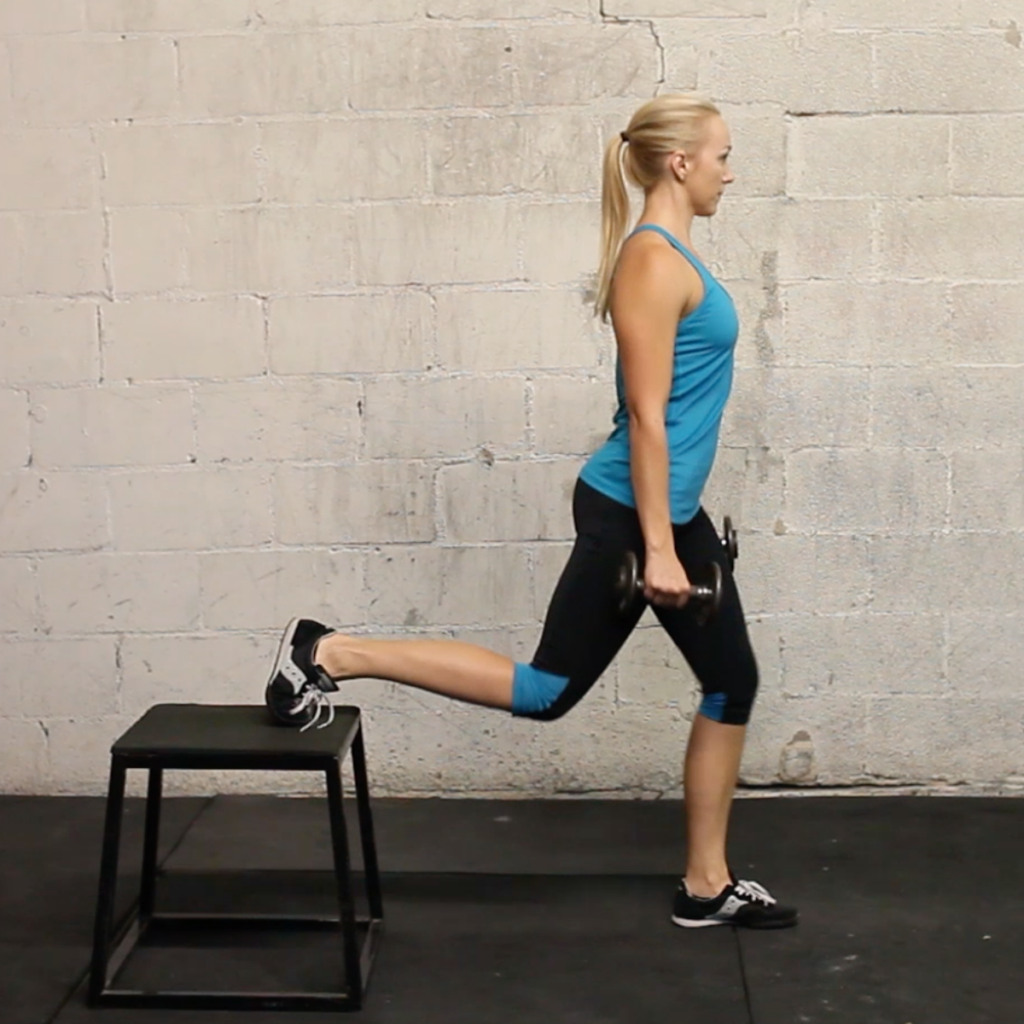
To do Bulgarian split squats, start by standing a few feet in front of a sturdy bench or elevated surface. Hold a dumbbell in each hand by your sides and place the top of one foot on the bench behind you. With your chest upright and core engaged, lower your body by bending your front knee until your thigh is parallel to the floor or as low as your mobility allows.

There are different ways to do these, but I prefer to slightly shift my weight so that most of my weight is on my front leg. Complete the desired reps on one leg, then switch sides. You can do a good bit of weight on split squats, so as you feel comfortable, don’t be afraid to move into heavier weights. BSS’s are one of the best single-leg exercises. They’ve even been the subject of many memes, lamenting how challenging they are. 

Dumbbell Deadlift

To do dumbbell deadlifts, start by standing with your feet hip-width apart, holding a dumbbell in each hand with your palms facing your body. Keep your chest upright, shoulders back, and torso tight. Hinge at your hips and bend your knees slightly, lowering the dumbbells down the front of your legs. Keep your back straight and lower until the dumbbells are near your shins or you feel a stretch in your hamstrings.

Grab the ground with your toes, push through your whole foot, squeeze your glutes, and return to the starting position, ensuring you maintain proper posture throughout. Repeat for the desired number of reps. Keep straight arms here; no elbow bending.

These are a staple for home leg workouts with dumbbells.

Curtsy Lunges

To do curtsy lunges, start by standing tall with a dumbbell in each hand, arms extended at your sides. Step one leg diagonally behind the other, crossing it as if performing a “curtsy,” and lower your hips until your front knee forms a 90-degree angle. Keep your torso upright and your back straight throughout the movement.

Push through your front foot to return to the starting position, then repeat on the opposite leg. Alternate legs for the desired number of reps, focusing on controlled movements to engage your glutes and inner thighs.

Glute Bridge /Hip Thrust

To do a hip thrust with a dumbbell, sit on the ground with your upper back resting against a sturdy bench or elevated surface. Roll a dumbbell onto your lap, holding it securely with both hands. You can put a towel or cushion here to protect your hip bones. Bend your knees and plant your feet flat on the ground, hip-width apart.

Drive through your heels and lift your hips until your body forms a straight line from your shoulders to your knees, squeezing your glutes at the top. Lower your hips back down in a controlled motion and repeat for the desired number of reps. These are a great addition to your lower-body workout, especially if they are new to you. Give them a try!

Dumbbell Step-ups

To do dumbbell step-ups, start by standing in front of a sturdy bench or platform that’s about knee height. Hold a dumbbell in each hand by your sides with your arms extended. OR hold just one dumbbell, and hold on to something for balance. The #1 rule is no falling! Step up onto the platform with one foot, pressing through your heel to lift your body until your standing leg is fully extended.

Bring your other foot up to meet the first, then step back down one foot at a time. If you started on your left foot, repeat all reps on your left foot before switching to your right, keeping your chest upright and core engaged throughout the movement. Adjust the platform height and dumbbell weight as needed for your fitness level. Step ups are one of my favorite compound exercises to do with dumbbells (or even without!).

Step ups at Hyde Park Gym, Austin, Texas

Farmer’s Walk/Farmer’s carry

To do a farmer’s walk with dumbbells, start by standing tall with a dumbbell in each hand, arms fully extended at your sides, and palms facing in. Keep your chest upright, shoulders back, and core engaged. Walk forward in a straight line, taking controlled steps, and focus on maintaining good posture throughout.

Avoid letting the dumbbells sway or pulling you off balance. Continue walking for a set distance or time, then set the dumbbells down carefully. This exercise builds grip strength, core stability, and overall endurance. Since it allows you to carry a good bit of heavy weight, it also works core strength and upper body. 

Farmer’s carry march

Benefits of Home Gym Workouts

Home workouts are convenient, time saving, and can be* cost effective. A single pair of dumbbells can provide a wide range of exercises, making them an affordable and versatile investment. Adjustable dumbbells aren’t inexpensive, but they are much cheaper than a whole set of dumbbells. They save space too. In theory, home workouts save you money on gym memberships and expensive equipment.

*Unless you get bit by the garage gym or home gym bug, then you’ll probably blow your budget on more fun things for your gym. But there are way worse ways to spend your money! 

Remind yourself you aren’t commuting to the gym, dealing with Austin traffic, or wherever you life. You can workout any time that you are home and don’t have to worry about compatible schedules with training partners or your personal trainer.

You can practice new or weird things in the privacy of your own home. You don’t have to worry about sharing space or what you’re wearing. Blare your own music and fly your own flags! Working out at home is the best! 

Home workouts are family-friendly. Everyone in the household, including kids, can join in, making it a fun and healthy activity. Exercises can be scaled for children or beginners using lighter weights or bodyweight options. I don’t have kids but I write programs for my niece and nephew, and I think it’s amazing that they see their whole family exercise together. 

Benefits of Leg Workouts With Dumbbells

Leg workouts improve lower-body strength, which is essential for everyday activities like walking, climbing stairs, and lifting objects. They enhance functional fitness, helping you move better in daily life and reducing the risk of injury. 

Additionally, the large muscle groups in the legs burn more calories during and after exercise compared to smaller muscle groups. Strengthening your legs can support weight management and increase overall energy expenditure. This improves your balance, stability and strength. Home leg workouts with dumbbells can improve all of these.

Here’s a great exercise to do on a cable stack: cable squats.

Do you need an arm dumbbell workout at home? I got you! Or, are you looking for some great tricep pushdown alternatives and triceps exercises.

Home Leg Workouts With Dumbbells: Try It Now!

Home leg workouts are a great way to develop leg strength, balance, and athletic performance. You’ll see muscle growth, increases in overall health, and maybe even improvements in body composition with challenging lower body workouts. Additionally, the benefits are unique to lifting. You can’t replicate these benefits with walking, jogging, or other forms of cardio.

If these are new to you, start very lightly and just go through the motions, learning and perfecting the form. After a few weeks, you can employ progressive overload, which means that you increase the challenge over time. You can do this by going heavier, doing more reps, more sets, or shortening the rest times. 

It can be confusing to pick the best exercises and the most effective way to add these in to your lower body workout. If you have questions, please reach out! You can leave a comment on this post, or message me. Let me know how your home leg workouts with dumbbells are going! Don’t be scared to try anything! Be curious and have fun with your training! 


Work With Me!

If you are looking for a personal trainer in Austin, I’d love to talk with you! If you are not in Austin, Round Rock, or central Texas, let’s talk about online training.

Message me here for a free consult about personal training in Austin, Texas, or here for online personal training, and we’ll discuss your goals, background, equipment availability, schedule, and exercise preferences.

Let’s get you strong and healthy! 💪


About the author

Kathryn Alexander is a strength coach and personal trainer in Austin, Texas. She loves hiking, college football, and the feel of a perfectly knurled barbell. Read more about Kathryn here.

  • things to do outside in Austin. Food truck park near Barton Springs
    Things to Do Outside in Austin
  • Best At Home Bicep Workouts (db curls) with personal trainer Kathryn Alexander
    Best At Home Bicep Workouts: Build Bigger Biceps Without a Gym
  • Personal training in Austin, Texas, personal trainer in Austin
    February is for Friends! (Big Sale!)
  • New coach Chris Rios Alexander Training
    New Coach! Introducing Chris Rios
  • start exercising, new to gym
    If You’re New To The Gym, Read This
  • tailgate baby shower at the gym
    Love Notes, Volume 4. December Edition

Filed Under: Home gyms, Training Tagged With: home gym, home workouts

Home Gym Ideas: Garage Edition (2024)

September 10, 2024 by Kathryn Alexander

Home gym ideas, garage edition! Home gyms are the most fun! I am a huge proponent of having your own home gym, whether it’s in a spare room, a back yard shed, or in your garage.

People get caught up in the pros and cons of a home gym, or a garage gym vs gym membership, or what’s the best equipment for home workouts? There are a million answers to these questions, and the good news, there are lots of ways to get it right! 

home gym ideas garage. Kathryn Alexander personal trainer Austin

If you need home gym ideas, garage gym ideas, or just want to brainstorm, please read along! You are truly only limited by your imagination! And maybe budget, but we’ll address that too. 🙂

Some links in this post are Amazon affiliate links to products that I love and regularly use.

I have put quite a bit of effort and investment into my garage gym. I have a two-car garage, and though I have somewhat limited space, I can park my truck in one side, and house all my home gym equipment on the other. It allows for me to use my own garage gym for good workouts, and active lifestyle, and spending time in a private space. Sometimes there are just so many people out there in public gyms, you know? 🙂

The great thing is that this also allows me to maintain my own equipment. I buy quality equipment and treat it well. After all, I intend to use it for a long time! 

Build Your Dream Garage Gym

The best thing about the millions of options when building your home gym is that you can perfectly and precisely tailor it to you. I encourage you to think about what would be the most fun thing for you to be able to train at home. What would be the best thing that you look forward to having the freedom to do in the comfort of your own home? 

That seems easy enough, but sometimes it’s hard to think that big, or get that creative! That’s ok! Just start thinking on that as you read the following ideas for how to make your home gym or garage gym the best facility for you!

Why Should You Have a Home Garage Gym? 

  • No commute! 
  • Save time! 
  • No waiting for equipment! 
  • No weirdos! (Unless you invite them over)
  • Nobody else’s sweat!
  • No distractions! 
  • All the equipment you have picked! 
  • Your own music! 
  • Your own lighting! 
  • Solitude! Or, invite your friends!

I could go on about what makes a garage gym so great! The convenience of skipping the commute and time can really increase your consistency in training. You can really find tune all the details of your gym too: like I mentioned, the music decisions are yours. You can put the fans and heaters on how you’d like. No weather’s going to stop you from training! 

Of course, a garage home gym is private and comfortable too. You can really focus on your own workouts without the distractions of a public commercial gym. 

Notice I didn’t say this really saves you money, because it can really put a dent in your fun budget, if you know what I mean. It saves you so much time! But not much money. Yes, if you forego your gym memberships, you’ll save a bit of that recurring cost. And weights last forever; if you take good care of your equipment, you can pass it on to your grand kids, and I’m not exaggerating. 

Probably most importantly, having a dedicated workout space at home encourages a healthy lifestyle, making it easier to integrate exercise into your daily routines. This is probably the most important thing for building your health, strength, and reaching your fitness goals.

What Is Your Training Style?

Alright, let’s get down to details. As you read this, consider what equipment you need for your home garage gym. Remember that question I asked, about what would be the best thing you can have readily accessible, to train with? That’s what we need to think about now. Are you a cardio, high reps, high volume kind of exerciser? If so, you might be able to build your dream garage gym space with floor mats, resistance bands, jump ropes and some light dumbbells or kettlebells. If this is your style of activity, you just need extra space to do your work. 

If your idea of an awesome workout is a powerlifting style training session, then you’ll need a squat rack, lots of metal plates, and a good barbell or two. Similarly, if you’ll be doing Olympic lifting/weightlifting, you’ll need a quality barbell, bumper plates, and some open space to move around as well. 

If you are training primarily for hypertrophy or physique goals, then you’ll want free weights, resistance bands, and maybe a few specialty pieces of equipment. You might not need a full power rack but you’ll need more weights than people who are primarily working conditioning or cardiovascular training. 

Finally, the more athletic your goals are, the more floor space you will need. If you can open your garage door, you can open up a small space for a little more room. That might help expand your training options.

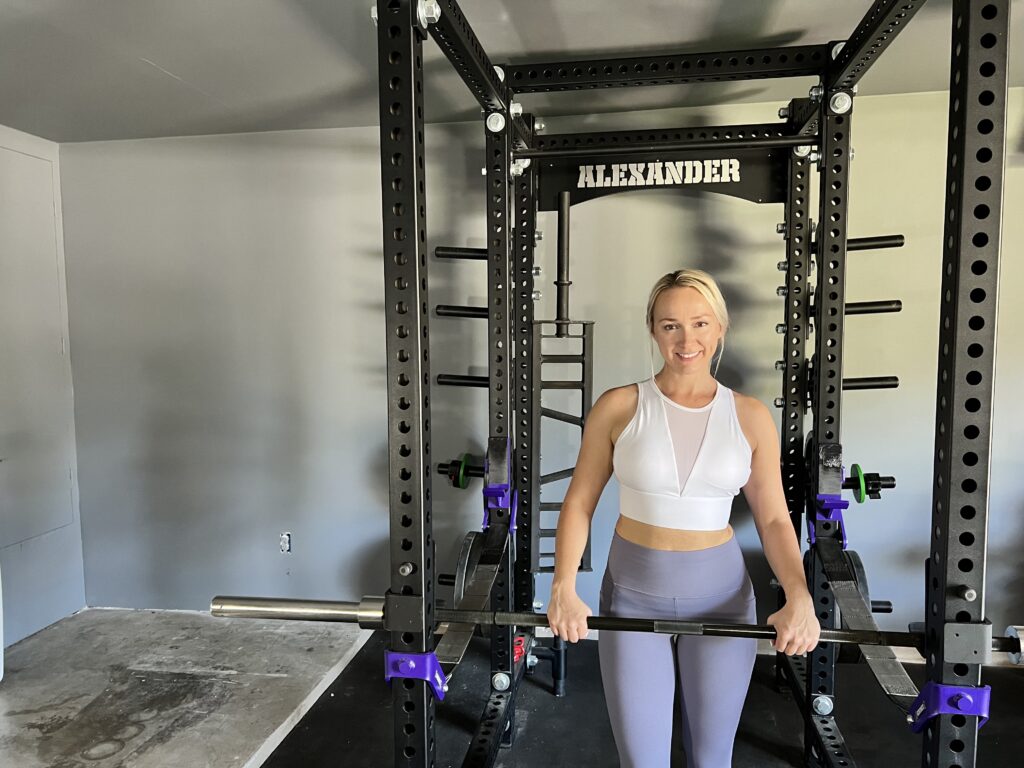
a home gym in Austin Texas, by Kathryn Alexander
a home gym in Austin Texas, designed by Kathryn Alexander

Home Gym Ideas for All Training Styles

Before we get into specifics, let’s talk about the kinds of equipment you’ll need that will apply to all kinds of training. In a nutshell, this means:

  • safe and durable flooring
  • storage space
  • good quality exercise equipment

Flooring For Your Home Gym

When building a home gym, choosing the right flooring is crucial for protecting your equipment, reducing noise, and ensuring safety. Most garages have concrete flooring, so it’s particularly important to add some kind of protective layer. Here’s why and what to consider:

Why You Need Mats or Flooring Over Concrete:

  1. Shock Absorption: Concrete is hard, offering no cushioning. Using mats or gym flooring will absorb impact from exercises like lifting weights or jumping, which can reduce the risk of injury and protect your joints.
  2. Protect Equipment: Dropping weights on concrete can damage the equipment and the floor itself. Mats help to cushion the impact and prevent damage.
  3. Noise Reduction: Mats can help reduce noise when moving or dropping weights, which is particularly useful if your gym is located near living spaces.
  4. Comfort: Mats provide a more comfortable surface for exercises like yoga, stretching, or bodyweight workouts.
  5. Anti-Slip Surface: Concrete can be slippery, especially if you sweat during workouts. Mats with textured surfaces provide grip and reduce the risk of slipping.

Recommended Types of Flooring for Home Gyms:

  1. Rubber Flooring:
    • Durability: Rubber is the most common material used in gym flooring because it’s durable and provides good shock absorption.
    • Thickness: Thicker rubber (8mm to ¾ inch or more) is ideal for heavy lifting areas, while thinner rubber (6mm) works for cardio and general fitness areas.
    • Rolls or Tiles: You can buy rubber flooring in rolls (for covering large areas) or tiles (for more customizable spaces). Tiles are easier to install.
  2. Foam Mats:
    • Lightweight Use: Foam tiles or mats are great for light exercises like yoga, stretching, or bodyweight exercises but not recommended for heavy weights as they may dent or wear down.
    • Interlocking Design: These mats usually have an interlocking puzzle design, making them easy to install and replace if damaged.
  3. PVC or Vinyl Flooring:
    • For Multipurpose Areas: These materials offer a more polished look and are durable. They are good for areas used for multiple purposes beyond just fitness (e.g., garages).
    • Less Shock Absorption: They aren’t as shock-absorbent as rubber but are good for areas where you won’t be dropping heavy weights.
  4. Horse Stall Mats:
    • Cost-Effective Option: These are thick, durable rubber mats commonly used in gyms. They are cheaper than gym-specific rubber flooring but offer similar protection.
    • Size: They typically come in larger 4’x6’ sections and can cover a significant area.

What to Consider:

  • Thickness: For weightlifting or using heavy equipment, go for 8mm or thicker rubber mats. These are a bit more heavy duty. If you’re doing mostly cardio, bodyweight exercises, or lighter weight training, 6mm to 8mm mats should suffice.
  • Area of Use: You can use thicker mats in specific areas where you do heavy lifting and thinner, less cushioned mats for stretching or cardio zones.

If you have a concrete floor, rubber mats or horse stall mats are highly recommended to prevent damage to the concrete and equipment, as well as to provide better comfort and shock absorption.

I have stall mats from Tractor Supply. You can also get good mats from Home Depot or Amazon. 

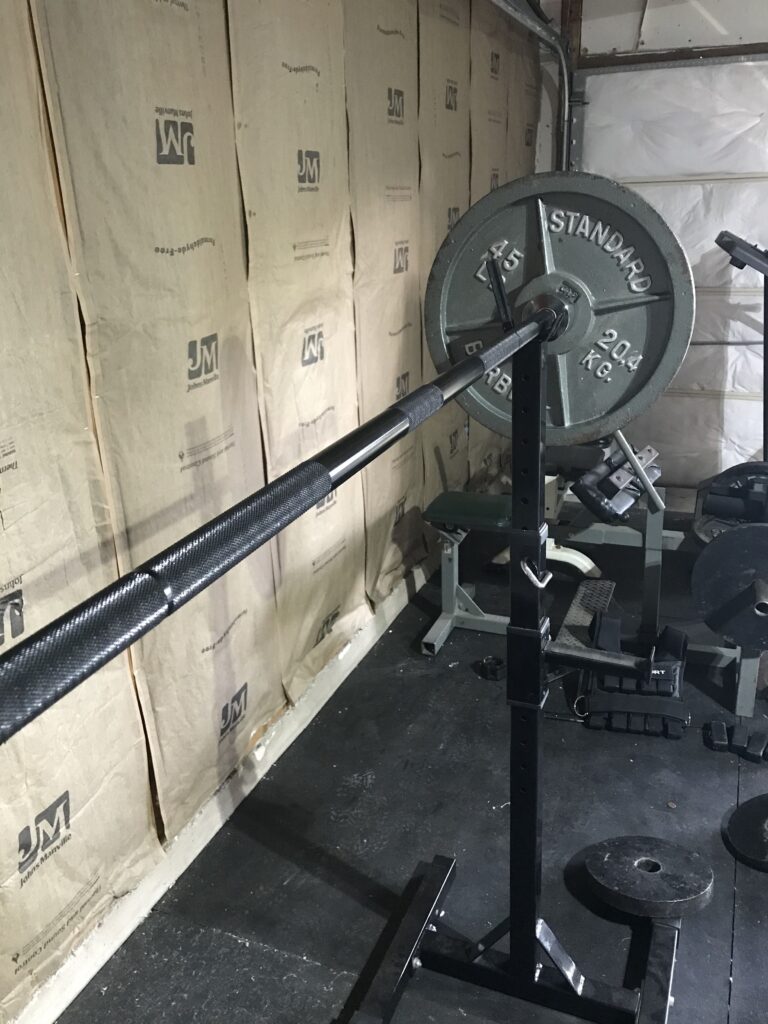
home gym ideas garage; where I got started
Where my gym I got started!

Equipment Storage

Organizing a garage space/home gym efficiently is key to keeping your workout space functional, safe, and clutter-free. Here are some essential storage solutions for common gym equipment, including barbells, plates, and accessories:

1. Barbell Storage

  • Vertical Barbell Holder (Barbell Rack): These hold barbells vertically to save floor space. They typically hold multiple barbells (2, 4, or even more). This type of storage also protects the barbell’s knurling and keeps them from rolling around.
  • Horizontal Wall-Mounted Barbell Rack: Also called barbell gun racks, these racks mount on the wall and hold the barbells horizontally. They’re great if you have more wall space and want easy access to the bars.
  • Floor-Mounted Barbell Rack: If you don’t want to mount anything on the wall, floor racks can store barbells horizontally on the ground. Some also come with additional storage for other equipment like plates or collars.

2. Weight Plate Storage

  • Plate Tree (Vertical Plate Storage): A plate tree is a vertical storage unit with arms for organizing different-sized plates. It keeps your plates off the floor and makes them easy to access.
  • Wall-Mounted Plate Storage Pegs: If you want to save floor space, wall-mounted pegs allow you to store your weight plates on the wall. They are especially helpful for keeping bumper plates organized.
  • Power Rack with Plate Storage: Many power racks come with built-in plate storage attachments, so you can store your plates right on the rack without needing additional equipment.
  • Rolling Plate Rack: This mobile storage option is great for easily moving weight plates around the gym, especially if you have a larger space.

3. Dumbbell and Kettlebell Storage

  • Dumbbell Rack: A 2- or 3-tier dumbbell rack is essential for keeping your dumbbells organized. They’re available in different sizes depending on how many dumbbells you have.
  • Kettlebell Rack or Shelf: Kettlebells can be stored on either a dedicated rack or a multi-purpose shelving unit. Some racks have flat shelves to accommodate various sizes.
  • Wall-Mounted Kettlebell Hooks: If floor space is limited, you can install wall-mounted hooks specifically designed to hold kettlebells.

4. Resistance Bands and Small Accessories

  • Wall-Mounted Pegboard: A pegboard with hooks is perfect for storing resistance bands, jump ropes, collars, lifting belts, and other smaller accessories. It keeps them organized and easy to access. Bands are crucial for back exercises, which are sometimes harder to do at home.
  • Over-the-Door Storage Rack: These racks have hooks or mesh compartments to store bands, towels, or smaller gym items, and they can be easily hung over a door in your gym.
  • Storage Bins or Baskets: Stackable bins or baskets can store miscellaneous items like foam rollers, yoga blocks, or smaller pieces of equipment.
  • Drawer Units or Shelves: Small drawer units or shelves can help keep accessories like chalk, wrist wraps, lifting straps, and other items organized and easy to reach.

5. Medicine Ball and Slam Ball Storage

  • Ball Rack: A vertical or tiered rack designed to hold medicine balls, slam balls, or wall balls can keep these pieces organized and prevent them from rolling around.
  • Wall-Mounted Ball Storage: Wall-mounted holders are also an option to keep balls off the floor and save space.

6. Storage for Mats and Foam Rollers

  • Wall-Mounted Mat Hooks: Mats can be hung on hooks or rails to keep them off the floor and to ensure they don’t take up unnecessary space.
  • Foam Roller Stand or Wall Rack: You can get a small rack or holder that keeps foam rollers standing upright. Some wall-mounted racks can also hold rollers alongside mats or bands.

7. Power Rack Storage Attachments

  • Power Rack Storage Attachments: Many modern power racks offer attachment options for storing accessories like resistance bands, weight plates, barbells, or even landmine attachments. This can maximize space and reduce clutter in your gym.

8. Wall-Mounted Shelves or Cabinets

  • Multi-Purpose Shelving: For items like water bottles, towels, or tech (phones, headphones, etc.), wall-mounted shelving units or cabinets can keep everything tidy and off the floor.

9. Collar and Clip Storage

  • Magnetic Wall Mounts: Magnetic storage solutions for collars and clips can attach them directly to a rack or the wall, making them easily accessible.
  • Small Hooks or Bins: You can also use small hooks or bins specifically for your collars, which can be mounted on a wall or attached to a rack.

10. Multi-Purpose Storage Benches

  • Storage Bench: A flat or adjustable bench that doubles as a storage compartment can hold smaller equipment like resistance bands, wraps, or dumbbells. This is a great way to save space while adding utility to your bench.

Whether you are training for specific competitive goals, or training to increase health of fitness, there are some pieces of equipment you will need regardless. In various strength training disciplines like powerlifting, Olympic weightlifting, bodybuilding, and general strength training, several pieces of equipment are essential, despite the differences in technique, goals, and training styles.

Here’s a list of equipment that is commonly used across these disciplines:

1. Olympic Barbell

  • Description: The Olympic barbell is a staple across almost all forms of lifting. It typically weighs 20 kg (45 lbs) for men and 15 kg (33 lbs) for women. The sleeves of the bar rotate (bearings or bushings), which is crucial for exercises like cleans and snatches.
  • Use Across Disciplines:
    • Powerlifting: Used for squats, bench press, and deadlifts.
    • Olympic Lifting: Central to movements like the snatch and clean & jerk.
    • Bodybuilding & General Strength: Used for a wide range of compound and isolation exercises.

2. Weight Plates (Bumper Plates or Metal Plates)

  • Description: Plates are needed to load the barbell, and they come in different materials. Bumper plates are rubberized and designed to be dropped safely, while metal plates are often used for powerlifting and bodybuilding.
  • Use Across Disciplines:
    • Powerlifting: Metal or iron plates are typically used for precise weight loading in squat, bench, and deadlift.
    • Olympic Lifting: Bumper plates are essential to allow for the bar to be safely dropped during cleans, snatches, and jerks.
    • General Strength & Bodybuilding: Both types are used depending on the exercise and preference.

3. Squat Rack / Power Rack

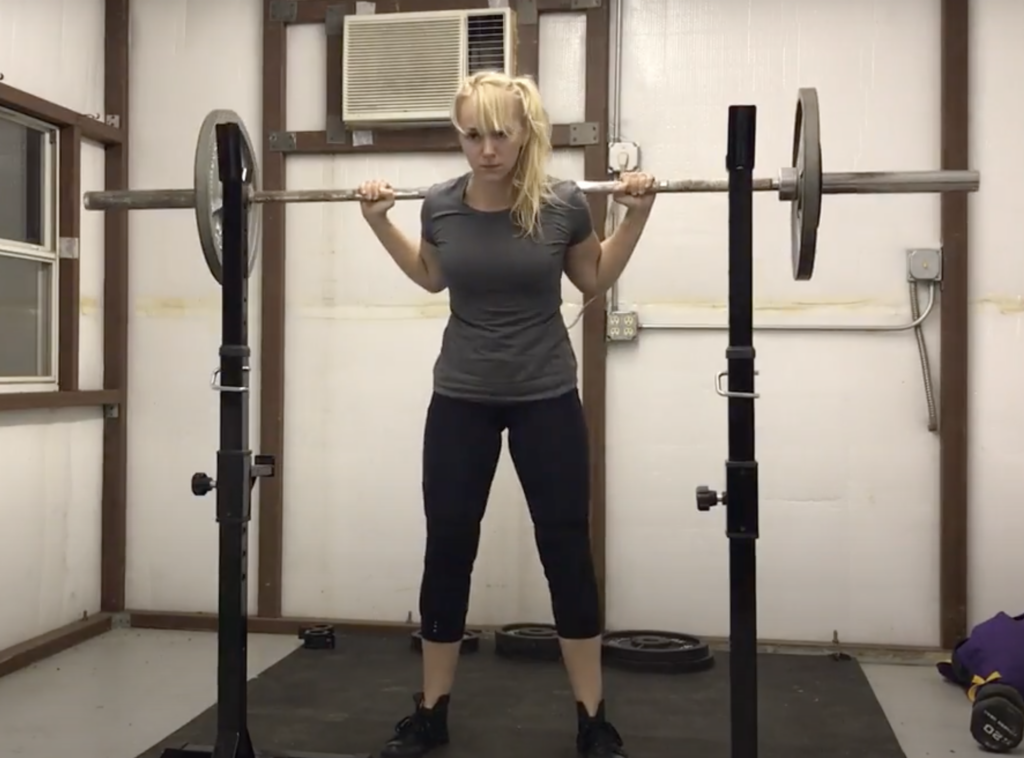
  • Description: A sturdy frame with adjustable safety bars and pins for holding the barbell at different heights. This allows for safe squatting and other lifts like bench presses and overhead presses. The best squat racks are heavy, sturdy, and safe. If you don’t want a whole squat cage or power rack, you can use a squat stand.
  • Use Across Disciplines:
    • Powerlifting: Essential for squats and often for bench press.
    • Olympic Lifting: Often used for squats (front and back) as part of strength development.
    • General Strength & Bodybuilding: Used for squats, presses, and even pull-ups if it has a bar attachment.

4. Weightlifting Shoes

  • Description: Specialized shoes with a raised heel that helps lifters maintain better form, especially in squats and Olympic lifts, by allowing for better ankle mobility.
  • Use Across Disciplines:
    • Powerlifting: Often used during squats for improved depth and form.
    • Olympic Lifting: Essential for snatches, clean & jerks, and squats.
    • General Strength: Some lifters use them for squats and overhead presses.

5. Chalk

  • Description: Lifting chalk (magnesium carbonate) helps to improve grip by reducing sweat on the hands.
  • Use Across Disciplines:
    • Powerlifting: Common for deadlifts and other heavy lifts to enhance grip.
    • Olympic Lifting: Essential for cleans, snatches, and jerks.
    • General Strength & Bodybuilding: Used by some lifters for grip-intensive exercises like deadlifts or pull-ups.

6. Lifting Belt

  • Description: A weightlifting belt helps stabilize the core and reduce stress on the lower back by providing intra-abdominal pressure during heavy lifts.
  • Use Across Disciplines:
    • Powerlifting: Heavily used for squats and deadlifts.
    • Olympic Lifting: Some lifters use it for clean & jerk or snatch, especially during heavy sets.
    • General Strength & Bodybuilding: Optional but commonly used during heavy compound lifts like squats and deadlifts.

7. Collars/Clips

  • Description: Collars or clips secure the plates on the barbell to prevent them from sliding off during lifts.
  • Use Across Disciplines: Used universally across powerlifting, Olympic lifting, bodybuilding, and general strength training to secure weight plates during lifts.

8. Bench

  • Description: A flat or adjustable bench is used for exercises like the bench press and a variety of other pressing and pulling exercises. I have a bench from Sorinex and a bench from Fringe sport. I love both. 
  • Use Across Disciplines:
    • Powerlifting: Essential for the bench press.
    • General Strength & Bodybuilding: Used for bench press, incline press, dumbbell exercises, and more.

9. Resistance Bands

  • Description: Bands add resistance or assistance in lifts. They can be used for mobility work, warm-ups, or to change the resistance curve of an exercise (accommodating resistance).
  • Use Across Disciplines:
    • Powerlifting: Used for accommodating resistance (e.g., banded squats, deadlifts) or warm-ups.
    • Olympic Lifting: Often used for mobility work or warm-ups.
    • General Strength & Bodybuilding: Common for warm-ups, mobility, or even adding resistance to lifts.

10. Kettlebells and Dumbbells

  • Description: While barbell training is central, kettlebells and dumbbells are used to supplement training and for accessory work.
  • Use Across Disciplines:
    • Powerlifting: Used for accessory exercises like rows, lunges, and presses.
    • Olympic Lifting: Often used for mobility and supplemental strength training.
    • Bodybuilding & General Strength: Common for hypertrophy work and targeting smaller muscles.

11. Pull-Up Bar

  • Description: A pull-up bar is a versatile piece of equipment for bodyweight exercises, often included as part of a power rack.
  • Use Across Disciplines:
    • Powerlifting & Olympic Lifting: Used for accessory back and grip work.
    • General Strength & Bodybuilding: Common for pull-ups, chin-ups, and core exercises.

While each lifting discipline has its unique requirements, these pieces of equipment serve as a foundation for strength training across the board, allowing for versatile and effective workouts regardless of the specific focus.

Related: how to heat a garage gym in the winter

​Home Gym Ideas: Garage Decoration

The best part about getting a good workout in your own garage gym is that you are in charge of every last thing. You can take an empty garage and make it the best home gym ever. Hang your motivational posters, decorate your garage walls, and hang that American flag. Play your loud music, crank the air conditioning if you’ve installed one. 

These are some of the best garage gym ideas I have! Let me know if I’ve missed an essential piece of equipment, of a fun way you’ve built up your own gym. Happy training in your own garage gym! 


About the author

Kathryn Alexander is a strength coach and personal trainer in Austin, Texas. She loves hiking, college football, and the feel of a perfectly knurled barbell. Read more about Kathryn here.


  • things to do outside in Austin. Food truck park near Barton Springs
    Things to Do Outside in Austin
  • Best At Home Bicep Workouts (db curls) with personal trainer Kathryn Alexander
    Best At Home Bicep Workouts: Build Bigger Biceps Without a Gym
  • Personal training in Austin, Texas, personal trainer in Austin
    February is for Friends! (Big Sale!)
  • New coach Chris Rios Alexander Training
    New Coach! Introducing Chris Rios
  • start exercising, new to gym
    If You’re New To The Gym, Read This
  • tailgate baby shower at the gym
    Love Notes, Volume 4. December Edition

Filed Under: Garage Gym, Home gyms Tagged With: garage gym, home gym, home training, home workouts

Full Body Band Workout at Home: 12 Best Exercises

June 10, 2024 by Kathryn Alexander

A full body band workout at home: the 12 best exercises for a complete resistance band workout. The closest thing you can get to having a full-body workout machine at home!

You probably know by now that I am a huge proponent of investing in your own home gym equipment, whether it’s resistance bands and some weights, or fully decking out a garage gym with barbells and equipment.

You can even learn bodyweight exercises and perfect them. I just think it’s hugely important to always be able to exercise. Specifically, strength training is important to be able to do regularly.

Today I’ll teach you a full-body resistance band workout. Resistance band workouts are great for so many reasons! Resistance bands are so portable: they’re lightweight and their compact design makes them easy to store and transport. They’re similar to the functional trainer at the gym, but you can take them with you wherever you go, whether it’s on vacation, to the office, or outdoors.

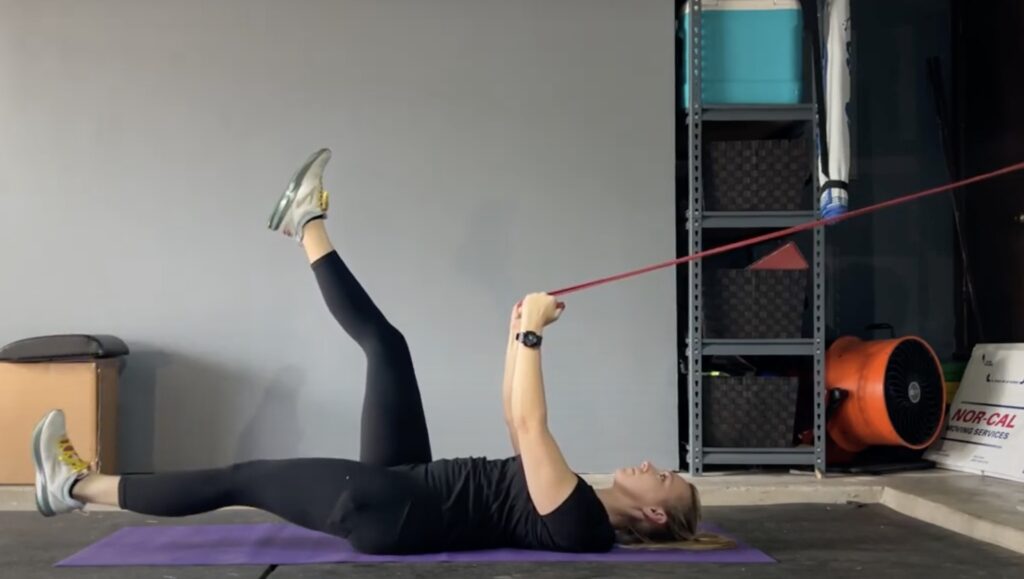
full body band workout at home: band ab work demonstrated by Austin personal trainer Kathryn Alexander

The Benefits of Resistance Bands

They offer a wide range of resistance levels, allowing you to easily adjust the intensity of your workouts by using different bands or adjusting the length of the band. This versatility makes them suitable for people of all fitness levels, from beginners to advanced athletes. Heck, you can even share bands in the same workout without the time or effort of adjusting weights/machine settings, etc.

My favorite bands are the kind pictured above, that I’m using in my garage gym. I prefer these laminated ones rather than the tubing. I’ve bought so many of these because I use them everywhere. (This is an affiliate link to the band I use. If you purchase through this link, I may make a small commission at no extra cost to you.)

Resistance bands are also relatively inexpensive, compared to most exercise equipment. You can get a full set of bands for a fraction of the cost of traditional gym equipment. They’re a great tool for a full body band workout at home.

You can set up your workout station even on the go, in a hotel room or outside. Bands don’t take up much space, but they give you the resistance you need for great training.

They allow you to work every muscle group in your body and perform a wide variety of exercises, including squats, lunges, chest presses, rows, bicep curls, shoulder presses, and more. Plus, you can easily modify exercises to make them easier or more challenging by adjusting your grip or stance.

This provides a smooth and controlled resistance throughout the entire range of motion, which can be gentler on your joints compared to free weights or machines. This makes them an excellent option for people recovering from injuries or dealing with joint pain.

Overall, resistance bands are a convenient, affordable, and effective tool for home workouts, allowing you to get a full-body workout without the need for a gym membership or equipment that takes up your whole garage so that you can’t park in the garage during random Austin hailstorms. Oddly specific, I know. 

The Full Body Band Workout

Below is a list of the 12 exercises that I recommend for a full body resistance band workout. Farther in the article is a description of how to do each, along with videos. 

  1. band pullaparts    
  2. band pullaparts pulldowns 
  3. squats with resistance bands
  4. banded push-ups
  5. banded rows
  6. standing banded shoulder press
  7. lateral band walks
  8. banded glute bridges
  9. alternating leg lifts with bands
  10. banded lat pulldowns
  11. banded bicep curls
  12. banded deadlifts

These exercises provide a full-body workout using resistance bands and can be easily modified to suit your fitness level and goals.

How to Do The Band Exercises

Band Pullaparts

These are classic band exercises. Pullaparts are great for back, shoulders, and good posture. To do the band pullapart:

  • stand tall
  • extend your arms in front of you, gripping a light band
  • keep elbows straight but not locked as you press your arms straight around your side
  • I prefer palms down but you can experiment with different hand positions
  • squeeze your shoulders behind you as you make a big wide sweep with your arms
  • press until the band touches your chest
  • control the return to your start position and repeat 

Band Pullaparts (Pulldown)

Upper body work is tough to do without pulling machines, but this is another great pulling band exercise.If it feels abstract with you, experiment until you can feel your lats (underneath your armpits) squeezing. BTW, I named these pullapart pulldowns. If you have a better name, please let me know. 🙏🏼

To do the band pullapart pulldown:

  • stand tall holding the band slightly wider than shoulder width
  • initiate the pull by squeezing your shoulder blades down
  • pull until the band is neck level
  • you can pull in front of your behind your head
Band pullaparts
Band pullaparts (pulldown)

Squats with Resistance Bands

The resistance band adds extra tension to target your glutes, quads, and hamstrings. This is one of the best lower body resistance band exercises. To do squats with resistance bands:

  • place the resistance band under your feet and hold the handles at shoulder height
  • perform squats by pushing your hips back and bending your knees
  • keep your feet flat on the ground
  • press your big toes into the ground as you drive back into your start position

Banded Pushups

Banded pushups are pretty fun! If you aren’t proficient with non-banded pushups, work on those first. These add a challenge, for sure. To do banded pushups:

  • loop the resistance band around your back and hold the ends in each hand while in a push-up position
  • perform push-ups while maintaining tension on the band, engaging your chest, shoulders, and triceps

Banded Rows

There are a few ways you can do rows with the band. You can do them standing, seated, and with the band anchored from wherever is secure. To do banded rows:

  • stand with the band anchored in front or you or sit on the floor with your legs extended and loop the resistance band around your feet
  • hold the ends of the band with both hands, palms facing each other
  • perform rows by pulling the band towards your torso, squeezing your shoulder blades together to engage your back muscles
  • again, I beg of you, make sure this band is secure! Please please don’t let it slip off and pop yourself in the face
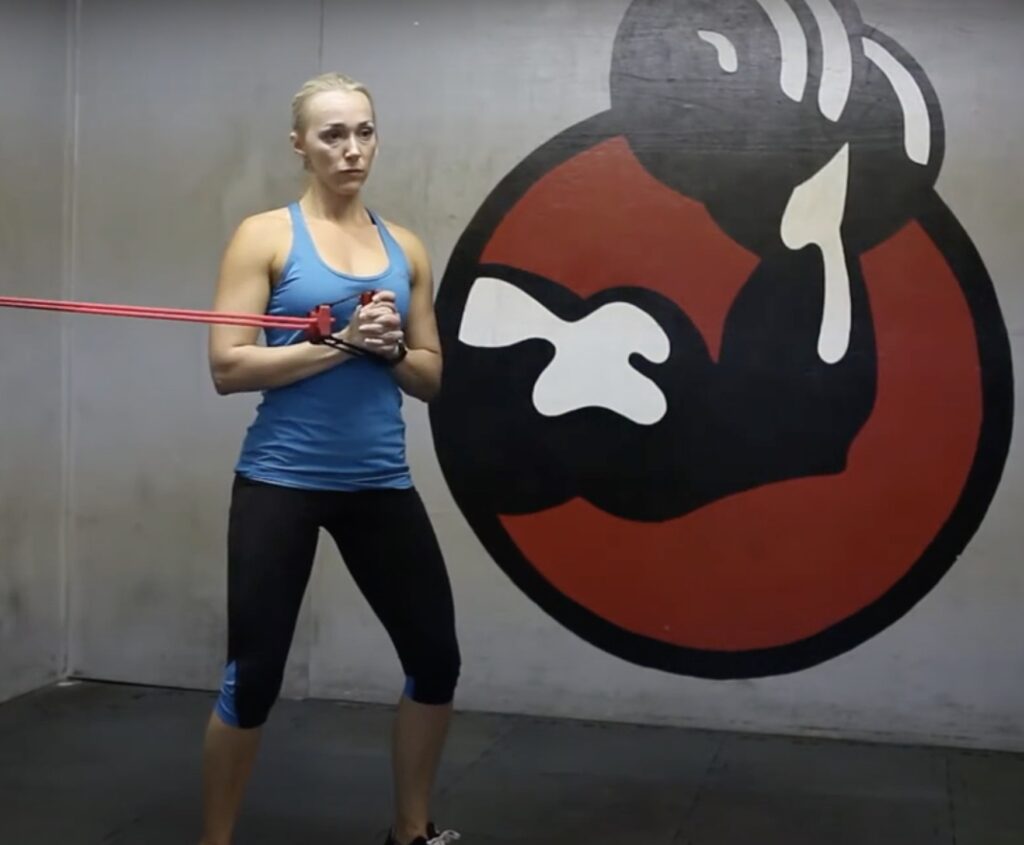
resistance band rows

Standing Band Shoulder Press (Overhead Press)

I prefer to do this one arm at a time so I am going to give you directions that way. To do the standing band shoulder press:

  • stand with your right foot on a light band
  • keeping your entire body engaged, hold the band in your right hand and press your right hand toward the ceiling
  • control to your start position and do as many reps as you plan
  • from there, repeat, stepping on the band with your left foot and pressing with your left arm
  • please make sure you are stepping on this securely! I do not want you to be on a blooper reel!

Lateral Band Walks

This exercise strengthens your hip abductors and glutes, improving hip stability. Also lights a nice little fire in your quads if you maintain that squat position. To do lateral band walks:

  • place the resistance band around your ankles OR under your feet, and assume a quarter-squat position. You can squat a bit more than I do in this demo video, for bonus points 🙂
  • step sideways against the resistance of the band, maintaining tension throughout the movement
  • drive with both legs; don’t just press into the band
  • maintain a straight line in your body, instead of leaning into the movement and bobbling back and forth
lateral band walks

Banded Glute Bridges

To do banded glute bridges:

  • lay on your back with your knees bent and feet hip-width apart, placing the resistance band just above your knees
  • lift your hips off the ground, squeezing your glutes at the top of the movement
  • lower your hips back down and repeat
  • this exercise effectively targets your glutes and hamstrings

Alternating Leg Lifts With the Band

This is one of my favorite ab exercises! In fact, I wrote a whole blog post about alternating leg lifts with bands here. These work abs and hip flexors together, which is fantastic for core and hip strength. To do the leg lifts with the band:

  • lay on your back with feet up, and hands on a band that is secured above your head
  • straighten your arms and tighten your whole core
  • use your abs to press your lower back into the ground
  • slowly lower your left leg all the way down and then back up
  • you can keep a slight bend in your knee if you need
  • repeat with your right leg, down and up before you begin again with the left leg
  • continue one leg at a time, maintaining tension into the band and through your whole core

If this is too tough to rig up at home, just do some planks and plank variations. More info here.

alternating leg lifts with band (for abs)

Banded Lat Pulldowns

Lat pulldowns are notoriously hard to repeat at home. However, if you can find a place to anchor your band, then you are good to go. A great option here is to vary your anchor point; if you can pull from a higher position, and medium position, that’s fantastic for your back. To perform the band lat pulldown:

  • attach your band securely as high as possible
  • step back and hinge over so your band is originating from above your head now
  • squeeze your shoulders blades down and follow with your elbows
  • pull elbows toward your hips, not behind you-squeeze your lats hard at the bottom of the movement
  • reverse the movement, beginning with extending your elbows, then allowing your shoulder blades to move upward again
Band lat pulldowns

Banded Biceps Curls

The bicep curl is also simpler to do with dumbbells; however, the resistance band bicep curl has the benefit of maintaining resistance throughout the whole movement. To do the banded biceps curls:

  • stand with both feet on the band (again, securely!)
  • ggrip the top of the band with both hands
  • you can take a neutral grip, meaning palms face each other, or you can keep your palms facing up (supinated position)
  • tighten your shoulders back and hold in this position, as you straight your elbows, and then bend elbows to curl up
  • return to your start position and do as many reps as you’d like

Banded Deadlifts

I saved one of the coolest for last! I really love this one, and it feels great! Hands down, my favorite exercise during a full body band workout at home. To do the banded deadlift:

  • stand over an appropriately resistant band-grab the center of the band, choking up if you need to increase the resistance
  • keep your whole trunk engaged and neutral
  • bring your hips toward the ground and grab the band
  • keeping your arms straight and your trunk unmoving, squeeze your glutes and grab the ground with your toes
  • press the ground away from you as you stand all the way up
  • reverse the movement to return to your starting position
Banded deadlift. Deadlifts with the band are inexplicably fun. Try it!

Bonus Band Lift: Pallof Press

OK here’s a bonus lift, your baker’s dozen: The Pallof Press. I just couldn’t narrow them down! Take care to maintain your feet shoulder-width apart here. If you find yourself taking a really wide stance and bending your knees excessively, you’ll be taking work away from your core. That’s not necessarily a wrong position! It’s very stable! But here, you’re trying to make your torso do the stability, so don’t let your legs take all the work. To perform the Pallof press:

  • stand upright with a band secured at your side, at chest level
  • grab the band with both hands in front of your sternum
  • step sideways into pressure from the band
  • press straight out in front of you and control your return to start position
  • do not lean into or reach into the press
Pallof press with a resistance band

How to Incorporate These Resistance Band Exercises

You can do these exercises all in a row, making it a giant full body workout. You could also do the upper body ones as a standalone upper body day, and similar with the lower body exercises if you’d like to make it a leg day. If you do that, I suggest doing the alternating leg lifts and Pallof press on either or both days. 

I suggest starting each exercise pretty lightly, and getting high reps to start with. Aim for 15-20, and see how you respond. Rest, and repeat. Keep practicing, and you’ll perfect your full body band workout at home.

More Notes About Using Resistance Bands

As I have mentioned, the resistance bands are a great way to get full body bands workouts at home or hit all the major muscle groups at home or while you’re traveling. They are just an effective way to do strength training in general. However, we need to buy quality bands and maintain them so that they are safe.

Always inspect your bands before you use them for any tearing or fraying. Do not loop bands around anything sharp that will cut or dig into them. Be careful if you leave them outside because they weather and tear faster. In fact, just bring them inside. They don’t take up much space so you could even throw them under the couch, in a drawer or any other little small space.

If you want to skip the band entirely, here’s a fun workout you can do at home without equipment.

full body band workout at home: the Pallof press demonstrated by Austin personal trainer Kathryn Alexander

Ways to Increase the Challenge of Resistance Bands

Unlike working with barbells, dumbbells or machines, you can’t just set the weight higher with exercise bands. Some bands are labeled with pounds of resistance, but that’s kind of ambiguous. Besides, as they get older and more worn, that number changes. So how do you progress? There are many ways to increase the challenge of resistance band work:

You can add reps if you’d like an increased challenge. 

You can do mechanical drop sets, which means hold the band tighter, for 10 or so reps, then adjust your grip so it is looser. Then do 10 more reps. Then adjust again, reducing resistance. The culmination of 30+ reps will get you! 

Of course, if you have a set of resistance bands and not just one, you can choose the thicker bands for greater resistance.

You can add pauses at the point of resistance, so you are working the entire time and increase your time under tension. 

12 Exercises for Full Body Band Workout At Home

So there you have it! Twelve of the best resistance band exercises for at-home workouts! Resistance band training is really all about getting creative! Whether you have mini bands, power bands, heavy bands, the small looped bands, experiment with what works best for you.

Because resistance bands require you to stabilize your body and engage your core muscles to control the resistance, they help improve your overall strength, stability, and balance, which translates to better functional fitness for everyday activities.

The best resistance band workout is one that gives you a little work, some strength training, and gets you toward your fitness goals. Let go of the idea that it needs to be perfectly counted and structured, and focus on what works for you. 

Want a Bump Up from Band Work?

If you have some more exercise equipment like medicine balls, adjustable dumbbells, a jump rope and even a yoga mat, you can add in some extra exercises to increase your heart rate and bump up the intensity of your session.

Check out The Home Team if you have a few pieces of home gym equipment and prefer to exercise from the comfort of your own home. You don’t need a large multi-station home gym or power rack for this workout program.

A basic home gym setup of bands, a medium pair of dumbbells and one heavier weight (dumbbell or kettlebell) will do. They’re super fun, but no squat rack required.

The above links are affiliate links to products & brands I actually use, which may make me a small commission at no extra cost to you.

Work With Me!

If you are looking for a personal trainer in Austin, I’d love to talk with you! If you are not in Austin, Round Rock, or central Texas, let’s talk about online training.

Message me here for a free consult about personal training in Austin, Texas, or here for online personal training, and we’ll discuss your goals, background, equipment availability, schedule, and exercise preferences.

Let’s get you strong and healthy! 💪


About the author

Kathryn Alexander is a strength coach and personal trainer in Austin, Texas. She loves hiking, college football, and the feel of a perfectly knurled barbell. Read more about Kathryn here.
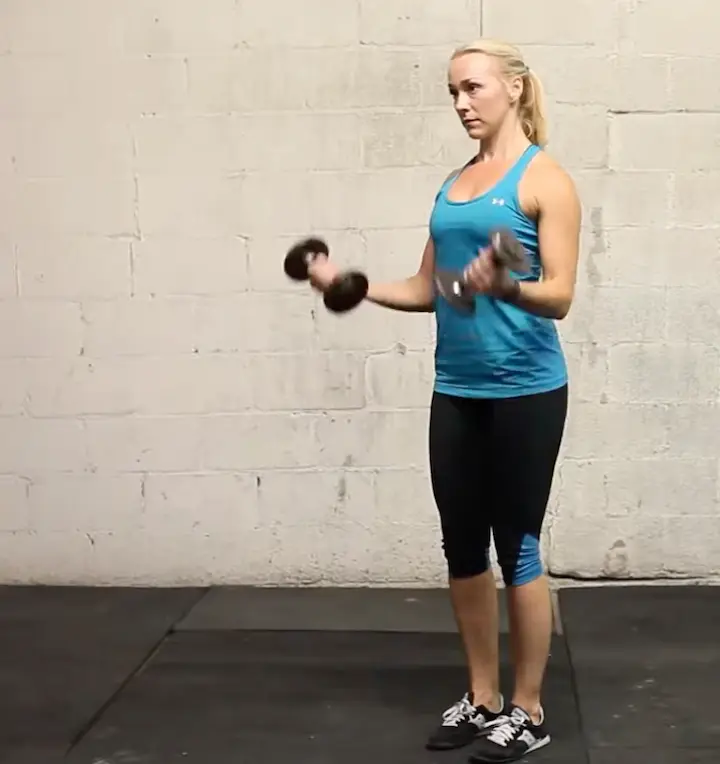

  • things to do outside in Austin. Food truck park near Barton Springs
    Things to Do Outside in Austin
  • Best At Home Bicep Workouts (db curls) with personal trainer Kathryn Alexander
    Best At Home Bicep Workouts: Build Bigger Biceps Without a Gym
  • Personal training in Austin, Texas, personal trainer in Austin
    February is for Friends! (Big Sale!)
  • New coach Chris Rios Alexander Training
    New Coach! Introducing Chris Rios
  • start exercising, new to gym
    If You’re New To The Gym, Read This
  • tailgate baby shower at the gym
    Love Notes, Volume 4. December Edition

Filed Under: Home gyms, Training Tagged With: home gym, home training, home workouts

Leg and Glute Home Workout For Lower Body Strength

May 6, 2024 by Kathryn Alexander

Here is a leg and glute home workout, for those times you can’t make it to the gym. 

Leg and glute workouts are the best! They’re so fun to do at the gym, but sometimes you want to do work from the comfort of your own home. Strong legs and strong glutes mean you can go hike, run, take on stairs easily, and you’ll keep lower back pain at bay.

There’s no reason not to work legs and glutes, the strongest muscles of the body. Try this leg and glute home workout, and let me know what you think! 

What Equipment You Need

This workout will assume you have some weights, maybe a pair of dumbbells or kettlebells, but not a barbell or machines. If you don’t have any weights or a resistance band, then you can do them all as bodyweight exercises. The weight and band resistance is just a bonus!

leg and glute home workout
A single kettlebell or dumbbell can be utilized well during leg and glute home workouts.

I’ll get right into the outline of the workout. Below that I will give explanations of how to do each exercise, including a video link. Finally, at the end of this article I’ll explain more about glute and leg anatomy if you’d like further reading. 

Leg day, commence!!

The Workout

Warm-up:

  1. 5 ish minutes of general movement (walking, jogging in place, high knees, bodyweight squats)
  2. Dynamic stretches for the legs and hips (leg swings, hip circles, lunging twists). Just enough movement to begin to feel looser and ready to work.

Main Workout:

  1. Squats:
    • Bodyweight squats: 3 sets of 12-15 reps
    • Progression: Goblet squats with a dumbbell or kettlebell
  2. Lunges:
    • Any variation you’d like (forward, reverse, or walking): 3 sets of 10 reps per leg
    • Progression: holding weights
  3. Bulgarian Split Squat
    • 3 sets of 10 reps per leg
    • Use a chair or elevated surface to rest one foot behind you while performing a split squat motion
  4. RDL:
    • 3 sets of 12 reps per leg
    • Progression: B stance RDL (directions below)
  5. Calf raises
    • 3 sets of 15 reps
    • Stand with feet hip-width apart and raise heels as high as possible, then lower back down
  6. Glute Bridges:
    • Bodyweight glute bridges: 3 sets of 15 reps
    • Progression: Single-leg glute bridges or weighted glute bridges, with a weight across your hips

How to do the Squat

If you can do this squat forever, you won’t get stuck on a low couch or in the restroom. You’ll keep your independence through old age. In my very first year as a certified personal trainer, before I even got a degree, I told a studio full of sorority girls this. Lol I STILL believe it! But, as you can imagine, the message didn’t land. Anyhow. It’s true.

You can add weight or reps to increase the challenge, but this alone will do wonders for your full body health.

To do the squat:

  • stand on a flat, level surface with both feet on the ground
  • keep your back straight and neutral
  • Upper body does not move; spine doesn’t flex or extend the entire time
  • arms in front of you-break at the hips to initiate squat
  • sit deep into heels-squeeze big toe into the ground as you stand

People often say to stand with feet shoulder-width apart for an ideal squat position, but I believe it’s better to be a bit wider. I’m comfortable with my feet wider. That’s fine too. As you squat, keep your knees big-toe width or wider. If you can do that, you can squat with as wide a stance as you’d like.

Also, every person squats differently, depending on leverages and angles of our femoral head in the hip socket, and other things we can’t even see. All my clients squat differently. Don’t force your squat to look like someone else’s.

Note that you’ll hinge forward from the hips as you squat. This is the correct way to squat. Do not get this confused with bad positioning. You cannot squat with your upper body in an upright position unless you use something like the sissy squat. Keep your back tight and neutral, no lower back rounding, and you’ll be ok. 

How to do Lunges

To do walking lunges:

  • from a tall standing position, step your right foot in front of you as if you are walking on railroad tracks not a tightrope
  • aim to land with a 90 degree angle in both knees
  • knee should be close to the floor but not touching
  • press into the ground through your heel and big toe, and squeeze your glutes to return to your starting position
  • repeat with your left leg. Do an equal number of reps on each leg

To do the reverse lunge:

  • from a tall standing position, step your right leg behind you
  • aim to land with a 90 degree angle in both knees
  • knee should be close to the floor but not touching
  • remember, you’re on railroad tracks, not a tight rope!
  • press into the ground through your heel and big toe, and squeeze your left foot into the ground
  • drive with your glutes to return to your start position

To do lateral lunges with feet stationary:

  • stand tall with legs approximately double shoulder width apart
  • bend into your right knee
  • keep your whole foot, including right heel on the ground
  • left knee will stay soft (slight bend) but straight-stand back up into the standing position
  • repeat on the left leg

You will feel this stretch on your inner thighs and that’s ok!

These are very similar to Cossack squats, which are a bit more advanced. If you’re more comfortable with those, you can do those here. 

Bulgarian Split Squats

How to do Bulgarian split squats:

  • set up facing away from a sturdy box, chair or bench
  • put one leg behind you, on the box
  • from here, bend both knees to accomplish the split squat
  • stop before your knee hits the ground
  • focus on the leg in front to do the work; make sure your whole foot is on the ground
  • squeeze your glutes, and drive your big toe in the ground as you come up
  • repeat for as many reps as you are performing
  • switch legs
Legs; Bulgarian split squat demo for exercise library
Bulgarian split squats, demonstrated by Austin personal trainer Kathryn Alexander

Tips for Bulgarian split squats:

  • you can put your toes on the bench, like I do in the video, or put your foot flat on the bench, with the top of your foot resting on the bench
  • situate your feet so that there is lateral stability between them
  • by this I mean, if you were to look down, your feet are as if you are on railroad tracks and not a tightrope
  • you might have to hop your front foot out to the side to accomplish this. You’ll feel more stable this way. 
  • you’ll probably find one side is more stable than the other. That is ok!

Here’s a full tutorial on how to do Bulgarian split squats if you’d like more details.

Romanian Deadlift with Dumbbells

To perform the RDL, Romanian deadlift, with dumbbells: 

  • stand tall with dumbbells in front of you
  • hold the dumbbells close to your body for the duration of the exercise
  • squeeze your back to keep it straight and neutral
  • push your hips behind you with knees soft
  • let your hamstrings stretch as you lower the weights, keeping them close to your legs. 

Romanian deadlifts can be tough to master. Remember it is a hard hinge! Keep practicing and it will make more sense to you. If you want more details, check out this whole post on how to do RDLs with dumbbells.

B Stance RDLs

The B-stance RDL, a staggered stance Romanian deadlift, is a fantastic lift that allows you to build strength symmetrically without the added challenge of also working balance. It’s comparable to single-leg deadlifts. Here’s how you do a B stance RDL:

  • set up with a kettlebell or dumbbell in your regular stance
  • position your right foot back at about the level of your left heel.
  • keep your torso at a hard neutral (no rounding or arching) and send your hips behind you
  • keep your hips level as you squeeze your glutes to stand back upright
  • add these as an accessory after your main lifts.

Here’s a full tutorial on how to do B stance RDLs. I love these! They are worth taking the time to learn well.

how to do B-stance RDL
how to do B-stance RDLs for a leg and glute home workout

Glute Bridge, 1 Leg at a Time

Glute bridges and hip thrusts are a great way to work your glute muscles. You can start this exercise with both feet on the ground to get a feel for it. From there, if you’d like a challenge, do the 1 leg version, described below. 

  • lay on your back with your knees bent and heels directly under your knees
  • squeeze your glutes and abs so your ribs aren’t flared up toward the ceiling
  • extend one leg 
  • squeeze your glutes to push hips off the ground and control back down

Calf raises

To do the calf raise: 

  • stand holding on for balance if you need (that is ok- the goal of this exercise is not balance, so you aren’t compromising your results by holding on for balance)
  • with your toes gripping the ground, press the ball of your foot into the ground so that your heels raise
  • squeeze your calves at the top and lower your heels to the ground under control
  • you can do these standing with your toes and ball of your feet elevated on a step/stairs, or on the flat ground

Leg and Glute Anatomy

Obviously, the leg and glute muscles make up the musculature of the lower body, so it helps to understand what the muscles are and what they do. Below is a quick description of each of the lower body muscles and their muscle anatomy:

  1. Gluteus maximus:
    • The largest and most superficial gluteal muscle.
    • Responsible for hip extension, outward rotation, and abduction.
    • Plays a significant role in activities like walking, running, climbing stairs, lunges, and split squats. 
  2. Gluteus medius:
    • Located on the outer surface of the pelvis.
    • Functions in hip abduction, internal and external rotation, and stabilization of the pelvis during walking and running.
    • Helps maintain pelvic alignment and stability during single-leg activities.
  3. Gluteus minimus:
    • Lies beneath the gluteus medius.
    • Assists in hip abduction and internal rotation.
    • Works in conjunction with the gluteus medius to stabilize the pelvis and support the hip joint.

These muscles work together to provide stability, strength, and mobility to the hip joint and pelvis, contributing to various movements and functional activities.

  1. Quadriceps:
    • Located on the front of the thigh.
    • Comprised of four muscles: rectus femoris, vastus lateralis, vastus medialis, and vastus intermedius.
    • Responsible for extending the knee and assisting in hip flexion. Quads and hip flexors are involved in leg extensions, squats and lunges. 
  2. Hamstrings:
    • Located on the back of the thigh.
    • Comprised of three muscles: biceps femoris, semitendinosus, and semimembranosus.
    • Responsible for flexing the knee and extending the hip. Hamstrings are also involved in squats and lunges, and especially involved in deadlifts and hinge movements.
  3. Adductors:
    • Located on the inner thigh.
    • Comprised of several muscles, including adductor longus, adductor brevis, adductor magnus, and gracilis.
    • Responsible for bringing the leg towards the midline of the body (adduction). Think of the seated adduction machine here, where you squeeze your knees together.
  4. Gastrocnemius:
    • Calf muscle located on the back of the lower leg.
    • Responsible for plantar flexion of the foot (pointing toes downward) and assisting in knee flexion.
  5. Soleus:
    • Located beneath the gastrocnemius.
    • Also contributes to plantar flexion of the foot but is more active during activities like walking and standing.
  6. Anterior tibialis:
    • Located on the front of the shin
    • Responsible for dorsiflexion (pulling the toes up toward the knee). This is often where people feel shin splits.

These muscles work together to provide stability, support, and movement to the lower extremities during activities such as walking, running, jumping, and squatting.

Related: here are some other quad exercises you can do at home.

Final Note About Glute Workouts

Often, people say they aren’t “activating their glutes” and do muscle activation drills. People say they have dead butt syndrome or glute amnesia. Fake news! Yall, these are made up terms. You might have weak glutes, and you might need to practice doing exercises well, but your muscles do not turn “off” or remain unactivated.

Fire hydrants, abductions, and other glute warm ups don’t magically turn the muscles on. Just practice doing these well, and you’ll progress into strong glutes. Please please don’t fall for “Killer Butt Workout” PZ60 or whatever is popular. Focus on doing great quality movement, not gimmicks.

Glute thrusts, hip bridges, squats and RDLs are some of the best glute exercises, and lower body exercises. Practice these, focusing on feeling your hamstrings stretch and glutes engage, and I promise you’ll start to feel your glutes working better. 

Other Options for Your Leg and Glute Home Workouts

There are so many more leg exercises, and a ton of good glute workouts. You can add in any lunge variations, the curtsy lunge, step ups, pause and tempo squats and lunges, monster walks with bands, etc. With bodyweight workouts, you can get as creative as you’d like! Keep up your strength training, and be consistent with your work.

The human body is amazing! When you keep giving it the right stimulus, you’ll see your fitness goals fall into place. Your everyday life will get easier and you’ll feel stronger. 

Try these exercises for the best dumbbell shoulder workouts at home. Sadly, you can’t do legs everyday!

Work With Me!

If you are looking for a personal trainer in Austin, I’d love to talk with you! If you are not in Austin, Round Rock, or central Texas, let’s talk about online training.

Message me here for a free consult about personal training in Austin, Texas, or here for online personal training, and we’ll discuss your goals, background, equipment availability, schedule, and exercise preferences.

Let’s get you strong and healthy! 💪

About the author

Kathryn Alexander is a strength coach and personal trainer in Austin, Texas. She loves hiking, college football, and the feel of a perfectly knurled barbell. Read more about Kathryn here.
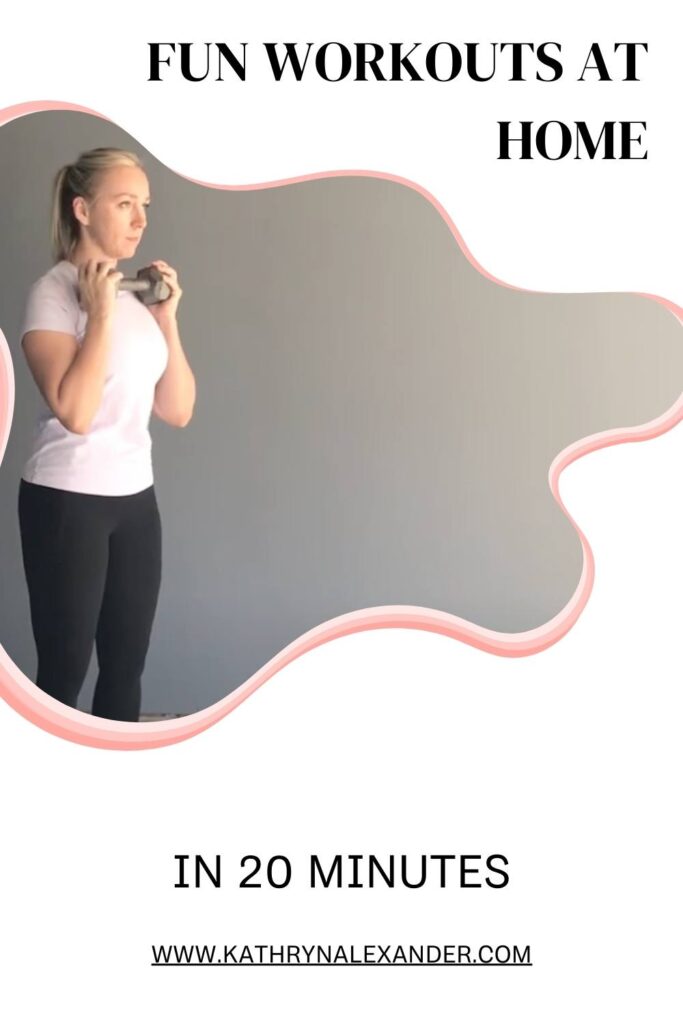

  • things to do outside in Austin. Food truck park near Barton Springs
    Things to Do Outside in Austin
  • Best At Home Bicep Workouts (db curls) with personal trainer Kathryn Alexander
    Best At Home Bicep Workouts: Build Bigger Biceps Without a Gym
  • Personal training in Austin, Texas, personal trainer in Austin
    February is for Friends! (Big Sale!)
  • New coach Chris Rios Alexander Training
    New Coach! Introducing Chris Rios
  • start exercising, new to gym
    If You’re New To The Gym, Read This
  • tailgate baby shower at the gym
    Love Notes, Volume 4. December Edition

Filed Under: Home gyms, Training Tagged With: home gyms, home training, home workouts

Quad Exercises at Home

July 25, 2023 by Kathryn Alexander

Quads are easier to work at the gym, since more equipment means more options, but if you have a little creativity, you can easily do quad exercises at home.

First let’s discuss how you would work quads at the gym. Quad exercises at the gym include seated leg extensions, leg presses, hack squats and barbell squats, among others.

Many people have barbells for home gyms or garage gyms now, but even the most well equipped home gyms rarely have leg machines like the ones named above.

quad exercises at home, demonstrated by Kathryn Alexander personal trainer in Austin, Texas
Barbell squats in my first home gym.

Quad Exercises at Home

Don’t give up on quad exercises at home, though. There are plenty of quad exercises you can do at home without extensive equipment or large machines. With a dumbbell or two, and some creativity and hard work, you can grow your quads at home. Try the following exercises for a quad-focused leg session.

How to do This Quad Workout

You can start with a warm up like a walk but you don’t have to. Your first exercises will be unweighted and will start the process of warming your legs up.

Below, you’ll see exercise “A”, basic squat. Do all 3 sets of those first. After that, do the exercises below in order. Where you see “B1” and “B2”, that is a superset. This means you do exercise “B1” for one set, then exercise “B2” for a set.

Then you rest if you need, and return to exercise “B1” again, then “B2”. If it says “3×10” that means you do it for 3 sets of 10 reps.

So on with “C1” and “C2”.

Best Quad Exercises for Home

A. basic squat to warm up, 3×10

B1. reverse lunge with short step (large knee bend), 4×10

B2. heels elevated goblet squat, stand with your heels on a sturdy 1-2 inches elevation, 4×15

C1. sissy squats, 3x 5-8. These are tough! Work up to them.

C2. lateral walk, 3×10 each direction

As you do this session more, you can add weight to the exercises, and more sets to make it more challenging. You can also be creative on modifications. For example, here’s a whole tutorial on lunge variations and home calf work.

If you’re working quads, you’ll want to work hamstrings as well. Read up on how to work hamstring strength here. And, here’s a whole home leg and glute workout.

Training at Your Home Gym

Quad work takes time and hard work, so keep at it! If you’d like to jump into a program that’s already written, try out The Home Gym. I write The Home Gym for those who work out at home with a few dumbbells and a band. It’s a 3 time weekly workout that works your whole body. Try the first week free here: The Home Team training program!


About the author

Kathryn Alexander is a strength coach and personal trainer in Austin, Texas. She loves hiking, college football, and the feel of a perfectly knurled barbell. Read more about Kathryn here.
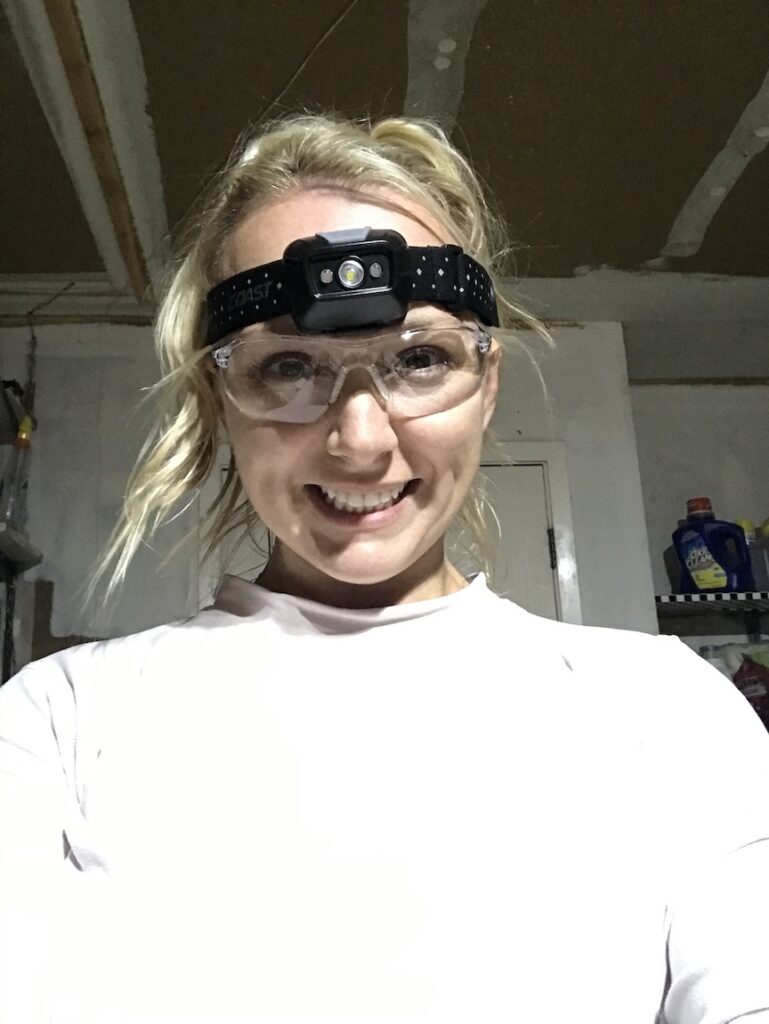

  • things to do outside in Austin. Food truck park near Barton Springs
    Things to Do Outside in Austin
  • Best At Home Bicep Workouts (db curls) with personal trainer Kathryn Alexander
    Best At Home Bicep Workouts: Build Bigger Biceps Without a Gym
  • Personal training in Austin, Texas, personal trainer in Austin
    February is for Friends! (Big Sale!)
  • New coach Chris Rios Alexander Training
    New Coach! Introducing Chris Rios
  • start exercising, new to gym
    If You’re New To The Gym, Read This
  • tailgate baby shower at the gym
    Love Notes, Volume 4. December Edition

Filed Under: Home gyms, How To Tagged With: home gym, home training, home workouts, how to

Primary Sidebar

Kathryn Alexander, personal trainer in Austin
Hi, and welcome here! -Kathryn

Recent Posts

  • Things to Do Outside in Austin
  • Best At Home Bicep Workouts: Build Bigger Biceps Without a Gym
  • February is for Friends! (Big Sale!)
  • New Coach! Introducing Chris Rios
  • If You’re New To The Gym, Read This

Did you know I make custom training plans? Tell Me More!

Footer

Follow

  • Email
  • Instagram
  • YouTube

Affiliate disclaimer

As an Amazon Associate I earn from qualifying purchases.

Newsletter sign up

  • Home
  • About Kathryn Alexander
  • Blog
  • Success Stories
  • Training Programs
  • Personal Training

Copyright © 2026 · Genesis Sample on Genesis Framework · WordPress · Log in

  • Featured In
  • Privacy Policy
  • Resources
  • Online Personal Training
  • Personal Training
  • Training Programs