• Skip to primary navigation
  • Skip to main content
  • Skip to primary sidebar
  • Skip to footer
Alexander Training personal trainer Austin Texas

Alexander Training - personal training in Austin, Texas

Personal training in Austin, Texas and customized strength programs in Austin, Texas.

  • Home
  • About Kathryn Alexander
  • Blog
  • Success Stories
  • Training Programs
  • Personal Training

garage gym

Best Garage Gym Fans 2026

March 15, 2026 by Kathryn Alexander

Best garage gym fans of 2026. Reporting from Austin, Texas, so you already know we’re not playing about the heat down here!

I really love having a home gym. It’s one of the best quality of life increases I’ve been able to buy, and I highly recommend it. There are a few issues you have to handle (like the weather) but it’s so worth it. Let’s talk about the best garage gym fans so you can get to your training. 

Disclaimer: As an Amazon Associate I earn from qualifying purchases. Some of the links in this post are to affiliate products.

If you train in a garage gym, you are going to have to deal with the climate and the issues it brings. Especially in the summer, airflow can make or break your workout. 

In many parts of the United States, especially here in Texas during warmer months, a garage can heat up fast. Like, well over 100 degrees, fast. The combination of a closed garage door, warm walls, and concrete floors can turn a solid training area into an uncomfortable or even dangerous situation.
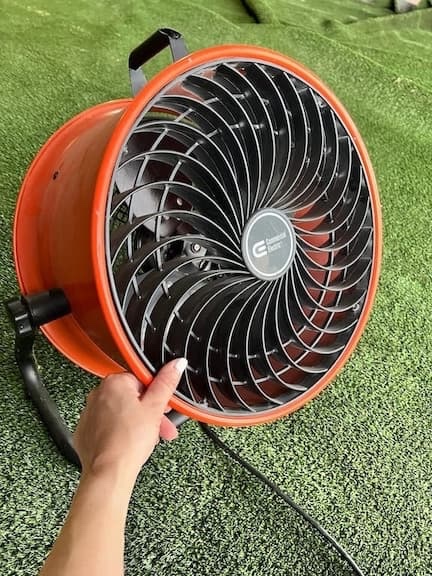
Best garage gym fan. Drum fan in my garage gym. I love this one because it's easily portable.
Drum fan in my garage gym. I love this one because it’s easily portable.

Are you building a home gym and have no idea where to start? I got you! Read this.

Choosing The Best Garage Gym Fan

Choosing the best garage fan matters so much. The right fan can create a refreshing breeze, improve efficient air circulation, and bring in cool air that makes your workout sessions far more comfortable.

Whether you want a compact option for a car garage, a wall-mounted fan to save floor space, or a large fan that can move huge amounts of air across expansive spaces, the right choice can make your training sooo much better!

Remember: your body is like a machine. When it overheats, it won’t perform as well! Having a good fan doesn’t make you a sissy; it makes you smart and better prepared.

For most home gym owners, the top pick is a durable, high-powered circulation fan that can move a lot of air without taking up too much room. In a typical garage gym, you want a fan that can cover a good number of cubic feet, handle large rooms, and still keep the noise level reasonable during lifting, conditioning, or longer training sessions.

A good fan should create enough movement to reduce stale air, help sweat evaporate, and improve comfort without blasting you so hard that it feels like a wind tunnel.
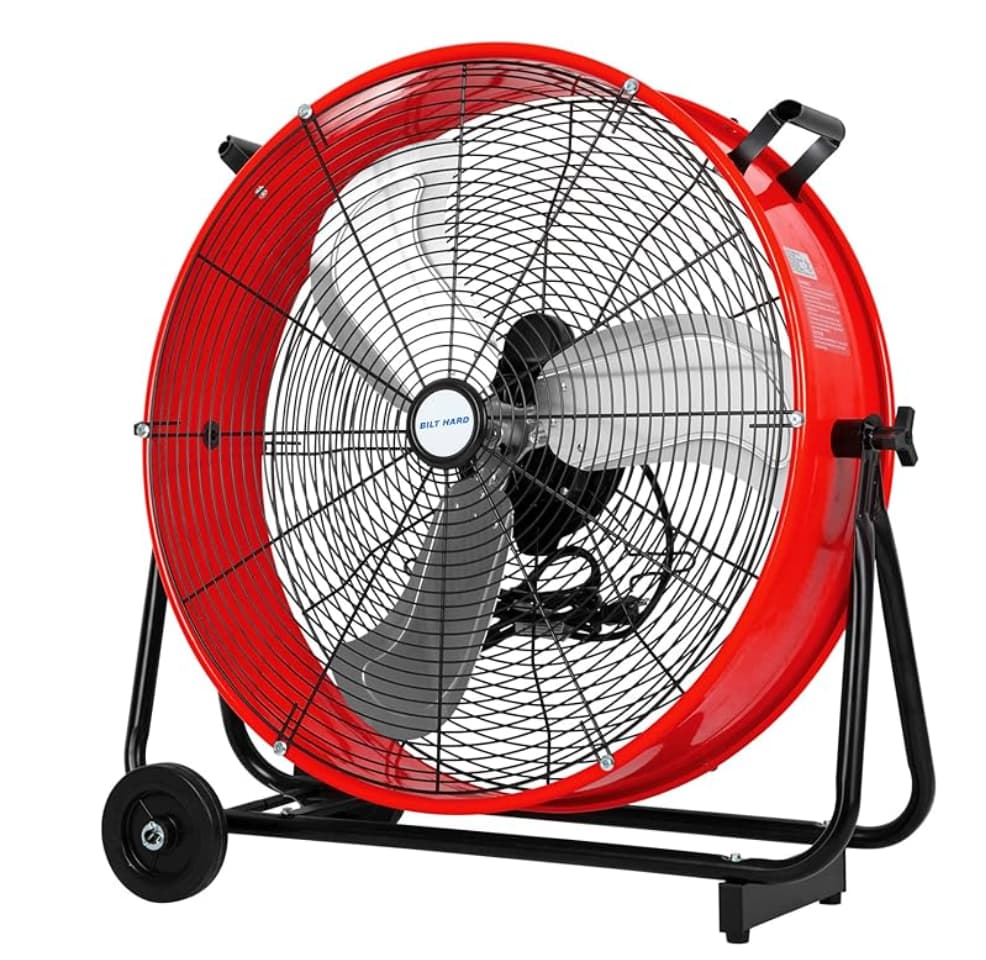
pretty garage gym fan red
You can probably find any color fan you want!

Here’s a link to the fan above.

Types of Garage Gym Fans

When you look up fans, you’ll find everything from a box fan to a drum fan, from tower fans to a high-velocity fan, and even cooling alternatives like an evaporative cooler, portable acs, a portable ac unit, or a window unit.

The truth is, there is no single perfect fan for every gym. The best option depends on your room size, how much powerful airflow you need, your budget, and whether you value raw power or quiet operation.

Here’s my minimal list of home gym equipment essentials.

Ideas on gym flooring.

Wall Mounted Fans

A wall-mounted fan is often the best choice for lifters who want to preserve floor space for racks, benches, sleds, and cardio equipment. With proper wall mounting, these fans stay off the ground, direct airflow across your lifting zone, and can cool different areas of the room.
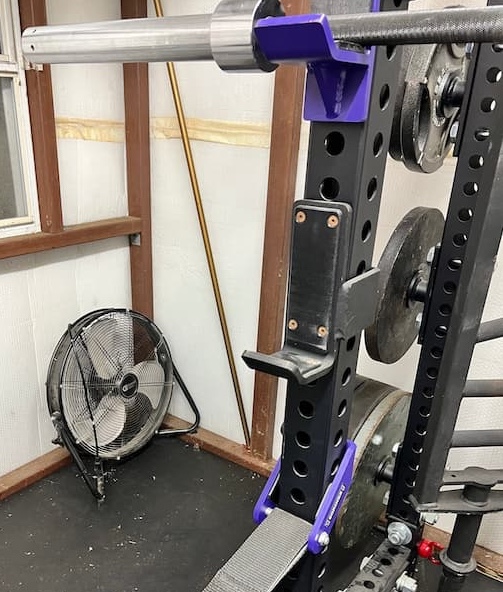
Wall mounted fan in my gym, which is in fact not wall mounted right now.

Many newer models come with a remote control, simple control panel functions, and multiple speed settings so you can switch from low speed during warm-ups to the highest setting during conditioning work. If you want flexibility and convenience, this type of fan is hard to beat.

You can find a similar wall mounted fan here.
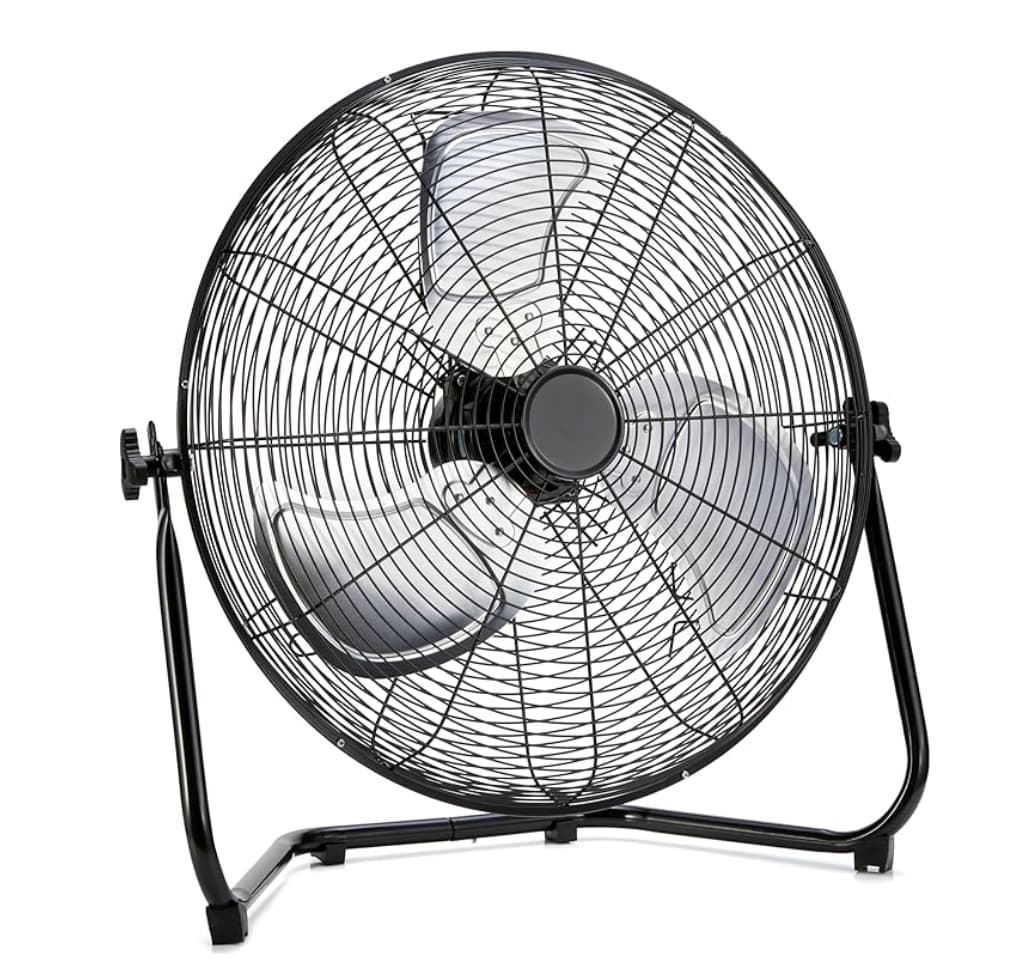
Heavy Duty Fans

For larger home gyms, a high-velocity fan or industrial fan is usually the better move. These are designed for workshops, warehouses, and utility spaces, which makes them ideal for garage use. A true heavy-duty fan can produce powerful airflow, strong wind speed, and enough circulation for larger areas where smaller household fans struggle.

If your gym is set up in a two-car garage, or if you often keep the garage door partially open while training, a strong floor model can push much air across the room and keep everything feeling fresher.

This is what I use, not because I have a large space (mine is 12’x20′), but it’s portable, and I can point it right at the door to blast out mosquitoes! Bonus!

Drum Fans

One of the most popular styles in this category is the drum fan. A drum fan uses large blades and an open design to move air aggressively across a large space. These are especially useful in home gyms with taller ceilings or wide open layouts, because they can distribute air across expansive spaces much better than standard household options.

If you want a big fan with serious output, this may be the route to go. You can also move these around, unlike the wall mounted fans.

This is a drum fan similar to mine. It’s my favorite of my two:
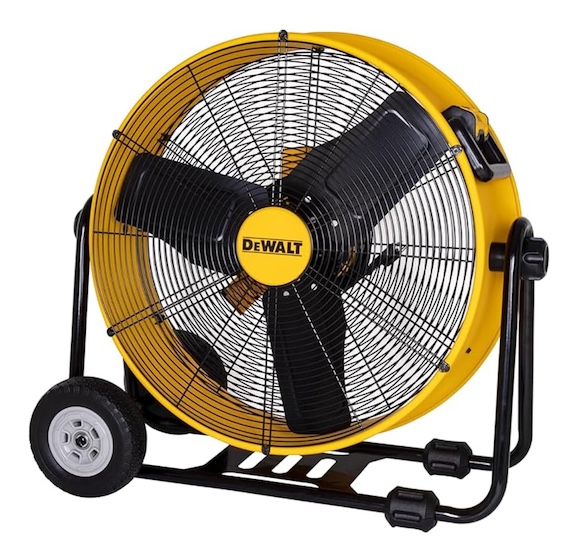
Dewalt drum fan
Dewalt drum fan

Other Portable Floor Fans

A portable floor fan is great for people who want flexibility. If you do mobility near the floor one day, heavy lifting the next, and bike intervals in another part of the gym after that, a movable fan lets you target cooling exactly where you need it.

These portable units are also easy to reposition if the sun hits one side of the garage harder in the afternoon. Compared with fixed systems, a portable floor fan gives you more control over your immediate cooling effect. They can also create a great cross flow if you have an open door or window.

That said, not every garage gym needs an aggressive shop-style fan. Some people want the quietest fan possible, especially if they train early in the morning or late at night. If that sounds like you, look for fans marketed for quiet operation or even silent air movers. While these may not create the same blast as a commercial industrial fan, they can still circulate enough air for solo lifting sessions.

A quieter unit may include different modes, a sleep mode, and more refined low settings for those who care more about comfort than maximum output.

Oscillating Fans

An oscillating fan can be a smart middle-ground option for medium-sized spaces. Unlike fixed fans that blast one direction, an oscillating fan can spread airflow across different areas, helping your whole gym feel more balanced. This is useful when you have a shared space or multiple stations. If your gym is also used for storage, laundry, or general garage use, sweeping airflow can keep the room feeling less stagnant overall.

If you want something especially rugged, look for models with metal blades, durable metal construction, and a dual ball bearing motor. These features often signal better long-term durability, especially in dusty garage conditions.

A cheaper plastic unit may work for a while, but a sturdier build tends to last longer and hold up better through frequent use. A dual ball bearing motor also tends to be associated with smoother operation and a longer lifespan, which matters when your fan is running through long summer workouts.

Ceiling Fans

For ceiling setups, some people ask whether a fitness room ceiling fan can work in a garage. In some cases, yes. A fitness room ceiling fan can help keep air circulating continuously, particularly in finished garage gyms that feel more like a studio than a workshop.

However, ceiling fans often do better as a support system than as the main cooling solution. For harder sessions, most people still benefit from a dedicated floor or wall unit with more direct force and powerful motor output.

The exception is a Big Ass Fan. If you’ve been in commercial gyms, you’ve probably seen the brand Big Ass Fan. They are gigantic ceiling fans and they make it chilly! They’d be overkill for a regular size garage, but if you have a barndominium type situation (my dream gym!) then they’re worth looking into.

Note that these are not cheap, but they’ll do a job littler fans can’t.
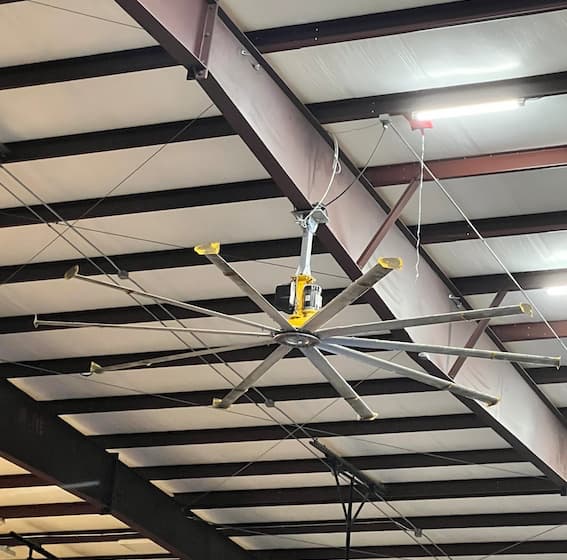
Big Ass Fan at the Premier Athletic Complex in Leander, Texas.

A Couple I Might Not Recommend

Tower fans look sleek and take up less room. In a finished gym or a more polished home (inside) gym, that style can make sense. The vertical design works well when you want airflow without a bulky footprint.

Some also offer an oscillating fan function, meaning the fan sweeps side to side to cool multiple zones. That can help if you’re moving between a rack, dumbbell area, and cardio corner.

Still, while tower fans can work for mild conditions, they usually won’t move the same huge amounts of air as a stronger shop or utility fan.

I also have to mention evaporative coolers. These are what you see on the sidelines of football games. Really overkill for a home gym. In some climates, an evaporative cooler can create a more chilled feeling than a fan alone, especially if the air is dry.

It won’t work the same way in every region, but it can be an interesting middle option between a fan and a full AC system. If you have a somewhat larger space, or if you are training people out of your home gym, and your goal is a stronger cooling effect without the price of heavy air conditioning, it may be worth considering.
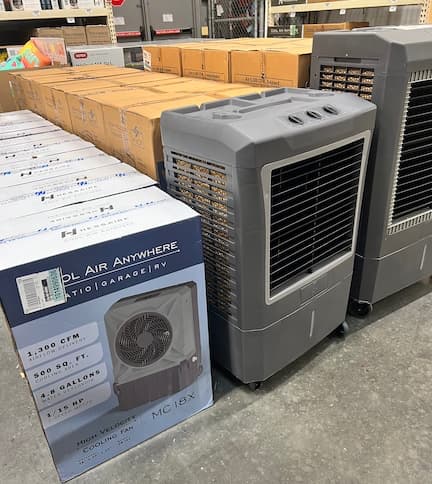
Cooler fan
Cooler fan

Other Factors to Consider When Buying a Garage Gym Fan

Of course, which fan you buy is up to you and your budget, but I like to buy well and buy once. Consider practically how often you’ll use it, how much it matters to you, and the other factors I mention above.

Many strong utility fans also include practical features like adjustable tilt, a pull cord, and simple dials rather than complicated electronics. Others add digital convenience with a remote control and easy-touch control panel settings.

If you want something simple and dependable, manual controls are perfectly fine. If you value convenience, especially during circuits or treadmill intervals, being able to adjust from across the room can be a huge plus.

Size of Your Gym

When comparing best fans, always think about square feet and the volume of the room. A standard one-car gym might need moderate airflow, but a two-car setup with higher ceilings contains many more cubic feet of air. That means you need more power to feel the same effect.

In larger garages, a small fan may technically run, but it won’t create enough air movement to cool the space effectively. This is why looking at size and output matters more than just grabbing the first popular model.

Garage Fan Brands

Brand names come up a lot in garage gym reviews, and a few are well known in this category. Air King has long been a recognizable name for utility and shop fans, especially for people who want simple, durable performance. A solid Air King model can be a good fan choice for home gym owners who prefer proven reliability over flashy features. 

Maxx Air fan products are also commonly considered in garages and workspaces because they are often designed to push strong airflow in demanding environments. If you are comparing similar fans, pay attention to build quality, output, warranty terms, and how they perform on low speed versus the highest speed.

Safety matters too. Since garages can be dusty, humid, and full of equipment, it is worth buying from a reputable brand that follows basic safety standards. A fan should feel stable, especially if it is a large fan or heavy-duty fan. If it is going on the wall, proper wall mounting is essential. You do not want a loose bracket above a squat rack. For ground units, make sure cords stay clear of walkways and that the frame is solid enough not to tip easily.

You should also look at warranty support. A one-year warranty is common and offers at least some peace of mind. While that may not sound exciting, it can help if your motor fails early or the controls stop working. For a product that may run often during the hottest part of the year, that baseline coverage matters.

When to Get an Air Conditioner

If you’re really dying in the heat when you do your home workouts, but you should go with an air conditioner instead. If your garage is brutally hot, a fan alone may not solve everything. In that case, a portable ac unit, a mini-split, one of the newer portable acs, or a mounted window unit may help bring real temperature relief. Just remember that cooling appliances typically cost more to buy and use more electricity.

That’s where energy consumption and energy costs come in. Many people choose fans because they use less energythan full air conditioning. A high-powered fan can still add to your bill, but in most cases it is far more affordable than running a dedicated cooling unit. If you only need circulation and a stronger breeze, a fan is usually the better value. If you need actual temperature reduction, then pairing a fan with a cooling unit may be the smarter long-term setup.

Final Notes on your Garage Gym Fan Decision

Even a simple box fan can still work in the right setup for your home gym. A box fan is affordable, easy to find at Home Depot, and decent for basic circulation. It’s not usually the most powerful or the most durable, but it can be a budget-friendly entry point. If your garage is small and you train in short sessions, it may be enough. And training in your home gym is still the best thing ever!

You may also come across specialized systems like space cool units, workshop ventilators, or even attic fans as part of broader heat management. Those can help reduce trapped heat overall, but they serve a different purpose than a direct workout fan. If your garage traps heat badly, improving ventilation in general can help, but you will still likely want a direct fan aimed at your training area.

In the end, the best garage fan is the one that matches your room size, training style, and comfort preferences. If you want a space-saving solution, a wall-mounted fan is often the best option. If you need maximum airflow for a two-car gym, a high-velocity fan, industrial fan, or drum fan is probably the best choice.

If you care most about minimal sound, prioritize the quietest fan with dependable quiet operation and practical speed settings. And if your heat is extreme, consider combining strong airflow with a portable ac unit, window unit, or other cooling support.

Best Garage Gym Fan For Your Gym

The bottom line is simple: good airflow can transform your training. A great setup with racks, weights, and even the best treadmills or the best protein powders on your shelf still won’t feel good if the room is stuffy, humid, and full of hot air. 

A fan that moves a lot of air, creates cool air circulation, and fits your layout can make a real significant difference in comfort, consistency, and performance. When your gym feels better, your workout experience does too.

And when your training space is comfortable, you are much more likely to use it regularly. For most lifters building an own home gym, investing in one of the best garage fans is one of the smartest upgrades you can make.

Disclaimer: As an Amazon Associate I earn from qualifying purchases. Some of the links in this post are to affiliate products.

Related: Here’s how to heat a garage gym.

Do you need advice on deadlift bars? Here’s a good rundown of deadlift barbells vs trap bars.
About the author

Kathryn Alexander is a strength coach and personal trainer in Austin, Texas. She loves hiking, college football, and the feel of a perfectly knurled barbell. Read more about Kathryn here.

  • walking lunges for deadlift for lower body strength.
    The Best Lower Body Muscular Strength Exercises
  • deadlift barbell vs trap bar
    Deadlift Barbell vs Trap Bar: Which Is Better for Strength, Muscle, and Safer Pulling?
  • Things to do in Austin in April (2026)
    Things to Do in Austin in April (2026)
  • Client results and testimonials for trainer Kathryn Alexander
    Love Notes, Volume 5. Q1, 2026
  • Best garage gym fan. Drum fan in my garage gym. I love this one because it's easily portable.
    Best Garage Gym Fans 2026
  • things to do outside in Austin. Food truck park near Barton Springs
    Things to Do Outside in Austin

Filed Under: Garage Gym, Home gyms Tagged With: garage gym, home gym, home training

How to Heat a Garage Gym: The Best Tips and Equipment

December 11, 2024 by Kathryn Alexander

I am republishing this as of December 2024, because I’m another year in to experimenting on how to heat a garage gym. we are starting to get down into the 30s here in Austin, and it’s enough to make all the dumbbells and barbells cold.

So, let’s get to it: here are the best ways to heat a garage gym this winter.

Some links in this post are Amazon affiliate links to products that I love and regularly use.

Heat Your Garage Gym This Winter!

Whether you live in harsher environments with more extreme weather, or farther south, the cold can present a challenge for your garage gym workouts. This isn’t you being a wuss, either; cold weather changes the game, and it’s good for you to have options on how to heat your space to a more comfortable temperature.

personal trainer Austin Kathryn Alexander
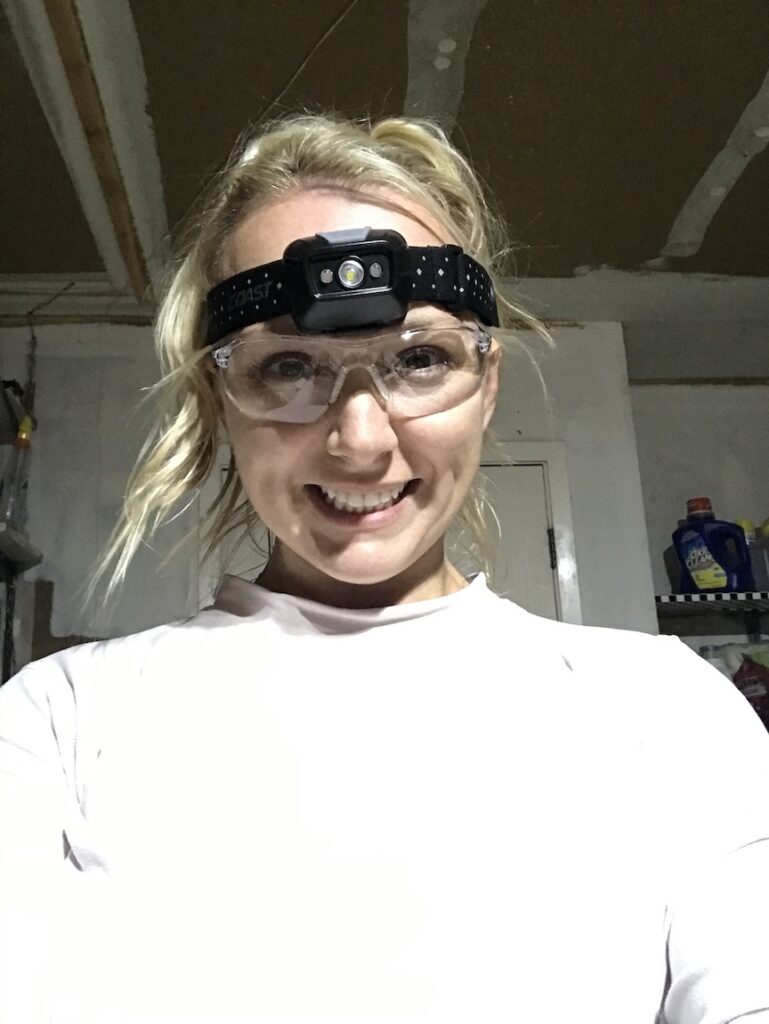
Headlamps are a must for home improvement projects 🙂

To make my winter garage sessions more survivable, I have added insulation to my garage walls behind new sheetrock, I insulated the door, and bought an electric heater. Worth every bit of the investment! I’ll give you all the details below.

Ways to Heat a Garage Gym in Winter

Learning how to heat a garage gym for cold winter weather is one of the best things you can do to continue making progress on your health and strength goals. Don’t skip your garage gym workout because of the cold weather!

There are several heating methods for warming your cold garage gym to a comfortable temperature in the winter months, the best way to warm your home gym this winter. Check them out below. 

Propane Heaters

Propane heaters are one of the most effective options for heating a garage in the cold weather, but they do come with down sides. 

A propane heater will put out a lot of heat and can create warm air in a large space like the whole garage, not just a corner. Most propane heaters are forced air heaters, meaning they propel air out instead of simply heating in a radiant fashion. 

Examples of propane heaters are the torpedo heaters you have probably seen in warehouse style gyms, and at the front of The Home Depot and Lowe’s in cooler months. 

You’ll need a fuel source such as a propane tank if you don’t have a gas line in your garage. 

However, the byproduct of a burning propane is carbon monoxide, so you must have proper ventilation. This part is crucial! 

You must leave the garage doors somewhat open and/or a window partially open to safely operate a propane heater. 

You should also have a carbon monoxide detector. You should have this anyway! But you should especially have it if you are using a propane heater. 

If you go this route, please research it further. It would also be a good idea to consult your local HVAC specialist first. 

If this concerns you, a better option might be a radiant heater.

Radiant Heaters and Infrared Heaters

Radiant heaters are a great heat source during the cold season. They can warm a small space or pocket of a room. Since they only radiate and do not force air out, they heat smaller areas. Infrared heaters are examples of radiant heaters. Infrared heaters can be free standing portable heaters or mounted to the ceiling to save floor space. They heat objects and people instead of heating the air around them. Depending on the size of your garage, radiant heaters might be a great option. 

Electric Heaters

Electric heaters are one of the easiest ways to heat a garage on cold days. I use an electric heater in my garage gym. It is an oil filled space heater which I put it near my squat rack, where I’ll be doing most of the work. It doesn’t dramatically heat the whole garage, but it makes the cold bearable. 

I use a DeLonghi oil filled radiator heater, which is about $100 – $150. Worth it to me. (Affiliate link).

I have two of these, one in my garage gym, and I use one inside too. It makes a room nice and cozy warm without having to raise the heat in the whole house.

You can google “best electric space heaters” to see which fits your space and budget. There will be many options and you should find many that will comfortably heat small garages. 

Mini Split Ductless Heaters

One of the most effective and convenient solutions for heating your garage gym in winter is installing a mini split. A mini split is an electric ductless heating system. They run about $1,000 and will need to be installed by a professional. These might be the best heaters, as they provide both heating and cooling, and are effective enough to combat the most extreme temperatures in cold climates, and fight off the heat in the summer. 

Mini splits will probably come with a fancy little remote control and put out all the hot air you’d like. 

Consider a mini split a complete and full heat and cold solution. It will affect your electric bill more than the smaller heaters and heating solutions, but it will be a permanent solution that will last a long time.

Other Ways to Heat a Garage Gym

There are of course other ways to heat a garage gym, including a wood stove, pellet stove or natural gas heaters. These are less convenient in a garage and more suitable for finished rooms. You would of course have to take care with these, as they have open flame. Generally I would suggest the above solutions before you use a wood or pellet stove, but if you have experience with these and can tell me otherwise, please let me know! I have admittedly lived pretty far south my whole life, and the portable electric heaters have been plenty for me. 

Insulation for Walls, Doors and Floors of Garage Gyms

One of the most effective, easy and cost saving ways to keep the cold air out is to ensure your garage is well insulated. Proper insulation on the walls, doors and floors can go a long way in holding heat in and reducing the cost of heating the garage. 

And, speaking of essentials, here are some home gym equipment essentials.

Floor Insulation

Concrete floors become brutally cold in the winter, bringing all that cold in via the floor. Laying down a solid flooring foundation is smart for any gym, for safety, preservation of your floor and sport performance.

One often overlooked benefit is that a thick floor covering will help with insulation. I recommend horse stall mats like the ones that can be found at Tractor Supply. These are 3/4 – 1” thick and do a great job of buffering the temperature of the cold floor.

You might want different thicknesses if you’re using your garage gym for different purposes. Here are more factors to consider when you are deciding how thick your gym flooring needs to be.

floors mats for heat retention in garage
Approximately 12 floor mats cover my garage gym floor to cushion and protect the floor, and insulate.

In the harsher winter of colder climates, some people elect to heat their garage floor. This is a more expensive and comprehensive solution, as it involves installing the heating elements into the floor. If you are considering this, do further research in finding reputable companies who specialize in heating floors.

Wall Insulation

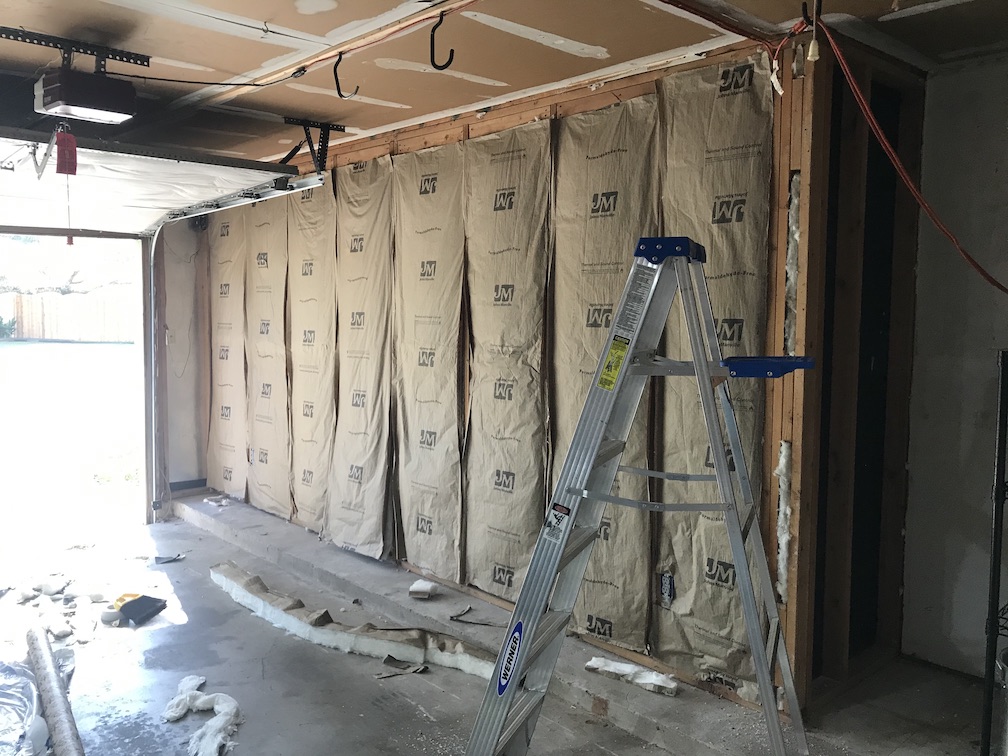
If you are renovating the garage walls and have the opportunity to install sheet insulation, take it. That will help tremendously to keep heat from escaping in the winter. The Home Depot gives a great idea of what kind of insulation level you need, including R-values by region of the US.  Check this out if you are adding insulation. 

How to heat a garage gym and use insulation to retain heat
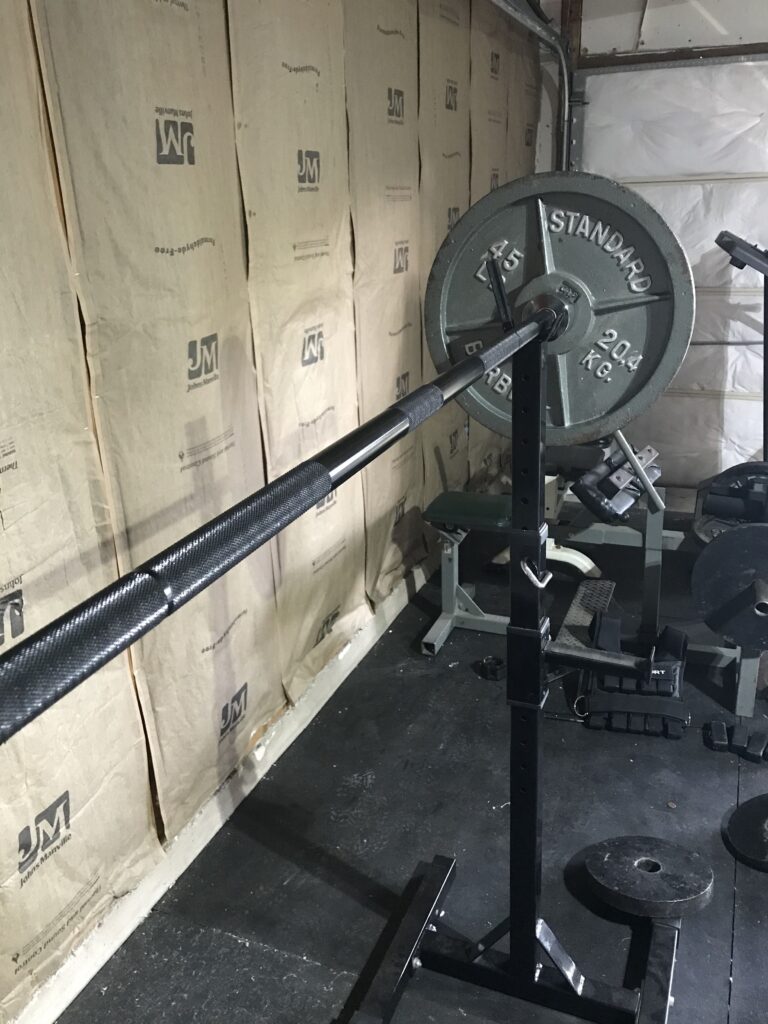
This is the fiberglass I used in the garage gym walls, and you can see the garage door insulation packed into the panels.
fiberglass insulation in garage gym walls
Fiberglass insulation in the garage gym walls, trimmed to fit between studs.

If you aren’t redoing the walls anytime soon, the next best thing is to insulate the garage door. 

Garage Door Insulation

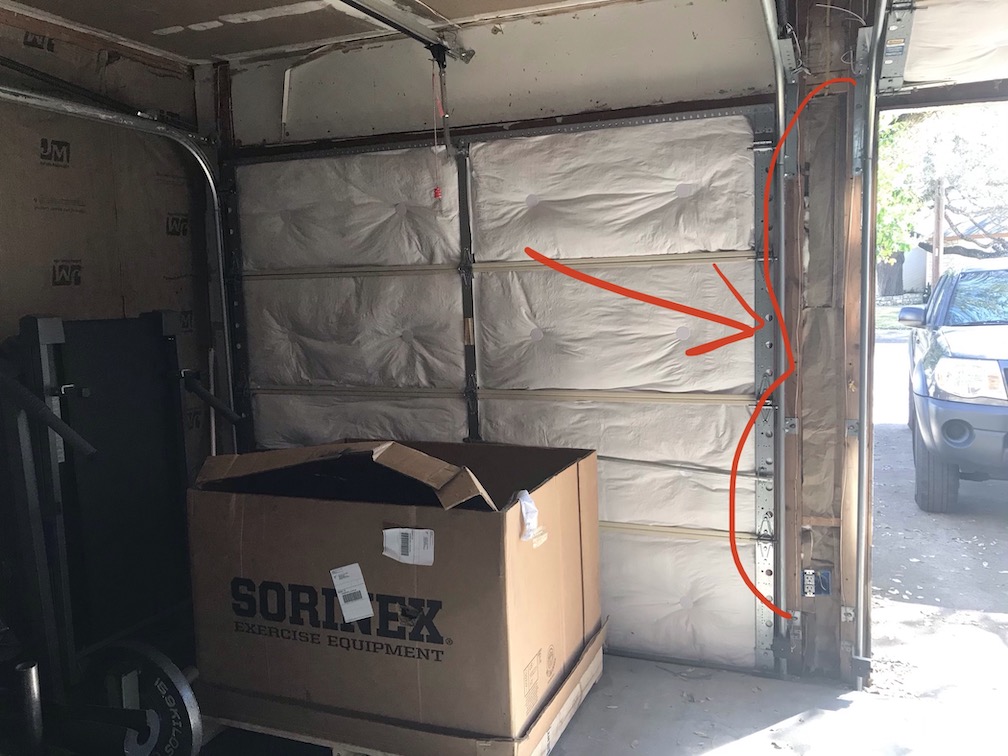
There are several ways to insulate an existing garage door. The two most common are fiberglass insulation, which comes in blankets, and foam panel insulation. I bought a garage door insulation kit with sheets of fiberglass insulation and installed it myself. It was around $200 from Home Depot for my two garage doors, and was fairly easy to do. It required fitting the insulation between the garage door panels, sealing the edges with tape clips. 

Garage door insulation for heating garage gym in winter.
Garage door insulation for heating my garage gym in winter. Excuse the markups.

I have since learned that this can get heavy because of accumulation of moisture in the fiberglass insulation, so foam panels might be a better option. Again, contact a trusted HVAC professional to help you make the right decision. Foam panel insulation also looks a bit sharper.

I don’t regret my insulation at all, and it’s effective. But, I might do it differently in the future to heat my next garage gym.

Finally, you can add weatherstripping or seal to the bottom of your garage door if you have large gaps that allow heat loss.

Related: Top 10 Benefits of a Home Gym

Dress for Cold Weather

The last thing you can do, which doesn’t involve modifying your garage, is dressing yourself for the cold weather. Invest in cold gear in layers: a base layer, an insulating layer, and an outer layer. I swear by REI merino wool socks, and thermal middle layers. 

To be fully honest with you, you need to ask your cold weather friends or google how to dress for winter weather. I do not know how, and my strategy is to avoid harsh winters. I’ve been skiing once and boy, was it a bad time. 

I was cold cold! I try every year to find better gear, but I still get cold, which is the reason I have added insulation behind my sheet rock, the garage door insulation, and a heater to my garage. 

Read also my favorite home gym organization ideas and storage solutions.

Make a Plan for Cold Weather Lifting

Make a cold weather plan so you continue getting your lifting in this winter. By adding a bit of weather stripping, insulation, and investing in the right type of heater, you can create a comfortable environment. 

You can also be strategic by warming up inside to begin the warming up/sweating process, and moving to the garage while it has had to for you, and it, to warm up.

In summary, to keep warm in your garage gym in the cold winter:

  • Identify leaks in your garage
  • Add weather stripping and insulation
  • Purchase a good heater for your space
  • Dress in layers in cold weather gear
  • Start your heater in the garage gym
  • Warm up inside
  • Go dominate your training session!

Cold Weather Not For You?

Join me in a heated gym with infrared saunas! You can’t always out run the cold. If this is the case for you, do the next best thing and meet me at Big Tex Gym in Austin, Texas for some climate controlled personal training! 

Check out these training options here and let me know how I can help you!

About the author

Kathryn Alexander is a strength coach and personal trainer in Austin, Texas. She loves hiking, college football, and the feel of a perfectly knurled barbell. Read more about Kathryn here.


  • walking lunges for deadlift for lower body strength.
    The Best Lower Body Muscular Strength Exercises
  • deadlift barbell vs trap bar
    Deadlift Barbell vs Trap Bar: Which Is Better for Strength, Muscle, and Safer Pulling?
  • Things to do in Austin in April (2026)
    Things to Do in Austin in April (2026)
  • Client results and testimonials for trainer Kathryn Alexander
    Love Notes, Volume 5. Q1, 2026
  • Best garage gym fan. Drum fan in my garage gym. I love this one because it's easily portable.
    Best Garage Gym Fans 2026
  • things to do outside in Austin. Food truck park near Barton Springs
    Things to Do Outside in Austin

As an Amazon Associate I earn from qualifying purchases.

Filed Under: Garage Gym, Home gyms Tagged With: garage gym, home gym, home workouts

Home Gym Ideas: Garage Edition (2024)

September 10, 2024 by Kathryn Alexander

Home gym ideas, garage edition! Home gyms are the most fun! I am a huge proponent of having your own home gym, whether it’s in a spare room, a back yard shed, or in your garage.

People get caught up in the pros and cons of a home gym, or a garage gym vs gym membership, or what’s the best equipment for home workouts? There are a million answers to these questions, and the good news, there are lots of ways to get it right! 

home gym ideas garage. Kathryn Alexander personal trainer Austin

If you need home gym ideas, garage gym ideas, or just want to brainstorm, please read along! You are truly only limited by your imagination! And maybe budget, but we’ll address that too. 🙂

Some links in this post are Amazon affiliate links to products that I love and regularly use.

I have put quite a bit of effort and investment into my garage gym. I have a two-car garage, and though I have somewhat limited space, I can park my truck in one side, and house all my home gym equipment on the other. It allows for me to use my own garage gym for good workouts, and active lifestyle, and spending time in a private space. Sometimes there are just so many people out there in public gyms, you know? 🙂

The great thing is that this also allows me to maintain my own equipment. I buy quality equipment and treat it well. After all, I intend to use it for a long time! 

Build Your Dream Garage Gym

The best thing about the millions of options when building your home gym is that you can perfectly and precisely tailor it to you. I encourage you to think about what would be the most fun thing for you to be able to train at home. What would be the best thing that you look forward to having the freedom to do in the comfort of your own home? 

That seems easy enough, but sometimes it’s hard to think that big, or get that creative! That’s ok! Just start thinking on that as you read the following ideas for how to make your home gym or garage gym the best facility for you!

Why Should You Have a Home Garage Gym? 

  • No commute! 
  • Save time! 
  • No waiting for equipment! 
  • No weirdos! (Unless you invite them over)
  • Nobody else’s sweat!
  • No distractions! 
  • All the equipment you have picked! 
  • Your own music! 
  • Your own lighting! 
  • Solitude! Or, invite your friends!

I could go on about what makes a garage gym so great! The convenience of skipping the commute and time can really increase your consistency in training. You can really find tune all the details of your gym too: like I mentioned, the music decisions are yours. You can put the fans and heaters on how you’d like. No weather’s going to stop you from training! 

Of course, a garage home gym is private and comfortable too. You can really focus on your own workouts without the distractions of a public commercial gym. 

Notice I didn’t say this really saves you money, because it can really put a dent in your fun budget, if you know what I mean. It saves you so much time! But not much money. Yes, if you forego your gym memberships, you’ll save a bit of that recurring cost. And weights last forever; if you take good care of your equipment, you can pass it on to your grand kids, and I’m not exaggerating. 

Probably most importantly, having a dedicated workout space at home encourages a healthy lifestyle, making it easier to integrate exercise into your daily routines. This is probably the most important thing for building your health, strength, and reaching your fitness goals.

What Is Your Training Style?

Alright, let’s get down to details. As you read this, consider what equipment you need for your home garage gym. Remember that question I asked, about what would be the best thing you can have readily accessible, to train with? That’s what we need to think about now. Are you a cardio, high reps, high volume kind of exerciser? If so, you might be able to build your dream garage gym space with floor mats, resistance bands, jump ropes and some light dumbbells or kettlebells. If this is your style of activity, you just need extra space to do your work. 

If your idea of an awesome workout is a powerlifting style training session, then you’ll need a squat rack, lots of metal plates, and a good barbell or two. Similarly, if you’ll be doing Olympic lifting/weightlifting, you’ll need a quality barbell, bumper plates, and some open space to move around as well. 

If you are training primarily for hypertrophy or physique goals, then you’ll want free weights, resistance bands, and maybe a few specialty pieces of equipment. You might not need a full power rack but you’ll need more weights than people who are primarily working conditioning or cardiovascular training. 

Finally, the more athletic your goals are, the more floor space you will need. If you can open your garage door, you can open up a small space for a little more room. That might help expand your training options.

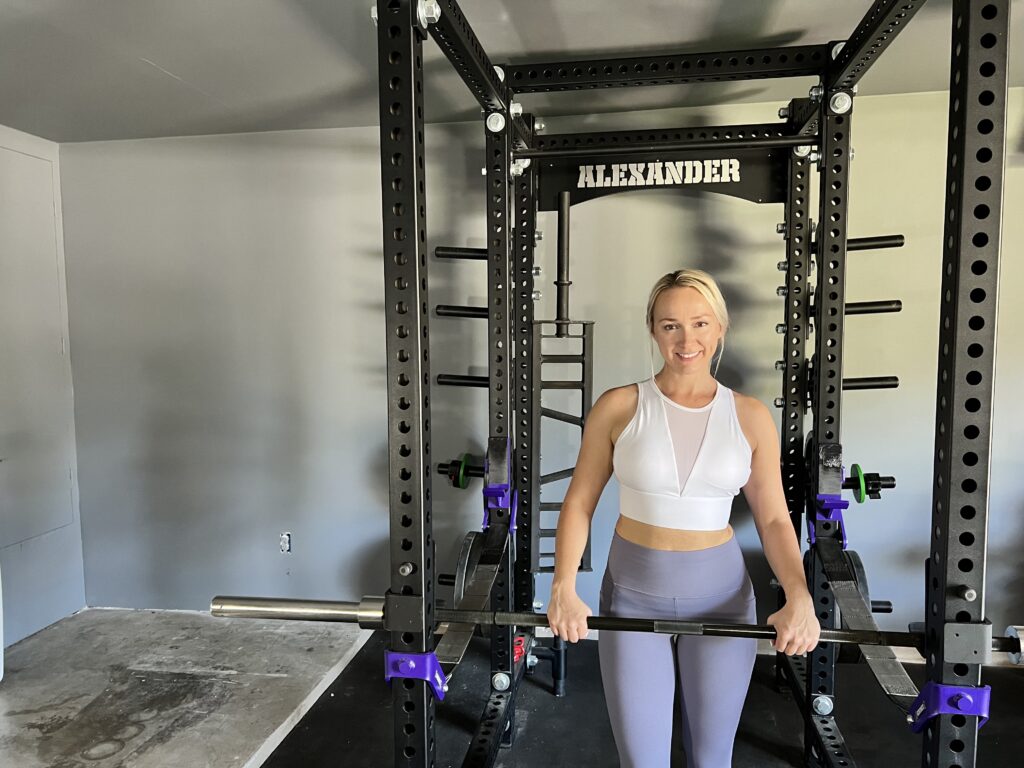
a home gym in Austin Texas, by Kathryn Alexander
a home gym in Austin Texas, designed by Kathryn Alexander

Home Gym Ideas for All Training Styles

Before we get into specifics, let’s talk about the kinds of equipment you’ll need that will apply to all kinds of training. In a nutshell, this means:

  • safe and durable flooring
  • storage space
  • good quality exercise equipment

Flooring For Your Home Gym

When building a home gym, choosing the right flooring is crucial for protecting your equipment, reducing noise, and ensuring safety. Most garages have concrete flooring, so it’s particularly important to add some kind of protective layer. Here’s why and what to consider:

Why You Need Mats or Flooring Over Concrete:

  1. Shock Absorption: Concrete is hard, offering no cushioning. Using mats or gym flooring will absorb impact from exercises like lifting weights or jumping, which can reduce the risk of injury and protect your joints.
  2. Protect Equipment: Dropping weights on concrete can damage the equipment and the floor itself. Mats help to cushion the impact and prevent damage.
  3. Noise Reduction: Mats can help reduce noise when moving or dropping weights, which is particularly useful if your gym is located near living spaces.
  4. Comfort: Mats provide a more comfortable surface for exercises like yoga, stretching, or bodyweight workouts.
  5. Anti-Slip Surface: Concrete can be slippery, especially if you sweat during workouts. Mats with textured surfaces provide grip and reduce the risk of slipping.

Recommended Types of Flooring for Home Gyms:

  1. Rubber Flooring:
    • Durability: Rubber is the most common material used in gym flooring because it’s durable and provides good shock absorption.
    • Thickness: Thicker rubber (8mm to ¾ inch or more) is ideal for heavy lifting areas, while thinner rubber (6mm) works for cardio and general fitness areas.
    • Rolls or Tiles: You can buy rubber flooring in rolls (for covering large areas) or tiles (for more customizable spaces). Tiles are easier to install.
  2. Foam Mats:
    • Lightweight Use: Foam tiles or mats are great for light exercises like yoga, stretching, or bodyweight exercises but not recommended for heavy weights as they may dent or wear down.
    • Interlocking Design: These mats usually have an interlocking puzzle design, making them easy to install and replace if damaged.
  3. PVC or Vinyl Flooring:
    • For Multipurpose Areas: These materials offer a more polished look and are durable. They are good for areas used for multiple purposes beyond just fitness (e.g., garages).
    • Less Shock Absorption: They aren’t as shock-absorbent as rubber but are good for areas where you won’t be dropping heavy weights.
  4. Horse Stall Mats:
    • Cost-Effective Option: These are thick, durable rubber mats commonly used in gyms. They are cheaper than gym-specific rubber flooring but offer similar protection.
    • Size: They typically come in larger 4’x6’ sections and can cover a significant area.

What to Consider:

  • Thickness: For weightlifting or using heavy equipment, go for 8mm or thicker rubber mats. These are a bit more heavy duty. If you’re doing mostly cardio, bodyweight exercises, or lighter weight training, 6mm to 8mm mats should suffice.
  • Area of Use: You can use thicker mats in specific areas where you do heavy lifting and thinner, less cushioned mats for stretching or cardio zones.

If you have a concrete floor, rubber mats or horse stall mats are highly recommended to prevent damage to the concrete and equipment, as well as to provide better comfort and shock absorption.

I have stall mats from Tractor Supply. You can also get good mats from Home Depot or Amazon. 

home gym ideas garage; where I got started
Where my gym I got started!

Equipment Storage

Organizing a garage space/home gym efficiently is key to keeping your workout space functional, safe, and clutter-free. Here are some essential storage solutions for common gym equipment, including barbells, plates, and accessories:

1. Barbell Storage

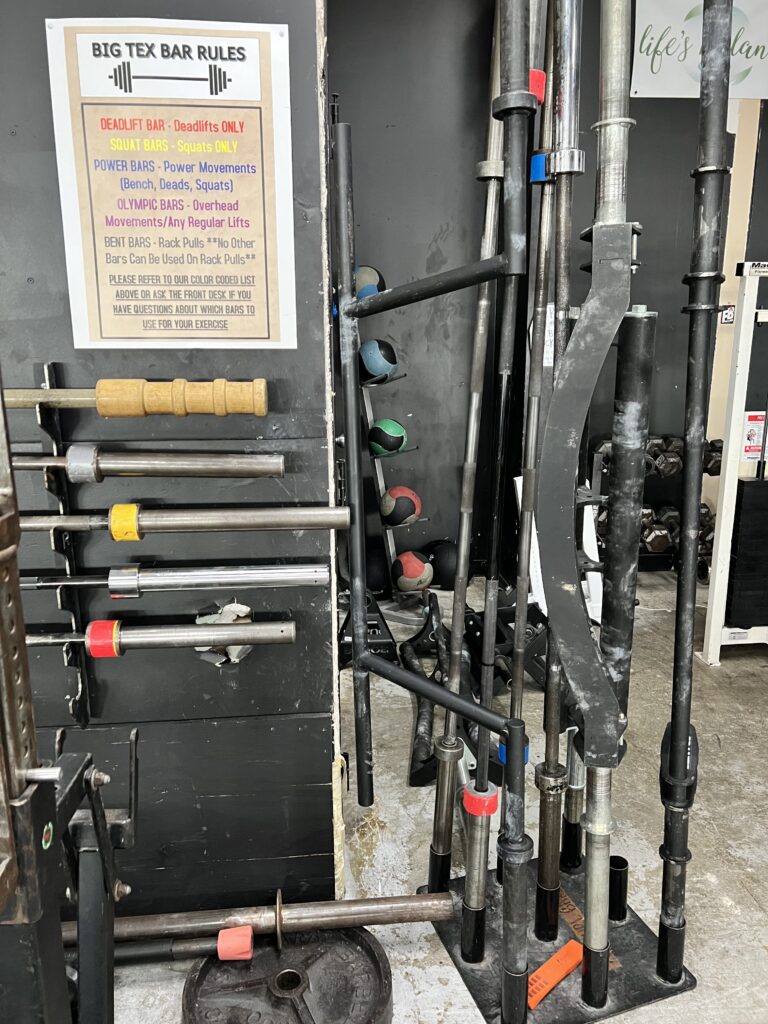
  • Vertical Barbell Holder (Barbell Rack): These hold barbells vertically to save floor space. They typically hold multiple barbells (2, 4, or even more). This type of storage also protects the barbell’s knurling and keeps them from rolling around.
  • Horizontal Wall-Mounted Barbell Rack: Also called barbell gun racks, these racks mount on the wall and hold the barbells horizontally. They’re great if you have more wall space and want easy access to the bars.
  • Floor-Mounted Barbell Rack: If you don’t want to mount anything on the wall, floor racks can store barbells horizontally on the ground. Some also come with additional storage for other equipment like plates or collars.

2. Weight Plate Storage

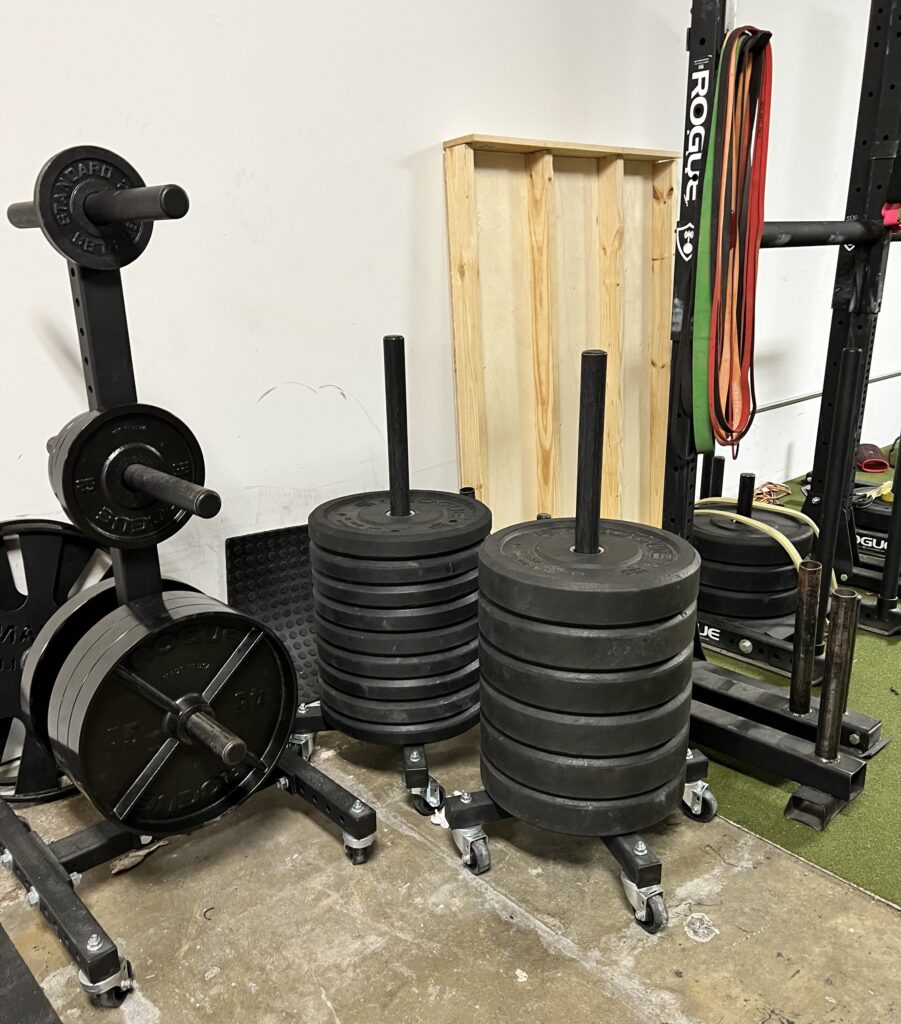
  • Plate Tree (Vertical Plate Storage): A plate tree is a vertical storage unit with arms for organizing different-sized plates. It keeps your plates off the floor and makes them easy to access.
  • Wall-Mounted Plate Storage Pegs: If you want to save floor space, wall-mounted pegs allow you to store your weight plates on the wall. They are especially helpful for keeping bumper plates organized.
  • Power Rack with Plate Storage: Many power racks come with built-in plate storage attachments, so you can store your plates right on the rack without needing additional equipment.
  • Rolling Plate Rack: This mobile storage option is great for easily moving weight plates around the gym, especially if you have a larger space.

3. Dumbbell and Kettlebell Storage

  • Dumbbell Rack: A 2- or 3-tier dumbbell rack is essential for keeping your dumbbells organized. They’re available in different sizes depending on how many dumbbells you have.
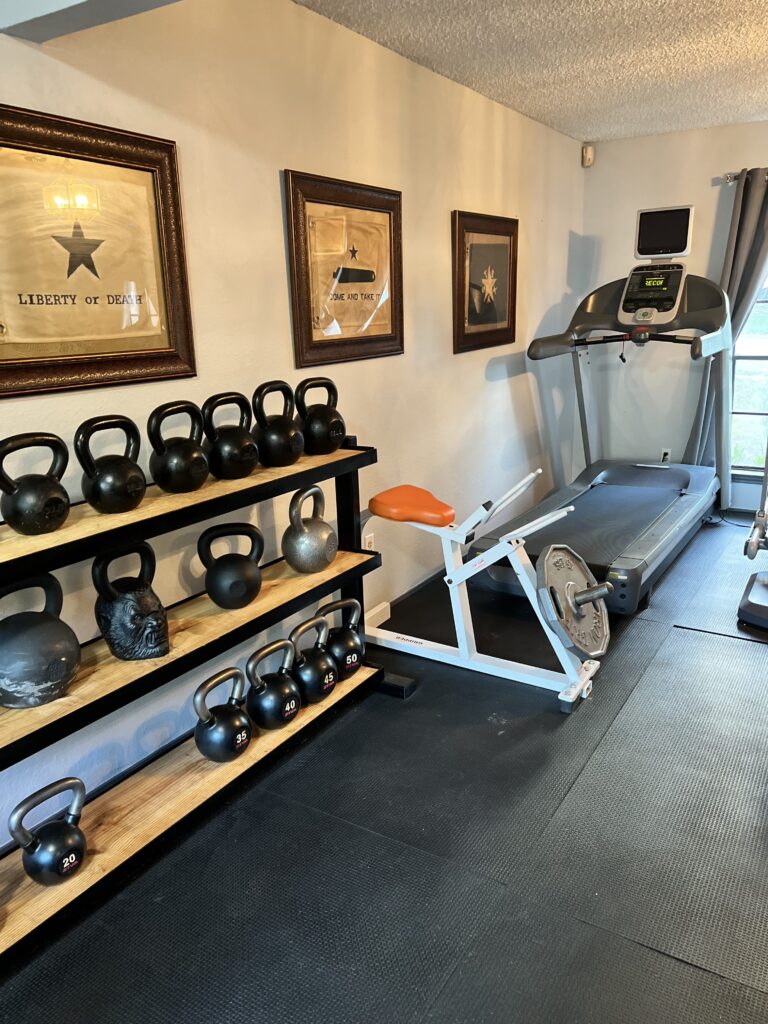
  • Kettlebell Rack or Shelf: Kettlebells can be stored on either a dedicated rack or a multi-purpose shelving unit. Some racks have flat shelves to accommodate various sizes.
  • Wall-Mounted Kettlebell Hooks: If floor space is limited, you can install wall-mounted hooks specifically designed to hold kettlebells.

4. Resistance Bands and Small Accessories

  • Wall-Mounted Pegboard: A pegboard with hooks is perfect for storing resistance bands, jump ropes, collars, lifting belts, and other smaller accessories. It keeps them organized and easy to access. Bands are crucial for back exercises, which are sometimes harder to do at home.
  • Over-the-Door Storage Rack: These racks have hooks or mesh compartments to store bands, towels, or smaller gym items, and they can be easily hung over a door in your gym.
  • Storage Bins or Baskets: Stackable bins or baskets can store miscellaneous items like foam rollers, yoga blocks, or smaller pieces of equipment.
  • Drawer Units or Shelves: Small drawer units or shelves can help keep accessories like chalk, wrist wraps, lifting straps, and other items organized and easy to reach.

5. Medicine Ball and Slam Ball Storage

  • Ball Rack: A vertical or tiered rack designed to hold medicine balls, slam balls, or wall balls can keep these pieces organized and prevent them from rolling around.
  • Wall-Mounted Ball Storage: Wall-mounted holders are also an option to keep balls off the floor and save space.

6. Storage for Mats and Foam Rollers

  • Wall-Mounted Mat Hooks: Mats can be hung on hooks or rails to keep them off the floor and to ensure they don’t take up unnecessary space.
  • Foam Roller Stand or Wall Rack: You can get a small rack or holder that keeps foam rollers standing upright. Some wall-mounted racks can also hold rollers alongside mats or bands.

7. Power Rack Storage Attachments

  • Power Rack Storage Attachments: Many modern power racks offer attachment options for storing accessories like resistance bands, weight plates, barbells, or even landmine attachments. This can maximize space and reduce clutter in your gym.

8. Wall-Mounted Shelves or Cabinets

  • Multi-Purpose Shelving: For items like water bottles, towels, or tech (phones, headphones, etc.), wall-mounted shelving units or cabinets can keep everything tidy and off the floor.

9. Collar and Clip Storage

  • Magnetic Wall Mounts: Magnetic storage solutions for collars and clips can attach them directly to a rack or the wall, making them easily accessible.
  • Small Hooks or Bins: You can also use small hooks or bins specifically for your collars, which can be mounted on a wall or attached to a rack.

10. Multi-Purpose Storage Benches

  • Storage Bench: A flat or adjustable bench that doubles as a storage compartment can hold smaller equipment like resistance bands, wraps, or dumbbells. This is a great way to save space while adding utility to your bench.

Whether you are training for specific competitive goals, or training to increase health of fitness, there are some pieces of equipment you will need regardless. In various strength training disciplines like powerlifting, Olympic weightlifting, bodybuilding, and general strength training, several pieces of equipment are essential, despite the differences in technique, goals, and training styles.

Here’s a list of equipment that is commonly used across these disciplines:

1. Olympic Barbell

  • Description: The Olympic barbell is a staple across almost all forms of lifting. It typically weighs 20 kg (45 lbs) for men and 15 kg (33 lbs) for women. The sleeves of the bar rotate (bearings or bushings), which is crucial for exercises like cleans and snatches.
  • Use Across Disciplines:
    • Powerlifting: Used for squats, bench press, and deadlifts.
    • Olympic Lifting: Central to movements like the snatch and clean & jerk.
    • Bodybuilding & General Strength: Used for a wide range of compound and isolation exercises.

2. Weight Plates (Bumper Plates or Metal Plates)

  • Description: Plates are needed to load the barbell, and they come in different materials. Bumper plates are rubberized and designed to be dropped safely, while metal plates are often used for powerlifting and bodybuilding.
  • Use Across Disciplines:
    • Powerlifting: Metal or iron plates are typically used for precise weight loading in squat, bench, and deadlift.
    • Olympic Lifting: Bumper plates are essential to allow for the bar to be safely dropped during cleans, snatches, and jerks.
    • General Strength & Bodybuilding: Both types are used depending on the exercise and preference.

3. Squat Rack / Power Rack

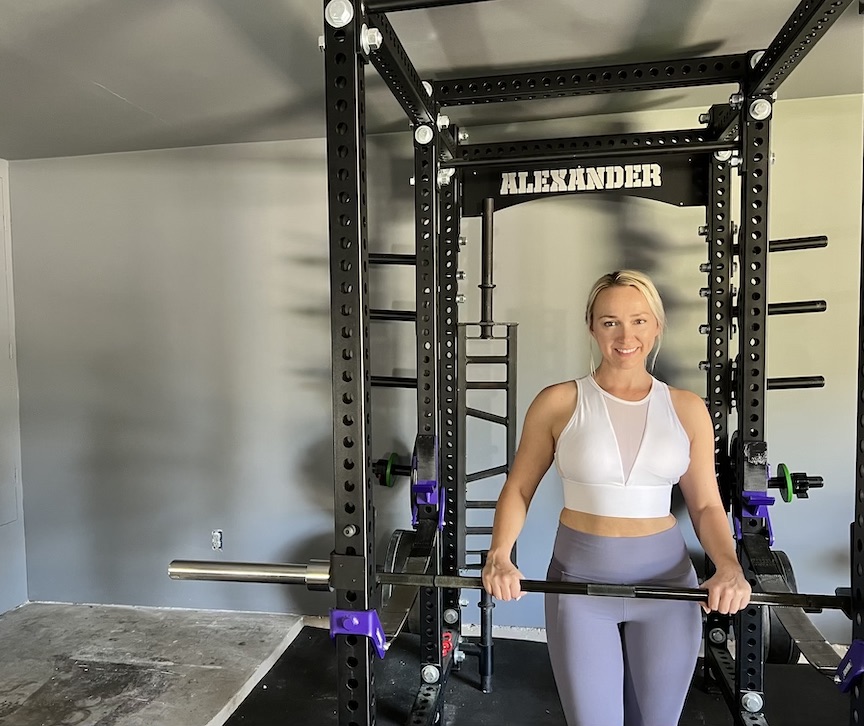
  • Description: A sturdy frame with adjustable safety bars and pins for holding the barbell at different heights. This allows for safe squatting and other lifts like bench presses and overhead presses. The best squat racks are heavy, sturdy, and safe. If you don’t want a whole squat cage or power rack, you can use a squat stand.
  • Use Across Disciplines:
    • Powerlifting: Essential for squats and often for bench press.
    • Olympic Lifting: Often used for squats (front and back) as part of strength development.
    • General Strength & Bodybuilding: Used for squats, presses, and even pull-ups if it has a bar attachment.

4. Weightlifting Shoes

  • Description: Specialized shoes with a raised heel that helps lifters maintain better form, especially in squats and Olympic lifts, by allowing for better ankle mobility.
  • Use Across Disciplines:
    • Powerlifting: Often used during squats for improved depth and form.
    • Olympic Lifting: Essential for snatches, clean & jerks, and squats.
    • General Strength: Some lifters use them for squats and overhead presses.

5. Chalk

  • Description: Lifting chalk (magnesium carbonate) helps to improve grip by reducing sweat on the hands.
  • Use Across Disciplines:
    • Powerlifting: Common for deadlifts and other heavy lifts to enhance grip.
    • Olympic Lifting: Essential for cleans, snatches, and jerks.
    • General Strength & Bodybuilding: Used by some lifters for grip-intensive exercises like deadlifts or pull-ups.

6. Lifting Belt

  • Description: A weightlifting belt helps stabilize the core and reduce stress on the lower back by providing intra-abdominal pressure during heavy lifts.
  • Use Across Disciplines:
    • Powerlifting: Heavily used for squats and deadlifts.
    • Olympic Lifting: Some lifters use it for clean & jerk or snatch, especially during heavy sets.
    • General Strength & Bodybuilding: Optional but commonly used during heavy compound lifts like squats and deadlifts.

7. Collars/Clips

  • Description: Collars or clips secure the plates on the barbell to prevent them from sliding off during lifts.
  • Use Across Disciplines: Used universally across powerlifting, Olympic lifting, bodybuilding, and general strength training to secure weight plates during lifts.

8. Bench

  • Description: A flat or adjustable bench is used for exercises like the bench press and a variety of other pressing and pulling exercises. I have a bench from Sorinex and a bench from Fringe sport. I love both. 
  • Use Across Disciplines:
    • Powerlifting: Essential for the bench press.
    • General Strength & Bodybuilding: Used for bench press, incline press, dumbbell exercises, and more.

9. Resistance Bands

  • Description: Bands add resistance or assistance in lifts. They can be used for mobility work, warm-ups, or to change the resistance curve of an exercise (accommodating resistance).
  • Use Across Disciplines:
    • Powerlifting: Used for accommodating resistance (e.g., banded squats, deadlifts) or warm-ups.
    • Olympic Lifting: Often used for mobility work or warm-ups.
    • General Strength & Bodybuilding: Common for warm-ups, mobility, or even adding resistance to lifts.

10. Kettlebells and Dumbbells

  • Description: While barbell training is central, kettlebells and dumbbells are used to supplement training and for accessory work.
  • Use Across Disciplines:
    • Powerlifting: Used for accessory exercises like rows, lunges, and presses.
    • Olympic Lifting: Often used for mobility and supplemental strength training.
    • Bodybuilding & General Strength: Common for hypertrophy work and targeting smaller muscles.

11. Pull-Up Bar

  • Description: A pull-up bar is a versatile piece of equipment for bodyweight exercises, often included as part of a power rack.
  • Use Across Disciplines:
    • Powerlifting & Olympic Lifting: Used for accessory back and grip work.
    • General Strength & Bodybuilding: Common for pull-ups, chin-ups, and core exercises.

While each lifting discipline has its unique requirements, these pieces of equipment serve as a foundation for strength training across the board, allowing for versatile and effective workouts regardless of the specific focus.

Related: how to heat a garage gym in the winter

​Home Gym Ideas: Garage Decoration

The best part about getting a good workout in your own garage gym is that you are in charge of every last thing. You can take an empty garage and make it the best home gym ever. Hang your motivational posters, decorate your garage walls, and hang that American flag. Play your loud music, crank the air conditioning if you’ve installed one. 

These are some of the best garage gym ideas I have! Let me know if I’ve missed an essential piece of equipment, of a fun way you’ve built up your own gym. Happy training in your own garage gym! 


About the author

Kathryn Alexander is a strength coach and personal trainer in Austin, Texas. She loves hiking, college football, and the feel of a perfectly knurled barbell. Read more about Kathryn here.

  • walking lunges for deadlift for lower body strength.
    The Best Lower Body Muscular Strength Exercises
  • deadlift barbell vs trap bar
    Deadlift Barbell vs Trap Bar: Which Is Better for Strength, Muscle, and Safer Pulling?
  • Things to do in Austin in April (2026)
    Things to Do in Austin in April (2026)
  • Client results and testimonials for trainer Kathryn Alexander
    Love Notes, Volume 5. Q1, 2026
  • Best garage gym fan. Drum fan in my garage gym. I love this one because it's easily portable.
    Best Garage Gym Fans 2026
  • things to do outside in Austin. Food truck park near Barton Springs
    Things to Do Outside in Austin

Filed Under: Garage Gym, Home gyms Tagged With: garage gym, home gym, home training, home workouts

How Thick Should Gym Flooring Be? A Detailed Guide

March 14, 2024 by Kathryn Alexander

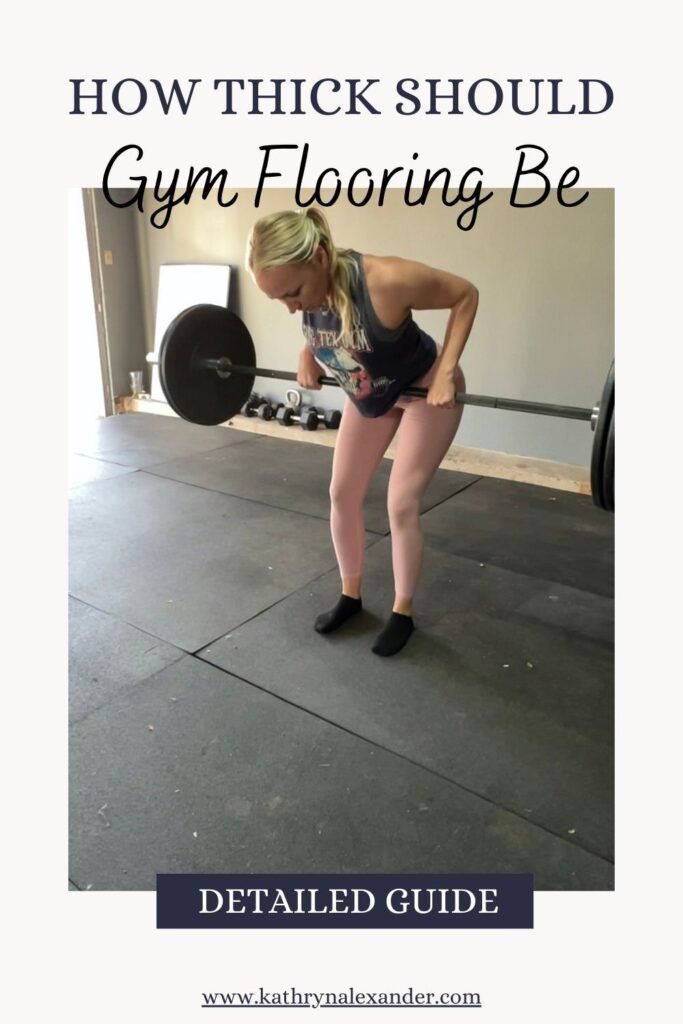
How thick should gym flooring be? When it comes to outfitting your commercial gym, home gym or garage gym, choosing the right thickness for gym flooring is crucial.  This guide covers how thick your gym flooring should be and what floor types are the best for your commercial gym or home gym flooring.

I have worked in many different types of gyms over the 19 years I’ve been training: athletic facilities, strength and conditioning rooms, commercial gyms, racquet clubs, hardcore local gyms, a froo-froo gym I’ll never set foot in again, and my favorite: my garage gym. They all had different flooring and surfaces, and it makes a big difference for the athletes, lifters a​nd coaches.

Let me help you decide what kind of flooring is the best option for you, based on what kind of exercise you do and your workout space.

What Types of Gym Flooring Are Available?

Whether your facility caters to heavy weightlifters, high-intensity interval trainers, or martial artists, the thickness of your gym flooring can make a significant difference in performance, safety, and overall user experience. In this comprehensive guide, we’ll explore various factors to consider when determining the appropriate thickness of gym flooring, including the type of exercises performed, equipment used, and specific needs of your facility.

Understanding Gym Flooring Options

Before delving into thickness considerations, let’s first examine some popular gym flooring options commonly used in commercial spaces:

  1. Rubber Mats:
    • Rubber mats offer excellent durability, shock absorption, and slip resistance, making them an ideal choice for high-impact exercises and heavy weight training areas. They come in various thicknesses ranging from 1/4 inch to 3/4 inch, providing options to suit different needs and preferences.
  2. Rubber Tiles:
    • Rubber tiles are versatile and easy to install, providing a seamless flooring solution for large workout spaces. They come in standard thicknesses ranging from 3/8 inch to 3/4 inch, offering superior impact absorption from hard surfaces, and noise reduction for commercial gyms and exercise rooms.
  3. Rubber Rolls:
    • Rubber rolls provide seamless coverage for larger areas and offer excellent shock absorption and slip resistance. They are available in different thicknesses, typically ranging from 1/4 inch to 3/4 inch, making them suitable for heavy weightlifting areas, power cages, and exercise studios.
  4. Foam Tiles:
    • Foam tiles are lightweight and portable, making them ideal for temporary or portable workout spaces. While they offer some cushioning and support, they are not as durable or resilient as rubber flooring options. Foam tiles typically range in thickness from 3/8 inch to 1 inch, providing options for light to moderate exercise activities.
Turf and rubber flooring at Iron Forge Gym

What to Consider When Determining Gym Flooring Thickness:

  1. Type of Exercises:
    • Consider the primary types of exercises performed in your gym, such as weight training, plyometrics, martial arts, or bodyweight exercises. High-impact exercises like plyometrics and heavy weightlifting require thicker flooring with superior shock absorption to cushion impacts and reduce the risk of injury.
  2. Equipment Usage:
    • Evaluate the type and weight of equipment used in your gym, including free weights, barbells, and weightlifting machines. Thicker flooring is necessary to withstand the impact of heavy equipment and protect the subfloor from damage.
  3. Specific Needs:
    • Assess the specific needs and preferences of your clientele, including their fitness goals, exercise preferences, and injury history. Tailor your gym flooring thickness to accommodate a wide range of activities and user requirements.
  4. Impact Absorption:
    • Prioritize flooring options with excellent impact absorption properties to minimize stress on joints and reduce the risk of injuries, particularly in high-impact exercise areas such as plyometric zones or martial arts studios.
  5. Noise Reduction:
    • Thicker gym flooring can help dampen noise from dropped weights and equipment, creating a quieter and more enjoyable workout environment for gym members and neighboring spaces.
  6. Aesthetics and Durability:
    • Consider the aesthetics of your gym and choose flooring options that complement the overall design and branding of your facility. Additionally, prioritize durable materials that can withstand heavy foot traffic and regular use without compromising performance or appearance.

Choosing the Right Thickness

Now that we’ve explored the various factors to consider let’s delve into how to choose the right thickness for your gym flooring based on specific needs and requirements:

  1. High-Impact Exercises:
    • For areas dedicated to plyometric exercises, martial arts, or high-intensity interval training, opt for thicker rubber flooring ranging from 1/2 inch to 3/4 inch to provide optimal shock absorption and joint protection.
  2. Heavy Weightlifting:
    • In weightlifting areas, power cages, and squat racks, choose rubber flooring with a thickness of at least 1/2 inch to 3/4 inch to withstand the impact of heavy weights and equipment without causing damage to the subfloor.
  3. General Exercise Areas:
    • For general exercise areas used for a variety of activities including strength training, cardio, and bodyweight exercises, opt for rubber flooring with a thickness of 3/8 inch to 1/2 inch to provide adequate cushioning and support for all types of workouts.
  4. Portability and Versatility:
    • If you require portable or temporary flooring solutions for events, classes, or outdoor workouts, consider foam tiles with a thickness of 3/8 inch to 1/2 inch for lightweight and easy-to-install options.
  5. Budget Considerations:
    • While thicker flooring typically offers better shock absorption and durability, it may come at a higher cost. Evaluate your budget constraints and balance the benefits of thicker flooring with your financial limitations.

​Flooring Considerations for Mixed Use Gyms

Gyms can be pretty cookie cutter, like most big box gyms. They have some machines, a circuit station, and some “hand weights” or light weights. Blah. Get me outta there. They can use any kind of typical rubber gym flooring because they don’t typically have squat racks, heavier weights, or Olympic lifting. That’s fine; it works for a lot of people. If it suits your needs, then you are in luck because these gyms are everyone. 

However, please know that local gyms with better equipment, heavier weights and happy happy regulars are great places for everybody! From people who are totally new to a gym to advanced lifters and competitors, these gyms typically have better equipment, and more options for you.

When it comes to flooring, they’ll typically use thick rubber flooring that’s obviously durable enough for commercial use. In some areas, you’ll see deadlift stations with even thicker mats than the typical rubber gym floor mats. This is necessary for heavier lifting. You’ll even see platforms for dedicated heavy deadlifting. 

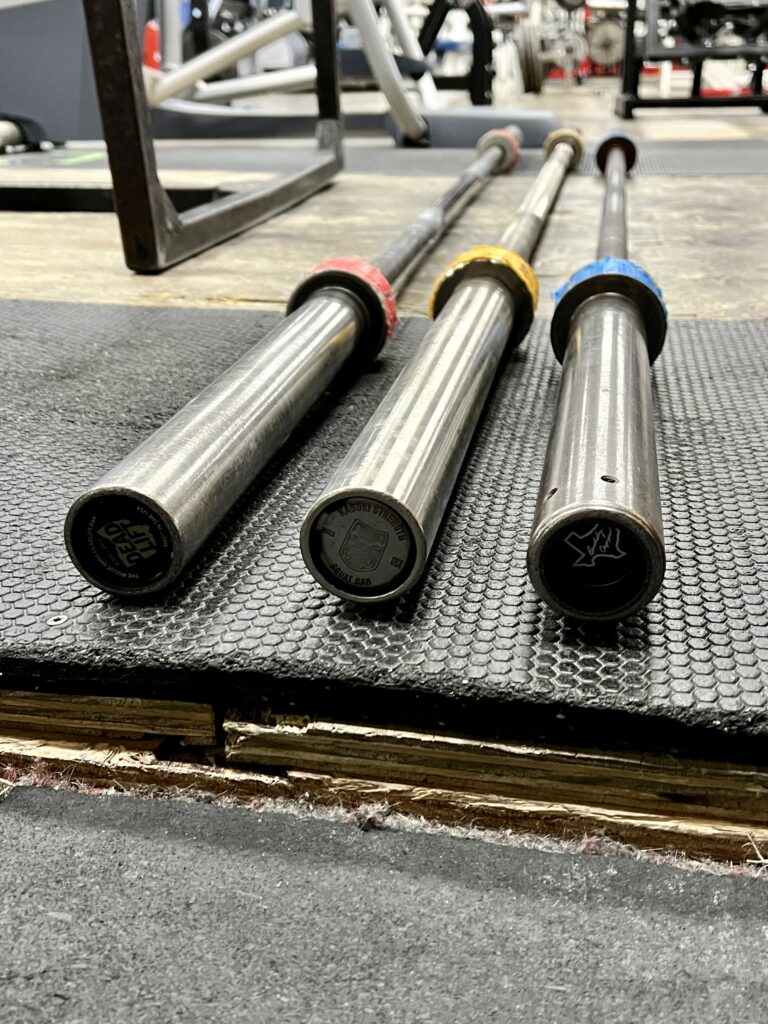
Platforms are made of layers of plywood and rubber horse stall flooring: some of the thickest mats out there. By screwing these layers of flooring together, the platform dissipates the weight of the heavy lifts to protect the floor. 

Home Gym and Garage Gym Flooring

The best thing about outfitting your home gym is that you get to make it perfectly fit you! As you decide how thick your gym flooring should be, answer the following questions:

  • what kind of exercise, lifting and movement will you do in your space? 
  • will you be deadlifting, clean & jerking, or snatching any weights? 
  • will you have a squat rack? 
  • what other type of equipment will you have? Anything large and heavy?

If you have smaller weights and will not be using barbells, you have many options of flooring thickness. You can use interlocking foam mats, which are thick, foam tiles that interlock like puzzle pieces. They are very versatile, easy to install and remove, and provide cushioning. They don’t need to be nailed down or permanently affixed to the floor. 

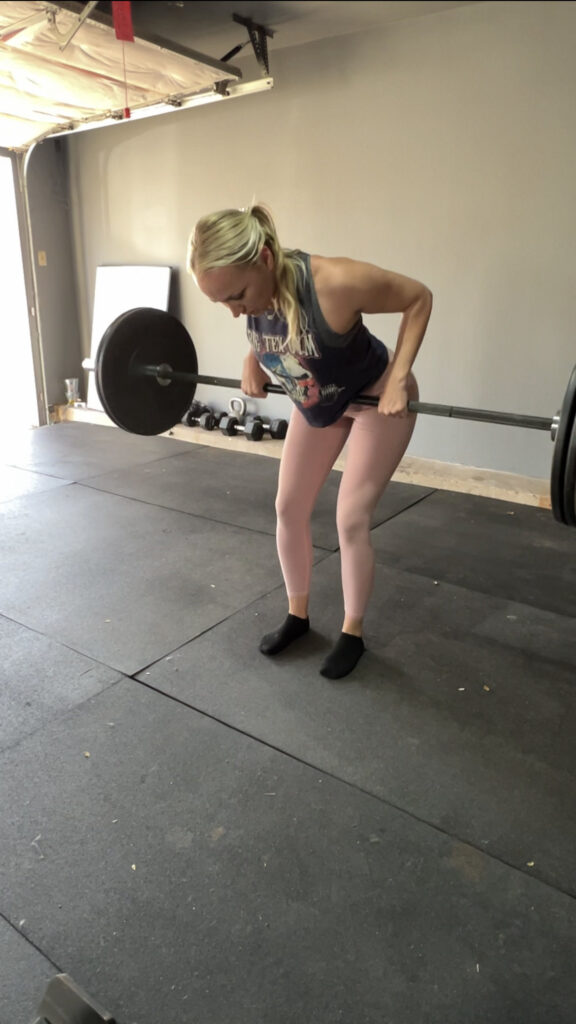
If you are going to set up a garage gym and are going to use any kind of barbells or a squat rack, I recommend rubber floor mats. The horse stall mats that are available from Tractor Supply Company are my favorites. The standard thickness of these is 3/4 inch of heavy rubber. This is a good balance of thickness and weight.

how thick should gym flooring be? 1/2 rubber mats pictured here.
How thick should gym flooring be? 1/2 rubber mats pictured here.

They are heavy (94 pounds) especially for one person lifting and installing them. Ask me how I know, lol. I have about 12 of them. They are my favorite gym mats though, and they’re worth the one time struggle of getting them home. 

You can see in this post about heating a garage gym, more details about my stall mats.

One of my clients even installed two in her basement gym in Virginia. They are a great choice to protect her floor from light to heavy use. 

Related: home gyms ideas garage edition! This is a huge guide for what you need for your garage gym!

Considerations for MMA and Martial Arts Gyms

Flooring for martial arts gyms often combines both rubber flooring and a softer flooring on top. One example of this is vinyl or canvas covered foam mats. These mats typically have a high-density foam core with a durable vinyl or canvas cover. They are easy to clean and provide a smooth surface suitable for various martial arts styles.

These two layers allow for insulation from a hard floor, and then further cushioning to reduce the risk of injury during falls or throws. The best thickness for this second layer of foam mat is 1-2 inches. Heavy lifting and weight lifting usually do not occur in this part of the gym, so the best choice is cushioned matting on top of rubber matting. 

Large Commercial Gym Flooring

For a larger area than a home gym or martial arts studio, the best option will be larger rubber floor rolls. In this case, you’ll want to segment your gym into heavy use areas that require thicker rubber floors, MMA and stretching areas, and areas where machines but not free weights are used. This way you can use the above information about which rubber flooring thickness suits your activity best. This can also help your budget. Thicker flooring means more money often, so in some areas, 3/8 rubber flooring rolls are a good thickness to provide safe, non-slip footing and enough cushion from the concrete slab. 

Then, where you have heavy gym equipment, squat racks and bench presses, install 1/2 inch rubber flooring. Finally, for specific deadlift areas, install thick flooring: a platform of plywood and horse stall mat, like I mentioned above. You might even buy a commercial deadlift platform, which typically comes with 8 large rubber pieces inside a metal frame. These are popular options in gyms with powerlifting competitors. 

Layers of a platform: rubber and plywood. Gym flooring.
Layers of a platform: rubber and plywood for this platform at Big Tex Gym, one of the best gyms in Austin.

Of course, all of these depend on your gym’s usage and budget. Just know that it will be worth it to make dedicated spaces so you are able to both protect your floor and give your lifters the best experience possible. 

Lastly, I LOVE me a good turf in a gym! If you have the space, this will set your gym apart from the others in town. Gym turf rolls are available to fit your specific square footage. They are fabulous for sled work, strongman training, and athletic movements. I highly highly recommend turf in a gym! It will set you apart from a general fitness studio, and establish your space as a lifting facility. 

How Thick Should Gym Flooring Be? 

As you can see, “how thick should gym flooring be?” is a great question! Selecting the right thickness for gym flooring is essential for creating a safe, comfortable, and functional workout environment in commercial gyms and fitness studios. By considering factors such as the type of exercises performed, equipment used, specific needs of your facility, and budget constraints, you can determine the ideal thickness of gym flooring to meet the requirements of your clientele.

Whether you opt for rubber mats, tiles, rolls, or foam tiles, prioritize impact absorption, durability, and user comfort to ensure optimal performance and satisfaction for gym members and coaches alike. 

Message me if you have anymore questions! I love this stuff! 🙂

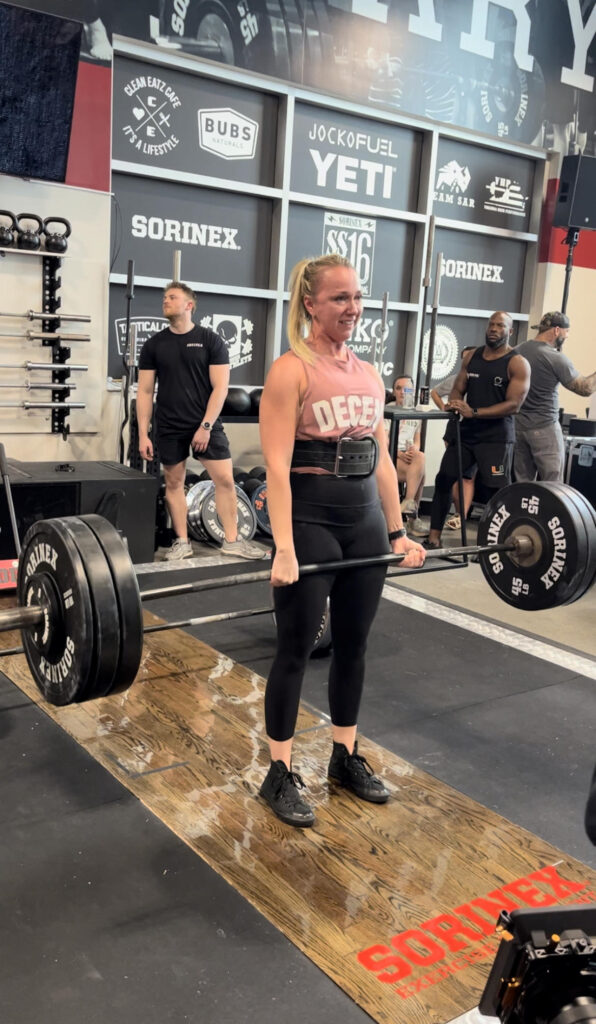
Gym flooring. Kathryn Alexander deadlifting on platform at Sorinex.

About the author

Kathryn Alexander is a strength coach and personal trainer in Austin, Texas. She loves hiking, college football, and the feel of a perfectly knurled barbell. Read more about Kathryn here.

  • walking lunges for deadlift for lower body strength.
    The Best Lower Body Muscular Strength Exercises
  • deadlift barbell vs trap bar
    Deadlift Barbell vs Trap Bar: Which Is Better for Strength, Muscle, and Safer Pulling?
  • Things to do in Austin in April (2026)
    Things to Do in Austin in April (2026)
  • Client results and testimonials for trainer Kathryn Alexander
    Love Notes, Volume 5. Q1, 2026
  • Best garage gym fan. Drum fan in my garage gym. I love this one because it's easily portable.
    Best Garage Gym Fans 2026
  • things to do outside in Austin. Food truck park near Barton Springs
    Things to Do Outside in Austin

Filed Under: Garage Gym, Home gyms Tagged With: garage gym, garage gyms, home gym

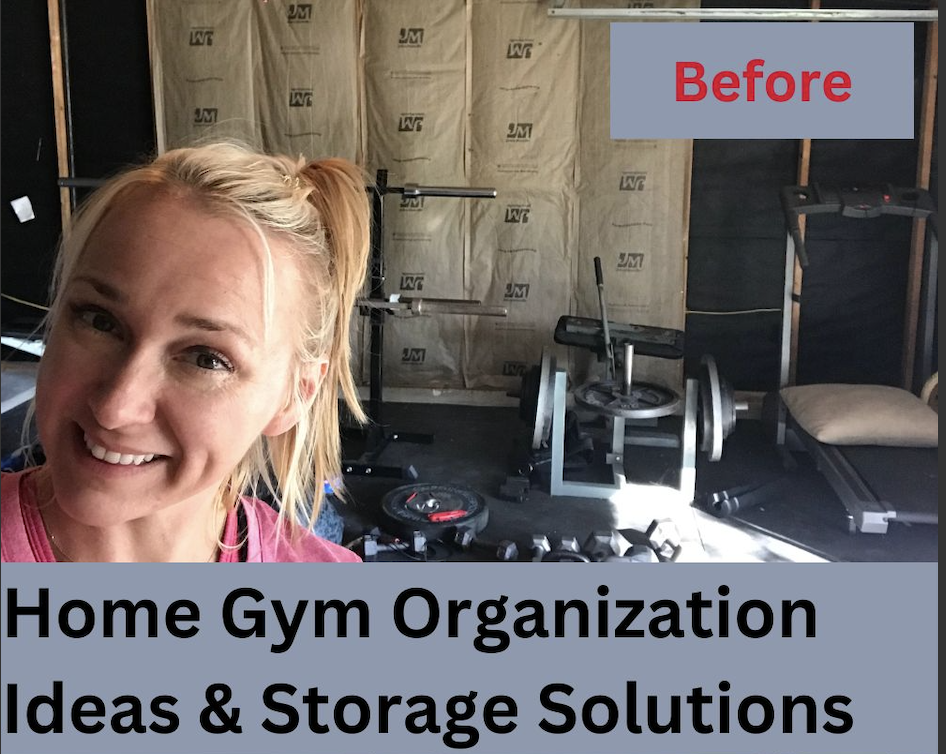
Home Gym Organization Ideas and Best Storage Solutions

February 19, 2024 by Kathryn Alexander

If you need home gym organization ideas, storage solutions, equipment suggestions, or are just in the planning process, I am so excited for you! There are so many ways to create an organized and well running home gym that’s perfect for you.

Creating a home gym or garage gym for your training in the comfort of your own home can be transformative for both your physical and mental well-being, and I highly recommend it for everybody. 

Whether you have a small space or an entire garage, I urge you to get started on your home gym. Crucial to this process is impeccable organization. Organizing your home gym is one of the most fun processes, and keeps it running smoothly. Building out your home gym or garage gym might seem daunting at first, but you can do it!

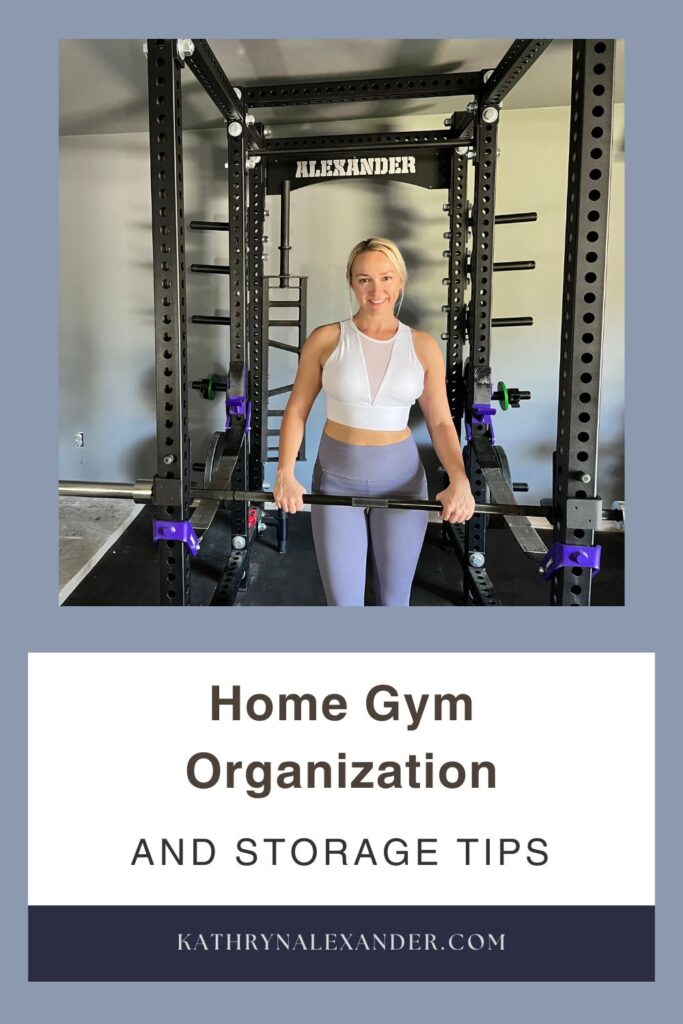
Home gym organization ideas Kathryn Alexander personal trainer Austin

Whether your gym occupies a tiny corner of your living room, spreads out across a spare room, or even commandeers your whole entire garage, the principles of effective organization remain the same.

It’s all about making your space work for you, ensuring every band, plate and bar has it’s place. The peace of mind that comes from stepping into a well-organized training space is unmatched, allowing you to focus solely on your strength and conditioning and fitness goals. 

Key Takeaways:

  • Home gym organization: Essential for efficient and enjoyable workouts. 
  • Adaptability: Strategies to fit every space, from limited to expansive. 
  • Personalized setup: Tailored to support your individual strength and fitness goals. 

Assess Your Space and Needs

Take a moment to assess your needs and your space, and fit them together. How much room are you going to allocate to your home gym? It can be a spare room, a corner of the living room, or you can go crazy and fill up your garage. Highly recommended 🙂

Do you need guidance on what to buy to start your home gym? Here’s the equipment in my short list of home gym essentials.

Now let’s discuss your training goals. If you are going to be training with dumbbells, barbells and weight plates, you’ll obviously need the room both for the exercises and the storage. 

If you are a yoga or Pilates enthusiast, or will primarily be doing mobility and stretching, you probably won’t have a ton of home gym equipment. You can get away with using a small space for your home sessions. 

It’s about making your space work for you, ensuring every jump rope, dumbbell and medicine ball has its place, making way for killer training sessions at home.

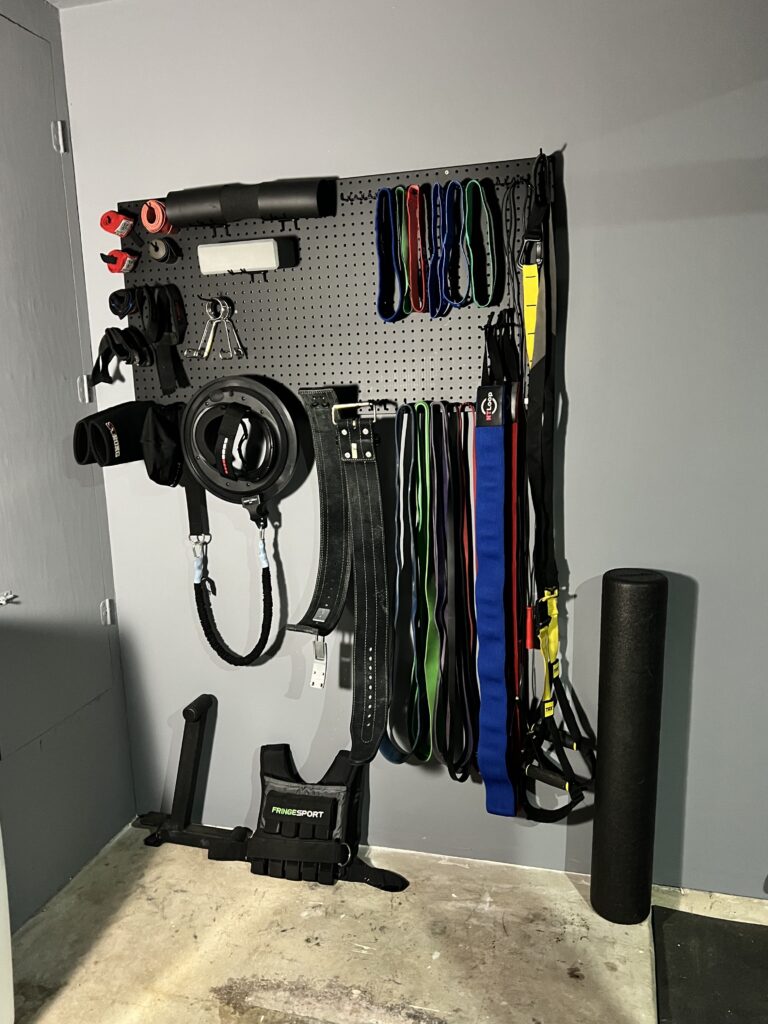
Peg board for garage gym or home gym storage

Declutter Your Space

Clutter is one of the biggest challenges of a home gym. We could all use more space, and it’s really tough to stop buying things for your home gym! 

When your home gym is cluttered, it hinders not just your physical movement but also your mental clarity. I’ve seen it – equipment scattered everywhere, from resistance bands tangled in a messy heap, foam rollers and yoga mats awkwardly flopped against a wall, to free weights hidden under a pile of jump ropes. The solution? Decluttering. 

  • Assess Your Equipment: Take a good, hard look at what you have. This is the hardest part for me. Other people will tell you to be ruthless about what you use and don’t. I have trouble with that because I do like collecting things if they can be valuable to my training. So, I focus on the next step: maximizing storage space.
  • Maximize Storage Space: Employ smart storage solutions. Wall-mounted racks are great for bars and even plate storage. I have a giant peg board that has hooks for hanging yoga mats and resistance bands, hip circles, and wraps and straps, freeing up valuable floor space. For heavier items like weight plates and kettlebells, consider sturdy shelves or cabinets that can bear the load. 

Smart Storage Solutions

My favorite home gym organization tip is to get stuff off the floor! Use wall storage, use the storage pegs on your power cage if you have one. Use shelving. All these things keep the floor clear, offering space for the versatility of your sessions. 

Since you probably don’t have the square footage of a large commercial gym, you will be using your free space for many different exercises, instead of dedicated equipment. When you have your equipment stored on the walls, this space will be a God send!

Utilize Wall-Mounted Racks and Hooks

Employing wall-mounted racks and hooks is a game-changer, especially for those of us with limited space. These ingenious storage options perfectly cater to hanging resistance bands, neatly storing foam rollers, and keeping jump ropes tangle-free.

The beauty of this approach lies in its impact on freeing up valuable floor space. Suddenly, that small workout space in your spare room or even a corner of your living room transforms into an open area, ready for you to execute your exercise routine without the hassle of navigating through clutter.

This brilliant use of vertical space not only makes your fitness equipment easily accessible but also contributes to a more organized and inviting exercise space, motivating you to keep up with your home workouts in the privacy of your home gym. 

Peg Board Garage Gym Storage

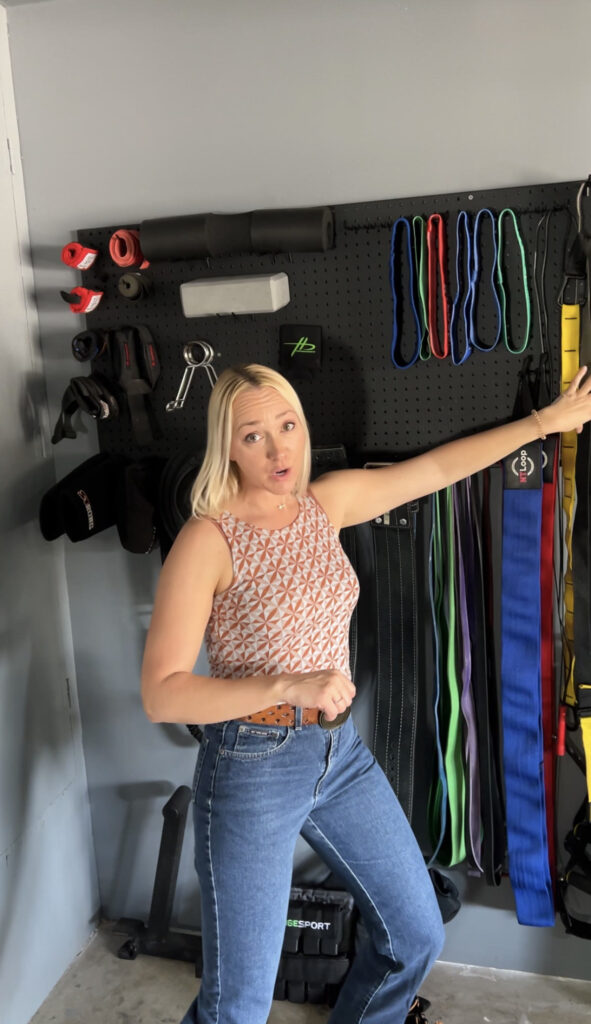
Hands down, the best thing I did for my garage gym organization is getting a peg board. I got this from U-Line and they delivered it in like 2 days. Not an ad. It is actually rated to hold quite a bit more weight than I use it for, but it holds so many little things that used to just get lost in in gym. 

I have bench press wraps, wrist wraps, lifting straps, knee sleeves, bands, jump rope and even an Iron Neck on my peg board. I also put my weight belts and longer resistance bands on the peg board so that they aren’t piled up on the floor. Don’t forget your TRX, blast straps, or any other rings or suspension systems too.

The only thing I don’t store on my peg board is medicine balls and dumbbells. Though it could hold it, I know it could. 

To reiterate, I LOVE how much storage this thing gives me! It is probably my best home gym organization idea. Highly recommend.

Kathryn Alexander peg board garage gym organization

Innovative Floor and Ceiling Storage

Every inch of space counts, especially when we’re working with areas like a cozy living room corner, a part of your garage gym, or even a dedicated spare room. This is where getting creative with floor and ceiling storage solutions truly shines. Floor racks are an absolute game-changer for heavy hitters like free weights and barbells, neatly corralling them in one accessible spot. 

While we are on the topic of flooring, read here for a comprehensive guide on how thick your gym flooring should be.

Home Gym organization ideas and storage solutions

By going vertical, you not only safeguard your valuable floor space for actual workouts but also keep essential gear like foam rollers and jump ropes within arm’s reach for easy access. It’s about smartly leveraging every nook and cranny to maintain a streamlined, motivating exercise space. A well-organized gym is your best friend in your fitness journey, making it easier for you to stay focused and committed. 

Home Gym Ideas Garage Edition! A comprehensive guide here!

The Rolling Cart: A Versatile Organizer

A rolling cart is a fantastic and convenient organizer. These can be either movable shelves with sheets, or plate storage on wheels. 

A rolling cart with flat storage shelves dynamic solution for keeping all those smaller items – think resistance bands, yoga mats, jump ropes, and even the foam rollers – neatly organized and within arm’s reach during a sweat session. Imagine this: no more pausing your workout to dig through a cluttered pile for your gear. With everything sorted on a rolling cart, you can easily wheel your essentials right to your side, ensuring those accessories are always just where you need them, when you need them. 

Rolling storage racks for weight plates

The best part? Rolling all the heavy plates to where you need them instead of lugging them over one by one. When it’s time to reclaim your space, simply roll the cart away. Talk about a game-changer for home gyms of any size!

Budget-Friendly Home Gym Organization Ideas

Organizing a home gym space doesn’t have to cost your whole budget. Thinking outside the box can help you find solutions that cater to your specific needs without overcrowding your space or emptying your wallet. For instance, like I mentioned, the one peg board on the wall offers a versatile way to hang resistance bands, jump ropes, and even yoga mats, freeing up valuable floor space and keeping your workout area clutter-free. 

Another great option is repurposing an old bookshelf or rolling cart to neatly store smaller items like ankle weights, foam rollers, and water bottles, ensuring quick access during your workout sessions.

For those with limited space, utilizing vertical space by installing wall-mounted racks can be a game-changer, perfect for hanging exercise equipment and saving room for those intense workout sessions. The best home gym storage ideas are those that reflect your lifestyle and help maintain the privacy of a home gym, turning even a small area into an open, inviting exercise space. 

Shelf storage of kettlebells in home gym

Barbell Storage

Barbells are an essential part of a home gym, if you are looking to completely replace your gym memberships. Barbells don’t take up much space, but they are usually a significant investment so you want them to be stored safely. There are many different sizes of barbells, but a standard barbell is 45 pounds and about 7 feet.

A great way to store many barbells is a gun storage style barbell holder. These storage racks use wall space to hold your barbell babies. I am going to build one of these this summer, so be on the lookout for updates. 

In the meantime, I store two of my barbells vertically. Two I store horizontally. One lives on the ground, so I need up give that one a better home. Stay tuned.

Horizontal and vertical barbell storage at Big Tex Gym in Austin, Texas

Personalizing Your Home Gym

Now here’s the next fun part: you get to make your home gym truly your own!  You get to put up your own pictures, medals, trophies, and poster. You can choose the lighting and the theme and ambiance. I end up collecting things little by little. The idea of creating a whole space is overwhelming to me, so I’ve ended letting my garage gym just turn into itself over the years. 

I have a few posters I like, some sports memorabilia (GEAUX TIGERS! HOOK ‘EM!) SEC, baby. I have some books I like, especially books about the golden era of bodybuilding and lifting. 

And, remember you get to be the sole DJ. You pick the music and get your mind right. These are just a few of the benefits of a home gym.

Is it still cold where you are? It’s chilly in Austin. Here’s the best ways to heat a garage gym.

Home Gym Organization Ideas: The Final Stretch

An enjoyable and well used home gym relies on organization. That’s the fine line between a frustrating session searching for the tools and weights you need, and a seamless training session that goes the way you plan. 

Organizing your home gym isn’t just about aesthetics; it’s the fine line that separates a frustrating session searching for a specific dumbbell or the perfect resistance band, from a seamless transition into your strength training or home leg workouts or mobility sequence. I’ve seen my own transformation, moving from cluttered chaos to a streamlined fitness setup, and the difference is night and day. 

Don’t let the value of your investments in fitness equipment degrade under a pile of clutter. Your equipment deserves it’s proper place. 

Take this moment to reevaluate your space and create a space where your training will thrive. Let the transformation begin not just in your physical environment but in your mindset. The leap from cluttered to clear, from haphazard to harmonious, will reap dividends not only in the clarity of your physical space but in the clarity of your mind during each workout. The final stretch? It’s realizing that the power to maximize your workout through innovative organization was in your hands all along.

Personal Training in Austin and Beyond

I’d love to help you with your personal training, and your home or garage gym. I have used so much equipment and built many garage gyms for different people’s needs. If you’d like to do a free consult about your training or equipment, contact me here.

Other Personal Training Resources

All Your Personal Training Options Explained

Personal Training in Austin and Round Rock, Texas


About the author

Kathryn Alexander is a strength coach and personal trainer in Austin, Texas. She loves hiking, college football, and the feel of a perfectly knurled barbell. Read more about Kathryn here.

  • walking lunges for deadlift for lower body strength.
    The Best Lower Body Muscular Strength Exercises
  • deadlift barbell vs trap bar
    Deadlift Barbell vs Trap Bar: Which Is Better for Strength, Muscle, and Safer Pulling?
  • Things to do in Austin in April (2026)
    Things to Do in Austin in April (2026)
  • Client results and testimonials for trainer Kathryn Alexander
    Love Notes, Volume 5. Q1, 2026
  • Best garage gym fan. Drum fan in my garage gym. I love this one because it's easily portable.
    Best Garage Gym Fans 2026
  • things to do outside in Austin. Food truck park near Barton Springs
    Things to Do Outside in Austin

Filed Under: Garage Gym, Home gyms Tagged With: garage gym, home gym

Home Gym Essentials

July 11, 2023 by Kathryn Alexander

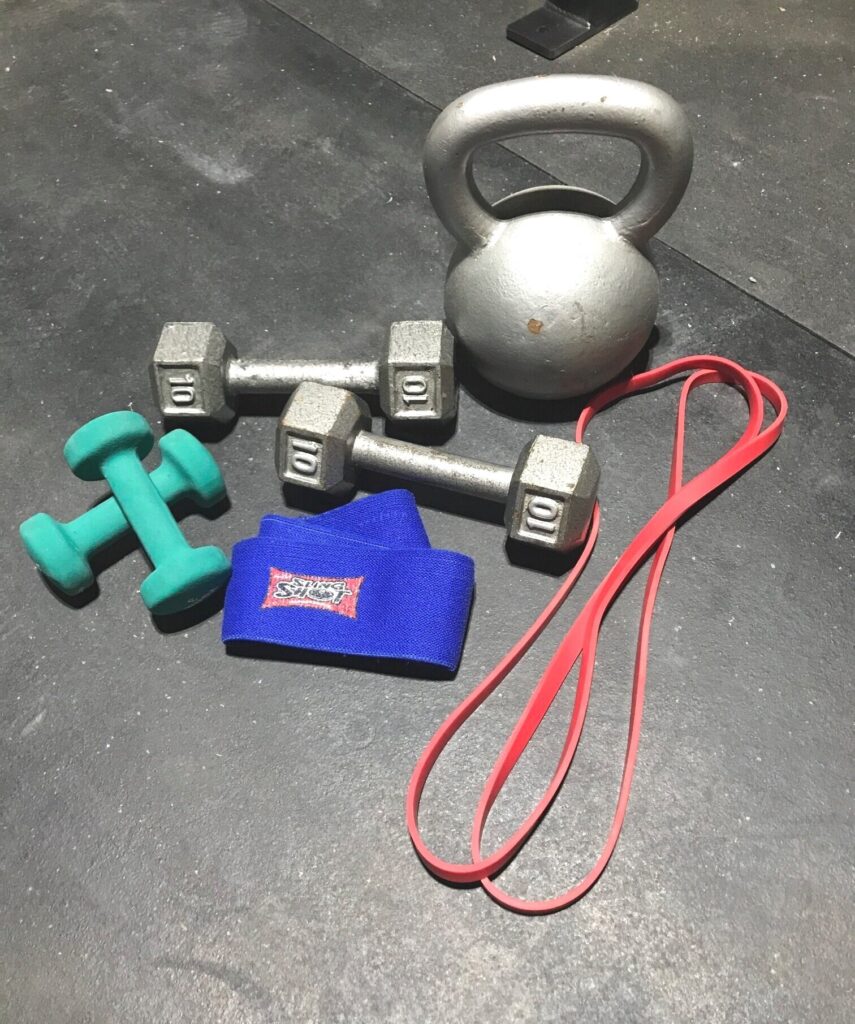
What are your home gym essentials? My bare minimum recommendation is two pairs of dumbbells, a heavy dumbbell or kettlebell, and a couple bands. I’ll give you specifics below.

Equipment for Your Home Gym

Home gyms have been growing in popularity, and for great reason! Even if you continue to go to fully equipped gyms, it’s a fantastic idea to have some of your own equipment at home. Might be raining so hard, traffic might be crazy. Whatever the reason, keeping some equipment at home gives you options.

Related: how to heat a garage gym in the winter

People have been building home gyms from basic, bare minimum style to fully equipped, built out garages for some time now. Most people fall somewhere in between having absolutely no equipment and having pallets delivered to their driveway.

With just a little bit of equipment, you can get good training. Read here how to get a full body push pull squat training session.

How Much Equipment Do You Need?

Take into consideration your budget, your space, and your needs. I highly recommend having a dedicated space where you can focus solely on your training regardless of how minimalist your set up is.

The Bare Minimum

At a minimum, I’d like to see you have:

  • a light pair of dumbbells
  • a medium pair of dumbbells
  • one heavy-ish weight (dumbbell or kettlebell will do)
  • a band, maybe two

With these, you can do many exercises to keep you conditioned. You’ll miss out on the benefits of heavy lifting without having a heavy weight, but this basic combination can keep you building muscle and building your health for a long time.

The designations of light, medium and heavy will be different for everybody. I recommend your light bells to be 2-5 pounds and your medium bells to be 8-15 pounds. Email me if you’d like specific recommendations. kathryn@kathrynalexander.com

The above links are affiliate links to products & brands I actually use, which may make me a small commission at no extra cost to you.

The Next Level

If you’re ready to invest a little more, buy one heavy dumbbell or kettlebell, and a hip circle. These should not be prohibitively expensive and give you more options to build strength. Your heavy implement can be 30+ pounds in most cases. A kettlebell is easier to hold on to, but is usually more expensive than a dumbbell. Your choice.

Where to Buy Your Equipment

Remember that weight equipment just needs to allow you to work. It doesn’t have to match and it doesn’t have to be fancy. If you have a resale shop like Play It Again Sports in your town, make that your first stop. Amazon has tons of options too. Some of my clients have had luck at Target and Wal-Mart online. Now is a good time to be checking Craigslist too.

My favorite hip circle, the blue band is typically used on the lower body. My favorite one is Mark Bell’s which you can find here. This is an affiliate link to the exact hip circle I have bought many of.

Finally, I order my resistance bands on Amazon. (This is an affiliate link to the band I use. If you purchase through this link, I may make a small commission at no extra cost to you.) You can find these in stores too if you’d like to put hands on them before buying.

Here are my favorite home gym organization ideas, and here is a definitive guide on how to select your gym flooring.

What Do I Do With These Weights?

If you are comfortable designing your own training, then you are now off to the races! If you would like guidance, you can do a week free of The Home Team, my training program for people who are exercising at home. This will give you a good taste of how to structure a week of training and get you started. If it works for you, you can continue from there. If you’d like to continue on your own, you’re off to a great start!

If you’re looking for a one off session and not a whole program, try this full body band workout at home.

If you’re in the market for a barbell and are looking for guidance on which to buy, check out this post on bushing vs bearing barbells.

Enjoy! Tag me in pictures of your home set up (@alexanderkma on Instagram), or let me know how you’ve set up your home gym!

Happy training!

Check out this list of best fitness places in North Austin.


About the author

Kathryn Alexander is a strength coach and personal trainer in Austin, Texas. She loves hiking, college football, and the feel of a perfectly knurled barbell. Read more about Kathryn here.
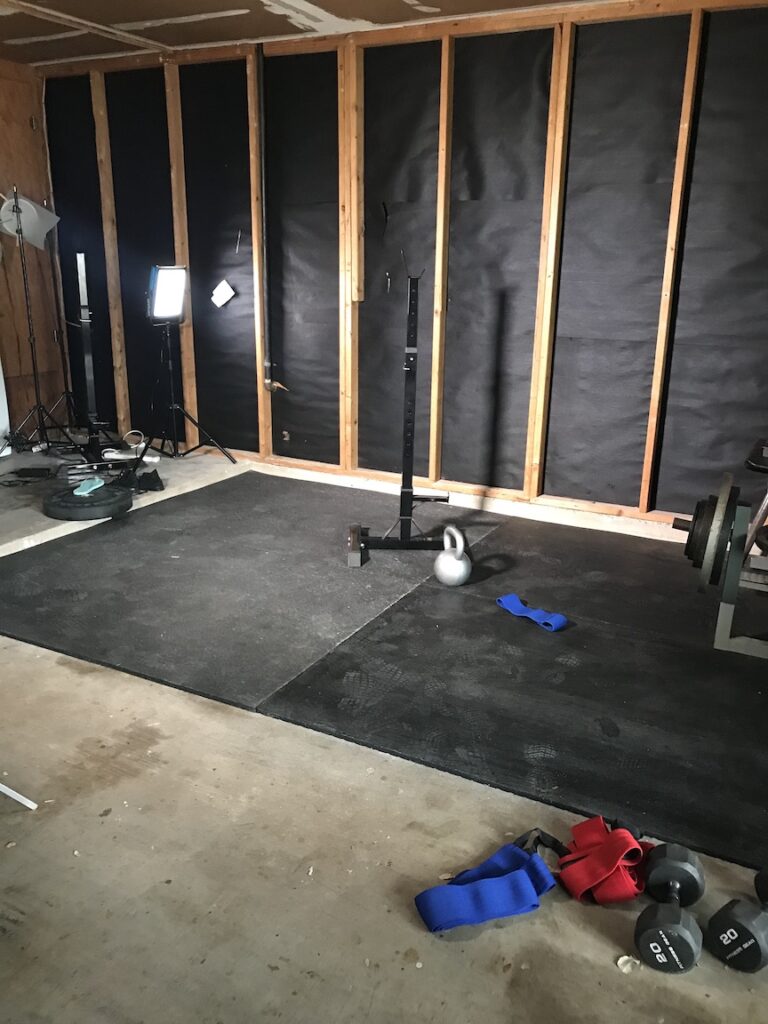

  • walking lunges for deadlift for lower body strength.
    The Best Lower Body Muscular Strength Exercises
  • deadlift barbell vs trap bar
    Deadlift Barbell vs Trap Bar: Which Is Better for Strength, Muscle, and Safer Pulling?
  • Things to do in Austin in April (2026)
    Things to Do in Austin in April (2026)
  • Client results and testimonials for trainer Kathryn Alexander
    Love Notes, Volume 5. Q1, 2026
  • Best garage gym fan. Drum fan in my garage gym. I love this one because it's easily portable.
    Best Garage Gym Fans 2026
  • things to do outside in Austin. Food truck park near Barton Springs
    Things to Do Outside in Austin

Filed Under: Garage Gym, Home gyms Tagged With: garage gym, garage gyms, home gym, home workoouts

Top 10 Benefits of a Home Gym

May 4, 2021 by Kathryn Alexander

The benefits of having a home gym are fantastic on your weight training routine and fitness goals. I know I sound like a broken record, but I have to tell you how strongly I feel about building out your own home gym. You might use it religiously, or it might be a supplement to your training in a commercial gym. Either way, you set yourself up for success when you have everything you need available to you in your own personal home gym.

I cannot overstate how building out a home gym will reinvigorate your training and bring you closer to your goals. It is SO fun and it is one of the best ways to enjoy putting a lot of time (or a little time) into your exercise routine. 

home gym benefits; squat rack of Alexander Training, personal trainer in Austin, Texas

Benefits of a Home Gym

I will cover these in greater detail below, but in a nutshell, here are some benefits of a home gym:

  • ease of use because of lowered psychological barrier 
  • saves time
  • saves money*
  • no sharing equipment
  • no one else’s sweat!
  • you get to pick the music
  • you are entirely responsible for your pace (work:rest ratios)
  • no gym manager oversight
  • you can try weird exercises!
  • you can maintain your equipment

Read also how to heat your garage gym this winter.

Ease of Use

Your home gym will become easier to use because of lowered psychological barrier of time, traffic, commute, etc. Some days a quick 20 minute HIIT session is what your body needs, and it’s hard to justify the commute time to do 20 minutes. Other days you’ll want an hour or 45-minute workout, and with your home gym setup and your own schedule, you can do it as quickly as you need.

It’s worth it, and easy to commit to when you have easy access. It’s literally right there. 

When exercise is easier to do and there are fewer barriers in the way, it’s more likely you’ll stick to a regular exercise routine. If having in-home training makes you more consistent in your fitness routine, then it’s absolutely the right choice. 

home gym benefits
The benefits of a home gym!

Home Gyms Save Time

As mentioned above, a home gym will save commute time, and wear and tear on your vehicle. You won’t get caught in gym chit-chat (for better or worse, because many times those are great chit-chats).

When life gets busy and your schedule is in a pinch, it’s a huge plus to have gym equipment close. This allows you to have complete control over your workout routine. Slash the travel time and see how much time you are able to devote to your strength training when your equipment is in the comfort of your own home. 

Saves Money *

I really love gyms, so I usually end up paying a monthly gym membership or two. BUT over time, you can potentially see some cost savings from not having membership fees. Of course, your home gym equipment will be available to your family members too. Maintaining memberships for the whole family is one thing that quickly drives up the cost of gym memberships. You might* save money if you let go of your monthly gym fee.

*The caveat here is that if you fall in love with building out your dream gym, it miiiight not save you money in the long run. You can always make a small dedicated space in a spare room in your house and begin with some free weights, a yoga mat, and resistance bands. Here is what I consider a minimal viable investment in fitness equipment for a home gym. 

Pretty soon though, you might get the itch to get your own squat rack, plates, and specialty bars. I can’t even discourage you. It’s the most fun way to spend a lot of money; even more fun than buying shoes! It’s also one of the best investments you’ll make in prioritizing your physical fitness and healthy lifestyle.

No Sharing Equipment

Whether you are a germ phobe or not, there are definite benefits to having your own space and your own equipment. A traditional gym will have a ton of equipment, yes, but I feel like I can get anything that I need done with my power rack and a couple barbells.

Since I don’t have to share, a small space is plenty sufficient. I can put my gym bag anywhere, I can use as much chalk as I want, and I know no matter what I’ll get a good workout. 

Plus, there’s no mess unless you made it. Here are my best tips on how to organize your home or garage gym.

No One Else’s Sweat

One of my favorite things about a public gym is that it’s a great way to meet people. They usually have a fun assortment of personal trainers and regulars, all of whom you can learn from. There are the water cooler talks in the locker room and by the bench press, and a community of fitness enthusiasts is a pretty fun addition to your daily life.

A public gym is still public, and that means other people’s sweat. Ew. Home gym owners can at least sweat in the comfort of their own home lol

You Get to Pick the Music

What you enjoy listening to is probably not what the training staff has to guess is palatable enough for everybody. It took me time to recover from hearing it a trillion times, but I’ll always have a soft spot for Rihanna’s Please Don’t Stop the Music (holla, Gold’s Gym 2007 staff & friends!). When it’s your gym and your rules, play what fires you up at whatever volume you want! This is actually a pretty fantastic home gym benefit.

You Are Responsible for Your Pace

I appreciate the spirit of cooperation, and it often works out beautifully that people with specific needs on a specific exercise program share equipment in the gym. However, when you have a plan, it’s not fun to have to wait for someone who is doing one set per 15 minutes on the one functioning piece of equipment you need, not re-racking weights between, and generally taking a ton of time between work sets. When you are dedicated enough that you are working on a specific pace to induce a specific adaptation, the inconsiderate gym hogs can really slow you down.

With your home workouts in your own workout space, you can work on your specific goals at your own pace. Morning person, night owl, fast trainer or slow enjoyer – setting your own pace is one of the best parts of having your own gym.

No Gym Manager Oversight

Most gym managers and owners are pretty cool, but they do get to set the tone. The ones that do it right can make a local gym the most fun, supportive environment in the world.  If they are off a little bit in a way that changes your mojo, that can really affect your training. If you are ready to call all the shots, you need your own place.

You Can Try Weird Exercises!

If you are always learning and always trying new things, it’s nice to have your own space to do so. Nothing’s wrong with going off the beaten path, but sometimes it’s more enjoyable to explore your training style without an audience. Doing a weird type of exercise or type of workout is just something I prefer to do at home. Similarly, I like going for PR’s without an audience. I do better when I know it’s me and only me. Having a lot of people around distracts me. I know I need to work on this, but having my own training environment is the perfect solution for me.

You Can Maintain Your Equipment

This might be the best part of having your own home gym. It hurts my heart every time I see someone abusing or mistreating gym equipment. You can bet that doesn’t happen at my home. You get to make sure your bars are straight, your plates face the right way (you know what I mean), shoes and feet are kept off your equipment, and your bench upholstery doesn’t get torn up. I can keep my equipment on a schedule of regular maintenance and cleaning. Respecting exercise equipment is a very important aspect of learning gym etiquette, and I love knowing that my own gym equipment is taken care of. 

Start Your Home Gym!

Whether you continue your fitness journey with bodyweight workouts in your spare bedroom, or you take it next level and full up your garage with home gym machines, I encourage you to start your own home gym. It is one of the best long term investments you can make in reaching your health and fitness goals. 

If I can help you get start with your own home gym, let me know! Remember it doesn’t have to be fully stocked to start. You don’t have to have anything fancy like a smart gym, expensive bumper plates or adjustable dumbbells. You can start with a pair or two of dumbbells or a band. If you need help decided what to start with, check out my suggestions for home gym essentials here:

Home Gym Essentials

Related: IF a home gym is not for you, or you just can’t pick… check out the best gyms in Austin. 🙂

Happy Training!

Try the first week of The Home Team training, free. You can do this whole workout program at your home gym!


About the author

Kathryn Alexander is a strength coach and personal trainer in Austin, Texas. She loves hiking, college football, and the feel of a perfectly knurled barbell. Read more about Kathryn here.
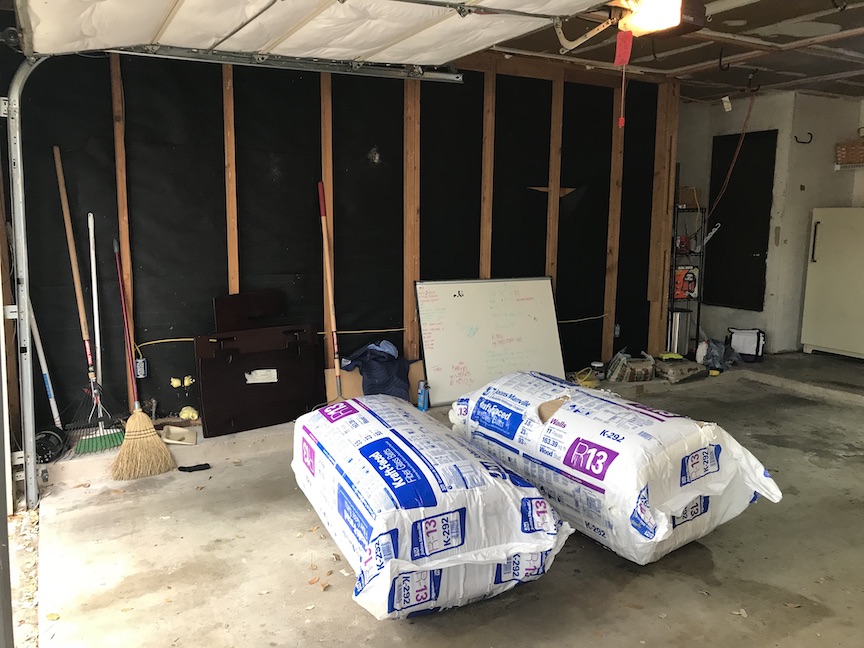
Filed Under: Home gyms Tagged With: garage gym, garage gyms, home gym

Primary Sidebar

Kathryn Alexander, personal trainer in Austin
Hi, and welcome here! -Kathryn

Recent Posts

  • The Best Lower Body Muscular Strength Exercises
  • Deadlift Barbell vs Trap Bar: Which Is Better for Strength, Muscle, and Safer Pulling?
  • Things to Do in Austin in April (2026)
  • Love Notes, Volume 5. Q1, 2026
  • Best Garage Gym Fans 2026

Did you know I make custom training plans? Tell Me More!

Footer

Follow

  • Email
  • Instagram
  • YouTube

Affiliate disclaimer

As an Amazon Associate I earn from qualifying purchases.

Newsletter sign up

  • Home
  • About Kathryn Alexander
  • Blog
  • Success Stories
  • Training Programs
  • Personal Training

Copyright © 2026 · Genesis Sample on Genesis Framework · WordPress · Log in

  • Featured In
  • Privacy Policy
  • Resources
  • Online Personal Training
  • Personal Training
  • Training Programs