Best garage gym fans of 2026. Reporting from Austin, Texas, so you already know we’re not playing about the heat down here!
I really love having a home gym. It’s one of the best quality of life increases I’ve been able to buy, and I highly recommend it. There are a few issues you have to handle (like the weather) but it’s so worth it. Let’s talk about the best garage gym fans so you can get to your training.
Disclaimer: As an Amazon Associate I earn from qualifying purchases. Some of the links in this post are to affiliate products.
If you train in a garage gym, you are going to have to deal with the climate and the issues it brings. Especially in the summer, airflow can make or break your workout.
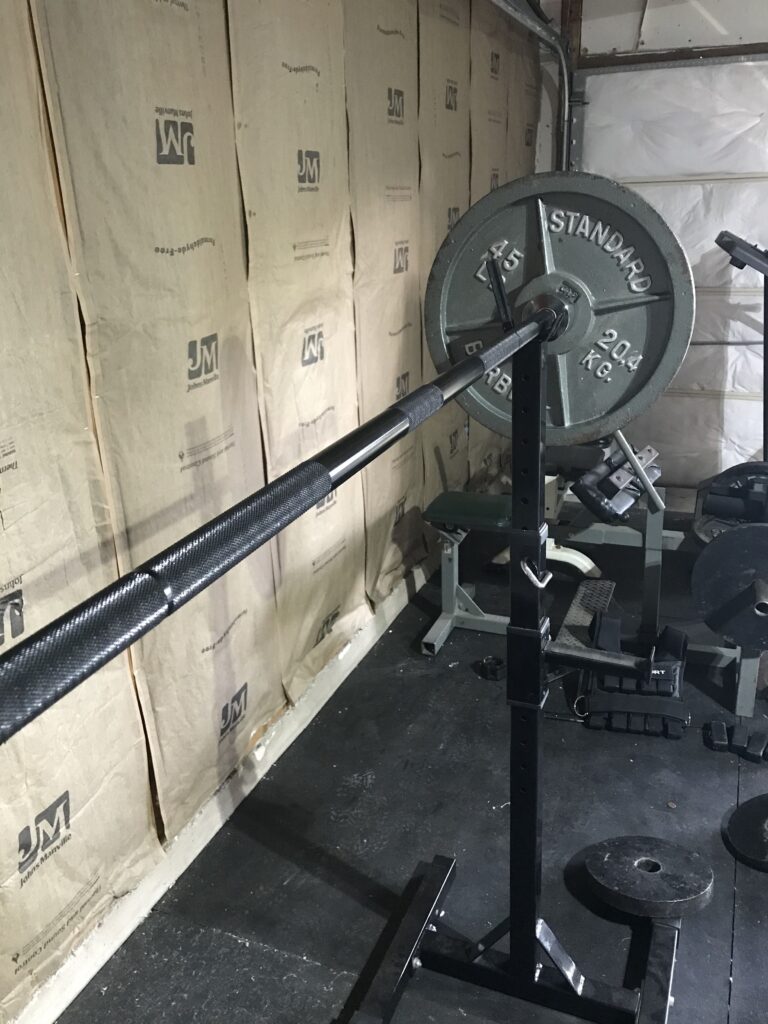
In many parts of the United States, especially here in Texas during warmer months, a garage can heat up fast. Like, well over 100 degrees, fast. The combination of a closed garage door, warm walls, and concrete floors can turn a solid training area into an uncomfortable or even dangerous situation.
Are you building a home gym and have no idea where to start? I got you! Read this.
Choosing The Best Garage Gym Fan
Choosing the best garage fan matters so much. The right fan can create a refreshing breeze, improve efficient air circulation, and bring in cool air that makes your workout sessions far more comfortable.
Whether you want a compact option for a car garage, a wall-mounted fan to save floor space, or a large fan that can move huge amounts of air across expansive spaces, the right choice can make your training sooo much better!
Remember: your body is like a machine. When it overheats, it won’t perform as well! Having a good fan doesn’t make you a sissy; it makes you smart and better prepared.
For most home gym owners, the top pick is a durable, high-powered circulation fan that can move a lot of air without taking up too much room. In a typical garage gym, you want a fan that can cover a good number of cubic feet, handle large rooms, and still keep the noise level reasonable during lifting, conditioning, or longer training sessions.
A good fan should create enough movement to reduce stale air, help sweat evaporate, and improve comfort without blasting you so hard that it feels like a wind tunnel.
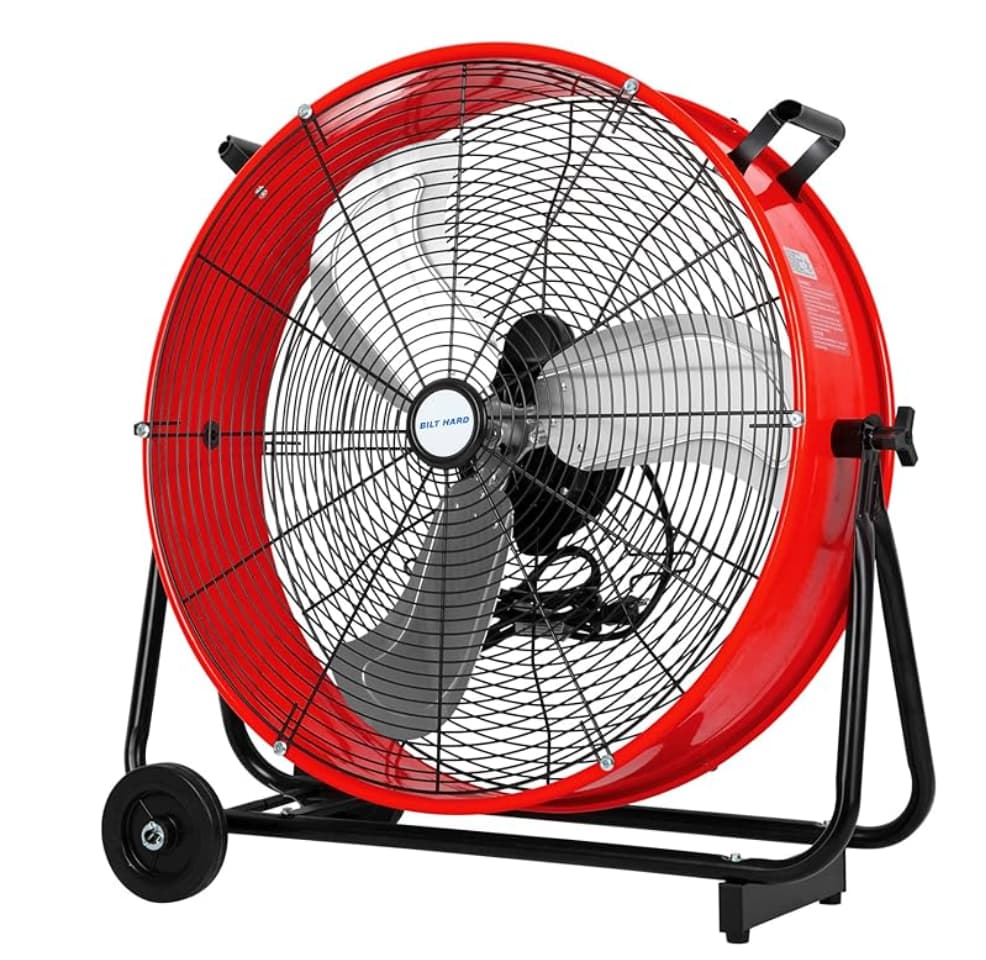
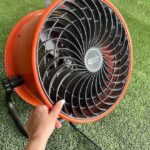
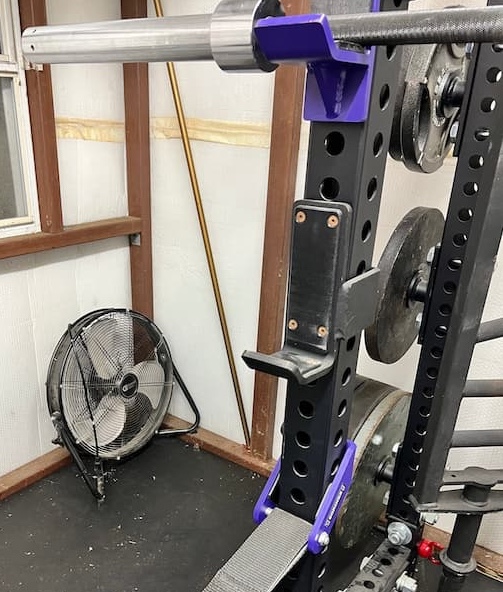
Here’s a link to the fan above.
Types of Garage Gym Fans
When you look up fans, you’ll find everything from a box fan to a drum fan, from tower fans to a high-velocity fan, and even cooling alternatives like an evaporative cooler, portable acs, a portable ac unit, or a window unit.
The truth is, there is no single perfect fan for every gym. The best option depends on your room size, how much powerful airflow you need, your budget, and whether you value raw power or quiet operation.
Here’s my minimal list of home gym equipment essentials.
Wall Mounted Fans
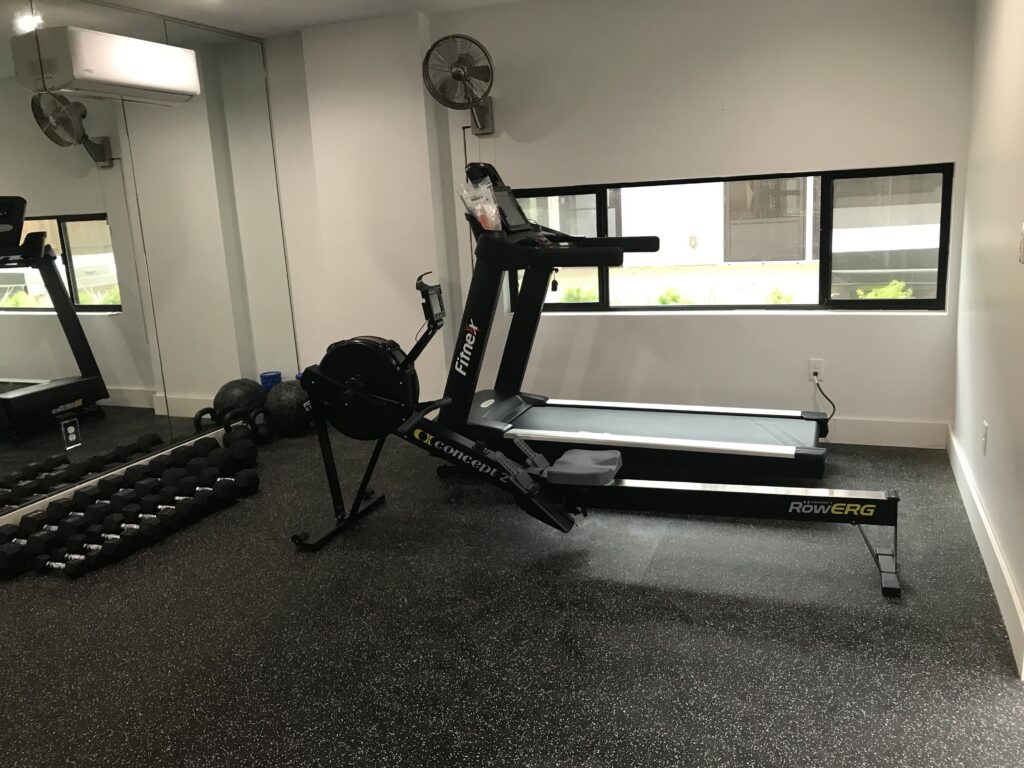
A wall-mounted fan is often the best choice for lifters who want to preserve floor space for racks, benches, sleds, and cardio equipment. With proper wall mounting, these fans stay off the ground, direct airflow across your lifting zone, and can cool different areas of the room.
Many newer models come with a remote control, simple control panel functions, and multiple speed settings so you can switch from low speed during warm-ups to the highest setting during conditioning work. If you want flexibility and convenience, this type of fan is hard to beat.
You can find a similar wall mounted fan here.
Heavy Duty Fans
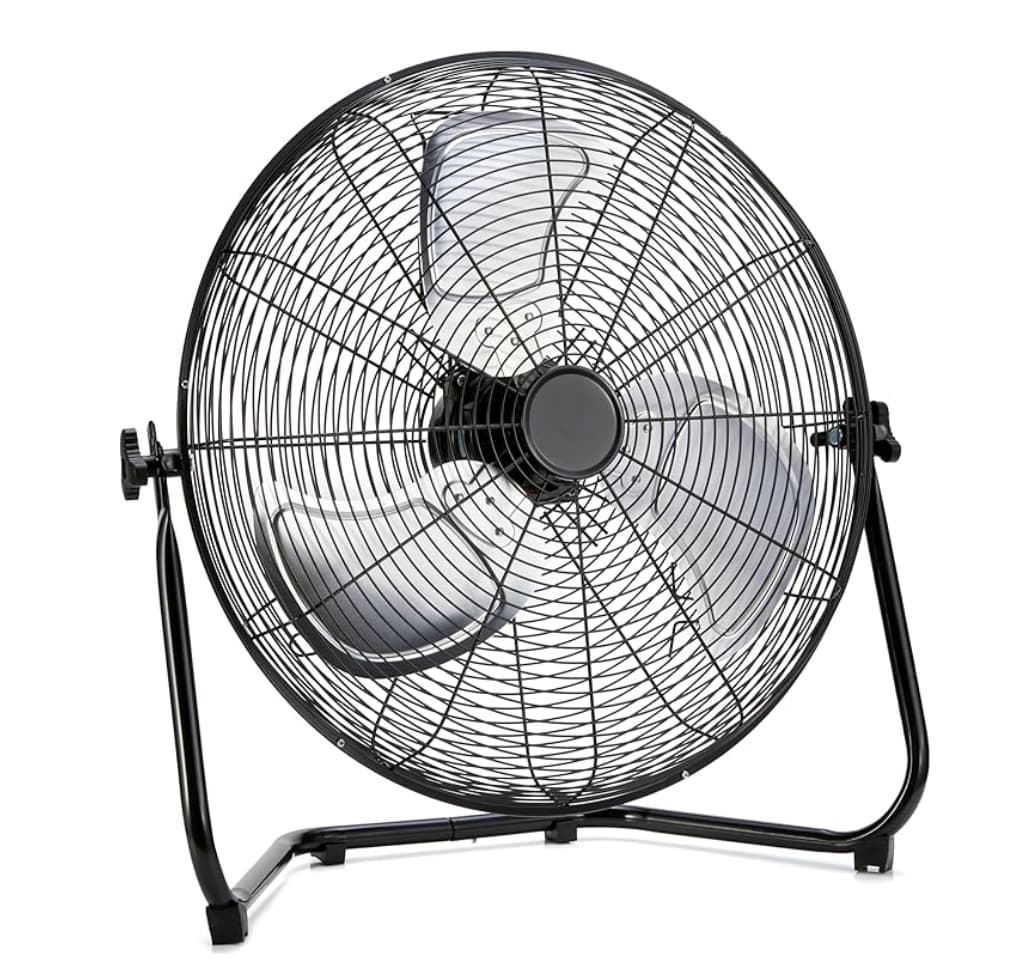
For larger home gyms, a high-velocity fan or industrial fan is usually the better move. These are designed for workshops, warehouses, and utility spaces, which makes them ideal for garage use. A true heavy-duty fan can produce powerful airflow, strong wind speed, and enough circulation for larger areas where smaller household fans struggle.
If your gym is set up in a two-car garage, or if you often keep the garage door partially open while training, a strong floor model can push much air across the room and keep everything feeling fresher.
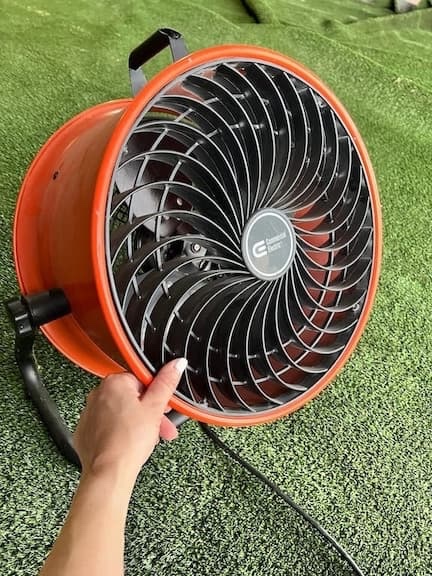
This is what I use, not because I have a large space (mine is 12’x20′), but it’s portable, and I can point it right at the door to blast out mosquitoes! Bonus!
Drum Fans
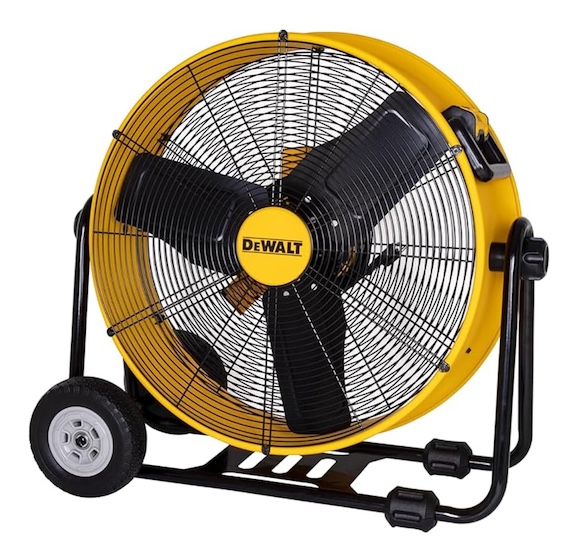
One of the most popular styles in this category is the drum fan. A drum fan uses large blades and an open design to move air aggressively across a large space. These are especially useful in home gyms with taller ceilings or wide open layouts, because they can distribute air across expansive spaces much better than standard household options.
If you want a big fan with serious output, this may be the route to go. You can also move these around, unlike the wall mounted fans.
This is a drum fan similar to mine. It’s my favorite of my two:
Other Portable Floor Fans
A portable floor fan is great for people who want flexibility. If you do mobility near the floor one day, heavy lifting the next, and bike intervals in another part of the gym after that, a movable fan lets you target cooling exactly where you need it.
These portable units are also easy to reposition if the sun hits one side of the garage harder in the afternoon. Compared with fixed systems, a portable floor fan gives you more control over your immediate cooling effect. They can also create a great cross flow if you have an open door or window.
That said, not every garage gym needs an aggressive shop-style fan. Some people want the quietest fan possible, especially if they train early in the morning or late at night. If that sounds like you, look for fans marketed for quiet operation or even silent air movers. While these may not create the same blast as a commercial industrial fan, they can still circulate enough air for solo lifting sessions.
A quieter unit may include different modes, a sleep mode, and more refined low settings for those who care more about comfort than maximum output.
Oscillating Fans
An oscillating fan can be a smart middle-ground option for medium-sized spaces. Unlike fixed fans that blast one direction, an oscillating fan can spread airflow across different areas, helping your whole gym feel more balanced. This is useful when you have a shared space or multiple stations. If your gym is also used for storage, laundry, or general garage use, sweeping airflow can keep the room feeling less stagnant overall.
If you want something especially rugged, look for models with metal blades, durable metal construction, and a dual ball bearing motor. These features often signal better long-term durability, especially in dusty garage conditions.
A cheaper plastic unit may work for a while, but a sturdier build tends to last longer and hold up better through frequent use. A dual ball bearing motor also tends to be associated with smoother operation and a longer lifespan, which matters when your fan is running through long summer workouts.
Ceiling Fans
For ceiling setups, some people ask whether a fitness room ceiling fan can work in a garage. In some cases, yes. A fitness room ceiling fan can help keep air circulating continuously, particularly in finished garage gyms that feel more like a studio than a workshop.
However, ceiling fans often do better as a support system than as the main cooling solution. For harder sessions, most people still benefit from a dedicated floor or wall unit with more direct force and powerful motor output.
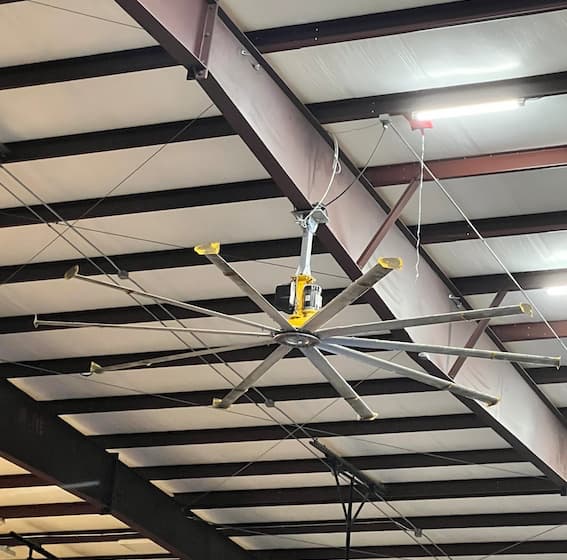
The exception is a Big Ass Fan. If you’ve been in commercial gyms, you’ve probably seen the brand Big Ass Fan. They are gigantic ceiling fans and they make it chilly! They’d be overkill for a regular size garage, but if you have a barndominium type situation (my dream gym!) then they’re worth looking into.
Note that these are not cheap, but they’ll do a job littler fans can’t.
A Couple I Might Not Recommend
Tower fans look sleek and take up less room. In a finished gym or a more polished home (inside) gym, that style can make sense. The vertical design works well when you want airflow without a bulky footprint.
Some also offer an oscillating fan function, meaning the fan sweeps side to side to cool multiple zones. That can help if you’re moving between a rack, dumbbell area, and cardio corner.
Still, while tower fans can work for mild conditions, they usually won’t move the same huge amounts of air as a stronger shop or utility fan.
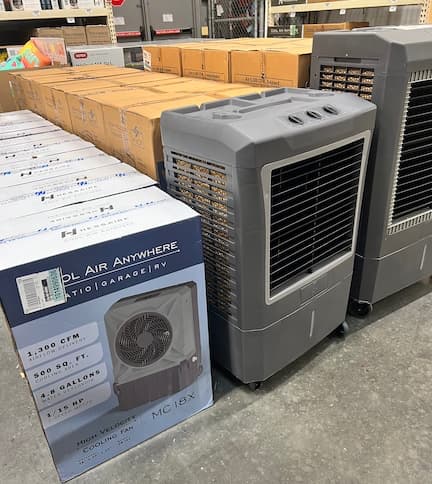
I also have to mention evaporative coolers. These are what you see on the sidelines of football games. Really overkill for a home gym. In some climates, an evaporative cooler can create a more chilled feeling than a fan alone, especially if the air is dry.
It won’t work the same way in every region, but it can be an interesting middle option between a fan and a full AC system. If you have a somewhat larger space, or if you are training people out of your home gym, and your goal is a stronger cooling effect without the price of heavy air conditioning, it may be worth considering.
Other Factors to Consider When Buying a Garage Gym Fan
Of course, which fan you buy is up to you and your budget, but I like to buy well and buy once. Consider practically how often you’ll use it, how much it matters to you, and the other factors I mention above.
Many strong utility fans also include practical features like adjustable tilt, a pull cord, and simple dials rather than complicated electronics. Others add digital convenience with a remote control and easy-touch control panel settings.
If you want something simple and dependable, manual controls are perfectly fine. If you value convenience, especially during circuits or treadmill intervals, being able to adjust from across the room can be a huge plus.
Size of Your Gym
When comparing best fans, always think about square feet and the volume of the room. A standard one-car gym might need moderate airflow, but a two-car setup with higher ceilings contains many more cubic feet of air. That means you need more power to feel the same effect.
In larger garages, a small fan may technically run, but it won’t create enough air movement to cool the space effectively. This is why looking at size and output matters more than just grabbing the first popular model.
Garage Fan Brands
Brand names come up a lot in garage gym reviews, and a few are well known in this category. Air King has long been a recognizable name for utility and shop fans, especially for people who want simple, durable performance. A solid Air King model can be a good fan choice for home gym owners who prefer proven reliability over flashy features.
Maxx Air fan products are also commonly considered in garages and workspaces because they are often designed to push strong airflow in demanding environments. If you are comparing similar fans, pay attention to build quality, output, warranty terms, and how they perform on low speed versus the highest speed.
Safety matters too. Since garages can be dusty, humid, and full of equipment, it is worth buying from a reputable brand that follows basic safety standards. A fan should feel stable, especially if it is a large fan or heavy-duty fan. If it is going on the wall, proper wall mounting is essential. You do not want a loose bracket above a squat rack. For ground units, make sure cords stay clear of walkways and that the frame is solid enough not to tip easily.
You should also look at warranty support. A one-year warranty is common and offers at least some peace of mind. While that may not sound exciting, it can help if your motor fails early or the controls stop working. For a product that may run often during the hottest part of the year, that baseline coverage matters.
When to Get an Air Conditioner
If you’re really dying in the heat when you do your home workouts, but you should go with an air conditioner instead. If your garage is brutally hot, a fan alone may not solve everything. In that case, a portable ac unit, a mini-split, one of the newer portable acs, or a mounted window unit may help bring real temperature relief. Just remember that cooling appliances typically cost more to buy and use more electricity.
That’s where energy consumption and energy costs come in. Many people choose fans because they use less energythan full air conditioning. A high-powered fan can still add to your bill, but in most cases it is far more affordable than running a dedicated cooling unit. If you only need circulation and a stronger breeze, a fan is usually the better value. If you need actual temperature reduction, then pairing a fan with a cooling unit may be the smarter long-term setup.
Final Notes on your Garage Gym Fan Decision
Even a simple box fan can still work in the right setup for your home gym. A box fan is affordable, easy to find at Home Depot, and decent for basic circulation. It’s not usually the most powerful or the most durable, but it can be a budget-friendly entry point. If your garage is small and you train in short sessions, it may be enough. And training in your home gym is still the best thing ever!
You may also come across specialized systems like space cool units, workshop ventilators, or even attic fans as part of broader heat management. Those can help reduce trapped heat overall, but they serve a different purpose than a direct workout fan. If your garage traps heat badly, improving ventilation in general can help, but you will still likely want a direct fan aimed at your training area.
In the end, the best garage fan is the one that matches your room size, training style, and comfort preferences. If you want a space-saving solution, a wall-mounted fan is often the best option. If you need maximum airflow for a two-car gym, a high-velocity fan, industrial fan, or drum fan is probably the best choice.
If you care most about minimal sound, prioritize the quietest fan with dependable quiet operation and practical speed settings. And if your heat is extreme, consider combining strong airflow with a portable ac unit, window unit, or other cooling support.
Best Garage Gym Fan For Your Gym
The bottom line is simple: good airflow can transform your training. A great setup with racks, weights, and even the best treadmills or the best protein powders on your shelf still won’t feel good if the room is stuffy, humid, and full of hot air.
A fan that moves a lot of air, creates cool air circulation, and fits your layout can make a real significant difference in comfort, consistency, and performance. When your gym feels better, your workout experience does too.
And when your training space is comfortable, you are much more likely to use it regularly. For most lifters building an own home gym, investing in one of the best garage fans is one of the smartest upgrades you can make.
Disclaimer: As an Amazon Associate I earn from qualifying purchases. Some of the links in this post are to affiliate products.
Related: Here’s how to heat a garage gym.
Do you need advice on deadlift bars? Here’s a good rundown of deadlift barbells vs trap bars.

About the author
Kathryn Alexander is a strength coach and personal trainer in Austin, Texas. She loves hiking, college football, and the feel of a perfectly knurled barbell. Read more about Kathryn here.