• Skip to primary navigation
  • Skip to main content
  • Skip to primary sidebar
  • Skip to footer
Alexander Training personal trainer Austin Texas

Alexander Training - personal training in Austin, Texas

Personal training in Austin, Texas and customized strength programs in Austin, Texas.

  • Home
  • About Kathryn Alexander
  • Blog
  • Success Stories
  • Training Programs
  • Personal Training

garage gyms

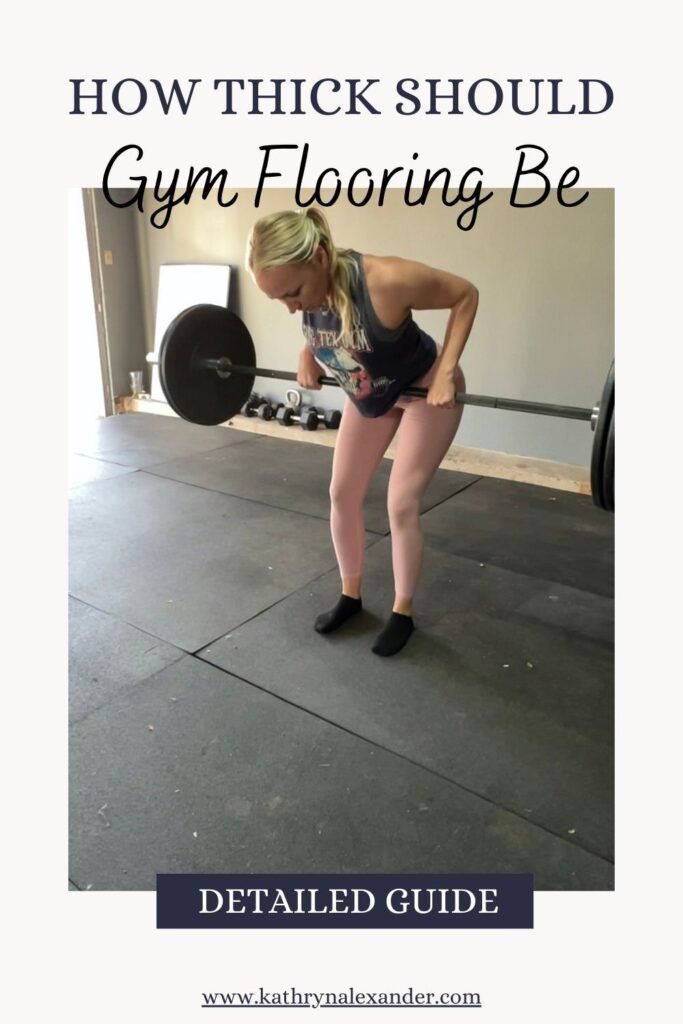
How Thick Should Gym Flooring Be? A Detailed Guide

March 14, 2024 by Kathryn Alexander

How thick should gym flooring be? When it comes to outfitting your commercial gym, home gym or garage gym, choosing the right thickness for gym flooring is crucial.  This guide covers how thick your gym flooring should be and what floor types are the best for your commercial gym or home gym flooring.

I have worked in many different types of gyms over the 19 years I’ve been training: athletic facilities, strength and conditioning rooms, commercial gyms, racquet clubs, hardcore local gyms, a froo-froo gym I’ll never set foot in again, and my favorite: my garage gym. They all had different flooring and surfaces, and it makes a big difference for the athletes, lifters a​nd coaches.

Let me help you decide what kind of flooring is the best option for you, based on what kind of exercise you do and your workout space.

What Types of Gym Flooring Are Available?

Whether your facility caters to heavy weightlifters, high-intensity interval trainers, or martial artists, the thickness of your gym flooring can make a significant difference in performance, safety, and overall user experience. In this comprehensive guide, we’ll explore various factors to consider when determining the appropriate thickness of gym flooring, including the type of exercises performed, equipment used, and specific needs of your facility.

Understanding Gym Flooring Options

Before delving into thickness considerations, let’s first examine some popular gym flooring options commonly used in commercial spaces:

  1. Rubber Mats:
    • Rubber mats offer excellent durability, shock absorption, and slip resistance, making them an ideal choice for high-impact exercises and heavy weight training areas. They come in various thicknesses ranging from 1/4 inch to 3/4 inch, providing options to suit different needs and preferences.
  2. Rubber Tiles:
    • Rubber tiles are versatile and easy to install, providing a seamless flooring solution for large workout spaces. They come in standard thicknesses ranging from 3/8 inch to 3/4 inch, offering superior impact absorption from hard surfaces, and noise reduction for commercial gyms and exercise rooms.
  3. Rubber Rolls:
    • Rubber rolls provide seamless coverage for larger areas and offer excellent shock absorption and slip resistance. They are available in different thicknesses, typically ranging from 1/4 inch to 3/4 inch, making them suitable for heavy weightlifting areas, power cages, and exercise studios.
  4. Foam Tiles:
    • Foam tiles are lightweight and portable, making them ideal for temporary or portable workout spaces. While they offer some cushioning and support, they are not as durable or resilient as rubber flooring options. Foam tiles typically range in thickness from 3/8 inch to 1 inch, providing options for light to moderate exercise activities.
Turf and rubber flooring at Iron Forge Gym

What to Consider When Determining Gym Flooring Thickness:

  1. Type of Exercises:
    • Consider the primary types of exercises performed in your gym, such as weight training, plyometrics, martial arts, or bodyweight exercises. High-impact exercises like plyometrics and heavy weightlifting require thicker flooring with superior shock absorption to cushion impacts and reduce the risk of injury.
  2. Equipment Usage:
    • Evaluate the type and weight of equipment used in your gym, including free weights, barbells, and weightlifting machines. Thicker flooring is necessary to withstand the impact of heavy equipment and protect the subfloor from damage.
  3. Specific Needs:
    • Assess the specific needs and preferences of your clientele, including their fitness goals, exercise preferences, and injury history. Tailor your gym flooring thickness to accommodate a wide range of activities and user requirements.
  4. Impact Absorption:
    • Prioritize flooring options with excellent impact absorption properties to minimize stress on joints and reduce the risk of injuries, particularly in high-impact exercise areas such as plyometric zones or martial arts studios.
  5. Noise Reduction:
    • Thicker gym flooring can help dampen noise from dropped weights and equipment, creating a quieter and more enjoyable workout environment for gym members and neighboring spaces.
  6. Aesthetics and Durability:
    • Consider the aesthetics of your gym and choose flooring options that complement the overall design and branding of your facility. Additionally, prioritize durable materials that can withstand heavy foot traffic and regular use without compromising performance or appearance.

Choosing the Right Thickness

Now that we’ve explored the various factors to consider let’s delve into how to choose the right thickness for your gym flooring based on specific needs and requirements:

  1. High-Impact Exercises:
    • For areas dedicated to plyometric exercises, martial arts, or high-intensity interval training, opt for thicker rubber flooring ranging from 1/2 inch to 3/4 inch to provide optimal shock absorption and joint protection.
  2. Heavy Weightlifting:
    • In weightlifting areas, power cages, and squat racks, choose rubber flooring with a thickness of at least 1/2 inch to 3/4 inch to withstand the impact of heavy weights and equipment without causing damage to the subfloor.
  3. General Exercise Areas:
    • For general exercise areas used for a variety of activities including strength training, cardio, and bodyweight exercises, opt for rubber flooring with a thickness of 3/8 inch to 1/2 inch to provide adequate cushioning and support for all types of workouts.
  4. Portability and Versatility:
    • If you require portable or temporary flooring solutions for events, classes, or outdoor workouts, consider foam tiles with a thickness of 3/8 inch to 1/2 inch for lightweight and easy-to-install options.
  5. Budget Considerations:
    • While thicker flooring typically offers better shock absorption and durability, it may come at a higher cost. Evaluate your budget constraints and balance the benefits of thicker flooring with your financial limitations.

​Flooring Considerations for Mixed Use Gyms

Gyms can be pretty cookie cutter, like most big box gyms. They have some machines, a circuit station, and some “hand weights” or light weights. Blah. Get me outta there. They can use any kind of typical rubber gym flooring because they don’t typically have squat racks, heavier weights, or Olympic lifting. That’s fine; it works for a lot of people. If it suits your needs, then you are in luck because these gyms are everyone. 

However, please know that local gyms with better equipment, heavier weights and happy happy regulars are great places for everybody! From people who are totally new to a gym to advanced lifters and competitors, these gyms typically have better equipment, and more options for you.

When it comes to flooring, they’ll typically use thick rubber flooring that’s obviously durable enough for commercial use. In some areas, you’ll see deadlift stations with even thicker mats than the typical rubber gym floor mats. This is necessary for heavier lifting. You’ll even see platforms for dedicated heavy deadlifting. 

Platforms are made of layers of plywood and rubber horse stall flooring: some of the thickest mats out there. By screwing these layers of flooring together, the platform dissipates the weight of the heavy lifts to protect the floor. 

Home Gym and Garage Gym Flooring

The best thing about outfitting your home gym is that you get to make it perfectly fit you! As you decide how thick your gym flooring should be, answer the following questions:

  • what kind of exercise, lifting and movement will you do in your space? 
  • will you be deadlifting, clean & jerking, or snatching any weights? 
  • will you have a squat rack? 
  • what other type of equipment will you have? Anything large and heavy?

If you have smaller weights and will not be using barbells, you have many options of flooring thickness. You can use interlocking foam mats, which are thick, foam tiles that interlock like puzzle pieces. They are very versatile, easy to install and remove, and provide cushioning. They don’t need to be nailed down or permanently affixed to the floor. 

If you are going to set up a garage gym and are going to use any kind of barbells or a squat rack, I recommend rubber floor mats. The horse stall mats that are available from Tractor Supply Company are my favorites. The standard thickness of these is 3/4 inch of heavy rubber. This is a good balance of thickness and weight.
how thick should gym flooring be? 1/2 rubber mats pictured here.
How thick should gym flooring be? 1/2 rubber mats pictured here.

They are heavy (94 pounds) especially for one person lifting and installing them. Ask me how I know, lol. I have about 12 of them. They are my favorite gym mats though, and they’re worth the one time struggle of getting them home. 

You can see in this post about heating a garage gym, more details about my stall mats.

One of my clients even installed two in her basement gym in Virginia. They are a great choice to protect her floor from light to heavy use. 

Related: home gyms ideas garage edition! This is a huge guide for what you need for your garage gym!

Considerations for MMA and Martial Arts Gyms

Flooring for martial arts gyms often combines both rubber flooring and a softer flooring on top. One example of this is vinyl or canvas covered foam mats. These mats typically have a high-density foam core with a durable vinyl or canvas cover. They are easy to clean and provide a smooth surface suitable for various martial arts styles.

These two layers allow for insulation from a hard floor, and then further cushioning to reduce the risk of injury during falls or throws. The best thickness for this second layer of foam mat is 1-2 inches. Heavy lifting and weight lifting usually do not occur in this part of the gym, so the best choice is cushioned matting on top of rubber matting. 

Large Commercial Gym Flooring

For a larger area than a home gym or martial arts studio, the best option will be larger rubber floor rolls. In this case, you’ll want to segment your gym into heavy use areas that require thicker rubber floors, MMA and stretching areas, and areas where machines but not free weights are used. This way you can use the above information about which rubber flooring thickness suits your activity best. This can also help your budget. Thicker flooring means more money often, so in some areas, 3/8 rubber flooring rolls are a good thickness to provide safe, non-slip footing and enough cushion from the concrete slab. 

Then, where you have heavy gym equipment, squat racks and bench presses, install 1/2 inch rubber flooring. Finally, for specific deadlift areas, install thick flooring: a platform of plywood and horse stall mat, like I mentioned above. You might even buy a commercial deadlift platform, which typically comes with 8 large rubber pieces inside a metal frame. These are popular options in gyms with powerlifting competitors. 
Layers of a platform: rubber and plywood. Gym flooring.
Layers of a platform: rubber and plywood for this platform at Big Tex Gym, one of the best gyms in Austin.

Of course, all of these depend on your gym’s usage and budget. Just know that it will be worth it to make dedicated spaces so you are able to both protect your floor and give your lifters the best experience possible. 

Lastly, I LOVE me a good turf in a gym! If you have the space, this will set your gym apart from the others in town. Gym turf rolls are available to fit your specific square footage. They are fabulous for sled work, strongman training, and athletic movements. I highly highly recommend turf in a gym! It will set you apart from a general fitness studio, and establish your space as a lifting facility. 

How Thick Should Gym Flooring Be? 

As you can see, “how thick should gym flooring be?” is a great question! Selecting the right thickness for gym flooring is essential for creating a safe, comfortable, and functional workout environment in commercial gyms and fitness studios. By considering factors such as the type of exercises performed, equipment used, specific needs of your facility, and budget constraints, you can determine the ideal thickness of gym flooring to meet the requirements of your clientele.

Whether you opt for rubber mats, tiles, rolls, or foam tiles, prioritize impact absorption, durability, and user comfort to ensure optimal performance and satisfaction for gym members and coaches alike. 

Message me if you have anymore questions! I love this stuff! 🙂
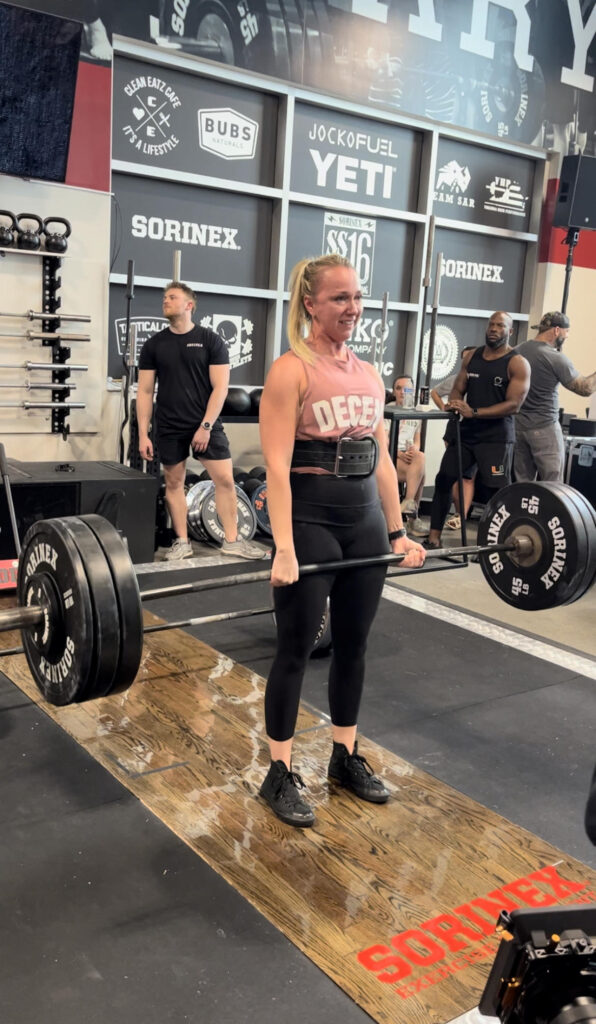
Gym flooring. Kathryn Alexander deadlifting on platform at Sorinex.

About the author

Kathryn Alexander is a strength coach and personal trainer in Austin, Texas. She loves hiking, college football, and the feel of a perfectly knurled barbell. Read more about Kathryn here.

  • walking lunges for deadlift for lower body strength.
    The Best Lower Body Muscular Strength Exercises
  • deadlift barbell vs trap bar
    Deadlift Barbell vs Trap Bar: Which Is Better for Strength, Muscle, and Safer Pulling?
  • Things to do in Austin in April (2026)
    Things to Do in Austin in April (2026)
  • Client results and testimonials for trainer Kathryn Alexander
    Love Notes, Volume 5. Q1, 2026
  • Best garage gym fan. Drum fan in my garage gym. I love this one because it's easily portable.
    Best Garage Gym Fans 2026
  • things to do outside in Austin. Food truck park near Barton Springs
    Things to Do Outside in Austin

Filed Under: Garage Gym, Home gyms Tagged With: garage gym, garage gyms, home gym

Home Gym Essentials

July 11, 2023 by Kathryn Alexander

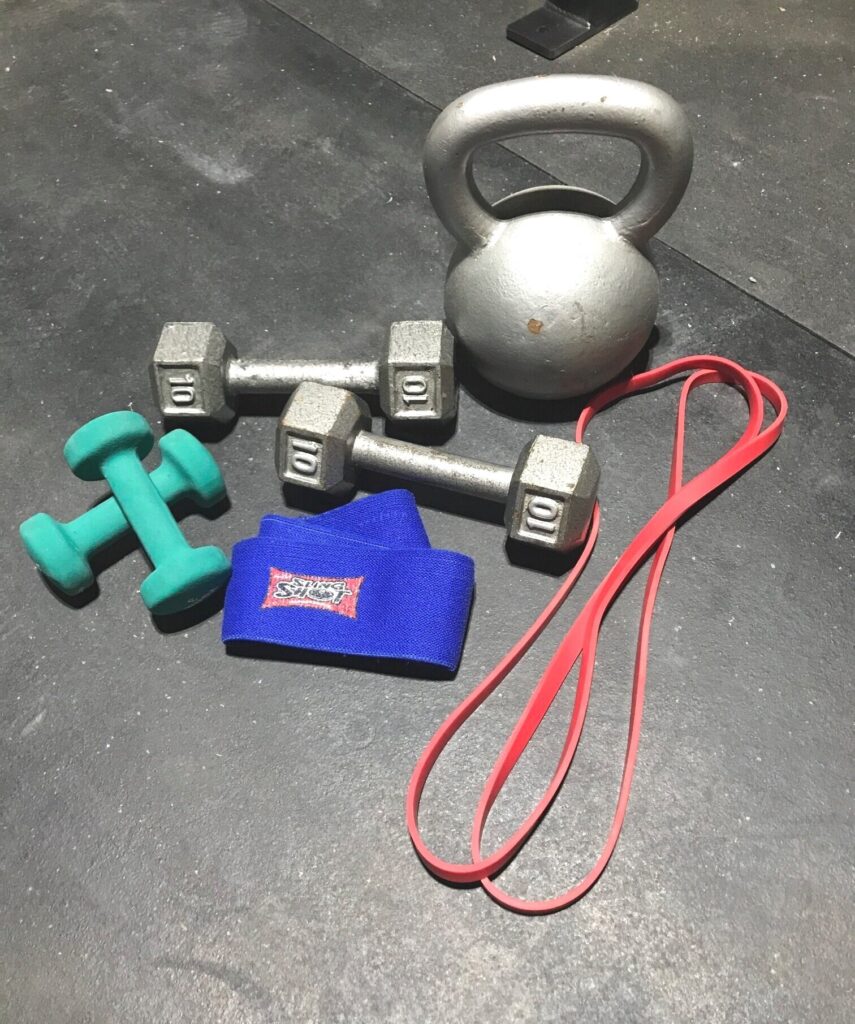
What are your home gym essentials? My bare minimum recommendation is two pairs of dumbbells, a heavy dumbbell or kettlebell, and a couple bands. I’ll give you specifics below.

Equipment for Your Home Gym

Home gyms have been growing in popularity, and for great reason! Even if you continue to go to fully equipped gyms, it’s a fantastic idea to have some of your own equipment at home. Might be raining so hard, traffic might be crazy. Whatever the reason, keeping some equipment at home gives you options.

Related: how to heat a garage gym in the winter

People have been building home gyms from basic, bare minimum style to fully equipped, built out garages for some time now. Most people fall somewhere in between having absolutely no equipment and having pallets delivered to their driveway.

With just a little bit of equipment, you can get good training. Read here how to get a full body push pull squat training session.

How Much Equipment Do You Need?

Take into consideration your budget, your space, and your needs. I highly recommend having a dedicated space where you can focus solely on your training regardless of how minimalist your set up is.

The Bare Minimum

At a minimum, I’d like to see you have:

  • a light pair of dumbbells
  • a medium pair of dumbbells
  • one heavy-ish weight (dumbbell or kettlebell will do)
  • a band, maybe two

With these, you can do many exercises to keep you conditioned. You’ll miss out on the benefits of heavy lifting without having a heavy weight, but this basic combination can keep you building muscle and building your health for a long time.

The designations of light, medium and heavy will be different for everybody. I recommend your light bells to be 2-5 pounds and your medium bells to be 8-15 pounds. Email me if you’d like specific recommendations. kathryn@kathrynalexander.com

The above links are affiliate links to products & brands I actually use, which may make me a small commission at no extra cost to you.

The Next Level

If you’re ready to invest a little more, buy one heavy dumbbell or kettlebell, and a hip circle. These should not be prohibitively expensive and give you more options to build strength. Your heavy implement can be 30+ pounds in most cases. A kettlebell is easier to hold on to, but is usually more expensive than a dumbbell. Your choice.

Where to Buy Your Equipment

Remember that weight equipment just needs to allow you to work. It doesn’t have to match and it doesn’t have to be fancy. If you have a resale shop like Play It Again Sports in your town, make that your first stop. Amazon has tons of options too. Some of my clients have had luck at Target and Wal-Mart online. Now is a good time to be checking Craigslist too.

My favorite hip circle, the blue band is typically used on the lower body. My favorite one is Mark Bell’s which you can find here. This is an affiliate link to the exact hip circle I have bought many of.

Finally, I order my resistance bands on Amazon. (This is an affiliate link to the band I use. If you purchase through this link, I may make a small commission at no extra cost to you.) You can find these in stores too if you’d like to put hands on them before buying.

Here are my favorite home gym organization ideas, and here is a definitive guide on how to select your gym flooring.

What Do I Do With These Weights?

If you are comfortable designing your own training, then you are now off to the races! If you would like guidance, you can do a week free of The Home Team, my training program for people who are exercising at home. This will give you a good taste of how to structure a week of training and get you started. If it works for you, you can continue from there. If you’d like to continue on your own, you’re off to a great start!

If you’re looking for a one off session and not a whole program, try this full body band workout at home.

If you’re in the market for a barbell and are looking for guidance on which to buy, check out this post on bushing vs bearing barbells.

Enjoy! Tag me in pictures of your home set up (@alexanderkma on Instagram), or let me know how you’ve set up your home gym!

Happy training!

Check out this list of best fitness places in North Austin.


About the author

Kathryn Alexander is a strength coach and personal trainer in Austin, Texas. She loves hiking, college football, and the feel of a perfectly knurled barbell. Read more about Kathryn here.


  • walking lunges for deadlift for lower body strength.
    The Best Lower Body Muscular Strength Exercises
  • deadlift barbell vs trap bar
    Deadlift Barbell vs Trap Bar: Which Is Better for Strength, Muscle, and Safer Pulling?
  • Things to do in Austin in April (2026)
    Things to Do in Austin in April (2026)
  • Client results and testimonials for trainer Kathryn Alexander
    Love Notes, Volume 5. Q1, 2026
  • Best garage gym fan. Drum fan in my garage gym. I love this one because it's easily portable.
    Best Garage Gym Fans 2026
  • things to do outside in Austin. Food truck park near Barton Springs
    Things to Do Outside in Austin

Filed Under: Garage Gym, Home gyms Tagged With: garage gym, garage gyms, home gym, home workoouts

Top 10 Benefits of a Home Gym

May 4, 2021 by Kathryn Alexander

The benefits of having a home gym are fantastic on your weight training routine and fitness goals. I know I sound like a broken record, but I have to tell you how strongly I feel about building out your own home gym. You might use it religiously, or it might be a supplement to your training in a commercial gym. Either way, you set yourself up for success when you have everything you need available to you in your own personal home gym.

I cannot overstate how building out a home gym will reinvigorate your training and bring you closer to your goals. It is SO fun and it is one of the best ways to enjoy putting a lot of time (or a little time) into your exercise routine. 

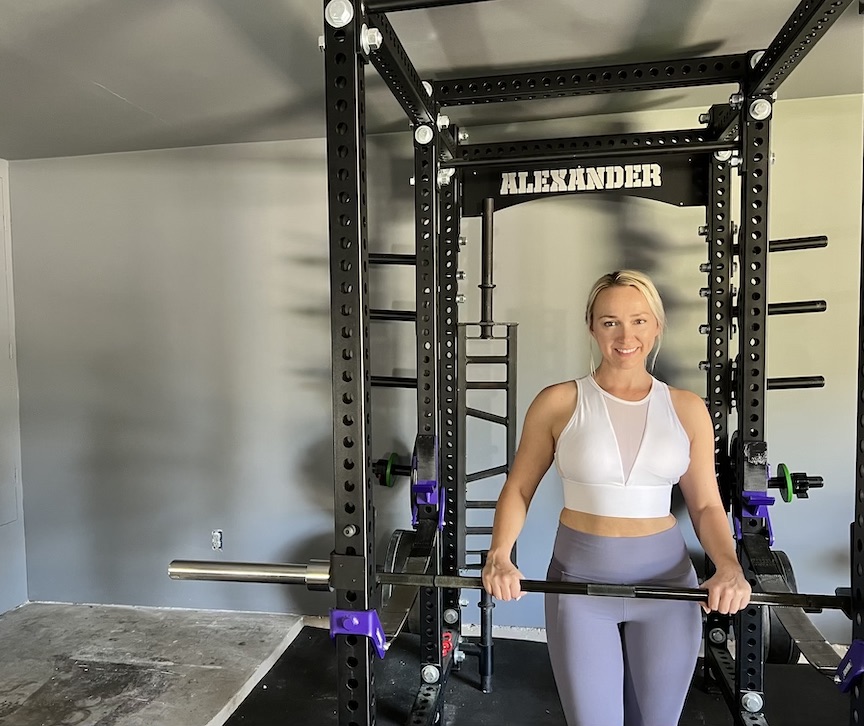
home gym benefits; squat rack of Alexander Training, personal trainer in Austin, Texas

Benefits of a Home Gym

I will cover these in greater detail below, but in a nutshell, here are some benefits of a home gym:

  • ease of use because of lowered psychological barrier 
  • saves time
  • saves money*
  • no sharing equipment
  • no one else’s sweat!
  • you get to pick the music
  • you are entirely responsible for your pace (work:rest ratios)
  • no gym manager oversight
  • you can try weird exercises!
  • you can maintain your equipment

Read also how to heat your garage gym this winter.

Ease of Use

Your home gym will become easier to use because of lowered psychological barrier of time, traffic, commute, etc. Some days a quick 20 minute HIIT session is what your body needs, and it’s hard to justify the commute time to do 20 minutes. Other days you’ll want an hour or 45-minute workout, and with your home gym setup and your own schedule, you can do it as quickly as you need.

It’s worth it, and easy to commit to when you have easy access. It’s literally right there. 

When exercise is easier to do and there are fewer barriers in the way, it’s more likely you’ll stick to a regular exercise routine. If having in-home training makes you more consistent in your fitness routine, then it’s absolutely the right choice. 

home gym benefits
The benefits of a home gym!

Home Gyms Save Time

As mentioned above, a home gym will save commute time, and wear and tear on your vehicle. You won’t get caught in gym chit-chat (for better or worse, because many times those are great chit-chats).

When life gets busy and your schedule is in a pinch, it’s a huge plus to have gym equipment close. This allows you to have complete control over your workout routine. Slash the travel time and see how much time you are able to devote to your strength training when your equipment is in the comfort of your own home. 

Saves Money *

I really love gyms, so I usually end up paying a monthly gym membership or two. BUT over time, you can potentially see some cost savings from not having membership fees. Of course, your home gym equipment will be available to your family members too. Maintaining memberships for the whole family is one thing that quickly drives up the cost of gym memberships. You might* save money if you let go of your monthly gym fee.

*The caveat here is that if you fall in love with building out your dream gym, it miiiight not save you money in the long run. You can always make a small dedicated space in a spare room in your house and begin with some free weights, a yoga mat, and resistance bands. Here is what I consider a minimal viable investment in fitness equipment for a home gym. 

Pretty soon though, you might get the itch to get your own squat rack, plates, and specialty bars. I can’t even discourage you. It’s the most fun way to spend a lot of money; even more fun than buying shoes! It’s also one of the best investments you’ll make in prioritizing your physical fitness and healthy lifestyle.

No Sharing Equipment

Whether you are a germ phobe or not, there are definite benefits to having your own space and your own equipment. A traditional gym will have a ton of equipment, yes, but I feel like I can get anything that I need done with my power rack and a couple barbells.

Since I don’t have to share, a small space is plenty sufficient. I can put my gym bag anywhere, I can use as much chalk as I want, and I know no matter what I’ll get a good workout. 

Plus, there’s no mess unless you made it. Here are my best tips on how to organize your home or garage gym.

No One Else’s Sweat

One of my favorite things about a public gym is that it’s a great way to meet people. They usually have a fun assortment of personal trainers and regulars, all of whom you can learn from. There are the water cooler talks in the locker room and by the bench press, and a community of fitness enthusiasts is a pretty fun addition to your daily life.

A public gym is still public, and that means other people’s sweat. Ew. Home gym owners can at least sweat in the comfort of their own home lol

You Get to Pick the Music

What you enjoy listening to is probably not what the training staff has to guess is palatable enough for everybody. It took me time to recover from hearing it a trillion times, but I’ll always have a soft spot for Rihanna’s Please Don’t Stop the Music (holla, Gold’s Gym 2007 staff & friends!). When it’s your gym and your rules, play what fires you up at whatever volume you want! This is actually a pretty fantastic home gym benefit.

You Are Responsible for Your Pace

I appreciate the spirit of cooperation, and it often works out beautifully that people with specific needs on a specific exercise program share equipment in the gym. However, when you have a plan, it’s not fun to have to wait for someone who is doing one set per 15 minutes on the one functioning piece of equipment you need, not re-racking weights between, and generally taking a ton of time between work sets. When you are dedicated enough that you are working on a specific pace to induce a specific adaptation, the inconsiderate gym hogs can really slow you down.

With your home workouts in your own workout space, you can work on your specific goals at your own pace. Morning person, night owl, fast trainer or slow enjoyer – setting your own pace is one of the best parts of having your own gym.

No Gym Manager Oversight

Most gym managers and owners are pretty cool, but they do get to set the tone. The ones that do it right can make a local gym the most fun, supportive environment in the world.  If they are off a little bit in a way that changes your mojo, that can really affect your training. If you are ready to call all the shots, you need your own place.

You Can Try Weird Exercises!

If you are always learning and always trying new things, it’s nice to have your own space to do so. Nothing’s wrong with going off the beaten path, but sometimes it’s more enjoyable to explore your training style without an audience. Doing a weird type of exercise or type of workout is just something I prefer to do at home. Similarly, I like going for PR’s without an audience. I do better when I know it’s me and only me. Having a lot of people around distracts me. I know I need to work on this, but having my own training environment is the perfect solution for me.

You Can Maintain Your Equipment

This might be the best part of having your own home gym. It hurts my heart every time I see someone abusing or mistreating gym equipment. You can bet that doesn’t happen at my home. You get to make sure your bars are straight, your plates face the right way (you know what I mean), shoes and feet are kept off your equipment, and your bench upholstery doesn’t get torn up. I can keep my equipment on a schedule of regular maintenance and cleaning. Respecting exercise equipment is a very important aspect of learning gym etiquette, and I love knowing that my own gym equipment is taken care of. 

Start Your Home Gym!

Whether you continue your fitness journey with bodyweight workouts in your spare bedroom, or you take it next level and full up your garage with home gym machines, I encourage you to start your own home gym. It is one of the best long term investments you can make in reaching your health and fitness goals. 

If I can help you get start with your own home gym, let me know! Remember it doesn’t have to be fully stocked to start. You don’t have to have anything fancy like a smart gym, expensive bumper plates or adjustable dumbbells. You can start with a pair or two of dumbbells or a band. If you need help decided what to start with, check out my suggestions for home gym essentials here:

Home Gym Essentials

Related: IF a home gym is not for you, or you just can’t pick… check out the best gyms in Austin. 🙂

Happy Training!

Try the first week of The Home Team training, free. You can do this whole workout program at your home gym!


About the author

Kathryn Alexander is a strength coach and personal trainer in Austin, Texas. She loves hiking, college football, and the feel of a perfectly knurled barbell. Read more about Kathryn here.
Filed Under: Home gyms Tagged With: garage gym, garage gyms, home gym

Primary Sidebar

Kathryn Alexander, personal trainer in Austin
Hi, and welcome here! -Kathryn

Recent Posts

  • The Best Lower Body Muscular Strength Exercises
  • Deadlift Barbell vs Trap Bar: Which Is Better for Strength, Muscle, and Safer Pulling?
  • Things to Do in Austin in April (2026)
  • Love Notes, Volume 5. Q1, 2026
  • Best Garage Gym Fans 2026

Did you know I make custom training plans? Tell Me More!

Footer

Follow

  • Email
  • Instagram
  • YouTube

Affiliate disclaimer

As an Amazon Associate I earn from qualifying purchases.

Newsletter sign up

  • Home
  • About Kathryn Alexander
  • Blog
  • Success Stories
  • Training Programs
  • Personal Training

Copyright © 2026 · Genesis Sample on Genesis Framework · WordPress · Log in

  • Featured In
  • Privacy Policy
  • Resources
  • Online Personal Training
  • Personal Training
  • Training Programs