• Skip to primary navigation
  • Skip to main content
  • Skip to primary sidebar
  • Skip to footer
Alexander Training personal trainer Austin Texas

Alexander Training - personal training in Austin, Texas

Personal training in Austin, Texas and customized strength programs in Austin, Texas.

  • Home
  • About Kathryn Alexander
  • Blog
  • Success Stories
  • Training Programs
  • Start Today

Training

Fun Workouts at Home Without Equipment

September 15, 2025 by Kathryn Alexander

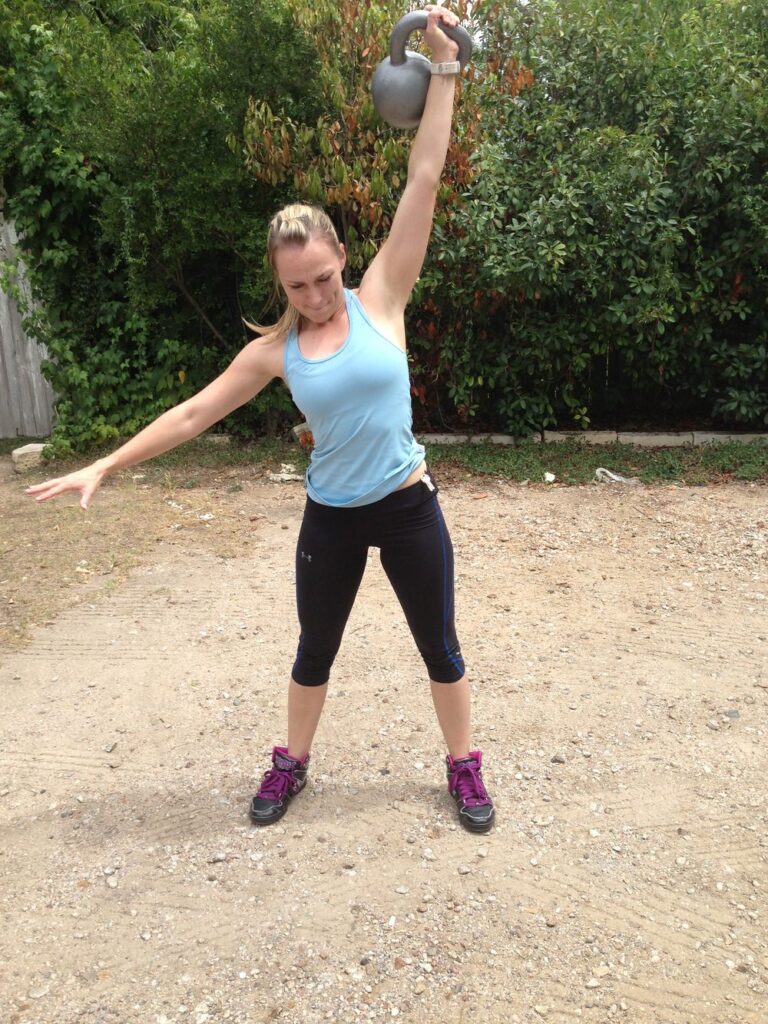
Fun workouts at home without equipment are entirely possible with a little bit of creativity and a little bit of energy. If you have followed me for any length of time, you know that I am a big advocate of doing exercise however you can. I love it when my clients have a gym membership but also get workouts at home. 
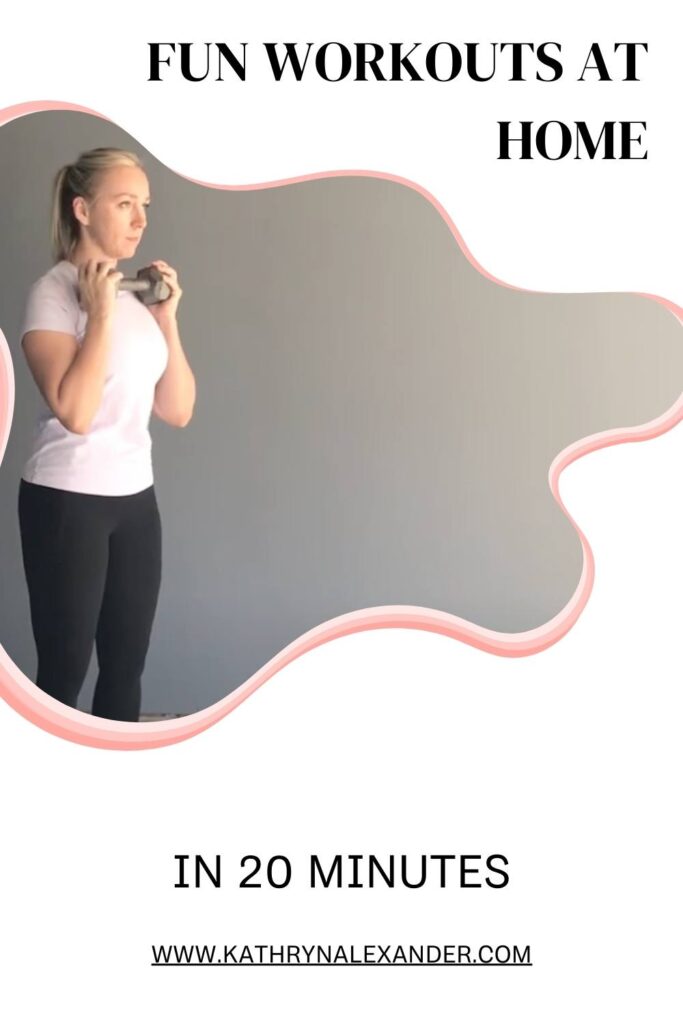
Fun workouts at home without equipment with Kathryn Alexander personal Trainer
Fun workouts at home without equipment

The thing is, you can get effective work done at home with just your bodyweight. If you are interested in a bodyweight workout at home, this post is for you! 

Why Home Workouts Work

At-home workout routines are a great way to add more physical activity into your day without leaving the comfort of your living room. Home bodyweight workouts can strengthen your entire body, raise your heart rate, and help you live a healthier, happier life.

The good news is, home workouts have numerous benefits: they save money, save time, and let you exercise in the comfort of your home. Using your own body weight is one of the best ways to challenge your entire body.

  • Perfect for any fitness level
  • Easy to adapt into a simple routine
  • Great for young athletes and adults alike who need to practice and reinforce fundamental movement skills

The best part? You don’t need anything except space to move and a willingness to start.

Full-Body Workout with Bodyweight Exercises

A full-body workout is possible without equipment—you just need proper form and attention to body position. Here are some strength-building moves you can try:

Bodyweight Squats

  • Starting position: feet shoulder-width apart.
  • keep your back straight and spine neutral
  • arms in front of you
  • break at the hips to initiate squat
  • sit deep into heels
  • squeeze big toe into the ground as you stand
squat, no weight added

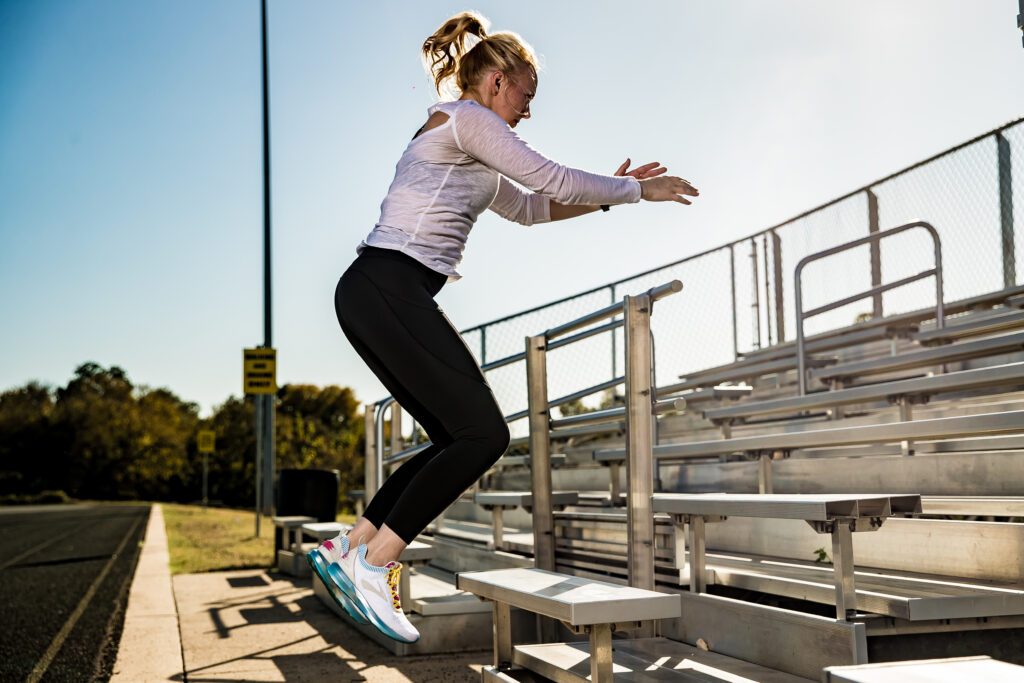
Advanced: Jump Squats

  • do bodyweight squats first to warm up! Don’t skip this.
  • with your arms in front of your chest, do a quick squat: bend at hips, sink back into heels
  • drive up and jump from this position
  • arms can stay where they are or extend toward ceiling
  • do not throw your arms down as you jump up
  • land softly
Squat jump! Kathryn from Alexander Training

Reverse Lunges

  • from a tall standing position, step one foot behind you
  • step as if you are on railroad tracks, not a tight rope
  • aim to land with a 90 degree angle in both knees
  • knee should be close to the floor but not touching
  • press into the ground through your heel and big toe, and squeeze your glute to return to your start position
  • it is up to you if you’d like to complete all on your right leg and then switch to your left, or alternate
  • reverse lunges are great for building strong legs
reverse lunges, done at home with no extra workout equipment

Plank Walk Out

  • from a standing position, reach down to touch the floor
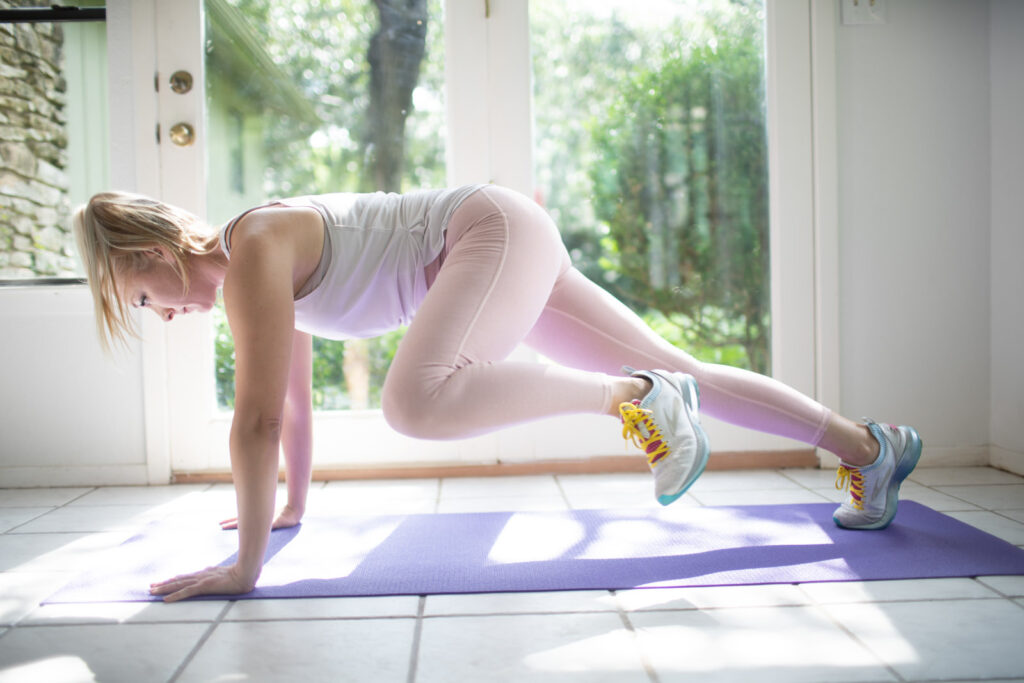
  • walk your hands out away from your feet, until you are in plank or pushup position
  • the farther the you walk your hands out, the tougher this is
  • walk your hands back in close to your feet
  • stand all the way up
plank walk outs, harder than they look!

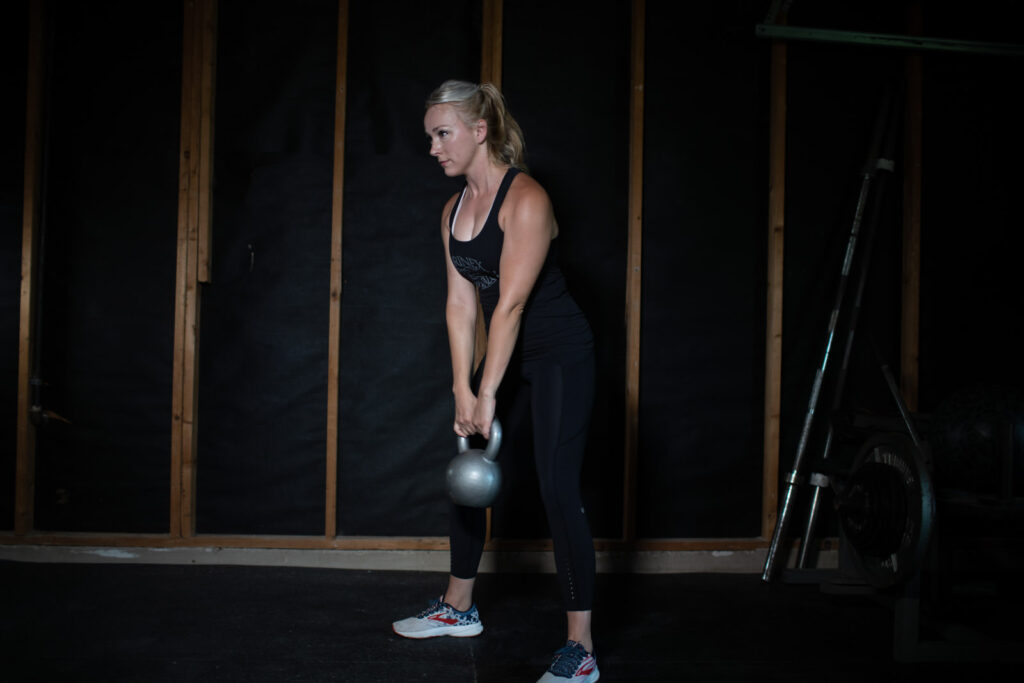
Good Morning

  • Optionally, you can hold a dumbbell, book, backpack, willing pet or small child at your chest
  • keep your torso tight and neutral, not bending or flexing the spine
  • keeping your whole feet flat on the ground, hinge at the hips and send your hips behind you
  • keep your torso tight and aim to feel a stretch in your hamstrings
  • squeeze your glutes to push your hips back under you
  • repeat for as many reps as is your goal
  • good mornings are mostly posterior, as they work your hamstrings, glutes back and core
Good mornings, done by Kathryn Alexander, Austin personal trainer

These moves work nearly every muscle group and give you a good workout at home with no equipment.

If you do want to start a home gym and need ideas for where to start, check out my list of home gym essentials.

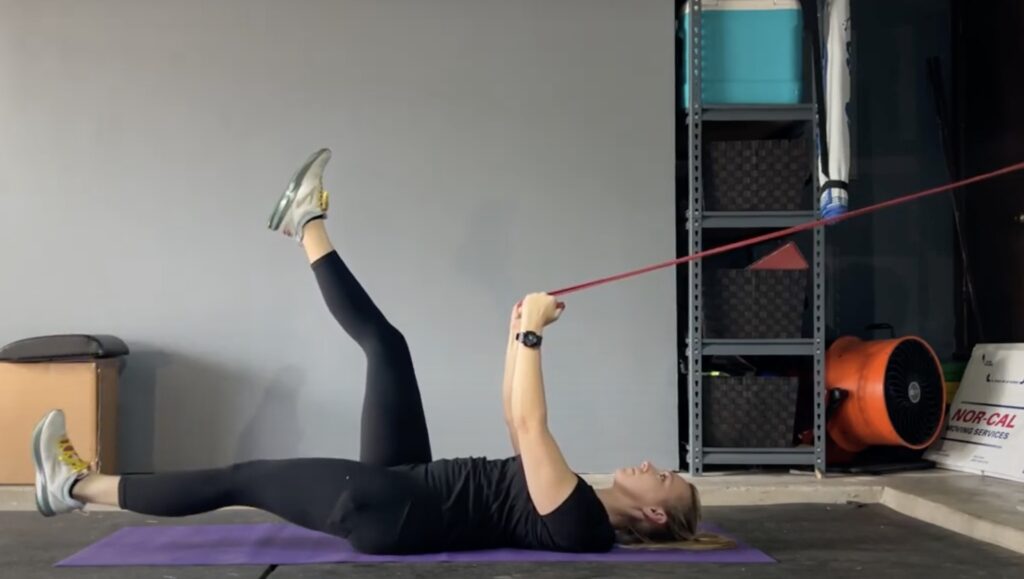
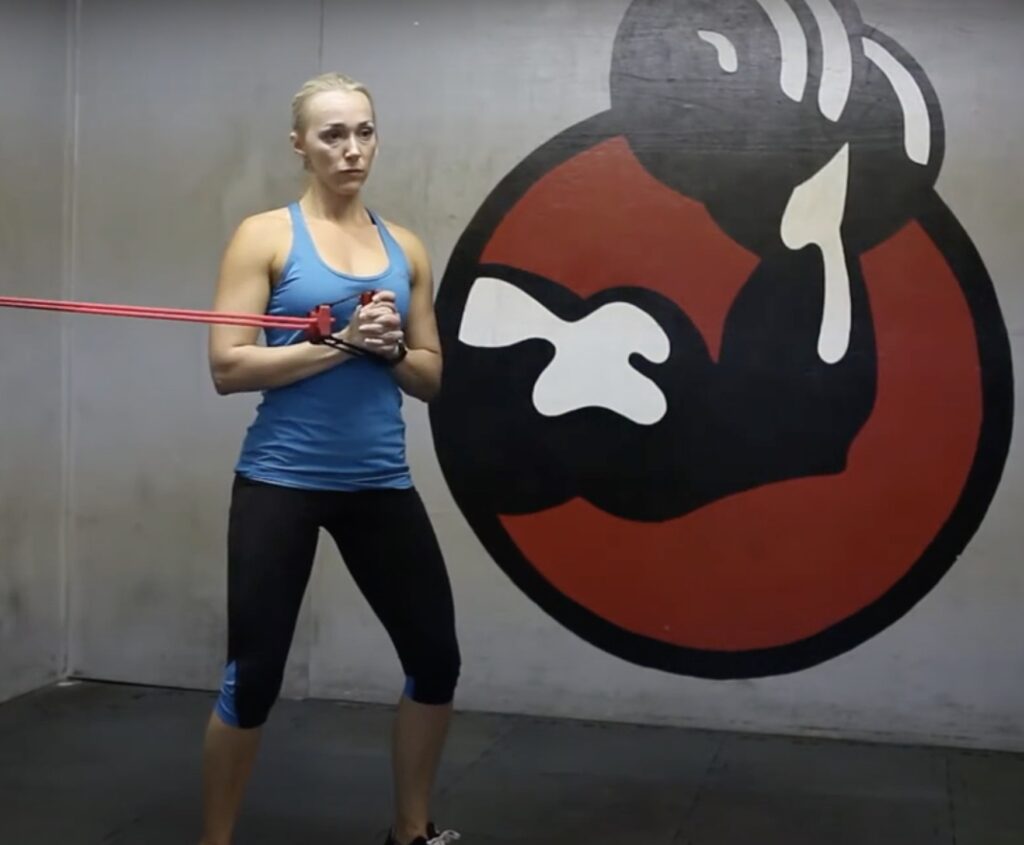
Here’s a full body band workout at home if you are looking for more ideas.

A Simple 20-Minute Home Workout

Using those exercises, try this quick 20-minute home workout you can do in the comfort of your home:

Warm-Up (3 minutes)

  • March in place, do body weight squats, easy lunges. You can dance around, hop side to side. I’ve even known clients to do belly dancing or Zumba to get moving.
  • Add dynamic stretches to prepare your muscle groups.

Strength Circuit (12 minutes)

Complete 3 rounds of:

  • 10 squats
  • 10 jump squats – OPTIONAL because these are advanced
  • 10 jump lunges per right leg and left leg
  • 10 plank walk outs
  • 12 good mornings

Core Work (3 minutes)

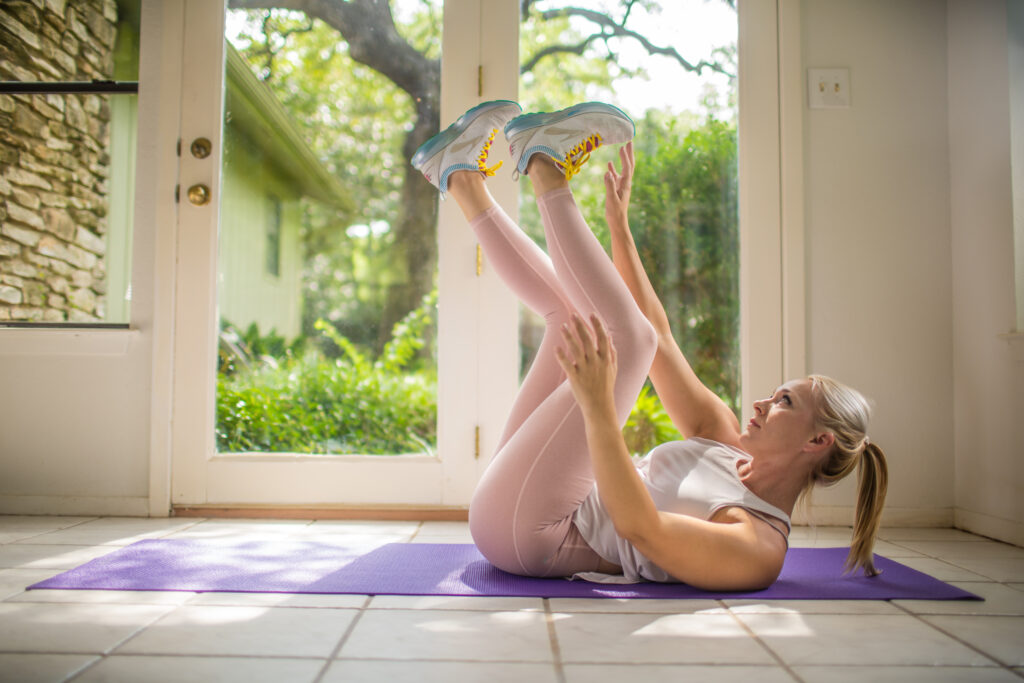
Side plank variations (breathe!) or bicycle crunches.

Cool Down (2 minutes)

Stretch the entire body, breathing deeply to lower your heart rate. Do some diaphragmatic breathing.

Adjust intensity with more or fewer reps depending on your fitness level. The best way to improve is to master proper form before adding speed or volume.

Creative and Fun At-Home Options For Workouts

Not every exercise routine has to feel like “exercise.” Here are plenty of ways to make it fun:

  • Build a family obstacle course in the comfort of your living room. I remember couch cushion forts growing up.
  • Dance! Put on good music and dance. I always recommend Britney Spears. A fun way to engage your entire body.
  • Use resistance bands if you want variety without bigger gym equipment.
  • Turn everyday movements into a good workout—stairs, balance drills, or dance breaks.

Pro Tips for Success

  • Aim for ideal form. it’s the safest way to train, avoid injury and avoid wasting time. 
  • BUT do not be scared to move. Don’t let fear of not being perfect stop you.
  • I’ve spent 20 years in the fitness industry now, and I can tell you that steady work done consistently beats crazy bouts of exercise (getting beach ready!) in the long run.
  • Even a little bit of movement daily leads to long-term success.

Get Your Workout In!

You don’t need all the gym equipment or a gym membership to stay fit. I mean, it’s fun and I encourage it. BUT do not let it stop you if you don’t make it to the gym frequently!

With just your own body weight, a simple routine, and a little creativity, you can train your entire body right at home. From strength-building moves like jump squats and lunges to stretches and cooling down, there are plenty of ways to enjoy workouts in the comfort of your home.

Start today, stay consistent, recruit your family, and enjoy stronger muscles, a healthier heart rate, and ultimately, happier lives.

Work With Me!

If you are looking for a personal trainer in Austin, I’d love to talk with you! If you are not in Austin, Round Rock, or central Texas, let’s talk about online training.

Message me here for a free consult about personal training in Austin, Texas, or here for online personal training, and we’ll discuss your goals, background, equipment availability, schedule, and exercise preferences.

Let’s get you strong and healthy! 💪
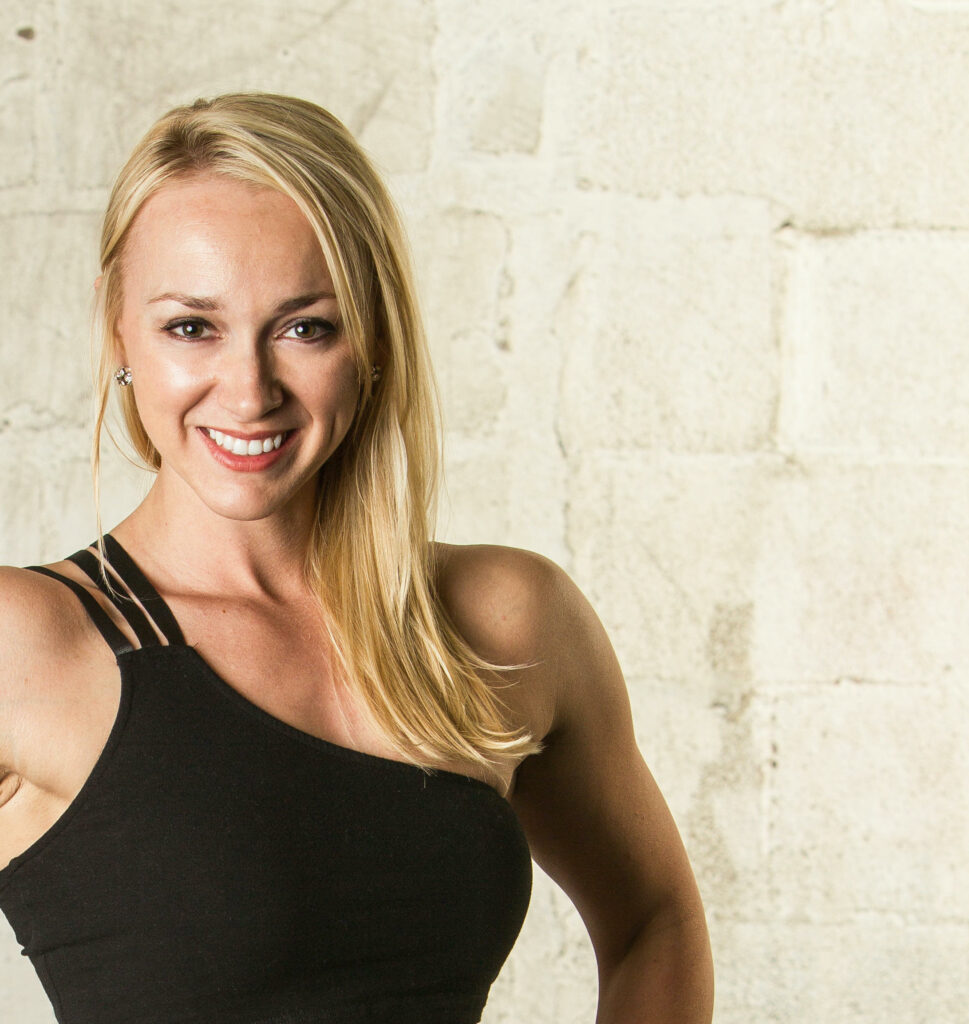
About the author

Kathryn Alexander is a strength coach and personal trainer in Austin, Texas. She loves hiking, college football, and the feel of a perfectly knurled barbell. Read more about Kathryn here.

  • 5 steps to keep fitness progress
    5 Steps To Keep Progressing On Your Fitness Right Now
  • Thanksgiving friends at Big Tex Gym
    Thanksgiving Joy + Fitness Momentum (Yes, Both!)
  • Austin personal trainer Kathryn Alexander shares her clients' secret for successful holidays.
    My Clients’ Secret for Successful Holidays
  • Gifts for powerlifters: wrist wraps
    The Best Gifts for Powerlifters and What 1 Gift to Avoid
  • More Semi-Private Personal Training Options!
  • Quick Note: Exercise is Quality of Life

Filed Under: Training Tagged With: home workouts

The Best 5 Chest Exercises: Top 5 You Should Be Doing

June 23, 2025 by Kathryn Alexander

Announcing that you know the best 5 chest exercises might be met with some debate, and I generally refrain from telling people what they should do. BUT, in this case, I can tell you 5 of the best exercises you can be doing to build your chest! 

Kathryn Alexander Austin personal trainer

Working your chest is so fun! I really didn’t fully appreciate this until somewhere around 2018, when I had a minor disc injury. I took time off the deadlifts and squats, and focused on upper body, including bench press. It became my strongest lift. Turning a lift that was your nemesis into one of your strongest is FUN. 

Why Working Chest is Fun

Working your chest is fun! It’s classic, it’s primal, and it just feels good! After you get a great chest workout, you’ll get a nice pump. It’s immediate gratification – it tells you what you’ll look like in the future, if you keep going. 

When you do keep going, you get stronger, feel more powerful, have better posture, and healthier shoulders. It’s a win-win. A strong chest enhances your upper body strength and makes full-body workouts feel easier and builds confidence. 

Besides, the chest is a highly visible muscle group, and developing it creates that wide, strong upper body look that’s especially noticeable in T-shirts or at the beach. Let me tell ya, it’s water season in Austin. It’s hot here and people are jumping in lakes! 

Finally, everyone’s going to ask you, “how much ya bench?!” It’s the go to lifting question. Doesn’t matter if you’re a powerlifter, cross fitter, or recreational lifter. People will ask about your bench. It’s fun to have an answer you’re proud of!

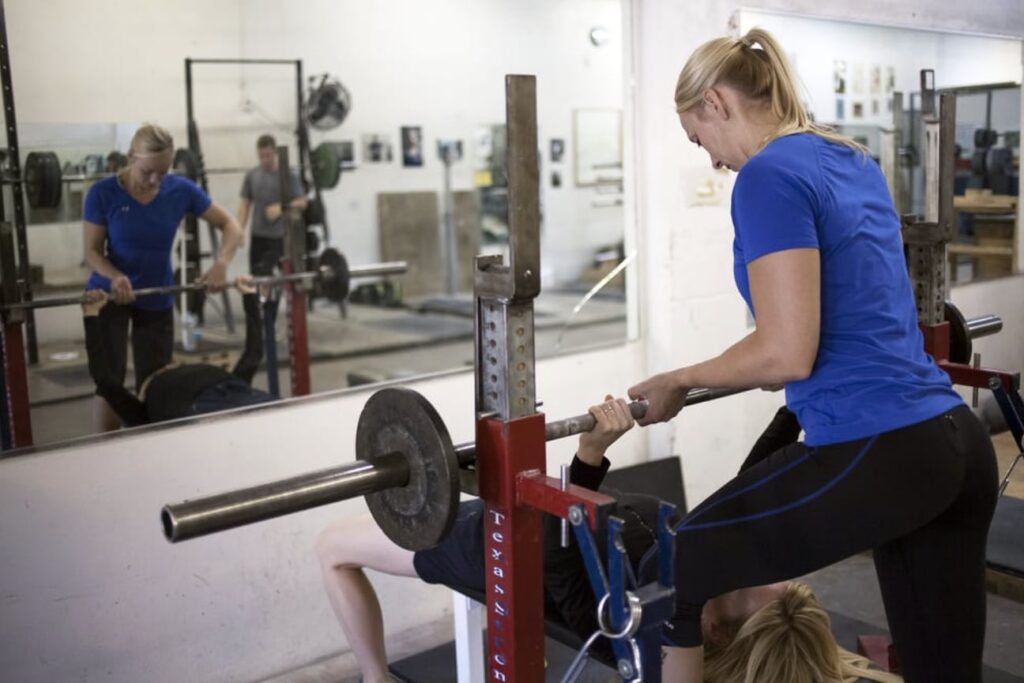
Kathryn Alexander spots bench press

The Best 5 Chest Exercises

At the bottom of this post, I’ll explain more about chest anatomy for you nerds. But for now, let’s get right into the top 5 chest exercises:

1. Flat Barbell Bench Press

Like I mentioned earlier, this is the daddy of all chest exercises. Maybe of all the classic lifts. Every one’s going to ask what you bench, it’s an easy metric as you’ll see it in weight rooms, at the NFL combine, etc. The barbell bench is a great exercise to work on. 

  • Targets: Mid chest muscles, pectoralis major, anterior deltoids, and triceps
  • Why it’s essential: A staple compound exercise for building overall strength and chest size. It’s one of the best ways to lift heavy weight and track progress. Classic compound exercise for building mass and strength; allows for heavy loading.

2. Incline Bench Press

  • Targets: Upper chest (clavicular head of the pectoralis major), anterior deltoids
  • Why it’s a best exercise: Pressing at an incline (30–45°) works the upper chest more directly than a flat bench press.
  • Tips: Keep your shoulder blades retracted, press in a straight line, and use heavier weights over time for strength training.
  • The incline bench press is going to be a bit harder than the flat bench. Know that going into it. It feels good! It feels powerful! It’s fun! But you won’t lift quite as heavy here as on your flat bench press. 

3. Dumbbell Press/Incline Dumbbell Press

  • Targets: Chest/Upper chest, anterior deltoids, and triceps assist
  • Why it works: A pair of dumbbells gives you a larger range of motion, which leads to better muscle growth and recruitment of the chest musculature. It builds the upper portion of the chest for a fuller look; dumbbells allow for a better range of motion.
  • Variation: Great for those who prefer resistance training with more control

4. Cable Chest Fly (High Cable Fly)

  • Targets: Inner and lower chest, pectoralis minor
  • Why it’s a favorite: Cable machines keep constant tension on the chest throughout the movement. Isolates the chest muscles while keeping constant tension. 
  • Tip: Adjust the cables to hit different angles and emphasize the full chest muscle groups.
  • the cable fly is sometimes hard to set up, depending on your gym. It might require you to use the spot of 2 exercises since you’re using 2 cable stacks. If this is the case, look for a cable fly machine, pec deck, or even grab dumbbells for your fly.

5. Push-Ups (Incline, Decline, and Seal Push-Ups)

  • Targets: Full chest, core-strength exercises. Pushups are a great way to build upper body strength in full-body workouts. They are bodyweight, versatile, and effective. Easily modified for any fitness level.
  • Why it’s effective: Uses your own body weight, can be done anywhere—even on a park bench or tree branch!
    • Incline push-ups emphasize the lower chest
  • One-leg push-ups increase core and lower body engagement
  • Elevate your feet to target the upper chest, or add a weight plate or band for more resistance.
  • Here’s a comprehensive post on how to do pushups and pushup variations.

Bonus! Dips (Chest Version)

  • Target: Lower chest, triceps.
  • Why it’s great: Excellent bodyweight exercise for depth and strength in the lower pecs.
  • Tip: Lean forward slightly and flare your elbows a bit to target the chest more than the triceps.

Here are 5 of the best chest exercises for muscle growth, strength, and definition. These target the upper chest, lower chest, and the full chest muscles, and they are great choices for chest day, whether you’re training for aesthetics or performance.

Bonus Chest Training Tips for Best Results

Train chest 1–2 times per week in a full-body workout or split routine. Include both compound and isolation movements

Most importantly, use a progressive overload strategy in your strength training. You won’t make change without pushing progress.

Finally, use free weights and machines (like cable machines) on your accessory work for variety and constant tension.

best 5 chest exercises

What Muscles to Chest Exercises Work?

Chest presses, whether done with dumbbells, a barbell, or a machine, are a compound exercise that primarily works the pectoralis major, the large fan-shaped chest muscle responsible for pushing movements.

Here are the main muscle groups worked during a chest press:

Primary Muscles (Prime Movers):

  • Pectoralis Major
    • Clavicular head (upper chest) – more engaged in incline presses
    • Sternal head (middle/lower chest) – emphasized in flat and decline presses

Secondary Muscles (Synergists):

  • Anterior Deltoids (front shoulders)
    Help lift and stabilize the arms during the press.
  • Triceps Brachii (back of the upper arm)
    Assist in extending the elbow during the press.

Stabilizer Muscles:

  • Pectoralis Minor (beneath the major)
    Helps stabilize the shoulder joint.
  • Serratus Anterior
    Assists in scapular movement and stabilization.
  • Rotator Cuff Muscles (e.g., infraspinatus, teres minor)
    Help stabilize the shoulder joint during pressing.
  • Core Muscles (e.g., rectus abdominis, obliques, transverse abdominis)
    Especially engaged when doing chest presses on a weight bench or with free weights for good posture and balance.

The Best 5 Chest Exercises

There you have it! My 5 best chest exercise recommendations for building a strong chest, increasing upper body strength, and enhancing overall muscle growth. To get the best results, include different angles (flat, incline, decline), and focus on proper form and a full range of motion on these exercises.

Best Triceps Exercises for Women

Work With Me!

If you are looking for a personal trainer in Austin, I’d love to talk with you! If you are not in Austin, Round Rock, or central Texas, let’s talk about online training.

Message me here for a free consult about personal training in Austin, Texas, or here for online personal training, and we’ll discuss your goals, background, equipment availability, schedule, and exercise preferences.

Let’s get you strong and healthy! 💪

About the author

Kathryn Alexander is a strength coach and personal trainer in Austin, Texas. She loves hiking, college football, and the feel of a perfectly knurled barbell. Read more about Kathryn here.

  • 5 steps to keep fitness progress
    5 Steps To Keep Progressing On Your Fitness Right Now
  • Thanksgiving friends at Big Tex Gym
    Thanksgiving Joy + Fitness Momentum (Yes, Both!)
  • Austin personal trainer Kathryn Alexander shares her clients' secret for successful holidays.
    My Clients’ Secret for Successful Holidays
  • Gifts for powerlifters: wrist wraps
    The Best Gifts for Powerlifters and What 1 Gift to Avoid
  • More Semi-Private Personal Training Options!
  • Quick Note: Exercise is Quality of Life

Filed Under: Training Tagged With: chest, training

Tricep Pushdown Alternative: 11 Other Triceps Exercises

May 24, 2025 by Kathryn Alexander

If you’re looking for tricep pushdown alternatives, you’re in luck—there are plenty of great exercises that target the triceps muscle and help build upper body strength. 

Whether your goal is to build strength, lose fat, tone up or just increase the density of your upper arm, working your triceps will help. Some people call their upper arms bat wings, bingo wings, chicken wings or just arm jiggle. Don’t do that. It’s triceps! 🙂 And here’s how to work them! 

tricep pushdown alternative

Why Do You Need Tricep Pushdown Alternatives?

While the cable tricep pushdown is a solid isolation exercise for the triceps brachii, especially when using a rope attachment or straight bar, not everyone has access to a cable machine.

Here’s a list of triceps pushdown alternative exercises that engage the back of your upper arm and can be done using free weights, bodyweight exercises, or resistance bands. Many of these can be done in a home gym.

What Are the Triceps Muscles?

Here’s a quick basic rundown of the triceps muscles:

Triceps Brachii

The triceps brachii is the large muscle located on the back of your upper arm. It’s main job is elbow extension—straightening your arm at the elbow joint. It’s an important muscle for pushing movements and contributes to overall upper body strength. It also makes up the majority of the muscle mass in your upper arm, so it’s important to work triceps. 

3 Heads of the Triceps

The triceps has three parts (or heads), which is why it’s called TRI-ceps. Tri= three. Each with slightly different roles:

  1. Long Head
    • Originates from the shoulder joint (scapula).
    • Involved in both shoulder and elbow movement.
    • Best activated with overhead triceps extensions or overhead tricep exercises.
  2. Lateral Head
    • Located on the outer side of the upper arm.
    • Gives the arm its “horseshoe” shape that looks so good.
    • Targeted by tricep pushdowns and triceps kickbacks.
  3. Medial Head
    • Lies deeper underneath the other two.
    • Assists with all triceps movements, especially during controlled elbow extension.
    • Activated well through full range of motion exercises like skull crushers.

Together, these muscle groups make up the triceps, playing a key role in pressing, stabilizing the arm, and building a strong, defined upper arm.

Kathryn Alexander Austin personal trainer

1. Close Grip Bench Press

A compound exercise that targets the triceps, chest muscles, and shoulder muscles, the close-grip bench pressemphasizes elbow extension. It’s a great way to build muscle mass and works all three heads of the triceps.

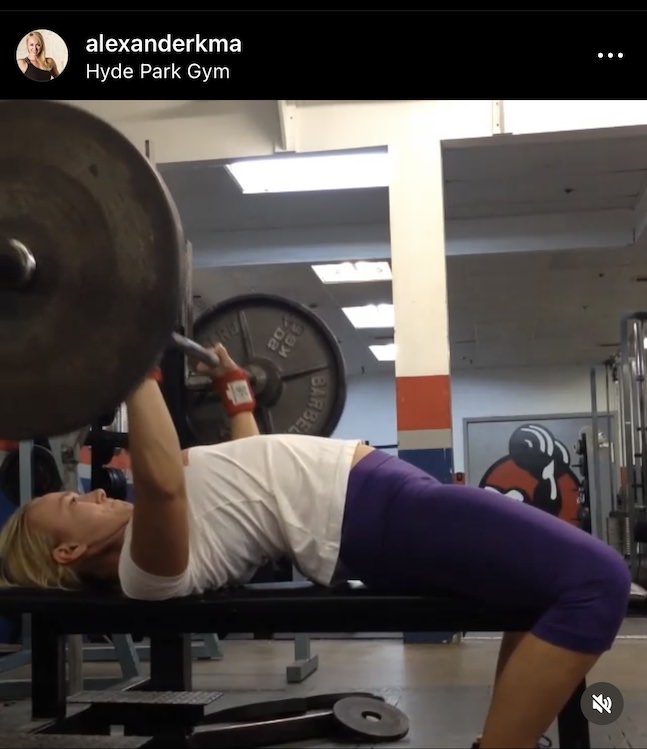
Close grip bench press. Filmed in like 2017, so don’t make fun of the capris, ok?
Close grip press with the cambered bar. This is also me, filmed at Hyde Park Gym in Austin, Texas.

2. Diamond Push-Ups / Diamond Pushups

This bodyweight exercise is a great alternative to the tricep pushdown exercise, especially for building strength at home. Position your hands under your chest in a diamond shape, hands close together. It heavily activates the triceps brachii, particularly the medial head and long head of the triceps. These are tough!! Practice practice, and don’t be hard on yourself if these are difficult at first.

3. Overhead Triceps Extension

Using a single dumbbell, ez curl bar, or resistance bands, this isolation exercise targets the long head of the triceps due to the movement at the shoulder joint. Focus on a full range of motion for best results with the overhead tricep extensions.

Dumbbell overhead triceps extensions
Cable overhead triceps extensions

4. Triceps Kickbacks / Dumbbell Kickbacks

Performed with lighter weights, triceps kickbacks isolate the triceps muscle and are ideal for honing triceps activationand improving good form. The triceps kickback is a good alternative when you don’t have much weight available.

This is a great tricep pushdown alternative, because it is very similar to the cable press down.

Make sure you get the angle just right on this one. Keep your upper arm parallel to the ground. If your elbows start to drift toward the ground, this becomes much more mechanically advantaged. That means easy, and you don’t want that.

Dumbbell triceps kickbacks. This was filmed at my home *studio during covid.
*Not really a studio. Just a sunroom.

5. Parallel Bar Dips

These are a compound movement that works the tricep muscles, chest muscles, and shoulders. Adding a weighted vestcan increase difficulty and help build muscle mass in the upper arms. This is an extremely effective exercise for upper body strength. It can be tough, so work on it consistently and patiently. 

6. Lying Tricep Extension / Dumbbell Skull Crushers

Also called the french press, this tricep exercise hits the lateral head and long head with precision. Using an ez curl bar or dumbbells can help tailor the movement for triceps strength.

Here’s a whole dumbbell arm workout you can do at home, if you want to add in biceps too!

7. Resistance Band Tricep Pushdown / Resistance Band Triceps Pushdown

If you don’t have a cable machine, this is the best way to mimic the cable tricep pushdown at home. Just attach a resistance band to a door anchor and use a rope handle or underhand grip for variation.

8. Bench Dips

This bodyweight exercise is a great exercise for beginners or for anyone working out in a home gym. Keep your starting position tight and avoid overextending the elbow joint.

9. Bodyweight Skull Crusher / Body Weight Skull Crushers

Using a bar at waist height or a sturdy surface, this exercise is a good alternative that requires only your own body weight and helps build strong triceps through elbow extension.

Skullcrushers for triceps

10. Dumbbell Tricep Extensions / Overhead Extension

These can be done seated or standing, and emphasize the triceps through controlled elbow joint movement. Extend the elbow, bend the elbow. Use heavier weights carefully, ensuring proper form and full extension.

This is a more simple movement, unlike the compound presses, so it is also a great tricep pushdown alternative.

Pro-tip for the ladies: If you have a ponytail, to keep from knocking it with the weight, put a little more pressure into your fingertips. This will angle the weight out away from your head.

I suppose that’s a tip for anybody who has a hair thing in.

Dumbbell overhead triceps extensions.

Bonus: Overhead Press

Though primarily for shoulders, the overhead press involves triceps activation, making it one of the most useful compound movements for general upper body strength.

Adding different exercises from this list to your training program can help you target the triceps brachii from a different angle and improve both triceps size and definition. Whether you’re training in a gym or a home gym, these best tricep pushdown alternatives will help round out your triceps workout effectively.

Work With Me!

If you are looking for a personal trainer in Austin, I’d love to talk with you! If you are not in Austin, Round Rock, or central Texas, let’s talk about online training.

Message me here for a free consult about personal training in Austin, Texas, or here for online personal training, and we’ll discuss your goals, background, equipment availability, schedule, and exercise preferences.

Let’s get you strong and healthy! 💪

About the author

Kathryn Alexander is a strength coach and personal trainer in Austin, Texas. She loves hiking, college football, and the feel of a perfectly knurled barbell. Read more about Kathryn here.


  • 5 steps to keep fitness progress
    5 Steps To Keep Progressing On Your Fitness Right Now
  • Thanksgiving friends at Big Tex Gym
    Thanksgiving Joy + Fitness Momentum (Yes, Both!)
  • Austin personal trainer Kathryn Alexander shares her clients' secret for successful holidays.
    My Clients’ Secret for Successful Holidays
  • Gifts for powerlifters: wrist wraps
    The Best Gifts for Powerlifters and What 1 Gift to Avoid
  • More Semi-Private Personal Training Options!
  • Quick Note: Exercise is Quality of Life

Filed Under: Training Tagged With: training

Dumbbell Back Workout: The 5 Best Exercises

February 4, 2025 by Kathryn Alexander

Dumbbell back workouts are great complements to gym sessions for your upper body pulling days. If you’ve done much lifting in gyms, you know that the best back workouts are usually done with equipment you typically find in gyms.

Lat pulldowns, cable rows, and machine rows are easier to do with cable systems and equipment that you find in the gym. 

However, you can get a great dumbbell back workout done at home if you do the following exercise. 

dumbbell back workout Kathryn Alexander Austin pesonal trainer
dumbbell back workout with Kathryn Alexander Austin personal trainer. Hyde Park Gym circa 2014.

Why is a Strong Back Important?

Having a strong back is important for health, safety prevention, and for looking strong and athletic. This applies to men and women. A strong back means you’ll have good posture, lowered risk of injury, and and likely a pain free upper body. A muscular back will make your overall physique look strong and balanced. 

In this article, I am going to explain how to do the 5 best dumbbell back exercises. Back in this case refers mostly to the muscle groups that work on the humerus and shoulder blades, as opposed to exercises that work your lower back musculature. In other words, I am referring to your latissimus dorsi, trapezius muscles, and rhomboids.

The teres minor, teres major, infraspinatus, (rotator cuff) and rear deltoids will be involved too. (Note that I am not focusing on rear delts either, so the rear delt fly is categorized with shoulder work in my book).

The lower back muscles, or erector spinae muscles and exercises that them, like deadlifts and hinges, will be covered in another article. 

The Dumbbell Back Workout

Here it is: my favorite dumbbell back workout, and how to do these 5 best back exercises that you can do with a set of dumbbells. I’ll give a quick overview, then dive into each one.

pullovers dumbbell back workout

Bent-Over Row

The single-arm dumbbell row, or bent over row, is probably what first comes to mind when lifters think of dumbbell back exercises, and for good reason. It’s a classic!

2 Arm Dumbbell Row

The same movement, but with both arms at a time, is one of the most popular row variations. This does work the lower back a good bit too, in addition to the upper back muscles.

Dumbbell Pullover

The dumbbell pullover *might* be my favorite upper body exercises, certainly one of the best dumbbell exercises. It works so many things, and feels so good! 

Renegade Row

Full disclosure, not my favorite, but lots of people do them, so let me explain. The renegade row requires so much stability from the body that it really limits how much you can row, and the range of motion is not great. 

Good Mornings

I’m giving good mornings an honorable mention because I love them so much. They actually do involved a lot of low back, and they aren’t a row. They are a hinge. But, I make the rules around here so I’m adding them to the list. 

Bent Over Rows

Like I said, these are a fundamental movement to target the lats, traps, and rhomboids. I want my clients to learn proper form here, and then learn when to use a little more body English. Let’s start with ideal form. 

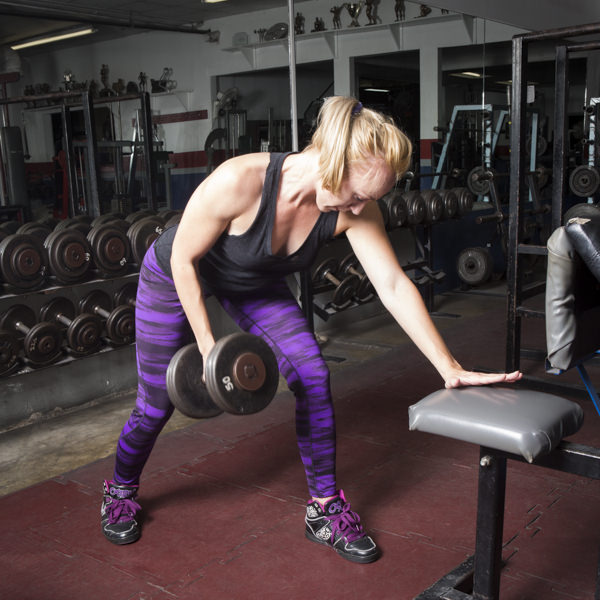
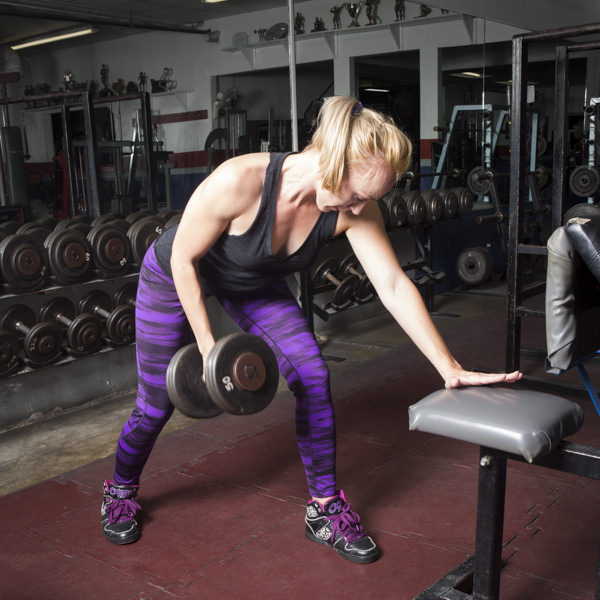
To do the one arm bent over dumbbell row:

  • stand with your legs staggered, with the leg holding the dumbbell behind the other
  • with a hinge in your hips and neutral, straight back, brace one arm on something sturdy in front of you
  • extend the dumbbell toward the floor, keeping your back straight, but letting your shoulder stretch slightly toward the floor
  • squeeze your shoulders back and immediately follow by pulling your elbow to your sides
  • extend your elbow first to return to your start position
  • allow your shoulders to again stretch toward the floor
bent over row, by Kathryn Alexander Austin personal trainer

2 Arm Dumbbell Rows

This is essentially the same exercise as the 1 arm dumbbell row, except you are using a pair of dumbbells here. You are providing all the stability since you are not propping a hand or knee on any other surface. This is a great exercise for full back involvement.

To do the 2 arm dumbbell row:

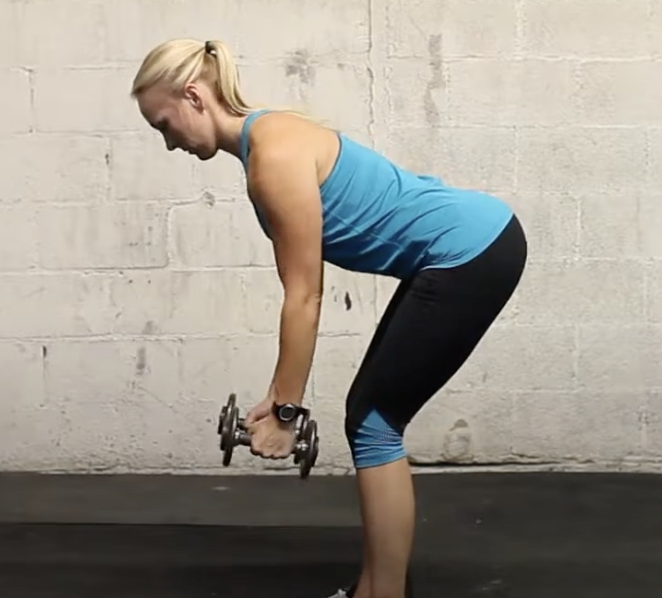
  • hinge at the hips with your back straight and neutral
  • extend your elbows, keeping your back straight, but letting your shoulders stretch slightly toward the floor
  • squeeze your shoulders back and immediately follow by pulling your elbows to your sides
  • extend your elbows first to return to your start position
  • allow your shoulders to again stretch toward the floor
  • your pattern here is shoulders back, elbows back, elbows straight, shoulders stretch toward floor, repeat

Pullover

YASSS the pullover! Arnold (and a lot of other people) use these for chest development. It does work chest, and triceps, and abs. I just really like it for back. Grab a lighter weight until you get the feel for this. Also, if hurts your shoulder, skip it.

Note that I also do these a bit differently, as I like to lay on a bench like I would for bench press. Some people lay perpendicular and cross the bench. You can do either. Experiment to see which setup works best for you. 

To do dumbbell pullovers:

  • lay flat on ground or bench, and then build up an arch in your lower back. I don’t want a flat back here.
  • press your shoulders down toward your hip pockets and keep them there for the duration of this exercise
  • make a big arc over your head with the weight
  • keep elbows soft and ribcage up
  • press your arms back until your hands are over your face, not farther toward bellybutton
  • repeat

Renegade Row

As I mentioned, the renegade row works so much of the body that it doesn’t focus on a rowing pattern. It requires so much stability that you have to use lighter weights on your row. But, try it and see if you like it.

To do the renegade row:

  • start in a high plank position, gripping a dumbbell in each hand
  • keep feet hip-width apart (wider for stability, narrower for difficulty)
  • brace your core. engage your abs and keep your body straight (no sagging hips)
  • pull one dumbbell towards your ribs, keeping your elbow close to your body
  • avoid twisting your torso—keep your hips squared to the ground
  • slowly return the dumbbell to the ground without dropping it
  • maintain a stable plank position, neutral spine, throughout the movement
  • of course, do the other arm

Good Mornings

And here we have the good morning! These DO work the spinal erectors, glutes, and hamstrings. They are a lower body exercise and work the entire posterior chain. I heart them.

To do good mornings: 

  • hold the dumbbell at your chest
  • keep your torso tight and neutral, not bending or flexing the spine
  • keeping your whole feet flat on the ground, hinge at the hips and send your hips behind you
  • keep your torso tight and aim to feel a stretch in your hamstrings
  • squeeze your glutes to push your hips back under you
  • return to your starting position
  • repeat for as many reps as is your goal

Benefits of Using Dumbbells for Back Work

There are some really great benefits of dumbbell workouts that I don’t want to overlook. Among them, dumbbell work typically works both sides of your body independently, improving muscle imbalances. This unilateral work can also build balanced strength. 

Dumbbells allow a greater range of motion than barbells or machines, leading to greater involvement (muscle activation). A dumbbell back workout is also pretty joint friendly. Since you aren’t committed to a grip like you are with a barbell, dumbbells let your wrists, elbows, and shoulders move freely, reducing stress on the joints. You don’t have to commit to an overhand grip if a neutral grip feels better, for example.

Free weights are also so so versatile! You can work your entire body, and get not just good back workouts. For example, managing dumbbells works your grip, forearms, stabilizers mores than machines. 

1 arm dumbbell row in home garage gym

Back is such an important muscle group to work! Be sure to prioritize your good pulling movements, or your back day if you split it up like a bodybuilder. Add in the single-arm row, the bent-over dumbbell row, pullovers and some hinges. Building muscle mass and back strength will always serve you well! 

How To Work All Back Large Muscle Groups

To ensure muscle growth and development in all areas of your back, you’ll want to work a variety of angles to work upper traps, mid traps, lower traps, lats, rhomboids, and the teres minor and major.

Some other exercises that you can include in your dumbbell back workout routine are the reverse fly, dumbbell upright row, and dumbbell shrugs, high pulls, and upright rows. These are pulling type movements, but I mentally categorize them with shoulder work. 

Here are some other dumbbell arm exercises you can add in too.

Likewise, I suggest always categorizing deadlifts, dumbbell deadlifts, barbell deadlifts, etc, on leg day. Yes they do work your lower back, but they aren’t primarily lower back exercises. They are full body, but leg work. If you find you’re using your back most, then I really suggest you adjust your form. 

Want to lift heavier weights with barbell rows? Learn how in this comprehensive post.

Do you have questions about your dumbbell back workout, or your workout program in general?

Work With Me!

If you are looking for a personal trainer in Austin, I’d love to talk with you! If you are not in Austin, Round Rock, or central Texas, let’s talk about online training.

Message me here for a free consult about personal training in Austin, Texas, or here for online personal training, and we’ll discuss your goals, background, equipment availability, schedule, and exercise preferences.

Let’s get you strong and healthy! 💪

About the author

Kathryn Alexander is a strength coach and personal trainer in Austin, Texas. She loves hiking, college football, and the feel of a perfectly knurled barbell. Read more about Kathryn here.


  • 5 steps to keep fitness progress
    5 Steps To Keep Progressing On Your Fitness Right Now
  • Thanksgiving friends at Big Tex Gym
    Thanksgiving Joy + Fitness Momentum (Yes, Both!)
  • Austin personal trainer Kathryn Alexander shares her clients' secret for successful holidays.
    My Clients’ Secret for Successful Holidays
  • Gifts for powerlifters: wrist wraps
    The Best Gifts for Powerlifters and What 1 Gift to Avoid
  • More Semi-Private Personal Training Options!
  • Quick Note: Exercise is Quality of Life

Filed Under: Training

Home Leg Workouts With Dumbbells

November 26, 2024 by Kathryn Alexander

Home leg workouts with dumbbells are simple, accessible, and so beneficial! Leg day is the big one! The toughest, hardest, most gut checking day of the week! In the gym, you can load up a heavy bar for barbell squats or deadlifts, or load up machines for a crushing leg workout.

But, you can also get a great leg workout by strength training from home. A dumbbell leg workout done with focus on movements can build and strengthen your legs (quads, hamstrings, calves), glutes, and lower back. And truly, your whole body. Grab some dumbbells and get to building strong legs.

home leg workouts with dumbbells

Equipment

Of course, for home workouts with dumbbells, you’ll want dumbbells. You can do so much great work with body weight, and a little bit of equipment. Free weights are expensive, so you can be strategic about getting a medium pair of dumbbells, and maybe 1 or 2 heavy dumbbells or kettlebells. If you have read much about my recommendations for home equipment, you know I suggest a pair of light dumbbells, medium dumbbells, one heavier dumbbell (or kettlebell), and some resistance bands. 

If you have the space and budget for a bench, that’s great too. This is plenty of equipment to build leg strength at home. Get you a good mat to protect yourself and the floor, and you are good to go!

Speaking of equipment, are you shopping for a powerlifter? If so, here are the best gifts for powerlifters and one that I would absolutely not recommend.

The Exercises

There are SO many dumbbell leg exercises; you are really only limited by your imagination. I will run through the basics, my favorites, and a few weird ones. Here is a list first so you can see the bird’s eye view, and I will explain how to do each one below. 

  • Goblet squats (front squat)
  • Dumbbell squats
  • Lunges (dumbbell lunges)
  • Romanian deadlifts
  • Single leg deadlift (or B stance deadlift) single-leg deadlift
  • Bulgarian split squat
  • Dumbbell deadlift
  • Curtsy lunges
  • Glute bridge /hip thrust
  • Dumbbell step-ups
  • Farmer’s walk/Farmer’s carry

How to Organize Your Home Leg Workout With Dumbbells

  • Goblet squats
  • Dumbbell Squats
  • Dumbbell deadlifts
  • Lunges
  • Curtsy lunges
  • Dumbbell step ups
  • Bulgarian split squat
  • Romanian deadlifts
  • Single leg deadlifts

*glute bridge/hip thrust

*Farmer’s walk/farmer’s carry

Pick one exercise from each of the above columns. Add in one or both of the glute bridge/hip thrust, or a farmer’s carry. With each exercise, you’ll warm up well, do some increasingly heavy sets, until you reach 3 work sets.

These 3 work sets can be between 5 and 12 reps that are challenging, where you have 1-2 reps left in reserve. I’d suggest you do two of these workouts each week, sticking to the same exercises. From there, utilize the concept of progressive overload, which means you try to overload from the last week, assuming you get all green lights (feeling good, getting good quality reps, etc.).

For example, your leg session A might be dumbbell squats, lunges, RDL’s and a farmer’s walk. Your B session that week could be goblet squats, dumbbell step ups, B stance RDL’s, and a glute bridge.

Record your sets, reps and weight, and the next week, try to do a little heavier. If you continue this way, you will see progress.

Goblet Squats/Front Squats

To do a goblet squat, start by holding a dumbbell vertically with both hands at chest level, gripping it by one end (like a goblet). Stand with your feet shoulder-width apart, toes slightly turned out. Keeping your chest upright and your core engaged, lower your body into a squat by bending your knees and pushing your hips back, as if sitting into a chair. Go as low as your flexibility allows, ideally until your thighs are parallel to the floor.

Grip the ground with your whole foot (and toes) and squeeze your glutes to drive yourself back up to the starting position. Maintain good form by keeping your back straight (no twerking) and avoiding letting your knees cave inward.

goblet squats

Dumbbell Squats

To do a dumbbell squat, start by standing with your feet shoulder-width apart, holding a dumbbell in each hand by your sides with your arms fully extended. Keep your chest upright, your core engaged, and your shoulders relaxed. Slowly lower your body into a squat by bending your knees and pushing your hips back, as if sitting into a chair. Keep the dumbbells steady by your sides throughout the movement.

Lower until your thighs are parallel to the floor or as low as your mobility allows. Grip the ground with your whole foot (and toes) and squeeze your glutes to drive yourself back up, ensuring your knees track over your toes and your back remains straight. Repeat for the desired number of reps. 

Lunges

To do walking dumbbell lunges, start by standing tall with a dumbbell in each hand, arms extended at your sides. Step forward with one leg, lowering your hips until both knees are bent at about 90 degrees. On your front leg, ensure your front knee stays directly above your ankle, and your back knee hovers just above the floor. Keep your chest upright and your core engaged throughout the movement. Push through your whole foot to return to the starting position, then alternate legs. 

You can do a reverse lunge, where you are stepping back with one leg. You can do a forward lunge, where you step forward, then back. With these, as you step back with your back leg, most of your weight stays on, and most of the work is done, by your front leg. Whichever way you do these, keep your feet hip-width apart, like you are walking on railroad tracks, not a tight tope. Lunges are fantastic for your whole posterior chain.  

One other option is a lateral lunge, or side lunges. With these, you’ll step out to your side with one leg, bending into that leg. For example, you’ll step out with your right leg, plant your right foot, and bend your right knee. Your leg leg with be mostly straight, and your torso will hinge forward. From here, press into the ground with your right foot, and stand back up into position. Repeat the exercise on the other side, stepping out with your left leg. Lateral lunges help with strength and hip mobility. 

walking lunges, Kathryn Alexander at her home garage gym

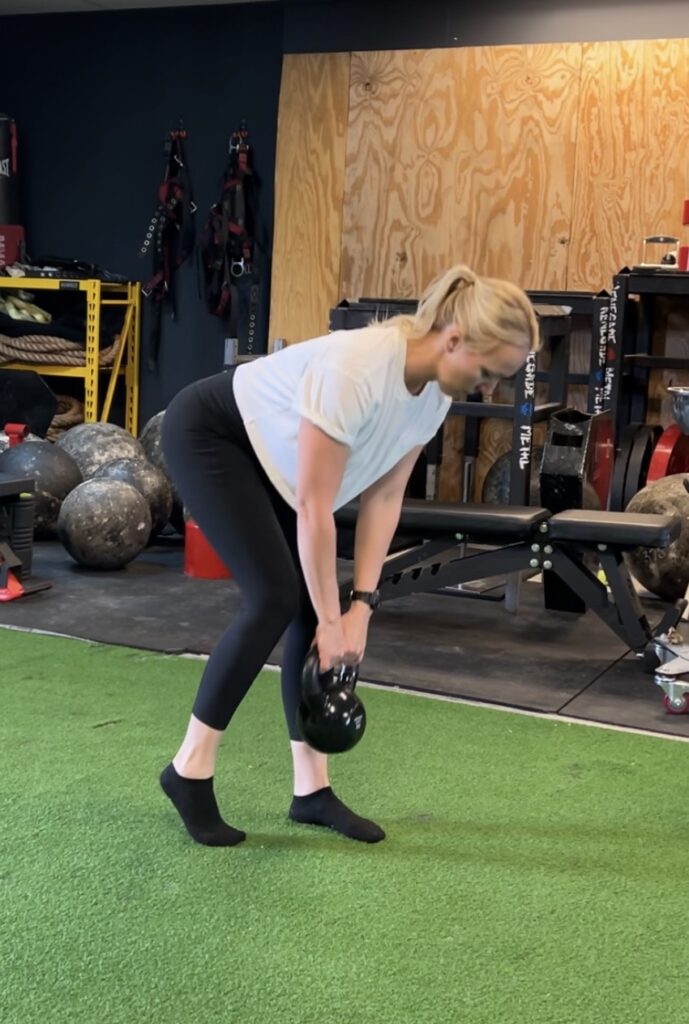
Romanian Deadlifts

To do Romanian deadlifts with dumbbells, start by standing with your feet hip-width apart, holding a dumbbell in each hand in front of your thighs with your palms facing you. Keep your chest lifted, shoulders back, tight upper back, and a slight bend in your knees. Hinge at the hips by pushing them backward, lowering the dumbbells along the front of your legs while maintaining a straight back and tight core.

Lower until you feel a stretch in your hamstrings or the dumbbells reach about mid-shin level, grab the ground with your whole foot, and squeeze your glutes back under you to return to the starting position. Keep the movement controlled and avoid rounding your back. Everyone’s range of motion is different, depending your your hamstrings flexibility, among other things. Big glute squeeze with all variations! 

B Stance RDLs

To do B-stance Romanian deadlifts (RDLs), start by standing with a dumbbell in each hand, arms extended by your side or in front of your body. Position one foot slightly behind the other with just the ball of the back foot touching the ground for balance, while your front foot bears most of the weight.

Keeping your chest upright and back straight, hinge at the hips, lowering the dumbbells along the front leg until you feel a stretch in your hamstrings. Maintain a slight bend in the front knee and keep your back leg straight. Return to your upright position and repeat on one side for the desired number of reps, then switch legs.

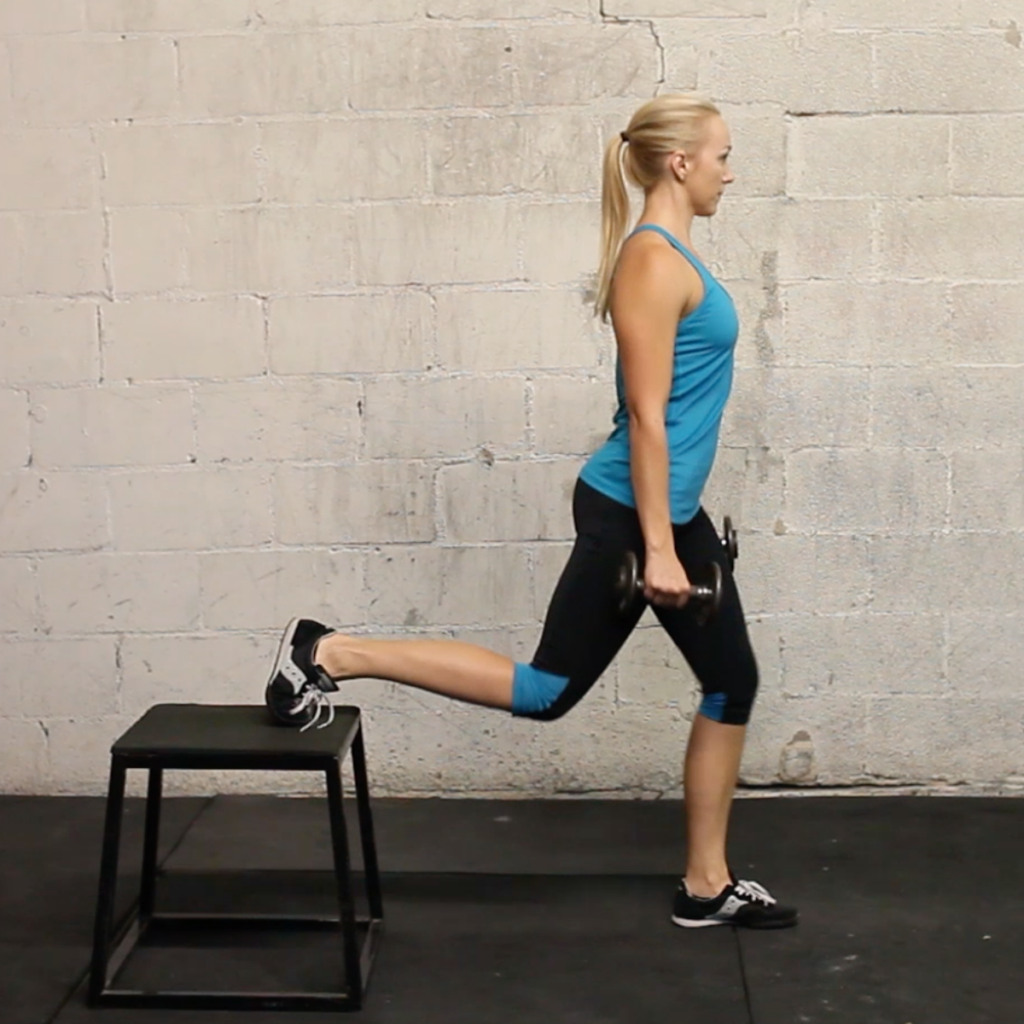
Bulgarian Split Squats

To do Bulgarian split squats, start by standing a few feet in front of a sturdy bench or elevated surface. Hold a dumbbell in each hand by your sides and place the top of one foot on the bench behind you. With your chest upright and core engaged, lower your body by bending your front knee until your thigh is parallel to the floor or as low as your mobility allows.

There are different ways to do these, but I prefer to slightly shift my weight so that most of my weight is on my front leg. Complete the desired reps on one leg, then switch sides. You can do a good bit of weight on split squats, so as you feel comfortable, don’t be afraid to move into heavier weights. BSS’s are one of the best single-leg exercises. They’ve even been the subject of many memes, lamenting how challenging they are. 

Dumbbell Deadlift

To do dumbbell deadlifts, start by standing with your feet hip-width apart, holding a dumbbell in each hand with your palms facing your body. Keep your chest upright, shoulders back, and torso tight. Hinge at your hips and bend your knees slightly, lowering the dumbbells down the front of your legs. Keep your back straight and lower until the dumbbells are near your shins or you feel a stretch in your hamstrings.

Grab the ground with your toes, push through your whole foot, squeeze your glutes, and return to the starting position, ensuring you maintain proper posture throughout. Repeat for the desired number of reps. Keep straight arms here; no elbow bending.

These are a staple for home leg workouts with dumbbells.

Curtsy Lunges

To do curtsy lunges, start by standing tall with a dumbbell in each hand, arms extended at your sides. Step one leg diagonally behind the other, crossing it as if performing a “curtsy,” and lower your hips until your front knee forms a 90-degree angle. Keep your torso upright and your back straight throughout the movement.

Push through your front foot to return to the starting position, then repeat on the opposite leg. Alternate legs for the desired number of reps, focusing on controlled movements to engage your glutes and inner thighs.

Glute Bridge /Hip Thrust

To do a hip thrust with a dumbbell, sit on the ground with your upper back resting against a sturdy bench or elevated surface. Roll a dumbbell onto your lap, holding it securely with both hands. You can put a towel or cushion here to protect your hip bones. Bend your knees and plant your feet flat on the ground, hip-width apart.

Drive through your heels and lift your hips until your body forms a straight line from your shoulders to your knees, squeezing your glutes at the top. Lower your hips back down in a controlled motion and repeat for the desired number of reps. These are a great addition to your lower-body workout, especially if they are new to you. Give them a try!

Dumbbell Step-ups

To do dumbbell step-ups, start by standing in front of a sturdy bench or platform that’s about knee height. Hold a dumbbell in each hand by your sides with your arms extended. OR hold just one dumbbell, and hold on to something for balance. The #1 rule is no falling! Step up onto the platform with one foot, pressing through your heel to lift your body until your standing leg is fully extended.

Bring your other foot up to meet the first, then step back down one foot at a time. If you started on your left foot, repeat all reps on your left foot before switching to your right, keeping your chest upright and core engaged throughout the movement. Adjust the platform height and dumbbell weight as needed for your fitness level. Step ups are one of my favorite compound exercises to do with dumbbells (or even without!).

Step ups at Hyde Park Gym, Austin, Texas

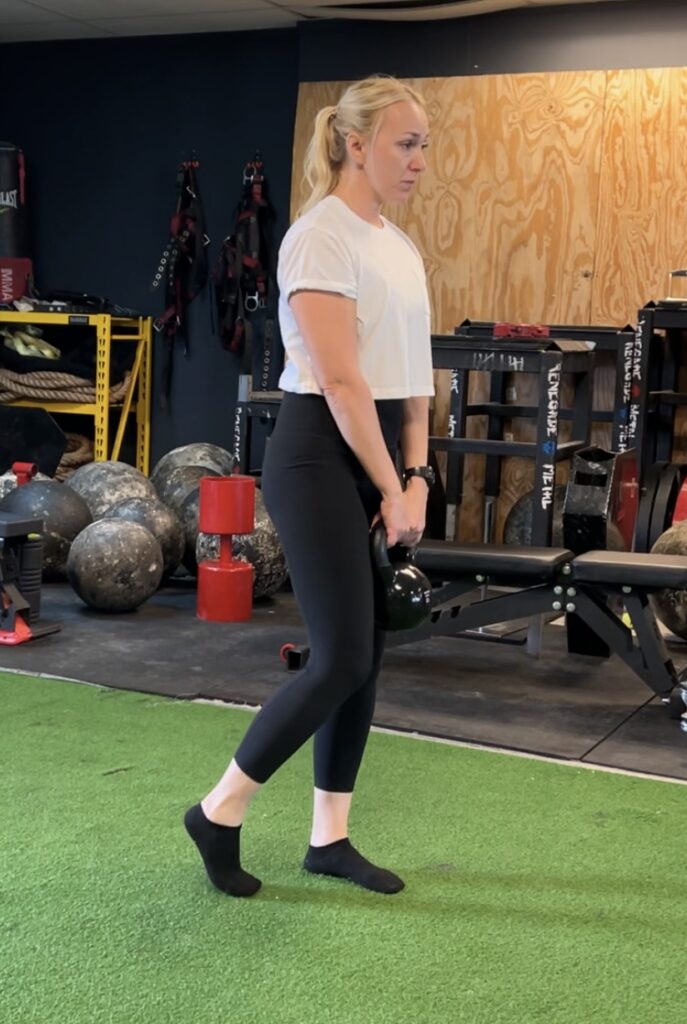
Farmer’s Walk/Farmer’s carry

To do a farmer’s walk with dumbbells, start by standing tall with a dumbbell in each hand, arms fully extended at your sides, and palms facing in. Keep your chest upright, shoulders back, and core engaged. Walk forward in a straight line, taking controlled steps, and focus on maintaining good posture throughout.

Avoid letting the dumbbells sway or pulling you off balance. Continue walking for a set distance or time, then set the dumbbells down carefully. This exercise builds grip strength, core stability, and overall endurance. Since it allows you to carry a good bit of heavy weight, it also works core strength and upper body. 

Farmer’s carry march

Benefits of Home Gym Workouts

Home workouts are convenient, time saving, and can be* cost effective. A single pair of dumbbells can provide a wide range of exercises, making them an affordable and versatile investment. Adjustable dumbbells aren’t inexpensive, but they are much cheaper than a whole set of dumbbells. They save space too. In theory, home workouts save you money on gym memberships and expensive equipment.

*Unless you get bit by the garage gym or home gym bug, then you’ll probably blow your budget on more fun things for your gym. But there are way worse ways to spend your money! 

Remind yourself you aren’t commuting to the gym, dealing with Austin traffic, or wherever you life. You can workout any time that you are home and don’t have to worry about compatible schedules with training partners or your personal trainer.

You can practice new or weird things in the privacy of your own home. You don’t have to worry about sharing space or what you’re wearing. Blare your own music and fly your own flags! Working out at home is the best! 

Home workouts are family-friendly. Everyone in the household, including kids, can join in, making it a fun and healthy activity. Exercises can be scaled for children or beginners using lighter weights or bodyweight options. I don’t have kids but I write programs for my niece and nephew, and I think it’s amazing that they see their whole family exercise together. 

Benefits of Leg Workouts With Dumbbells

Leg workouts improve lower-body strength, which is essential for everyday activities like walking, climbing stairs, and lifting objects. They enhance functional fitness, helping you move better in daily life and reducing the risk of injury. 

Additionally, the large muscle groups in the legs burn more calories during and after exercise compared to smaller muscle groups. Strengthening your legs can support weight management and increase overall energy expenditure. This improves your balance, stability and strength. Home leg workouts with dumbbells can improve all of these.

Here’s a great exercise to do on a cable stack: cable squats.

Do you need an arm dumbbell workout at home? I got you! Or, are you looking for some great tricep pushdown alternatives and triceps exercises.

Home Leg Workouts With Dumbbells: Try It Now!

Home leg workouts are a great way to develop leg strength, balance, and athletic performance. You’ll see muscle growth, increases in overall health, and maybe even improvements in body composition with challenging lower body workouts. Additionally, the benefits are unique to lifting. You can’t replicate these benefits with walking, jogging, or other forms of cardio.

If these are new to you, start very lightly and just go through the motions, learning and perfecting the form. After a few weeks, you can employ progressive overload, which means that you increase the challenge over time. You can do this by going heavier, doing more reps, more sets, or shortening the rest times. 

It can be confusing to pick the best exercises and the most effective way to add these in to your lower body workout. If you have questions, please reach out! You can leave a comment on this post, or message me. Let me know how your home leg workouts with dumbbells are going! Don’t be scared to try anything! Be curious and have fun with your training! 


Work With Me!

If you are looking for a personal trainer in Austin, I’d love to talk with you! If you are not in Austin, Round Rock, or central Texas, let’s talk about online training.

Message me here for a free consult about personal training in Austin, Texas, or here for online personal training, and we’ll discuss your goals, background, equipment availability, schedule, and exercise preferences.

Let’s get you strong and healthy! 💪


About the author

Kathryn Alexander is a strength coach and personal trainer in Austin, Texas. She loves hiking, college football, and the feel of a perfectly knurled barbell. Read more about Kathryn here.

  • 5 steps to keep fitness progress
    5 Steps To Keep Progressing On Your Fitness Right Now
  • Thanksgiving friends at Big Tex Gym
    Thanksgiving Joy + Fitness Momentum (Yes, Both!)
  • Austin personal trainer Kathryn Alexander shares her clients' secret for successful holidays.
    My Clients’ Secret for Successful Holidays
  • Gifts for powerlifters: wrist wraps
    The Best Gifts for Powerlifters and What 1 Gift to Avoid
  • More Semi-Private Personal Training Options!
  • Quick Note: Exercise is Quality of Life

Filed Under: Training

Horizontal Pressing Exercises

November 16, 2024 by Kathryn Alexander

Horizontal pressing exercises for upper body strength are some of the most common and fun exercises there are. Think bench presses and dumbbell presses and pushups. 

You might not categorize exercises in your head as horizontal pressing or horizontal pushing exercises, or even vertical push, etc., but knowing the fundamental movement patterns is a great way make sure you are working all planes of motion. 

And besides, no one ever says, “hey, how much do you horizontal press?” Lol but people definitely ask, “how much ya bench?”

horizontal pressing exercises: pushups, by Kathryn Alexander Austin personal trainer
horizontal pressing exercises: pushups, Kathryn Alexander Austin personal trainer

Horizontal Pressing Exercises as Fundamental Moves

When I say horizontal press, I mean a horizontal exercise in relation to your body. This is one of the most basic movement patterns the body does, so it is worth practicing. You can be on your back doing a horizontal press, as you press a barbell upward toward the ceiling. You can be doing a horizontal press while seated upright, pushing into a machine or bands. You can really be facing any direction, as long as the resistance allows you to push outward from your chest into the resistance. 

horizontal pressing exercises: bench press, by Kathryn Alexander Austin personal trainer
horizontal pressing exercises: bench press, Kathryn Alexander Austin personal trainer

You might hear some people split their training into a push-pull workout. The target muscle group during a push day is usually chest and/or shoulders. Horizontal pressing exercises will be a large part of that push day.

Horizontal presses are fundamental for building upper body strength, particularly in the chest, shoulders, and triceps. If you want any width on your shoulders or depth to your upper body, you’ve got to include these exercises. Your entire body will look strong and balanced when you do. This post covers how to incorporate this basic movement pattern into your workout, no matter what level you are at.

Eight of My Favorite Horizontal Pressing Exercises

1. Barbell Bench Press

  • Muscles Targeted: Chest (pectoralis major), shoulders (anterior deltoids), triceps.
  • Benefits: Allows for heavy loading, great for overall upper body strength, and foundational for powerlifting.
  • Variation: Incline bench press and decline bench press to target different parts of the chest. 
  • muscle mass, shoulder blades

The bench press is a foundational upper-body strength exercise that primarily targets the chest, shoulders, and triceps. This compound movement is what you think of when you think of a regular bench press. It is performed by lying on a bench and pressing a barbell or dumbbells upward from chest level.

The movement involves lowering the weight to the chest and then pushing it back to the starting position. The prime movers during the bench press are the pectoralis major (chest muscles), anterior deltoids (front shoulders), and triceps brachii (back of the upper arms). Supporting muscles like the serratus anterior, rotator cuff, and lats also play a role in stabilizing the movement.

The bench press is a staple in strength training because of its versatility and effectiveness. It helps build muscle mass, increase upper-body strength, and improve overall pressing power, which is beneficial for sports performance and daily activities.

Additionally, incorporating the bench press into your workout routine can enhance posture and boost bone density in the upper body due to the load-bearing nature of the exercise. Whether you’re aiming to gain muscle, improve athletic performance, or maintain functional strength, the bench press is a valuable addition to nearly every training program.

For the bench press haters: remember, you don’t have to max all the time! In fact, please don’t max all the time! The bench press is one of the best exercises for upper body strength, which is hugely beneficial, not just for powerlifters, but especially people who need to build upper body strength, muscle mass and bone mass. Like all of these exercises, you can reap great benefits from it in sub max work. 

2. Dumbbell Bench Press

  • Muscles Targeted: Chest, shoulders, triceps.
  • Benefits: Increased range of motion compared to the barbell bench press, improves muscle imbalances, and enhances shoulder stability. 
  • If you want to work more of your upper chest muscles, you can set up your bench at an incline, so this becomes an incline dumbbell bench press. 

The dumbbell bench press is a versatile upper-body exercise that primarily targets the pectoralis major (chest muscles), anterior deltoid (front shoulders), and triceps brachii (back of the arms). Performed by lying on a bench and pressing dumbbells upward from chest level, it involves lowering the weights to the sides of the chest and pushing them back up.

Unlike the barbell bench press, the dumbbell variation allows for a greater range of motion, engaging stabilizing muscles more effectively and promoting balanced muscle development between both sides of the body. This exercise helps build chest strength, improves shoulder stability, and enhances overall pressing power, making it an excellent addition to strength training for improved functional strength and aesthetics.

Incline Horizontal Pressing

A note about incline work here. So far, we’ve covered the best horizontal push exercises and quickly mentioned incline work. If you picture an overhead press, that is strictly a vertical exercise where you press weight overhead. Of course, the flat bench press is a horizontal press. The incline dumbbell bench press or bench press will be some degree between those two.

We can really split work into the basic movements, but the truth is life doesn’t always work strictly on planes of movement. Therefore, you will benefit from working at inclines between totally horizontal and vertical presses. The best way to get full pectoral development and strength is to work these different angles.

Incline dumbbell pressing; a different way to horizontal press

3. Push-Up

  • Muscles Targeted: Chest, shoulders, triceps, core.
  • Benefits: Bodyweight exercise that can be done anywhere, scalable with variations like incline push-ups, decline push-ups, and weighted push-ups.

Push ups are a classic bodyweight exercise that, like other pushing movements, work the pecs, shoulders and triceps. I LOVE pushups! They also work abs, back, all of your core and stabilizing muscles. As a horizontal pressing movement, push-ups are one of the best exercises due to their accessibility—requiring no equipment—and scalability for all fitness levels. 

They’re fantastic for your abs and core, too. The top of push up position is just a high plank position. Then, a pushup is a moving plank!

Pushup negatives, which are a great way to work into pushups if you can’t do full length pushups yet. They are also a way to make pushups tougher if you slow down the pace.

You can do them anywhere, anytime! They build functional strength by working natural movement patterns and train the body to work as a unit, improving stability and coordination. Push-ups also offer versatility, with variations to increase difficulty or target specific muscles, making them ideal for building strength, enhancing endurance, and supporting overall upper-body development.

If you get really good at pushups and want to get crazy, you can move from a stable surface to something that moves and challenges you more. You can add pauses, tempo work, or even plyometric pushups if you’re very powerful.

Here’s a whole tutorial on how to do pushups.

Pushups modified. You can do these from anything sturdy. Pushups like this are a great use of a Smith machine.

4. Close-Grip Bench Press

  • Muscles Targeted: Triceps, chest, shoulders.
  • Benefits: Emphasizes the triceps more than the traditional bench press, good for building arm strength.

Like the other horizontal pressing movements, the main muscles close grip bench presses work are chest, shoulders and triceps. However, since the close grip bench press allows for much more elbow flexion, it uses more triceps. Some people find this grip is kinder to their shoulder joint, and some people use as an elbow extension exercise to focus on triceps.

Kathryn Alexander, personal trainer in Austin

We’re halfway through! Is this more than you want to think about? If so, talk to a quality personal trainer about your workout program. Sometimes, even with lots of training experience, it’s just helpful to have someone plan your training. Message me if you’d like to talk about your exercise selection or training program.

5. Chest Press Machine

  • Muscles Targeted: Chest, shoulders, triceps.
  • Benefits: Provides stability and can be safer for beginners or those with shoulder issues, allows for controlled movement and isolation.
  • This is one of the most intuitive horizontal pushes, because the lifter is usually seated, and pushing horizontally.

6. Floor Press

  • Muscles Targeted: Chest, shoulders, triceps.
  • Benefits: Reduced range of motion helps protect the shoulders, great for focusing on the lockout phase of the press.

7. Dumbbell Floor Press

  • Muscles Targeted: Chest, shoulders, triceps.
  • Benefits: Similar benefits to the floor press but allows for individual arm work, improving unilateral strength.

8. Resistance Band Press

  • Muscles Targeted: Chest, shoulders, triceps.
  • Benefits: Provides variable resistance throughout the range of motion, good for shoulder health and can be done anywhere.

More Tips for Horizontal Push Work

As you can see, the main types of horizontal push exercises are barbell, dumbbell, and machine presses. Include both a machine chest press and free weight press (dumbbell and barbell presses) in your training. Varying your chest presses will benefit you. 

Including a mix of these exercises in your routine can help you build a strong, balanced upper body.

I suggest you start with pushups and dumbbell presses. If you can handle the barbell, that is a good starting point too. I’m generally not a smith machine fan, but they are super helpful for doing pushups from if you’d like that modification. 

Final Notes About Horizontal Presses

There are very few true isolation exercises. Your horizontal pushing exercises will be compound exercises. Whether your grip is shoulder width, wide, close grip, whether your hands are neutral grip or overhand, will not work different muscle groups. With all these horizontal press exercises, you’re working pectoral muscles, shoulder muscles, and triceps. These are compound movements. 

You’ll also want to do horizontal pulling exercises too, to have a balanced body.

Of course, you’ll want to work lower body too. You can expand the push-pull routines into your lower body as well with a push-pull-squat workout. There are many different exercises and workout splits. If you’d just like to follow a plan that works your whole body in balanced proportions, check out The Works, a full-body strength training program that includes resistance training, cardio, abs and stretching. This program can be done at a gym or at home and will take into account what available equipment you have. 

Of course, message me or leave a comment with any questions. Happy horizontal pressing! 😊 💪


About the author

Kathryn Alexander is a strength coach and personal trainer in Austin, Texas. She loves hiking, college football, and the feel of a perfectly knurled barbell. Read more about Kathryn here.

  • 5 steps to keep fitness progress
    5 Steps To Keep Progressing On Your Fitness Right Now
  • Thanksgiving friends at Big Tex Gym
    Thanksgiving Joy + Fitness Momentum (Yes, Both!)
  • Austin personal trainer Kathryn Alexander shares her clients' secret for successful holidays.
    My Clients’ Secret for Successful Holidays
  • Gifts for powerlifters: wrist wraps
    The Best Gifts for Powerlifters and What 1 Gift to Avoid
  • More Semi-Private Personal Training Options!
  • Quick Note: Exercise is Quality of Life

Filed Under: Training

Lat Pulldown Machine Exercises and Variations

October 21, 2024 by Kathryn Alexander

Lat pulldown machine exercises and variations: how to execute and implement them for your best back development.

Lat pulldown machines are a fantastic tool for back exercises. There are many different ways to use the lat pulldown machine and all it’s variations. Lat pulldown exercises can be varied by grip width, grip type, hand positioning, and angle of the pull. Even if you can do pull-ups and don’t technically need a lat pulldown machine, it can be a very great tool for back strength, size and development. 

pulldown machine exercises

What are Lat Pulldowns?

Lat pulldowns are typically a seated pulling motion that mimics a pull-up. Because pull-ups are basically all or nothing; binary; you can do one or you cannot, they are tough to practice well. If you cannot pull up your own body weight, you need to build strength at that angle first. Resistance bands and machine lat pulldowns allow you to do this. 

Lat pulldowns allow you to practice this movement well, using full control of the muscles around your shoulder blades and perfecting your form. Don’t get me wrong: to achieve the ability to do pull-ups, you have to do some ugly pull-ups. But, along the way, lat pulldowns are a great way to take steps toward pull-ups.

Why Are Lat Pulldown Exercises Important to Do?

Strong lats are crucial to building and maintaining good posture, significant upper body strength, and preventing biomechanical stress from muscular imbalances. Lats are one of the most interesting muscle groups, and one of the largest contributors to full body strength.

A strong back makes a statement; it is undeniable that a person with an impressive back lifts, and pulldowns are one of the best exercises to help with this. In men, this looks strong and powerful. In women, this looks strong and graceful. I often hear my clients tell me their goals include having a strong, pain free, and aesthetically pleasing back. 

Finally, if you are a bench only type of person, you’ll develop imbalances that the lat pulldown can help you fix. Excessive stress on the shoulders from a heavy bench routine can be helped by balancing out the chest work with back work. 

Are you shopping for Austin gift ideas? Check out my favorites!

Why Are Lat Pulldown Exercises Important to Do?

Lat pulldowns work the whole back: lower back, middle back, upper back, and even arms. We don’t really want this to be an isolation exercise, but the pull up does not work your back in isolation. The muscles used from doing the lat pulldown exercise are the latissimus dorsi muscles, rhomboids, upper and lower trapezius muscles, and rear deltoids. The grip muscles of the hands and fingers, and forearm flexors, and biceps also assist in these exercises.

Fun fact: the first time I achieved a pull up, my abs were the most sore of all my muscles. Isn’t that wild? I had prepared my back muscles well and built stronger lats by doing a solid strength training program and pull-down exercises, but my abdominal muscles had not fully joined the game until I did full range of motion, unassisted pull-ups. I point this out just to highlight how pulls are not an isolation exercise.

How to do the Classic Machine Lat Pulldown (Regular Grip)

  • Adjust the Seat and Knee Pads:
    • Sit on the pulldown machine and adjust the seat height so that your feet are flat on the floor.
    • Position the knee pads so they sit comfortably on your thighs, holding you in place during the exercise. (This helps a ton! Don’t skip this!)
    • You’ll stand back up and start in a standing position while you get your grip on, next.
  • Grip the Bar:
    • Reach up and grab the bar with an overhand grip (palms facing away from you), slightly wider than shoulder-width apart. Not a super close grip or very wide yet.
    • Make sure your hands are evenly spaced on the bar. Don’t set up crooked, ain’t nobody got time for that.
  • Starting Position:
    • Sit down with your arms fully extended and your torso upright. Think chest up, and allow your shoulders to stretch up.
    • Pull your shoulder blades down and move smoothly into driving your elbows down, into your hips.
  • Pull the Bar Down:
    • Pull the bar to your upper chest or just below your chin, keeping your torso steady and your core engaged.
    • As mentioned above, think about your elbows retracting into your hips, not pointing back behind you. 
  • Return to Starting Position:
    • Return the bar overhead. Control your movement upwards, extending the elbow joint first, and then letting the bar pull you back into the stretched position.
    • Keep your chest up as you are stretched back into your initial position. 

Lat Pulldown Variations

The classic lat pull-down, described above, is one you should practice first. It’s symmetrical and balanced, and will help you learn to recruit and connect to your lat muscles. From there, experiment with different variations on the pulldown machine so that you can truly begin to feel how you can use your lats to control your shoulder joint and your arms. Then, try to feel, individually, your lower lats*, upper back muscles, mid back muscles. 

Focus on learning this scapular depression and elevation first:

Scapular elevation and depression, demonstrated by Austin personal trainer Kathryn Alexander.

Start with light weights so you can learn that mind muscle connection. Don’t be afraid to go heavier though; the pulldown is pretty forgiving. It’s not dangerous to increase the weight as you’re learning. 

*There’s truly no “lower lats” because the lats are one muscle group that originates from the thoracic and lumbar vertebrae and fascia, ninth to twelfth ribs, and posterior half of the iliac crest. This means your lower back, and hip bones. From there, imagine the muscles attaching to your upper arm. 

Note that you do not have to MASTER the basic lat pulldown to move on to any other pulldown variations. Do your best to practice good form on all of them, and you’ll learn from each exercise to the next. For best results in building muscle and just learning the exercise, practice many variations doing the best you can.

Single Arm Lat Pulldown

The single arm lat pulldown is an excellent variation of the first exercise. In this exercise, you’ll use a single handle or ring instead of a straight bar attachment. You’ll perform your pull one side at a time. I like to stretch the whole side that I’m working. For example, if I’m pulling with my right side, I’ll grip the ring or handle with my right hand, and then skooch over in the seat, dropping my right leg closer to the floor. This creates a straight line stretch all the way down my right side, from my right arm, all the way down to my right knee, which is either close to or resting on the floor. 

This is a great exercise to feel one side at a time, and to make sure your arms are being worked symmetrically. 

Here are some barbell and dumbbell back exercises if you are looking to expand your workouts.

Wide Grip Lat Pulldown

The wide grip lat pulldown is an excellent variation of the first exercise. For this exercise, you’ll set up just like you would for the class pulldown, except you’ll take a wider grip. You can think about doing the top of the “Y” in the “YMCA”. This variation might feel a little tougher, so start light again. This is an excellent exercise to focus on that mind muscle connection, and really feel your lats. This is a great option to really challenge yourself to move into pulling heavy weights.

Neutral Grip Lat Pulldown

Neutral grip means that your hands face each other the whole time. You might not use a typical lat pulldown bar for this exercise. You can do this with a bar attachment that places your hands facing each other, or you can use two separate attachments like rings or handles that you can control yourself. For these neutral grip lat pulldowns, the primary difference is just hand placement. Focus also on the main technical points of the classic lat pulldown, above. 

This is a neutral grip lat pulldown with a MAG grip attachment.

Underhand Grip Lat Pulldown

Also called a reverse grip lat pulldown, this is also like a chin up. In this case, you’ll use an underhand position, meaning your palms are facing you. For wrist comfort, you’ll probably have a shoulder width grip, or even closer. This is one of the best pullup options to begin, because you’ll find you can progress on these faster than on a wide grip lat pulldown. Your biceps will really get a workout and help out with this movement. 

reverse grip lat pulldown; Hyde Park Gym in Austin, Texas.

Pulldown Machine Exercises and Variations: Execution

With a couple of different attachments (tricep rope, straight bar attachment), the pulldown machine can be used like a cable machine for other exercises. These include cable face pulls, tricep pushdowns, the straight-arm pulldown, seated row and low rows (if it is a lat pulldown low row machine). Every weight machine is different, and you’ll typically find better options at a gym than at a home gym. So if you are a hybrid home gym/gym gym athlete, be strategic and take advantage of a few of these pulldown machine exercises while you have gym access!

Learning the basic exercises, working your whole body (full body push pull upper style), eating healthy cooking, and lifting with good technique will drive you to your goals the fastest you can go!


Work With Me!

If you are looking for a personal trainer in Austin, I’d love to talk with you! If you are not in Austin, Round Rock, or central Texas, let’s talk about online training.

Message me here for a free consult about personal training in Austin, Texas, or here for online personal training, and we’ll discuss your goals, background, equipment availability, schedule, and exercise preferences.

Let’s get you strong and healthy! 💪


About the author

Kathryn Alexander is a strength coach and personal trainer in Austin, Texas. She loves hiking, college football, and the feel of a perfectly knurled barbell. Read more about Kathryn here.

  • 5 steps to keep fitness progress
    5 Steps To Keep Progressing On Your Fitness Right Now
  • Thanksgiving friends at Big Tex Gym
    Thanksgiving Joy + Fitness Momentum (Yes, Both!)
  • Austin personal trainer Kathryn Alexander shares her clients' secret for successful holidays.
    My Clients’ Secret for Successful Holidays
  • Gifts for powerlifters: wrist wraps
    The Best Gifts for Powerlifters and What 1 Gift to Avoid
  • More Semi-Private Personal Training Options!
  • Quick Note: Exercise is Quality of Life

Filed Under: Training Tagged With: training

Dumbbell Shoulder Workout at Home + Exercise Demos

July 17, 2024 by Kathryn Alexander

Do you need a dumbbell shoulder workout at home? You are in luck! Shoulders are a very easy muscle group to workout at home, since you can do a full shoulder workout with a pair of dumbbells.

You won’t need expensive or big equipment either; no squat rack or special bench needed. If you have a set of dumbbells, or even some lighter weights and resistance bands, you’ll have plenty of options to get a great dumbbell shoulder workout at home!

dumbbell shoulder workout at home by Kathryn Alexander
Shoulder work has always been a staple of my routine.

Shoulders are a smaller muscle group than legs and glutes, for example, so you don’t need quite as much heavy weight to get a great shoulder workout. You probably know this intuitively: you can squat and deadlift heavier weights than you can overhead press.

Of course, when you have the chance to train shoulders at a gym, you can increase the weights and utilize all the equipment, but I guarantee you can get some of the best shoulder workouts of your life at home with minimal equipment and hard work.

Below are some of the best dumbbell shoulder exercises for your workout at home or even in the gym. And, I’m throwing in a couple body weight and band exercises because they work too!

Seated Dumbbell Shoulder Press

  • sit on a sturdy bench or chair and brace your feet into the ground or bench
  • hold the dumbbells at shoulder level
  • tuck your elbows slightly so they are in line with your body and not poking behind you
  • press straight overhead until elbows are straight
  • stop before weights clank each other
  • if you get good contact with the ground and drive your feet in, you can do a bit more weight on the seated shoulder press than the standing dumbbell press

Standing Dumbbell Shoulder Presses

  • stand tall with your abs and glutes engaged
  • hold the dumbbells at shoulder level
  • tuck your elbows slightly so they are in line with your body and not poking behind you
  • press straight overhead until elbows are straight
  • stop before weights clank each other
  • if you are between weights (ie, 17 pounds would be optimal, but you only have 10 or 20), then you can give it a little push from your lower body to move the heavier weights

1 Arm Dumbbell Overhead Press

  • stand tall with your abs and glutes engaged
  • you won’t drive with your lower body, but keep a slight bend in your knees
  • stand with feet shoulder-width. Much wider will give you too much stability. (the offset nature of this exercise actually makes you work your core muscles too)
  • hold one dumbbell at shoulder level
  • tuck your elbow slightly so it is in line with your body and not poking behind you
  • press straight overhead until elbow is straight
  • control the descent and repeat for the desired number of reps
1 arm shoulder press by Kathryn Alexander, Austin personal trainer.
This is the top of a kettlebell press. This was fairly heavy, so it was probably a push press.

Lateral Raise

  • stand tall
  • keep your arms straight but not locked
  • reach for the sides of the room as you bring the dumbbells to shoulder level
  • control the return to the start position
  • the dumbbell lateral raise is one of the best exercises for shoulder work. Maybe my favorite!

Front Raise

front raise
  • with a dumbbell in each hand, raise your arms straight in front of you
  • palms will be facing down
  • you can do these seated or standing, but control the movement both ways and minimize rocking forward and backward
  • these target front delts

Bent Over Rear Delt Raise

  • hinge over with hips behind you and back straight
  • keeping elbows straight but not locked, extend the dumbbells to your side
  • be sure dumbbells don’t travel toward your hips or out in front of you
  • control the return to your start position

Bent Over Rear Delt Row

  • hinge over with hips behind you and back straight
  • upper arms are extended straight out to your side, with palms facing behind you
  • bend at the elbows as if you are elbowing the ceiling
  • aim for elbows to be straight out from your shoulder, not toward your hips

Prone Rear Delt Series

  • lay face down on the mat
  • bend your elbows like goalposts, with thumbs pointed up
  • raise your arms a few inches up and down
  • repeat with arms straight out like a “Y”
  • repeat with arms straight out to your sides like a “T”
  • repeat the whole series with your palms facing down

Dumbbell Upright Row

  • Start with a dumbbell in each hand. 
  • Stand with feet about shoulder width, and arms extended down straight in front of your body
  • Palms will be facing your torso.
  • Drive your elbows up toward the ceiling, leading with your elbow.
  • When dumbbells are about shoulder height (or a few inches lower), reverse the movement and return to your starting position.
  • Control the dumbbells down and repeat for all your reps. 
  • This will work your shoulders and upper back muscles (traps).

Band Pullaparts

  • stand tall
  • extend your arms in front of you, gripping a light band
  • keep elbows straight but not locked as you press your arms straight around your side
  • I prefer palms down but you can experiment with different hand positions
  • squeeze your shoulders behind you as you make a big wide sweep with your arms
  • press until the band touches your chest
  • control the return to your start position and repeat
  • the goal isn’t to squeeze your shoulder blades here. Instead, think about keeping them wide, apart from each other, and really reach toward the edges of the room. 

What Muscles Make Up the Shoulders?

I threw a bunch of exercises at you, so let me elaborate on what you’re actually working. Dumbbell exercises for shoulders primarily target the three heads of the deltoid muscle. Here’s a breakdown of the shoulder muscles worked by specific dumbbell exercises:

Deltoid Muscles

  1. Anterior Deltoid (Front)
    • Primary Exercises:
      • Front Raises: Lifts dumbbells directly in front of you, targeting the anterior deltoids.
      • Arnold Press: Combines pressing and rotating movements to engage the front deltoids.
  2. Lateral Deltoid (Middle)
    • Primary Exercises:
      • Lateral Raises: Lifts dumbbells to the sides, focusing on the lateral deltoids.
      • Shoulder Press: Overhead pressing movement primarily targets the lateral and anterior deltoids.
  3. Posterior Deltoid (Rear)
    • Primary Exercises:
      • Bent-Over Reverse Fly: Targets the rear delts by lifting the dumbbells outward in a bent-over position.
      • Face Pulls (with dumbbells): Pulling dumbbells toward the face while maintaining a bent-over position can also engage the rear deltoids.

Supporting Muscles

While the primary focus of these exercises is the deltoid muscles, several supporting muscle groups are also engaged:

  1. Rotator Cuff Muscles
    • Function: Stabilizes the shoulder joint during movements.
    • Exercises: Engaged in all shoulder movements, especially those involving rotation like the Arnold press.
  2. Trapezius (Upper Traps)
    • Function: Assists in lifting and stabilizing the shoulders.
    • Exercises: Shrugs and to a lesser extent during overhead presses.
  3. Serratus Anterior
    • Function: Helps in the upward rotation of the scapula, essential for overhead movements.
    • Exercises: Engaged during shoulder presses and front raises.
  4. Rhomboids
    • Function: Retracts the scapula.
    • Exercises: Engaged during bent-over reverse flys and other rear deltoid exercises.

By incorporating a variety of dumbbell exercises, you can effectively target and develop all parts of the shoulder muscles, contributing to balanced shoulder strength and aesthetics.

The Benefits of Shoulder Exercises

There are so many benefits to working shoulders:

Functional Benefits

Strong shoulders enhance your ability to perform everyday tasks such as lifting, carrying, pushing, and pulling objects. This includes activities like carrying kids, lifting heavy items, and reaching overhead.

Strong shoulders also help maintain proper posture by supporting the arms and reducing the tendency to slouch. Good posture reduces stress on the spine and helps prevent lower back pain.

Finally, shoulders can really enhance athletic performance. Many sports and physical activities rely on shoulder strength and stability, including swimming, basketball, tennis, and weightlifting. Strong shoulders improve performance and reduce the risk of injury in these activities.

Health Benefits

Healthy shoulders give you many health benefits too, including injury prevention. Strong shoulders help stabilize the shoulder joint, reducing the risk of injuries such as dislocations, strains, and rotator cuff tears. Well-developed muscles provide better support and protection for the joints and ligaments.

Strong shoulders can help alleviate pain associated with conditions like impingement syndrome, arthritis, and tendonitis. It can also prevent compensatory muscle imbalances that lead to discomfort in other areas such as the neck and upper back.

Strong and flexible shoulder muscles contribute to a better range of motion, making it easier to perform various movements without discomfort or restriction.

Aesthetic Benefits

Finally, and possibly the most fun benefit, is the aesthetic look of well developed shoulders. Well-developed shoulders contribute to a balanced and proportionate physique. Broad shoulders enhance the appearance of the upper body, creating a V-shaped torso that is often considered aesthetically pleasing.

In short, big shoulders always look good!

Overall Well-Being

Achieving shoulder strength and muscle development can boost self-confidence and body image, motivating individuals to maintain a healthy and active lifestyle.

Maintaining shoulder strength is crucial for aging populations to preserve independence and perform daily activities without assistance. It helps in maintaining mobility and quality of life as one ages.

In summary, strong shoulders are essential for functional efficiency, injury prevention, improved health, and overall aesthetic appeal. Regularly incorporating shoulder-strengthening exercises into your fitness routine can yield significant benefits across various aspects of life.

Here’s a great leg and glute workout to do from home, if you’re looking to make it a full body situation! Or, if you’re adding in back, learn how to do barbell rows and their variations.

How To Incorporate These Dumbbell Shoulder Exercises at Home

Now that you have the shoulder exercises, what is the best way to add them in your program? There are obviously a lot of variables here, like how your workouts are split and what other exercises you are doing. If you are doing an upper body day, I’d recommend adding 2-3 of the above exercises in. If you are doing a shoulder-specific training day, you can do 4-6. 

I suggest doing both the compound movements (overhead presses) and isolation exercises (lateral raise, band pullaparts). 

As far as how these exercises complement the other exercises you are doing, it’s hard to give you an exact step-by-step guide. I’d rather walk you through what fits your needs.

First, consider what will be redundant. For example, if you bench press often, you are probably getting lots of work on your front delts. You might not need to add front raises in. In fact, you might need to add more band pullaparts, face pulls, and rows to offset muscular imbalances. 

Seconds, what’s your ultimate goal? If its full development and you want to pack on the muscle mass for boulder shoulders, you’ll still want to supplement with heavy weights. You might do a hybrid workout routine where you can progress the weight and work on your strength goals at the gym, and do another shoulder session at home.

Balance out your shoulder work with some back work. Here’s how to add barbell rows in your routine.

Try These Dumbbell Shoulder Exercise in Your Workout Routine

So there you have it! A complete, but not exhaustive list of some of the best shoulder exercises you can do at home for muscle growth, shoulder stability, and shoulder health. Try these dumbbell exercises, and see which work for you to build your best routine for a dumbbell shoulder workout at home.


Work With Me!

If you are looking for a personal trainer in Austin, I’d love to talk with you! If you are not in Austin, Round Rock, or central Texas, let’s talk about online training.

Message me here for a free consult about personal training in Austin, Texas, or here for online personal training, and we’ll discuss your goals, background, equipment availability, schedule, and exercise preferences.

Let’s get you strong and healthy! 💪


About the author

Kathryn Alexander is a strength coach and personal trainer in Austin, Texas. She loves hiking, college football, and the feel of a perfectly knurled barbell. Read more about Kathryn here.
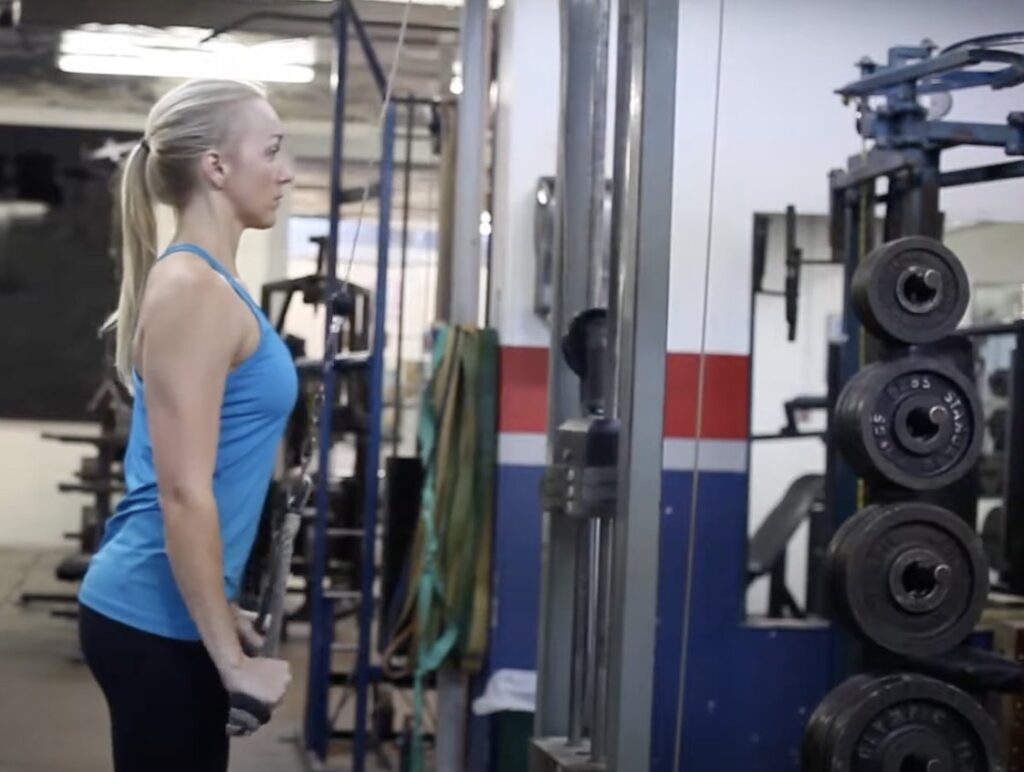

  • 5 steps to keep fitness progress
    5 Steps To Keep Progressing On Your Fitness Right Now
  • Thanksgiving friends at Big Tex Gym
    Thanksgiving Joy + Fitness Momentum (Yes, Both!)
  • Austin personal trainer Kathryn Alexander shares her clients' secret for successful holidays.
    My Clients’ Secret for Successful Holidays
  • Gifts for powerlifters: wrist wraps
    The Best Gifts for Powerlifters and What 1 Gift to Avoid
  • More Semi-Private Personal Training Options!
  • Quick Note: Exercise is Quality of Life

Filed Under: Training

Should I Go to the Gym Everyday?

June 17, 2024 by Kathryn Alexander

Should I go to the gym every day? Should I go 3 times a week? More? How do I know what is best for me? 

Whether you should go to the gym every day or less frequently depends on your fitness goals, current fitness level, overall health, and what kind of training you are doing. As with everything in life, there is not a definite yes or no answer. Sorry- I wish it was that simple! 

But, I can walk you through and help you decide what is best for you! 

There are some reasons to go to the gym everyday, and there are some reasons that it makes more sense to do 3-5 gym sessions per week. 

Read below to see which applies best to you. 

Why You Should Not Go to the Gym Everyday

Like I mentioned above, some people’s goals aren’t conducive to going to the gym every day. If you are doing very heavy, or very intense training, you’ll probably want to take some rest days between training days. 

If you are doing a less intense workout plan and you don’t rest, you can do a lower intensity workout, active recovery, or other recovery method on some of your exercise days.

If your goal is weight loss, I encourage you to get regular exercise. In this case, you might go 3-6 days a week, and take a rest day. 

If your goal is to compete in a specific competition, you’ll probably be training hard. In this case, you’ll want to balance how much effort you can exert while maintaining energy levels needed for training.

Recovery When Going to the Gym Everyday

When you have reached the point where you are lifting very heavy weights, you’ll need more time for recovery and muscle growth between training sessions. Additionally, if you are training aggressively for a competition you’ll most likely be training intensely enough that you should NOT be training 6+ days a week if all sessions are at that intensity.

Without adequate rest, you risk overtraining, which can lead to injuries and burnout. This is especially applicable the more advanced you become as a lifter, and the stronger you are. 

Often, overtraining is under recovery. Our bodies can actually handle more than we think, provided we are eating good food in the right amounts, letting and/or facilitating physical recovery, and managing mental and emotional stress as well.

should I go to the gym everyday? 3-5 days?

Of course, if you have a coach, speak with your coach. If you would like to do a free consult to see if we would work together for your fitness goals, message me here. 

Not allowing for recovery can hinder progress.

Logistically speaking, going to the gym every day might not be sustainable in the long run and could lead to fatigue. 

Fun fact, many of my online and hybrid in-person/remote clients actually live in Austin, where I train clients in-person. It’s just hard to fit driving to the gym in many times a week. Many of these clients have built out a home gym or garage gym and meet me once a week or once a month, and then do the rest of their training at their home gym (or wherever they choose to have a gym membership).

Why You Should Go to the Gym Everyday

On the other hand, there are some benefits of going to the gym every day. Going to the gym every day can help build a consistent habit. This is very important for some people who thrive on consistency and routine. 

Exercise is also great for mental health, so daily workouts can be ideal for many people’s overall health.

This is also important if you have set a goal for yourself, and you need to keep your word to yourself. If this is the case, I would choose a time frame to commit to. It would be difficult to say you’ll go to the gym every single day forever. For a shorter amount of time, you can do it.

If this is you, and you want to go every day, that’s ok! This just means you should make a smart plan so that you have some workouts that are more intense, and some workouts that are not as tiring. 

If you love going to the gym often and love incorporating all the equipment in your training, read here about different barbells and how much they weigh.

What Type of Training Are You Doing?

Like I touched on earlier, what type of training you do every day has a large part in how often you should exercise. Do you do heavy resistance training every day, more general cardiovascular exercise, or hard HIIT workouts? 

If you are doing exhausting, full-body workouts or athletic prep, I highly recommend you have at least one day of enough rest. 

If you choose to do daily exercise, you can split up your weight training, or do different types of workouts like adding in yoga, Pilates, running, swimming, or other aerobic exercise. 

Common splits that hit the major muscle groups include:

  • Upper/lower body
  • Push/pull/squat style split
  • Bodypart specific like chest/arms/back/legs

Getting a variety of exercise types is actually a great way to improve overall health. Whether you use weight machines, free weights, or bodyweight exercises, the combination of resistance training, cardio, and general movement leads to many health and physical fitness benefits. It will help you maintain a healthy heart rate, minimize the risk of high blood pressure, and stave off heart disease. This variety of daily exercise will also help you maintain healthy muscle tone, build lean muscle mass, and keep body fat in a healthy zone.

Cardiovascular Training Physical Activity Guidelines

Real talk, I love lifting. I like strength training sessions much more than doing cardio. However, it feels good to feel good, and cardiovascular training is a crucial way to help you feel great and maintain your general health. 

The U.S. Department of Health and Human Services (Office of Disease Prevention and Health Promotion) currently recommends the following exercise guidelines: 

  • 150 minutes per week of moderate-intensity aerobic activity or 75 minutes per week of vigorous aerobic activity
  • Moderate intensity to high intensity resistance training twice a week

This combo is great for those looking to build and maintain general fitness. Of course, if you’re chasing specific fitness goals, you’ll spend more time on those. If you like rock climbing, practice rock climbing. If you are doing a triathlon, then practice running, swimming and biking, and make strength training your supplemental exercise.  In this case, you’ll probably be doing enough exercise that you won’t need to count total minutes of exercise or minutes of moderate aerobic activity.

Generally speaking though, for healthy adults, a fitness routine that includes a few days of cardio and 2-3 days of lifting will create a workout schedule that contributes to great heart health, cognitive function, and mental health. 

The above guidelines were sourced from The American Heart Association on 6/3/2024.

If you’re interested in more information about heart health, here’s a more in-depth science based article on how much exercise you need to do for optimal health.

Kathryn Alexander, personal trainer in Austin, does bleacher jumps on an east side track

Training Three – Five Days a Week

Instead of forcing yourself to go to the gym everyday, try a regular workout routine of 3 -5 days a week. There are some great benefits to training and resting on alternating days.

Benefits of training a few days a week include allowing time for your muscles to repair and grow stronger post workout. Three to five days of training per week allows this recovery and growth between, reducing the risk of overtraining and injury. If your main goal is muscle strength or muscle building, you’ll want to have rest days.

The recovery days also allow your central nervous system time to recover. Some types of exercise are more heavy on the nervous system, and some require less. Either way, taking a rest day is great for your muscles, joints and other soft tissue to recover as well. 

Other Benefits of Going to the Gym 3-5 Days a Week

Let’s be honest, life is busy! Going to the gym every day is tough on the schedule! Not everybody has that much time to spend. Going to the gym 3-5 days a week on a regular basis is a lot more feasible for many people. If your routine is more sustainable and easier to fit into a busy lifestyle, it will lead to better long-term adherence. 

That’s what you want, after all. You want to do this long term! Exercise forever, and you’ll feel great forever. 

Incorporating rest days also reduces burnout. Burnout is mental as well, not just physical fatigue. If you can stay mentally fresh and motivated, you’ll enjoy your workouts so much more. 

With fewer training days, each session can be more focused and intense, leading to better performance and results. Additionally, emphasizing quality workouts rather than the quantity can lead to more effective and efficient training.

Finally, having a little more time allows you to do more things like keep up your hobbies, spend time with family and friends, and just live a little more balanced lifestyle. A less demanding gym schedule can lead to the right balance of work and play, health benefits and rest, and we could all use a little more balance, I think. 

How Many Days Should You Go To The Gym?

Having read through this, what makes the most sense to you? You can probably tell by now that I’m a fan of taking some days off from the gym. Work hard, rest hard is my motto. 🙂

Choose an exercise plan, and commit to it. As you go, listen to your body. Pay attention to how you feel and if your training program is working for you. Do you feel worked, and sleep hard at night? Do you feel overdone, and hate going to the gym, and generally want to quit? 

Remember, if you do choose to go to the gym every day, some of your days can be lower intensity, stretching, recovery, etc. Give yourself some variety in your training so that you can have natural highs and lows in training intensity. Some days might be vigorous activity like heavy weights some might be brisk walking, and some might be lower intensity cardio exercise. 

Finally, consider working with a fitness professional or coach. Sometimes it’s hard to see the best way in our own path. A coach can create an effective plan for you give your goals, schedule, current fitness level, and gym access. 

Ultimately, finding a routine that works for you and is enjoyable is the most important thing in maintaining long-term fitness and health. Practice different styles of physical exercise until you find the balance of progress, enjoyment, and time spend exercising and at the gym. 

Work With Me!

If you are looking for a personal trainer in Austin, I’d love to talk with you! If you are not in Austin, Round Rock, or central Texas, let’s talk about online training.

Message me here for a free consult about personal training in Austin, Texas, or here for online personal training, and we’ll discuss your goals, background, equipment availability, schedule, and exercise preferences.

Let’s get you strong and healthy! 💪


About the author

Kathryn Alexander is a strength coach and personal trainer in Austin, Texas. She loves hiking, college football, and the feel of a perfectly knurled barbell. Read more about Kathryn here.
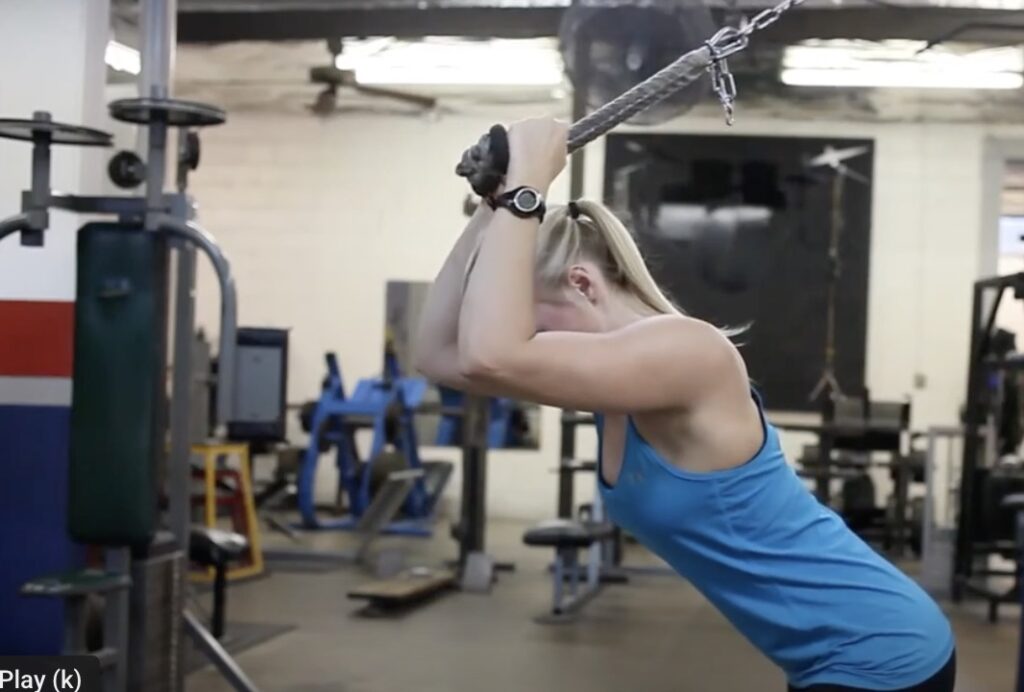

  • 5 steps to keep fitness progress
    5 Steps To Keep Progressing On Your Fitness Right Now
  • Thanksgiving friends at Big Tex Gym
    Thanksgiving Joy + Fitness Momentum (Yes, Both!)
  • Austin personal trainer Kathryn Alexander shares her clients' secret for successful holidays.
    My Clients’ Secret for Successful Holidays
  • Gifts for powerlifters: wrist wraps
    The Best Gifts for Powerlifters and What 1 Gift to Avoid
  • More Semi-Private Personal Training Options!
  • Quick Note: Exercise is Quality of Life

Filed Under: Training

Full Body Band Workout at Home: 12 Best Exercises

June 10, 2024 by Kathryn Alexander

A full body band workout at home: the 12 best exercises for a complete resistance band workout. The closest thing you can get to having a full-body workout machine at home!

You probably know by now that I am a huge proponent of investing in your own home gym equipment, whether it’s resistance bands and some weights, or fully decking out a garage gym with barbells and equipment.

You can even learn bodyweight exercises and perfect them. I just think it’s hugely important to always be able to exercise. Specifically, strength training is important to be able to do regularly.

Today I’ll teach you a full-body resistance band workout. Resistance band workouts are great for so many reasons! Resistance bands are so portable: they’re lightweight and their compact design makes them easy to store and transport. They’re similar to the functional trainer at the gym, but you can take them with you wherever you go, whether it’s on vacation, to the office, or outdoors.

full body band workout at home: band ab work demonstrated by Austin personal trainer Kathryn Alexander

The Benefits of Resistance Bands

They offer a wide range of resistance levels, allowing you to easily adjust the intensity of your workouts by using different bands or adjusting the length of the band. This versatility makes them suitable for people of all fitness levels, from beginners to advanced athletes. Heck, you can even share bands in the same workout without the time or effort of adjusting weights/machine settings, etc.

My favorite bands are the kind pictured above, that I’m using in my garage gym. I prefer these laminated ones rather than the tubing. I’ve bought so many of these because I use them everywhere. (This is an affiliate link to the band I use. If you purchase through this link, I may make a small commission at no extra cost to you.)

Resistance bands are also relatively inexpensive, compared to most exercise equipment. You can get a full set of bands for a fraction of the cost of traditional gym equipment. They’re a great tool for a full body band workout at home.

You can set up your workout station even on the go, in a hotel room or outside. Bands don’t take up much space, but they give you the resistance you need for great training.

They allow you to work every muscle group in your body and perform a wide variety of exercises, including squats, lunges, chest presses, rows, bicep curls, shoulder presses, and more. Plus, you can easily modify exercises to make them easier or more challenging by adjusting your grip or stance.

This provides a smooth and controlled resistance throughout the entire range of motion, which can be gentler on your joints compared to free weights or machines. This makes them an excellent option for people recovering from injuries or dealing with joint pain.

Overall, resistance bands are a convenient, affordable, and effective tool for home workouts, allowing you to get a full-body workout without the need for a gym membership or equipment that takes up your whole garage so that you can’t park in the garage during random Austin hailstorms. Oddly specific, I know. 

The Full Body Band Workout

Below is a list of the 12 exercises that I recommend for a full body resistance band workout. Farther in the article is a description of how to do each, along with videos. 

  1. band pullaparts    
  2. band pullaparts pulldowns 
  3. squats with resistance bands
  4. banded push-ups
  5. banded rows
  6. standing banded shoulder press
  7. lateral band walks
  8. banded glute bridges
  9. alternating leg lifts with bands
  10. banded lat pulldowns
  11. banded bicep curls
  12. banded deadlifts

These exercises provide a full-body workout using resistance bands and can be easily modified to suit your fitness level and goals.

How to Do The Band Exercises

Band Pullaparts

These are classic band exercises. Pullaparts are great for back, shoulders, and good posture. To do the band pullapart:

  • stand tall
  • extend your arms in front of you, gripping a light band
  • keep elbows straight but not locked as you press your arms straight around your side
  • I prefer palms down but you can experiment with different hand positions
  • squeeze your shoulders behind you as you make a big wide sweep with your arms
  • press until the band touches your chest
  • control the return to your start position and repeat 

Band Pullaparts (Pulldown)

Upper body work is tough to do without pulling machines, but this is another great pulling band exercise.If it feels abstract with you, experiment until you can feel your lats (underneath your armpits) squeezing. BTW, I named these pullapart pulldowns. If you have a better name, please let me know. 🙏🏼

To do the band pullapart pulldown:

  • stand tall holding the band slightly wider than shoulder width
  • initiate the pull by squeezing your shoulder blades down
  • pull until the band is neck level
  • you can pull in front of your behind your head
Band pullaparts
Band pullaparts (pulldown)

Squats with Resistance Bands

The resistance band adds extra tension to target your glutes, quads, and hamstrings. This is one of the best lower body resistance band exercises. To do squats with resistance bands:

  • place the resistance band under your feet and hold the handles at shoulder height
  • perform squats by pushing your hips back and bending your knees
  • keep your feet flat on the ground
  • press your big toes into the ground as you drive back into your start position

Banded Pushups

Banded pushups are pretty fun! If you aren’t proficient with non-banded pushups, work on those first. These add a challenge, for sure. To do banded pushups:

  • loop the resistance band around your back and hold the ends in each hand while in a push-up position
  • perform push-ups while maintaining tension on the band, engaging your chest, shoulders, and triceps

Banded Rows

There are a few ways you can do rows with the band. You can do them standing, seated, and with the band anchored from wherever is secure. To do banded rows:

  • stand with the band anchored in front or you or sit on the floor with your legs extended and loop the resistance band around your feet
  • hold the ends of the band with both hands, palms facing each other
  • perform rows by pulling the band towards your torso, squeezing your shoulder blades together to engage your back muscles
  • again, I beg of you, make sure this band is secure! Please please don’t let it slip off and pop yourself in the face
resistance band rows

Standing Band Shoulder Press (Overhead Press)

I prefer to do this one arm at a time so I am going to give you directions that way. To do the standing band shoulder press:

  • stand with your right foot on a light band
  • keeping your entire body engaged, hold the band in your right hand and press your right hand toward the ceiling
  • control to your start position and do as many reps as you plan
  • from there, repeat, stepping on the band with your left foot and pressing with your left arm
  • please make sure you are stepping on this securely! I do not want you to be on a blooper reel!

Lateral Band Walks

This exercise strengthens your hip abductors and glutes, improving hip stability. Also lights a nice little fire in your quads if you maintain that squat position. To do lateral band walks:

  • place the resistance band around your ankles OR under your feet, and assume a quarter-squat position. You can squat a bit more than I do in this demo video, for bonus points 🙂
  • step sideways against the resistance of the band, maintaining tension throughout the movement
  • drive with both legs; don’t just press into the band
  • maintain a straight line in your body, instead of leaning into the movement and bobbling back and forth
lateral band walks

Banded Glute Bridges

To do banded glute bridges:

  • lay on your back with your knees bent and feet hip-width apart, placing the resistance band just above your knees
  • lift your hips off the ground, squeezing your glutes at the top of the movement
  • lower your hips back down and repeat
  • this exercise effectively targets your glutes and hamstrings

Alternating Leg Lifts With the Band

This is one of my favorite ab exercises! In fact, I wrote a whole blog post about alternating leg lifts with bands here. These work abs and hip flexors together, which is fantastic for core and hip strength. To do the leg lifts with the band:

  • lay on your back with feet up, and hands on a band that is secured above your head
  • straighten your arms and tighten your whole core
  • use your abs to press your lower back into the ground
  • slowly lower your left leg all the way down and then back up
  • you can keep a slight bend in your knee if you need
  • repeat with your right leg, down and up before you begin again with the left leg
  • continue one leg at a time, maintaining tension into the band and through your whole core

If this is too tough to rig up at home, just do some planks and plank variations. More info here.

alternating leg lifts with band (for abs)

Banded Lat Pulldowns

Lat pulldowns are notoriously hard to repeat at home. However, if you can find a place to anchor your band, then you are good to go. A great option here is to vary your anchor point; if you can pull from a higher position, and medium position, that’s fantastic for your back. To perform the band lat pulldown:

  • attach your band securely as high as possible
  • step back and hinge over so your band is originating from above your head now
  • squeeze your shoulders blades down and follow with your elbows
  • pull elbows toward your hips, not behind you-squeeze your lats hard at the bottom of the movement
  • reverse the movement, beginning with extending your elbows, then allowing your shoulder blades to move upward again
Band lat pulldowns

Banded Biceps Curls

The bicep curl is also simpler to do with dumbbells; however, the resistance band bicep curl has the benefit of maintaining resistance throughout the whole movement. To do the banded biceps curls:

  • stand with both feet on the band (again, securely!)
  • ggrip the top of the band with both hands
  • you can take a neutral grip, meaning palms face each other, or you can keep your palms facing up (supinated position)
  • tighten your shoulders back and hold in this position, as you straight your elbows, and then bend elbows to curl up
  • return to your start position and do as many reps as you’d like

Banded Deadlifts

I saved one of the coolest for last! I really love this one, and it feels great! Hands down, my favorite exercise during a full body band workout at home. To do the banded deadlift:

  • stand over an appropriately resistant band-grab the center of the band, choking up if you need to increase the resistance
  • keep your whole trunk engaged and neutral
  • bring your hips toward the ground and grab the band
  • keeping your arms straight and your trunk unmoving, squeeze your glutes and grab the ground with your toes
  • press the ground away from you as you stand all the way up
  • reverse the movement to return to your starting position
Banded deadlift. Deadlifts with the band are inexplicably fun. Try it!

Bonus Band Lift: Pallof Press

OK here’s a bonus lift, your baker’s dozen: The Pallof Press. I just couldn’t narrow them down! Take care to maintain your feet shoulder-width apart here. If you find yourself taking a really wide stance and bending your knees excessively, you’ll be taking work away from your core. That’s not necessarily a wrong position! It’s very stable! But here, you’re trying to make your torso do the stability, so don’t let your legs take all the work. To perform the Pallof press:

  • stand upright with a band secured at your side, at chest level
  • grab the band with both hands in front of your sternum
  • step sideways into pressure from the band
  • press straight out in front of you and control your return to start position
  • do not lean into or reach into the press
Pallof press with a resistance band

How to Incorporate These Resistance Band Exercises

You can do these exercises all in a row, making it a giant full body workout. You could also do the upper body ones as a standalone upper body day, and similar with the lower body exercises if you’d like to make it a leg day. If you do that, I suggest doing the alternating leg lifts and Pallof press on either or both days. 

I suggest starting each exercise pretty lightly, and getting high reps to start with. Aim for 15-20, and see how you respond. Rest, and repeat. Keep practicing, and you’ll perfect your full body band workout at home.

More Notes About Using Resistance Bands

As I have mentioned, the resistance bands are a great way to get full body bands workouts at home or hit all the major muscle groups at home or while you’re traveling. They are just an effective way to do strength training in general. However, we need to buy quality bands and maintain them so that they are safe.

Always inspect your bands before you use them for any tearing or fraying. Do not loop bands around anything sharp that will cut or dig into them. Be careful if you leave them outside because they weather and tear faster. In fact, just bring them inside. They don’t take up much space so you could even throw them under the couch, in a drawer or any other little small space.

If you want to skip the band entirely, here’s a fun workout you can do at home without equipment.

full body band workout at home: the Pallof press demonstrated by Austin personal trainer Kathryn Alexander

Ways to Increase the Challenge of Resistance Bands

Unlike working with barbells, dumbbells or machines, you can’t just set the weight higher with exercise bands. Some bands are labeled with pounds of resistance, but that’s kind of ambiguous. Besides, as they get older and more worn, that number changes. So how do you progress? There are many ways to increase the challenge of resistance band work:

You can add reps if you’d like an increased challenge. 

You can do mechanical drop sets, which means hold the band tighter, for 10 or so reps, then adjust your grip so it is looser. Then do 10 more reps. Then adjust again, reducing resistance. The culmination of 30+ reps will get you! 

Of course, if you have a set of resistance bands and not just one, you can choose the thicker bands for greater resistance.

You can add pauses at the point of resistance, so you are working the entire time and increase your time under tension. 

12 Exercises for Full Body Band Workout At Home

So there you have it! Twelve of the best resistance band exercises for at-home workouts! Resistance band training is really all about getting creative! Whether you have mini bands, power bands, heavy bands, the small looped bands, experiment with what works best for you.

Because resistance bands require you to stabilize your body and engage your core muscles to control the resistance, they help improve your overall strength, stability, and balance, which translates to better functional fitness for everyday activities.

The best resistance band workout is one that gives you a little work, some strength training, and gets you toward your fitness goals. Let go of the idea that it needs to be perfectly counted and structured, and focus on what works for you. 

Want a Bump Up from Band Work?

If you have some more exercise equipment like medicine balls, adjustable dumbbells, a jump rope and even a yoga mat, you can add in some extra exercises to increase your heart rate and bump up the intensity of your session.

Check out The Home Team if you have a few pieces of home gym equipment and prefer to exercise from the comfort of your own home. You don’t need a large multi-station home gym or power rack for this workout program.

A basic home gym setup of bands, a medium pair of dumbbells and one heavier weight (dumbbell or kettlebell) will do. They’re super fun, but no squat rack required.

The above links are affiliate links to products & brands I actually use, which may make me a small commission at no extra cost to you.

Work With Me!

If you are looking for a personal trainer in Austin, I’d love to talk with you! If you are not in Austin, Round Rock, or central Texas, let’s talk about online training.

Message me here for a free consult about personal training in Austin, Texas, or here for online personal training, and we’ll discuss your goals, background, equipment availability, schedule, and exercise preferences.

Let’s get you strong and healthy! 💪


About the author

Kathryn Alexander is a strength coach and personal trainer in Austin, Texas. She loves hiking, college football, and the feel of a perfectly knurled barbell. Read more about Kathryn here.
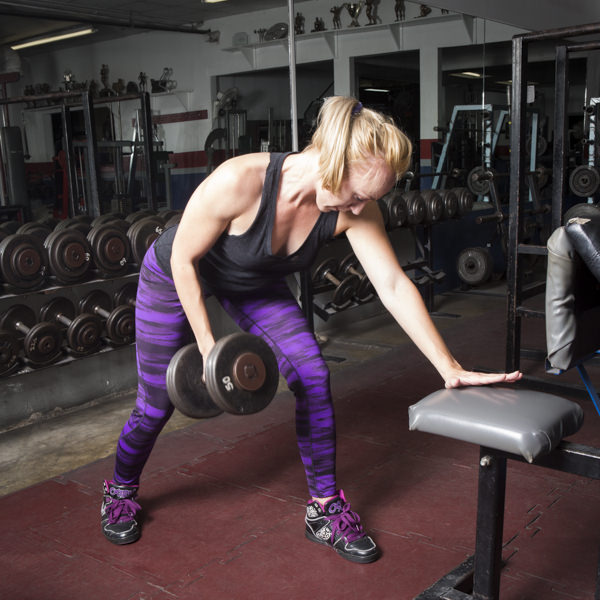

  • 5 steps to keep fitness progress
    5 Steps To Keep Progressing On Your Fitness Right Now
  • Thanksgiving friends at Big Tex Gym
    Thanksgiving Joy + Fitness Momentum (Yes, Both!)
  • Austin personal trainer Kathryn Alexander shares her clients' secret for successful holidays.
    My Clients’ Secret for Successful Holidays
  • Gifts for powerlifters: wrist wraps
    The Best Gifts for Powerlifters and What 1 Gift to Avoid
  • More Semi-Private Personal Training Options!
  • Quick Note: Exercise is Quality of Life

Filed Under: Home gyms, Training

1 Month Body Transformation: Maximizing Your Results

June 3, 2024 by Kathryn Alexander

Aiming for a 1 month body transformation is a pretty aggressive, big goal. I encourage all my clients to think of exercising as something you’ll do forever. Like, for-ev-verrrr. Most often, when my clients are stuck and aren’t seeing the progress they want, the answer is to just keep going. Keep working hard, for more weeks and months. 

However, I understand the desire to want a lot of progress quickly. Getting noticeable results quickly can even jump-start your motivation and desire to commit to your exercise routine. Who wouldn’t want to see muscle growth, weight loss, increased energy level and health changes in a month?

1 month body transformation by Austin personal trainer Kathryn Alexander
…and be sure you take pictures to document all your work after your 1 month body transformation

But again: a month is quick! To make the most significant body transformation in one month, you’ll need a focused and intense approach that combines optimal training, nutrition, and recovery strategies. Here’s a detailed plan to achieve this.

Set Actionable Goals (Procedural Goals)

Many fitness articles will tell you to set outcome goals, such as “I will lose 10 pounds this month” or “I will decrease my body fat by 3%”. 

I really dislike these. 

I encourage you to set procedural goals instead of outcome goals. What is the difference? Procedural goals focus on the specific steps or procedures required to achieve an objective. They are what you do. 

Outcome goals focus on the end result or the final achievement that you are aiming for. 

Note: you can have outcome goals, of course. I want you to more heavily weigh the procedural goals, because remember, the procedural goals are the ones that will get you to the outcome. Do the procedural goals and you’ll get there! 

Procedural Goals 

Procedural goals focus on the methods, steps, and processes that you will follow. Success with procedural goals is measured by adherence to the process and steps. This involves following short-term, daily, or weekly tasks.

Outcome Goals

Outcome goals focus on the end result, emphasizing only the outcome. Outcome goals are often not particular on how you arrive at the goal, so long as you meet it. These often have a distinct finish line.

Check out my client Tony’s 1 month transformation here.

Tony, client of Kathryn Alexander (Alexander Training) earned a transformation that yielded big weight loss and big strength gains.
Tony showing his progress in a side view.

How to Set Goals

What this difference between procedural goals and outcome goals means for you while you are doing your 1 month body transformation challenge, is that by setting procedural goals, you will have a plan to follow. 

You won’t have a binary “won” or “lost”, “accomplished it” or “failed”. You’ll have a set workout routine and healthy diet or meal plan that you follow. You will have made good decisions and see real results no matter what. 

You won’t have starved and beat yourself down just to lost 5 pounds. You will have made real progress if you establish a strength training plan, add in some cardio, eat well and rest well. You will have made big changes no matter what, and you’ll see the health benefits. 

How To Make a 1 Month Body Transformation

Ok, time for real talk: as I mentioned before, 1 month is a short period of time to see significant change, but you can absolutely make change happen. Here’s what I would do:

  • Strength training (full body, compound exercises)
  • HIIT workouts (high intensity interval training)
  • Steady state cardio (low or moderate intensity)
  • A healthy diet that includes enough protein and the optimal caloric range
  • Get enough protein (worth a repeat)
  • Rest! R&R
A 1 month body transformation will take athletic work, strength training, resistance training, a good diet and rest.

This is assuming you are healthy enough for all of this. I would NOT start from no exercise to heavy heavy weights, HIIT workouts, or 5+ high intensity sessions a week. Your fitness level does matter here!

Start moderately and build from there. It will be much faster in the long run to build a foundation for a few weeks, and then increase your output.

Here is a training plan I made to start at a foundational level: Square 1.

Strength Training Plan

Again, this is assuming you are currently lifting and not a beginner. If this is the case and you are making a 30-day push or following a 30-day fitness challenge, be smart about it. 

So what is the best strength training plan to build muscle mass and increase fat loss? The best plan will training your whole body, hitting all muscle groups. It will include compound exercises like squats, deadlifts, lunges, bench press, overhead press, rows, and pull-ups.

I’d also like you to add in athletic movements like sled pushes, ball throws, and squat presses. 

You can see progress with a variety of rep ranges in your weight training plan. There is so much talk about high-rep workouts, low-rep workouts, etc, but there is no perfect rep range for specific progress. If you are pushing an increase in cardiovascular fitness and looking to change body composition, I’d encourage you to do 8-15 reps. 

Rep ranges in the 1-5 range are more for tradition strength workouts. Strength will take longer to build than just 1 month. You can build some strength in one month, but it’s more likely you’ll be able to push change in body composition in one month.

Picking a Strength Training Program

So what is the best workout routine for a 1 month body transformation? If you work hard and do intense workouts, many many programs can help you see change. Don’t get caught up in all the details.

Find a smart program, of course, but most importantly, put in hard work. 

If you have the ability to work with a trainer, do that. A trainer can help you write an exercise routine specific to you, can help you use the equipment to the beset of your ability, and help you perfect form so you can workout the best way, safely and effectively. 

How to find the best personal trainer for you.

Nutrition Plan

What do you eat to optimize results during a 1 month body transformation? There are a few basic tenets here, but I do highly recommend you work with a dietitian like Lindsey Ray of Eat Pray Lift Nutrition.

Briefly, here are some guidelines to follow with your nutrition. 

  • Caloric Surplus/Deficit: Depending on your goal (muscle gain or fat loss), maintain a caloric surplus (500-700 calories) for muscle gain or a moderate deficit (500 calories) for fat loss.
  • High Protein Intake: Consume 1.6-2.2 grams of protein per kilogram of body weight daily to support muscle growth and recovery.
  • Balanced Macronutrients:
    • Carbohydrates: 4-6 grams per kilogram of body weight for energy and glycogen replenishment.
    • Fats: 0.8-1 gram per kilogram of body weight for hormone regulation and energy.
  • Hydration: Drink 2-3 liters of water daily to stay hydrated and support muscle function. This might be more if you are larger and/or work a physically active or hot job. Looking at you, Austin firefighters, and yall in construction and building/home maintenance.

High Intensity Interval Training (HIIT)

HIIT, or High-Intensity Interval Training, is a form of exercise that alternates between short bursts of intense activity and periods of less intense activity or rest. The main idea is to push your body to near its maximum output for a brief period, then allow it to recover slightly before repeating the process. This type of training can be applied to various forms of exercise, including running, cycling, strength training, and bodyweight exercises.

Key Features of HIIT:

  1. Intensity: HIIT workouts are typically characterized by short bursts of intense activity, often around 80-90% of your maximum heart rate.
  2. Intervals: The high-intensity periods are interspersed with low-intensity recovery periods or complete rest. For example, 30 seconds of sprinting followed by 30 seconds of walking or resting.
  3. Duration: HIIT sessions are usually shorter than traditional workouts, often lasting between 15 to 30 minutes, but they can be highly effective despite their brevity.
  4. Variety: Exercises in a HIIT workout can vary widely, including cardio, strength training, and plyometrics. This variety helps to keep the workouts engaging and targets different muscle groups.
  5. Efficiency: HIIT is known for its efficiency in burning calories and improving cardiovascular fitness in a shorter amount of time compared to traditional steady-state cardio exercises.

HIIT is a fantastic way to make progress on your body composition. Again – please be active and ready to do HIIT safely. Speak to your doctor to be cleared for exercise, and don’t start HIIT if you are currently sedentary. Build your foundation with steady state cardio first. 

Steady State Cardio

Steady-state cardio is a type of cardiovascular exercise where you maintain a consistent, moderate level of intensity over a prolonged period. This contrasts with high-intensity interval training (HIIT), where the intensity varies. Steady-state cardio can be performed through activities like jogging, cycling, swimming, or rowing at a steady pace.

Note that steady state cardio can be at different intensities. It won’t be HIGH intensity, but it can be very low (low intensity steady state, or LISS) or medium intensity. Both will keep a steady heart rate and can improve blood pressure.

Key Features of Steady-State Cardio:

  1. Consistency: The intensity level remains constant throughout the workout.
  2. Duration: These sessions typically last longer, often between 30 to 60 minutes or more.
  3. Moderate Intensity: The exercise is performed at a moderate intensity, usually around 50-70% of your maximum heart rate.

Benefits of Steady-State Cardio:

  1. Improved Cardiovascular Health: Regular steady-state cardio strengthens the heart, improves circulation, and reduces the risk of heart disease.
  2. Increased Endurance: Helps build aerobic capacity and endurance, allowing you to perform physical activities for longer periods without fatigue.
  3. Calorie Burning: Effective for burning calories and aiding in weight management or weight loss.
  4. Lower Injury Risk: Generally lower impact and less intense compared to HIIT, reducing the risk of injury, especially for beginners or those with joint issues.
  5. Stress Reduction: Can be meditative and relaxing, helping to reduce stress and improve mental health.
  6. Consistency and Habit Formation: Easier to maintain and incorporate into a regular fitness routine due to its less intense nature.

Example of a Steady-State Cardio Workout:

  • Jogging: Running at a consistent, moderate pace for 30-45 minutes.
  • Cycling: Biking at a steady speed for 45-60 minutes.
  • Swimming: Swimming laps at a consistent pace for 30 minutes.
  • Elliptical: Using the elliptical machine at a steady rate for 40 minutes.

Rest and Recovery

If you are working hard on a 1 month body composition change, you’ll obviously be pushing hard. To recover from all this physical work, you’ll need to prioritize quality rest. 

This is not optional. This is a must-have essential component. It always is, especially during times of hard physical work. 

Aim for 7-9 hours of sleep per night for optimal recovery and muscle growth. Develop great sleep habits like limiting overhead and bright lighting in the hours before bed, and sleeping in a dark, quiet bedroom.

What Is Your Plan for Body Transformation?

If you have a good plan and have decided a hard push for a 1 month body transformation is for you, then I am 100% in support of this! Make your plan, execute on it, and be proud of yourself for all your hard work! 

If you would like help with the details of your training plan, I’d love to do a free consult. You might not want to do a hard 1 month push. Another plan might work for you better. Let’s discuss! 

Work With Me!

If you are looking for a personal trainer in Austin, I’d love to talk with you! If you are not in Austin, Round Rock, or central Texas, let’s talk about online training.

Message me here for a free consult about personal training in Austin, Texas, or here for online personal training, and we’ll discuss your goals, background, equipment availability, schedule, and exercise preferences.

Let’s get you strong and healthy! 💪


About the author

Kathryn Alexander is a strength coach and personal trainer in Austin, Texas. She loves hiking, college football, and the feel of a perfectly knurled barbell. Read more about Kathryn here.
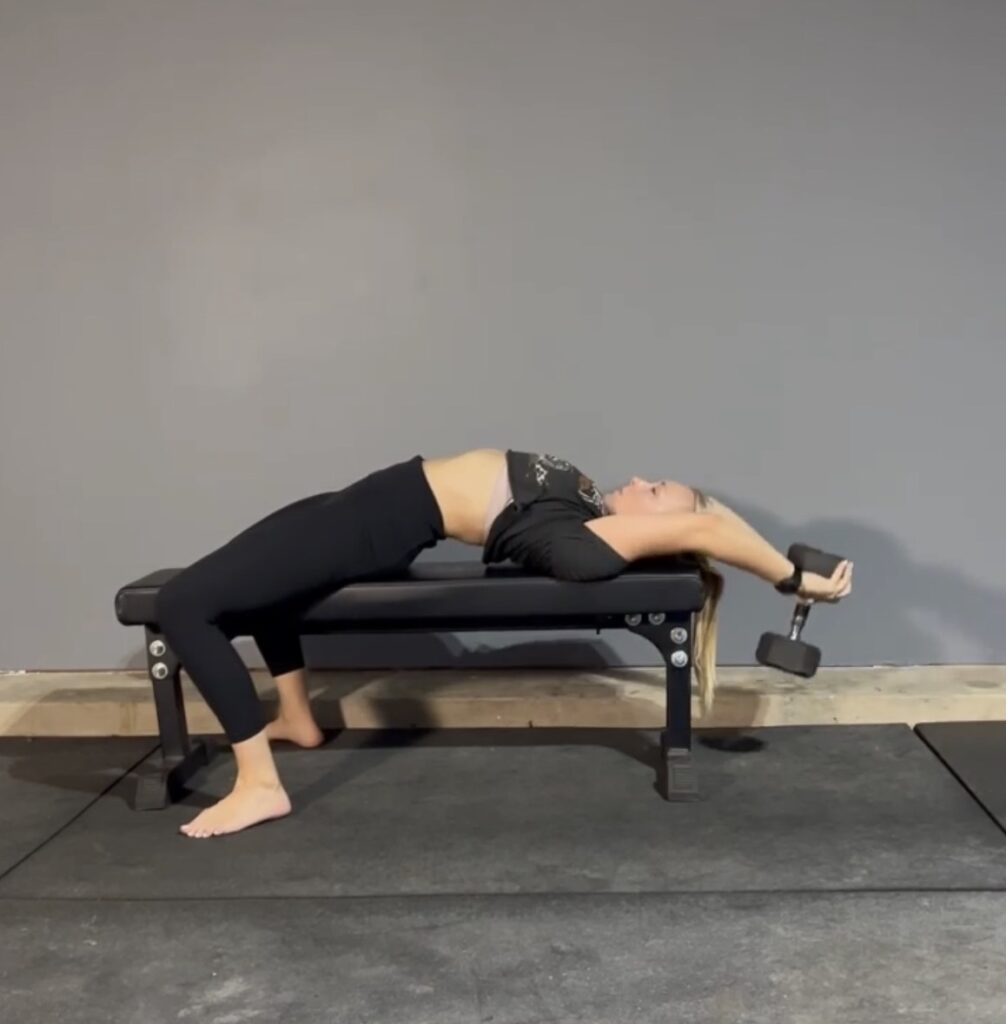

  • 5 steps to keep fitness progress
    5 Steps To Keep Progressing On Your Fitness Right Now
  • Thanksgiving friends at Big Tex Gym
    Thanksgiving Joy + Fitness Momentum (Yes, Both!)
  • Austin personal trainer Kathryn Alexander shares her clients' secret for successful holidays.
    My Clients’ Secret for Successful Holidays
  • Gifts for powerlifters: wrist wraps
    The Best Gifts for Powerlifters and What 1 Gift to Avoid
  • More Semi-Private Personal Training Options!
  • Quick Note: Exercise is Quality of Life

Filed Under: How To, Training

Lower Back Pain from Squats? What You Can Do

May 28, 2024 by Kathryn Alexander

Squats are one of the most important lifts to train, both because of their ability to change the physique, and because of the phenomenal carryover to real life movement. Squats are an essential movement pattern.

Need to sit down and not PLOP on the couch? That’s a squat. Want to increase your speed and power for sport? Squats can help with that.

Want to maintain your independence for your whole life, ie, not get stuck on a low chair or a toilet? Fill out your jeans a little more? Make your hikes feel stronger? Squats. 

Despite their stellar benefits to health and performance, squats are often blamed for low back injury. In reality, squats do not cause low back pain. Poorly executed squats can cause low back pain. 

Read on for how to maximize your squat performance and squat technique so you can build your strength, change your body, and prevent pain. 

Lower back pain from squats? What you can do.
Having lower back pain from squats? What you can do.

Why You Might Get Lower Back Pain After Squats

Squats are a full body lift. They heavily involve legs, glutes, back and core. Done properly, squats integrate the whole body in a natural movement. It usually becomes apparent when one piece is a weak link. For example, many people’s legs can handle more than their core (abs and lower back) can.

Note that there are many types of squats. People usually think of the barbell back squat when they hear squats, but there are many ways to squat.

Sometimes lifters have great form, and relatively weak core muscles. They can see great progress if they work on bringing their core strength and upper back strength up to speed. Other times, lifters have poor form that doesn’t necessary cause back pain, but can limit progress. Finally, a common mistake is that some lifters use poor technique that actually can cause back pain.

Also unforunately, sometimes people just do stupid stuff in the gym. Not warming up properly, adding too much weight to the bar from one set to the next, and trying to go heavy too frequently can all have suboptimal results, including lower back pain after squats. 

Barbell rows are a great exercise for strengthening your whole back. Here’s a solid tutorial on how to do barbell rows.

How to Avoid Lower Back Pain After Squats

The best ways to avoid lower back pain from squats are to learn proper technique for your warm ups, work on perfecting your form, and follow a well designed program. 

The warm up is not just about getting warm; it is much more important than that. The warm up is a physiological process to get your nervous system engaged, get your joints moving, and increase your heart rate and blood flow for the upcoming exercise. By warming up properly and working up in weight with exercise specific warm ups, you’ll actually be able to do more work and better work. 

Let me repeat: warming up well is a performance enhancement strategy. Trust me!

Perhaps the most important way to prevent and avoid lower back pain is to learn to squat with optimal form. Every person’s squat will look different because of differences in limb length and individual build, but every individual has an optimal squat form.

Learning proper form will help you use your legs and glutes as they are intended to be used in the squat, allowing your back to be used in the way that it is intended. This way your back is not overcompensating for not using your prime movers (the leg and glute muscles) as they should be during the squat. 

Find a Good Squat Program

Finally, follow a good program written by an experienced coach. People who wing it without a program often lift heavy loads too often, too light, infrequently, miss major muscle groups, or skip assistance exercises that help you prevent injury. I recommend programs by Aaron Ausmus of Pen and Paper Strength App and Zack Phillips of ReadyUp Athletic Development. I would be honored to help you with a program as well. Check out these or contact me about a custom program written for your goals.

How Different Squats Can Help You

When you think of squats, you probably think of barbell squats, and probably back squats. This is when the bar is on your back (very creatively named) as opposed to front squats, which is more Olympic/weightlifting style. I like both and I encourage you to practice both!

Back squats cause more of a hinge at the hips, which is fine and safe! IF your back is tender, however, these might be less comfortable.

In that case, elevate your heels and do front squats. This will allow you to stay in a more upright position through your spine.

Both front and back squats are great lower body work, whichever you do. Also with both, maintain good form, light enough weight for a big range of motion, and an engaged core and neutral spine.

Final Notes on Squat Form

It is easy to get lost in the weeds with squats and squat form. The easiest way to do this is to find a million YouTube videos that tell you you have anterior pelvic tilt, posterior pelvic tilt, butt wink, tight hip flexors, tight hips, poor ankle mobility, lifting too heavy and squashing your lumbar spine, or a million other major issues people love to split hairs about.

Good technique is always easier to maintain with lighter weight, of course. But, you do want to build your strength and progress to being able to lift heavy weight. The best way to do this is to start light and practice ideal squat mechanics deliberately.

Yes – most people can improve their squat position and technique, but the benefits of squats hugely outweigh the risks. Remember – you can start light! You should start light in the first place. Squats don’t have to be scary! They aren’t some dangerous exercise that will break you. In fact, the good news is, squats done the right way will make your life so much better!

How to Recover From Lower Back Pain Caused by Squats

Squatting is a natural movement and most people can find a way to do it pain free. If you suspect you are having lower back pain caused by squats, then something must change. In the short term, back off squats, especially if you are doing barbell squats and are going very heavy. Do not stop your movement, though! This is not a free pass to stop exercising. 

If the pain is exceptionally bad, please contact a doctor or a physical therapist. The following advice applies to pain that is manageable and is not medical advice. 

Movement is good for the body, so continue movement by walking, swimming or other low impact exercise. You can add in unweighted squats as a test to see how it feels. If you’d like to bump it a notch, you can add lunges or stationary lunges. While lunging, the back can typically remain upright, which is generally a safe position. 

Add in movements such as the McKenzie press, child’s pose, unweighted reverse hyperextensions, back extensions and dead hangs. The spine is made to move through spinal flexion and extension in conjunction with a strong core. With a strong back and core, risk of muscle strain is lessened and lumbar discs are protected.

You can also look at other factors in your life that might be contributing to lower back pain. Do you have good posture when you sit, and do you have an ergonomic setup where you spend most of your work day? Check out your mattress too. Ideally you spend 8 or so hours there each night. It is important that you don’t sleep in a funny position in that little dip that develops as mattresses age. 

This glute exercise can strengthen glutes and help reduce back pain

Most importantly, remember that this too shall pass! Keep a positive attitude and look to athletes and people you know who have come back from injuries. Your body is always actively working to heal you – help it as much as you can! 

Benefits and Variations of Squats

Because squats use so much of the body, they can be very taxing on the nervous system, and thus send a large signal to the body to adapt. In other words, when you challenge yourself on squats, they feel hard because they are hard! 

One way to avoid injury and overuse is to become proficient in squat variations. This will develop your strength in many ways, at varying angles, and help prevent overuse injuries. Practice goblet squats, dumbbell squats, barbell squat, deep squats, full squats. These are some of the best exercises, and when you can do these movements well, you’ll decrease your risk of injury, chance of knee pain, work through mobility issues, and get stronger.

Check out this post about 7 squat variations you can do with little equipment.

Keep Squatting to Build a Strong Back!

When done correctly in a well written program, lower back pain from squatting is rare. In fact, squatting correctly does wonders for strengthening your back and preventing low back pain and injury. 

While it might take some time on the front end to learn and practice ideal squatting form, or trouble shoot your current squat form, it is well worth the effort to be strong. 

Accessory Work for Lower Back

It is also an excellent idea to add in accessory work for your lower back. Some machines that you might see but not usually utilize at the gym can really help with supplemental lower back strength. These include the back extension and reverse hyperextension. You can read a detailed tutorial on these lower back machines here.

Enjoy lifting, my friends, and please be in touch if you have questions I can help you with. Kathryn@kathrynalexander.com 

Related: strong hamstrings can help keep your back pain free as well. Check out this leg curl machine to help build hamstrings strength.


Work With Me!

If you are looking for a personal trainer in Austin, I’d love to talk with you! If you are not in Austin, Round Rock, or central Texas, let’s talk about online training.

Message me here for a free consult about personal training in Austin, Texas, or here for online personal training, and we’ll discuss your goals, background, equipment availability, schedule, and exercise preferences.

Let’s get you strong and healthy! 💪

About the author

Kathryn Alexander is a strength coach and personal trainer in Austin, Texas. She loves hiking, college football, and the feel of a perfectly knurled barbell. Read more about Kathryn here.
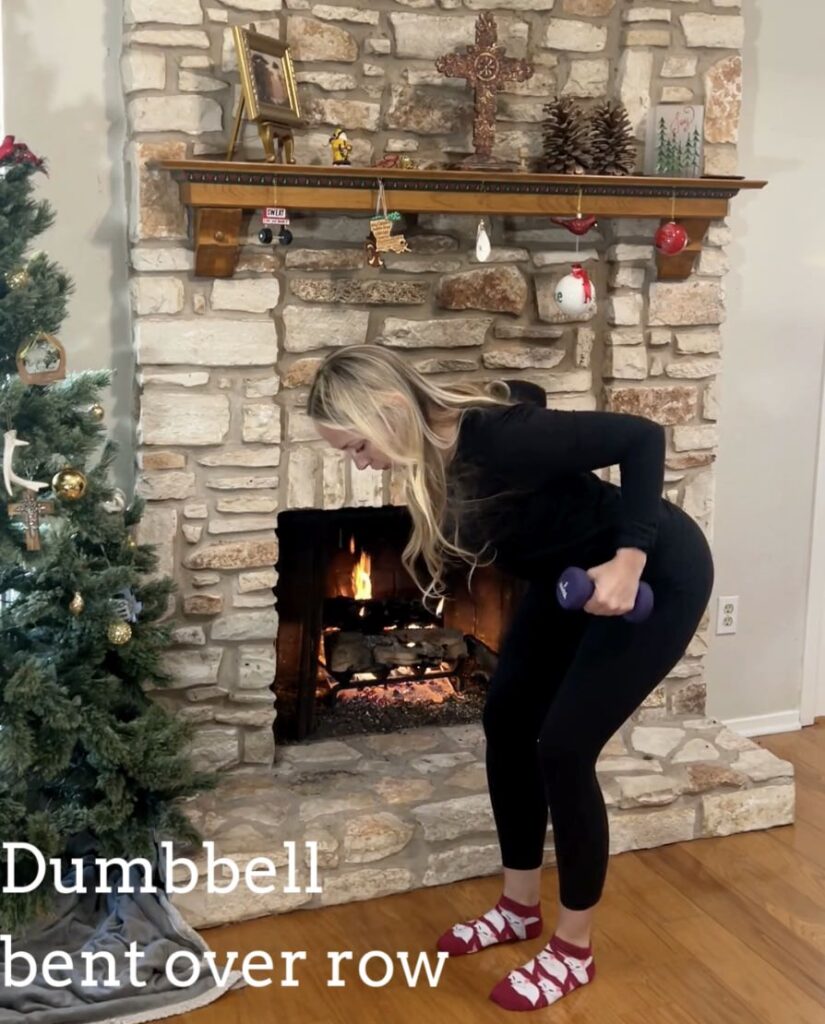

  • 5 steps to keep fitness progress
    5 Steps To Keep Progressing On Your Fitness Right Now
  • Thanksgiving friends at Big Tex Gym
    Thanksgiving Joy + Fitness Momentum (Yes, Both!)
  • Austin personal trainer Kathryn Alexander shares her clients' secret for successful holidays.
    My Clients’ Secret for Successful Holidays
  • Gifts for powerlifters: wrist wraps
    The Best Gifts for Powerlifters and What 1 Gift to Avoid
  • More Semi-Private Personal Training Options!
  • Quick Note: Exercise is Quality of Life

Filed Under: Training Tagged With: strength

Leg and Glute Home Workout For Lower Body Strength

May 6, 2024 by Kathryn Alexander

Here is a leg and glute home workout, for those times you can’t make it to the gym. 

Leg and glute workouts are the best! They’re so fun to do at the gym, but sometimes you want to do work from the comfort of your own home. Strong legs and strong glutes mean you can go hike, run, take on stairs easily, and you’ll keep lower back pain at bay.

There’s no reason not to work legs and glutes, the strongest muscles of the body. Try this leg and glute home workout, and let me know what you think! 

What Equipment You Need

This workout will assume you have some weights, maybe a pair of dumbbells or kettlebells, but not a barbell or machines. If you don’t have any weights or a resistance band, then you can do them all as bodyweight exercises. The weight and band resistance is just a bonus!

leg and glute home workout
A single kettlebell or dumbbell can be utilized well during leg and glute home workouts.

I’ll get right into the outline of the workout. Below that I will give explanations of how to do each exercise, including a video link. Finally, at the end of this article I’ll explain more about glute and leg anatomy if you’d like further reading. 

Leg day, commence!!

The Workout

Warm-up:

  1. 5 ish minutes of general movement (walking, jogging in place, high knees, bodyweight squats)
  2. Dynamic stretches for the legs and hips (leg swings, hip circles, lunging twists). Just enough movement to begin to feel looser and ready to work.

Main Workout:

  1. Squats:
    • Bodyweight squats: 3 sets of 12-15 reps
    • Progression: Goblet squats with a dumbbell or kettlebell
  2. Lunges:
    • Any variation you’d like (forward, reverse, or walking): 3 sets of 10 reps per leg
    • Progression: holding weights
  3. Bulgarian Split Squat
    • 3 sets of 10 reps per leg
    • Use a chair or elevated surface to rest one foot behind you while performing a split squat motion
  4. RDL:
    • 3 sets of 12 reps per leg
    • Progression: B stance RDL (directions below)
  5. Calf raises
    • 3 sets of 15 reps
    • Stand with feet hip-width apart and raise heels as high as possible, then lower back down
  6. Glute Bridges:
    • Bodyweight glute bridges: 3 sets of 15 reps
    • Progression: Single-leg glute bridges or weighted glute bridges, with a weight across your hips

How to do the Squat

If you can do this squat forever, you won’t get stuck on a low couch or in the restroom. You’ll keep your independence through old age. In my very first year as a certified personal trainer, before I even got a degree, I told a studio full of sorority girls this. Lol I STILL believe it! But, as you can imagine, the message didn’t land. Anyhow. It’s true.

You can add weight or reps to increase the challenge, but this alone will do wonders for your full body health.

To do the squat:

  • stand on a flat, level surface with both feet on the ground
  • keep your back straight and neutral
  • Upper body does not move; spine doesn’t flex or extend the entire time
  • arms in front of you-break at the hips to initiate squat
  • sit deep into heels-squeeze big toe into the ground as you stand

People often say to stand with feet shoulder-width apart for an ideal squat position, but I believe it’s better to be a bit wider. I’m comfortable with my feet wider. That’s fine too. As you squat, keep your knees big-toe width or wider. If you can do that, you can squat with as wide a stance as you’d like.

Also, every person squats differently, depending on leverages and angles of our femoral head in the hip socket, and other things we can’t even see. All my clients squat differently. Don’t force your squat to look like someone else’s.

Note that you’ll hinge forward from the hips as you squat. This is the correct way to squat. Do not get this confused with bad positioning. You cannot squat with your upper body in an upright position unless you use something like the sissy squat. Keep your back tight and neutral, no lower back rounding, and you’ll be ok. 

How to do Lunges

To do walking lunges:

  • from a tall standing position, step your right foot in front of you as if you are walking on railroad tracks not a tightrope
  • aim to land with a 90 degree angle in both knees
  • knee should be close to the floor but not touching
  • press into the ground through your heel and big toe, and squeeze your glutes to return to your starting position
  • repeat with your left leg. Do an equal number of reps on each leg

To do the reverse lunge:

  • from a tall standing position, step your right leg behind you
  • aim to land with a 90 degree angle in both knees
  • knee should be close to the floor but not touching
  • remember, you’re on railroad tracks, not a tight rope!
  • press into the ground through your heel and big toe, and squeeze your left foot into the ground
  • drive with your glutes to return to your start position

To do lateral lunges with feet stationary:

  • stand tall with legs approximately double shoulder width apart
  • bend into your right knee
  • keep your whole foot, including right heel on the ground
  • left knee will stay soft (slight bend) but straight-stand back up into the standing position
  • repeat on the left leg

You will feel this stretch on your inner thighs and that’s ok!

These are very similar to Cossack squats, which are a bit more advanced. If you’re more comfortable with those, you can do those here. 

Bulgarian Split Squats

How to do Bulgarian split squats:

  • set up facing away from a sturdy box, chair or bench
  • put one leg behind you, on the box
  • from here, bend both knees to accomplish the split squat
  • stop before your knee hits the ground
  • focus on the leg in front to do the work; make sure your whole foot is on the ground
  • squeeze your glutes, and drive your big toe in the ground as you come up
  • repeat for as many reps as you are performing
  • switch legs
Legs; Bulgarian split squat demo for exercise library
Bulgarian split squats, demonstrated by Austin personal trainer Kathryn Alexander

Tips for Bulgarian split squats:

  • you can put your toes on the bench, like I do in the video, or put your foot flat on the bench, with the top of your foot resting on the bench
  • situate your feet so that there is lateral stability between them
  • by this I mean, if you were to look down, your feet are as if you are on railroad tracks and not a tightrope
  • you might have to hop your front foot out to the side to accomplish this. You’ll feel more stable this way. 
  • you’ll probably find one side is more stable than the other. That is ok!

Here’s a full tutorial on how to do Bulgarian split squats if you’d like more details.

Romanian Deadlift with Dumbbells

To perform the RDL, Romanian deadlift, with dumbbells: 

  • stand tall with dumbbells in front of you
  • hold the dumbbells close to your body for the duration of the exercise
  • squeeze your back to keep it straight and neutral
  • push your hips behind you with knees soft
  • let your hamstrings stretch as you lower the weights, keeping them close to your legs. 

Romanian deadlifts can be tough to master. Remember it is a hard hinge! Keep practicing and it will make more sense to you. If you want more details, check out this whole post on how to do RDLs with dumbbells.

B Stance RDLs

The B-stance RDL, a staggered stance Romanian deadlift, is a fantastic lift that allows you to build strength symmetrically without the added challenge of also working balance. It’s comparable to single-leg deadlifts. Here’s how you do a B stance RDL:

  • set up with a kettlebell or dumbbell in your regular stance
  • position your right foot back at about the level of your left heel.
  • keep your torso at a hard neutral (no rounding or arching) and send your hips behind you
  • keep your hips level as you squeeze your glutes to stand back upright
  • add these as an accessory after your main lifts.

Here’s a full tutorial on how to do B stance RDLs. I love these! They are worth taking the time to learn well.

how to do B-stance RDL
how to do B-stance RDLs for a leg and glute home workout

Glute Bridge, 1 Leg at a Time

Glute bridges and hip thrusts are a great way to work your glute muscles. You can start this exercise with both feet on the ground to get a feel for it. From there, if you’d like a challenge, do the 1 leg version, described below. 

  • lay on your back with your knees bent and heels directly under your knees
  • squeeze your glutes and abs so your ribs aren’t flared up toward the ceiling
  • extend one leg 
  • squeeze your glutes to push hips off the ground and control back down

Calf raises

To do the calf raise: 

  • stand holding on for balance if you need (that is ok- the goal of this exercise is not balance, so you aren’t compromising your results by holding on for balance)
  • with your toes gripping the ground, press the ball of your foot into the ground so that your heels raise
  • squeeze your calves at the top and lower your heels to the ground under control
  • you can do these standing with your toes and ball of your feet elevated on a step/stairs, or on the flat ground

Leg and Glute Anatomy

Obviously, the leg and glute muscles make up the musculature of the lower body, so it helps to understand what the muscles are and what they do. Below is a quick description of each of the lower body muscles and their muscle anatomy:

  1. Gluteus maximus:
    • The largest and most superficial gluteal muscle.
    • Responsible for hip extension, outward rotation, and abduction.
    • Plays a significant role in activities like walking, running, climbing stairs, lunges, and split squats. 
  2. Gluteus medius:
    • Located on the outer surface of the pelvis.
    • Functions in hip abduction, internal and external rotation, and stabilization of the pelvis during walking and running.
    • Helps maintain pelvic alignment and stability during single-leg activities.
  3. Gluteus minimus:
    • Lies beneath the gluteus medius.
    • Assists in hip abduction and internal rotation.
    • Works in conjunction with the gluteus medius to stabilize the pelvis and support the hip joint.

These muscles work together to provide stability, strength, and mobility to the hip joint and pelvis, contributing to various movements and functional activities.

  1. Quadriceps:
    • Located on the front of the thigh.
    • Comprised of four muscles: rectus femoris, vastus lateralis, vastus medialis, and vastus intermedius.
    • Responsible for extending the knee and assisting in hip flexion. Quads and hip flexors are involved in leg extensions, squats and lunges. 
  2. Hamstrings:
    • Located on the back of the thigh.
    • Comprised of three muscles: biceps femoris, semitendinosus, and semimembranosus.
    • Responsible for flexing the knee and extending the hip. Hamstrings are also involved in squats and lunges, and especially involved in deadlifts and hinge movements.
  3. Adductors:
    • Located on the inner thigh.
    • Comprised of several muscles, including adductor longus, adductor brevis, adductor magnus, and gracilis.
    • Responsible for bringing the leg towards the midline of the body (adduction). Think of the seated adduction machine here, where you squeeze your knees together.
  4. Gastrocnemius:
    • Calf muscle located on the back of the lower leg.
    • Responsible for plantar flexion of the foot (pointing toes downward) and assisting in knee flexion.
  5. Soleus:
    • Located beneath the gastrocnemius.
    • Also contributes to plantar flexion of the foot but is more active during activities like walking and standing.
  6. Anterior tibialis:
    • Located on the front of the shin
    • Responsible for dorsiflexion (pulling the toes up toward the knee). This is often where people feel shin splits.

These muscles work together to provide stability, support, and movement to the lower extremities during activities such as walking, running, jumping, and squatting.

Related: here are some other quad exercises you can do at home.

Final Note About Glute Workouts

Often, people say they aren’t “activating their glutes” and do muscle activation drills. People say they have dead butt syndrome or glute amnesia. Fake news! Yall, these are made up terms. You might have weak glutes, and you might need to practice doing exercises well, but your muscles do not turn “off” or remain unactivated.

Fire hydrants, abductions, and other glute warm ups don’t magically turn the muscles on. Just practice doing these well, and you’ll progress into strong glutes. Please please don’t fall for “Killer Butt Workout” PZ60 or whatever is popular. Focus on doing great quality movement, not gimmicks.

Glute thrusts, hip bridges, squats and RDLs are some of the best glute exercises, and lower body exercises. Practice these, focusing on feeling your hamstrings stretch and glutes engage, and I promise you’ll start to feel your glutes working better. 

Other Options for Your Leg and Glute Home Workouts

There are so many more leg exercises, and a ton of good glute workouts. You can add in any lunge variations, the curtsy lunge, step ups, pause and tempo squats and lunges, monster walks with bands, etc. With bodyweight workouts, you can get as creative as you’d like! Keep up your strength training, and be consistent with your work.

The human body is amazing! When you keep giving it the right stimulus, you’ll see your fitness goals fall into place. Your everyday life will get easier and you’ll feel stronger. 

Try these exercises for the best dumbbell shoulder workouts at home. Sadly, you can’t do legs everyday!

Work With Me!

If you are looking for a personal trainer in Austin, I’d love to talk with you! If you are not in Austin, Round Rock, or central Texas, let’s talk about online training.

Message me here for a free consult about personal training in Austin, Texas, or here for online personal training, and we’ll discuss your goals, background, equipment availability, schedule, and exercise preferences.

Let’s get you strong and healthy! 💪

About the author

Kathryn Alexander is a strength coach and personal trainer in Austin, Texas. She loves hiking, college football, and the feel of a perfectly knurled barbell. Read more about Kathryn here.
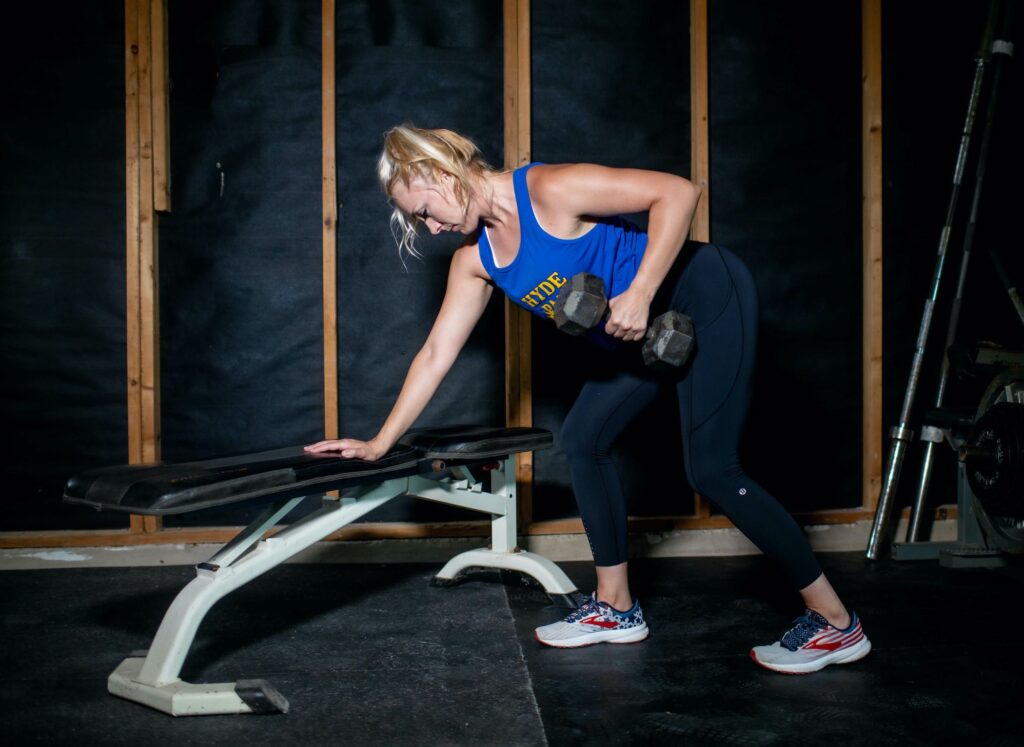

  • 5 steps to keep fitness progress
    5 Steps To Keep Progressing On Your Fitness Right Now
  • Thanksgiving friends at Big Tex Gym
    Thanksgiving Joy + Fitness Momentum (Yes, Both!)
  • Austin personal trainer Kathryn Alexander shares her clients' secret for successful holidays.
    My Clients’ Secret for Successful Holidays
  • Gifts for powerlifters: wrist wraps
    The Best Gifts for Powerlifters and What 1 Gift to Avoid
  • More Semi-Private Personal Training Options!
  • Quick Note: Exercise is Quality of Life

Filed Under: Home gyms, Training

Dumbbell Curl: Muscles Worked (+ Exercises!)

April 30, 2024 by Kathryn Alexander

Dumbbell curl muscles worked, exercises, and tips on how to maximize your biceps growth for bigger and stronger arms.

Dumbbell curls primarily target the muscles at the front of the upper arm, specifically the biceps brachii. However, they also engage several other muscles to stabilize and support the movement. Here are the main muscles worked during dumbbell curls:

  1. Biceps Brachii: This is the primary muscle targeted by dumbbell curls. It’s located on the front of your upper arm and is responsible for flexing the elbow joint, bringing your forearm towards your upper arm.
  2. Brachialis: Located underneath the biceps brachii, the brachialis muscle also plays a significant role in elbow flexion. It helps to add thickness to the upper arm.
  3. Brachioradialis: This muscle runs along the forearm and also aids in elbow flexion. It’s particularly active during hammer curls but is engaged to some extent during standard dumbbell curls as well.
  4. Forearm Muscles (Flexors): Various muscles in the forearm, such as the flexor carpi radialis and flexor carpi ulnaris, assist in stabilizing the wrist and controlling the movement of the dumbbell during curls.
  5. Shoulder Stabilizers: While not the primary focus, the anterior deltoid (front shoulder) and other shoulder stabilizer muscles may also be engaged to some extent to stabilize the shoulder joint and shoulder blades (scapula) during the movement.

Setting the Foundation: Starting Position

The dumbbell curl can be done very strictly, in an effort to make it an isolation exercise. As you become more comfortable and experienced at the dumbbell biceps curl, you can add in some body movement. For now, let’s talk about how to master it at a lighter weight. As bodybuilders say, make light weight feel heavy. 

dumbbell curl muscles worked, demonstrated by Austin personal trainer Kathryn Alexander

First, stand with your feet shoulder-width apart—this offers a sturdy base that supports a full range of motion. The stance is our foundation; it’s what grounds us and preps our entire body for the work ahead. Alternatively, you can sit on the edge of a bench that allows your arms to extend down by your sides. 

Next, let’s talk grip. Hold a pair of dumbbells with your arms straight and palms facing your side. This is your start position. This grip engages the biceps muscles right from the get-go, setting the stage for an efficient curl. Ensure you’re using a weight that allows for maintaining proper form. Later in your lifting career, you can break the rules a little bit.

Lastly, elbow placement is crucial. Keep your elbows tight to the side of your body. Don’t let your elbows pop out to the side of your body or flare out as you initiate movement. If this happens, it’s an indication that the weight is becoming a struggle for you. If you’re at the point where you are wanting to deliberately use swinging, or momentum, you can. But be aware that if your elbows are getting wiggly, and your goal is strict form, you’ll want to drop the weight back down. If you are aiming for biceps isolation, you’ll want to ensure your biceps are doing the work, for the best results. 

dumbbell curl muscles worked. arm exercises for biceps

Executing the Perfect Dumbbell Curl

A traditional bicep curl with dumbbells is typically what we consider a supinated bicep curl. It is probably the most common of the biceps exercises, and for good reason. It’s a great biceps exercise and one I’d like you to master. Step by step directions are below. 

  • stand tall with abs and glutes engaged
  • OR sit on a bench with good posture. No flopping around or lazy sitting
  • squeeze your back to secure your shoulders in place
  • begin with your palms facing your side
  • bend at the elbows and bring the dumbbells in front of you, not moving elbows or shoulders forward or back
  • rotate your wrist so your palms are now facing up toward the ceiling
  • squeeze at the top
  • control the descent

There are variations in wrist position such as with hammer curls or Zottman curls, but the most traditional of curls begin with a neutral grip (meaning palms face each other), and when you supinate as you curl up, you turn your wrists so that it is an underhand grip. There are many right ways to work the biceps, but I just wanted to note that the above directions refer to the most common way. 

Avoiding Common Mistakes On the Dumbbell Biceps Curl

Common mistakes people make when doing the dumbbell biceps curl:

  • Using too much weight: Many believe that heavier weights guarantee bigger biceps, but this often leads to poor form and decreased muscle growth. Use an appropriate amount of weight that isn’t baby weight but allows you to maintain constant tension on the bicep muscle. 
  • Swinging the elbows: Keeping your elbows pinned at your side is crucial. Swinging them forward like you’re in a dance contest takes tension off the biceps brachii muscle, hindering growth. 
  • Losing control at the top of the movement: The temptation to relax at the top can cause you to lose the constant tension needed for muscle growth. Ensure you lower the dumbbells with the same control as lifting them. Don’t just drop them. If you do, you’ll miss all the benefits of the eccentric portion of the life.
  • Ignoring the full range of motion: Skipping parts of the movement means you’re not working the muscle fibers effectively. Make sure you fully extend and flex at the elbow joint for the best results. 

Variations for Continued Growth of the Biceps Muscles

I cannot stress enough the importance of incorporating various dumbbell curl variations into your routine. By targeting the biceps in different ways, we stimulate muscle growth from multiple angles, leading to better results. Let me share with you a few variations for great biceps workouts.

  • Hammer Curls: With a neutral grip, these engage not just the biceps brachii but also the brachialis muscle, contributing to thicker, well-developed upper arms. 
  • Preacher Curls: By isolating the biceps during the preacher curl, you keep constant tension at the top of the movement, which is crucial for muscle fibers recruitment. 
  • Concentration Curls: A great way to hone in on the biceps with a mind-muscle connection that’s hard to beat. Each curl done well forces you to maintain perfect form, maximizing muscle growth.

By varying the stimulus, you can ensure continued growth and progress towards achieving bigger biceps. Each variation offers its unique benefits, from improved grip strength to enhanced focus on either the long head of the biceps or short head of the biceps, ultimately leading to stronger, more muscular arms. 

Wanna branch out and try a dumbbell shoulder workout at home? Here are some of the best exercises.

Cable biceps curls. Austin personal trainer Kathryn Alexander at Hyde Park Gym circa 2017 ish

Incorporating Equipment and Accessories Beyond Dumbbells

Remember, any movement where you deliberately flex at the elbow will involve biceps. Curls are most commonly done with dumbbells and barbells, but there is a world of different equipment to add in. Barbell curls can be done with different bars, such as thick bars or EZ curl bars. You can use dumbbells, kettlebells, center mass bells, which all still rely solely on gravity. 

If you’d really like to vary it up, you can do biceps curls with resistance equipment like cable machines, plate or pin loaded machines, and resistance bands. 

With cable machines, you can maintain constant tension on the biceps muscles, stimulating growth from angles dumbbells alone don’t always. The cable machine is really a game changer for helping you maintain time under tension during biceps work. Resistance bands add a varied resistance curve, providing peak tension at the top of the movement. These can really help you maximize the dumbbell curl muscles worked.

Barbell biceps curls (Kathryn Alexander)

EZ curl bars angled grip reduces stress on the forearm muscles and elbow joint, allowing you to focus more on the bicep muscles. These feel more comfortable to many people too. Over the years of training, I have found that many of my clients prefer an EZ curl bar, either on the cable or as a barbell.  

By integrating these tools, you’ll engage the biceps brachii muscle (and the other dumbbell curl muscles worked) more comprehensively, building not just bigger, but stronger biceps. 

Unleashing Your Arm Potential

Building the full potential of your arms requires a multi-faceted approach, one that goes beyond just curling a pair of dumbbells. Yes, the journey to bigger biceps, stronger forearms, and an you will rely heavily on dumbbell bicep curls, but I encourage you to try other lifts as well. Hammer curls, preacher curls, the Zottman curl, 21’s, etc, all work biceps in different ways, and at slightly different angles.

As you practice these variations, you’ll go from googling dumbbell bicep curls worked to fully understanding how to feel and engage your biceps in many angles and exercises. 

Finally, I want you to work other muscle groups too. It’s fun to get a pump in your biceps, but for optimal arm size and strength, and just bigger arms, you’ll want to work triceps too. You’ll even want to work chest, back, shoulders, and even legs for full body symmetry and development. 

Let Me Help You!

I know this is a lot to think about, when maybe your most pressing question was which muscles the dumbbell bicep curl works! If you need help finding an exercise solution that works for you, I’d be happy to do a free consult and see if we are a good match. If we are, I’ll make a custom program for you, taking into account your goals, schedule, equipment availability, and exercise background. This can be done with online personal training if you are not in central Texas. 

Work With Me!

If you are looking for a personal trainer in Austin, I’d love to talk with you! If you are not in Austin, Round Rock, or central Texas, let’s talk about online training.

Message me here for a free consult about personal training in Austin, Texas, or here for online personal training, and we’ll discuss your goals, background, equipment availability, schedule, and exercise preferences.

Let’s get you strong and healthy! 💪

About the author

Kathryn Alexander is a strength coach and personal trainer in Austin, Texas. She loves hiking, college football, and the feel of a perfectly knurled barbell. Read more about Kathryn here.

  • 5 steps to keep fitness progress
    5 Steps To Keep Progressing On Your Fitness Right Now
  • Thanksgiving friends at Big Tex Gym
    Thanksgiving Joy + Fitness Momentum (Yes, Both!)
  • Austin personal trainer Kathryn Alexander shares her clients' secret for successful holidays.
    My Clients’ Secret for Successful Holidays
  • Gifts for powerlifters: wrist wraps
    The Best Gifts for Powerlifters and What 1 Gift to Avoid
  • More Semi-Private Personal Training Options!
  • Quick Note: Exercise is Quality of Life

Filed Under: Training

Simple Core Workouts at Home: The Best Ab Exercises

April 3, 2024 by Kathryn Alexander

If you are looking to do simple core workouts at home, you are in the right place. I am going to tell you two different core workouts, and explain when to do each one. 

Before we jump into the specific exercises, I want to give you some more background into the difference between core workouts, ab workouts, and which is best for you. 

Simple core workouts at home: best ab exercises from Kathryn Alexander, online personal trainer in Austin

What are the Abdominal Muscles?

The abdominal muscles, also known as the abs, are a group of muscles located in the abdomen or the stomach area. They play a crucial role in providing stability and support to the trunk, facilitating movements such as bending forward, twisting, and maintaining posture. The main abdominal muscles include:

  • Rectus abdominis: This is the most well-known abdominal muscle, commonly referred to as the “six-pack muscles.” It runs vertically down the front of the abdomen and is responsible for flexing the spine, usually in a straight line. 
  • External obliques: These muscles are located on the sides of the abdomen and run diagonally downward. They help with rotation and bending of the trunk.
  • Internal obliques: Situated beneath the external obliques, these muscles also run diagonally but in the opposite direction. They work in conjunction with the external obliques to assist with trunk rotation and bending.
  • Transverse abdominis: This muscle is the deepest of the abdominal muscles and wraps around the abdomen horizontally. It acts like a corset, providing stability and support to the spine and pelvis.

These muscles work together to support the abdominal wall, protect the internal organs, and assist in various movements and activities. Strengthening and conditioning the abdominal muscles can help improve core stability, posture, and overall functional movement.

What Muscles Make Up the Core Muscles?

The abdominal muscles I mentioned above make up the abs, which are on the front of your stomach. Core muscles include most of the muscles in your torso. This means core muscles include all of the abdominal muscles, but also the other muscles in your back and midsection that are in your trunk. 

The core muscles work together to stabilize the spine, pelvis, and trunk, providing a solid foundation for movement and overall stability. While the abdominal muscles are a significant part of the core, other muscles also contribute to its function. In addition to the abdominal muscles listed above, muscles that make up the core include:

  • Multifidus: These small muscles run along the spine and play a crucial role in stabilizing each vertebra, contributing to overall spinal stability.
  • Erector spinae: A group of muscles located along the back of the spine, the erector spinae helps maintain an upright posture and assists in spinal extension and rotation.
  • Quadratus lumborum: Located on either side of the lower back, these muscles help stabilize the pelvis and spine and assist in lateral flexion of the trunk.
  • Pelvic floor muscles: Found at the base of the pelvis, these muscles provide support to the pelvic organs and contribute to core stability and control.
  • Diaphragm: A dome-shaped muscle located beneath the lungs, the diaphragm plays a crucial role in breathing and also contributes to core stability by creating intra-abdominal pressure.

Together, these muscles work in coordination to support the spine, pelvis, and trunk during various movements and activities, providing stability, balance, and protection to the body’s core. Work both ab movements and core movements for optimal ab development and core strength. 

The toe touch, described in "Simple core workouts at home: best ab exercises" from Kathryn Alexander, personal trainer in Austin

What is the Difference Between Ab Work and Core Work? 

As you can see, all abdominal muscles are muscles of the core, but not all core muscles are abs. This means that an ab workout will focus more on crunches, sit ups, some twists, abdominal bracing, and many other forms of spinal flexion. 

Core work includes, in addition to the above, anti-rotation, twisting, and spinal flexion and extension. Remember, core work includes many back muscles.

It is important to do both ab work, and core work. Whether your abs show or not, they are there and it’s smart to train them to be strong. The leaner you get, the more your abs will show (if you work them). 

It is impossible to cleanly separate these muscles and movements though; for example, what people call lower abs often works your whole abdominal wall, and hip flexors. Planks and toros stabilization exercises work your entire core, the superficial rectus abdominis, deep transverse abdominis, and many muscles in the back. Muscles in your core even help stabilize the shoulder blades. 

This is good news though! Like many exercises, we find that when trained well, they really work your entire body in a beneficial way. Training core will help with specific core strength, and whole body strength and stabilization. These simple core workouts at home make it easy to train.

So, let’s get into it. Below I have categorized these sessions into an A session, which is focused on abs, and a B session, which is a whole core session. Try these both for simple core workouts you can do at home. 

A Session: An Ab Workout For Home

This session is 7 exercises. I’ll give more specific details below, but I suggest doing them as a big circuit.

Crunches

  • lay on your back, supporting your head if you choose
  • using your abs, think about bringing your ribs closer to your hip bones
  • this is not a sit-up; it’s a partial range of motion crunch
  • you can do these on the floor or on a stability ball. If you use a stability ball, Swiss ball or BOSU ball, set up with your bellybutton approximately on the top of the ball. This will be challenging but will give you the best ab workout.

Alternating Toe Touch

  • lay on your back with your right leg bent and right foot on the floor
  • bring your outstretched left leg up to touch your left foot with your right hand
  • do all your reps on this side and then repeat on the other side

Toe Touch

  • lay on your back with your legs in the air
  • reach your right arm toward your left toes in a quick crunch motion
  • reach your left arm toward your right toes in a quick crunch motion
  • continue alternating sides

Russian Twist

  • Start in situp position
  • Hold your feet a few inches off the ground
  • Rotate your shoulders to face your left side, then back across the midline to face the right side
  • Keep your chest up and don’t let your low back sink into the floor

V Up

  • from a regular seated position on the ground, hinge back while keeping your back straight
  • this is crucial – no rounding in your low back! 
  • make a “V” shape with your upper body to hips to knees
  • with your hands behind you for balance, extend this “V” as you lean back and extend your legs at the same time
  • without pressing into the ground, return to your start position

Dead Bug

  • lay on your back with arms and legs extended into the air
  • squeeze your abs to press your back into the ground
  • maintain this abdominal squeeze
  • extend your right arm and left leg toward the floor in a controlled manner
  • shorten your range of motion if your low back pops off the ground
  • return to your start position, and repeat with your opposite arm and leg
  • you’ll get it- this one’s a thinker!

Reverse Crunch

  • Lay on your back with both feet up in the air
  • Keep your feet flat, as if you’re balancing a clipboard on them. 
  • Use your abs to curl your hips up, pressing your feet into the air
  • Control the descent back to your starting position
  • Keep your range of motion small!

B Session: Core Workout for Home

Crunch

  • lay on your back, supporting your head if you choose
  • using your abs, think about bringing your ribs closer to your hip bones
  • this is not a sit-up; it’s a partial range of motion crunch

Bird Dog

  • start in 4 point position (hands and knees on ground, knees under hips, hands under shoulders) 
  • control your torso so your back is flat and tight
  • pretend you are balancing red wine on your back and wearing your favorite white cashmere $$$ shirt
  • extend your right arm trying to resist movement in the torso
  • return to start position
  • repeat with all limbs
  • to increase the challenge, do right arm + left leg together, then left arm + right leg at the same time
  • If you wanna get super crazy here, set up like normal, then pick your knees up off the ground just an inch. This is way hard! Let me know if you try this 🙂

Plank

  • If you have uncontrolled high blood pressure, skip this one please!
  • this can be done from hands or elbows
  • maintain a straight body position from your legs through the crown of your head
  • keep your back engaged so your shoulders don’t shift up into your ears, and lift hips you don’t sink toward the floor
  • there are many plank variations, including the high plank position, which is when you do the plank from your hands
  • keep breathing through your nose and think happy thoughts!
  • check out this whole blog post about plank exercises for beginners

Side Plank

  • If you want bonus plank work, you can do side planks. Here, move from your regular plank to your left elbow.
  • You can do these in a straight line from your spine all the way to knees on the ground or feet on the ground.
  • Rotation and repeat from your right elbow. 
  • Another option for planks is to do them from your hands, with arms extended, rather than elbow. 
  • If that’s the case, pop onto your left hand, then right hand, then back to regular planks. Experiment to see which works best for you. 

Which plank is better? Neither, both! On hands, with arms extended, since more of your bodyweight is in your feet, it’ll be probably easier to hold longer. It might feel like more arm work though. If your wrists feel comfortable with it, try it. Also try the elbow/forearm version, since it’s a little more intense on your core. 

Plank Knee to Elbow

  • start in plank position from hands
  • maintain a straight neutral position from your legs through the crown of your head
  • keep your back engaged so your shoulders don’t shift up into your ears, and you don’t sink toward the floor
  • bring your right knee toward your right elbow 
  • return right foot to floor and perform the same movement on your left side
  • your knee probably won’t touch your elbow, and that’s ok. Don’t crunch to reach it
The plank knee to elbow, described in "Simple core workouts at home: best ab exercises" from Kathryn Alexander, online personal trainer

Bicycle Crunches

  • Lay on your back with your hands by your ears and knees bent at 90 degree
  • As you extend your right leg, reach your right shoulder toward your left knee
  • Alternate, so as you extend your left leg, your right knee bends
  • Crunch to bring your left shoulder toward your right knee
  • Continue alternating, bending your legs as if you’re riding a bike, and doing an oblique (side) crunch on the same rhythm

How To Implement These Simple Core Exercises At Home

I suggest picking one of these sessions to do at a time. Let’s say you’re going to do the A session, which is more abdominal focused. Do the exercises in order, about 10 each. Then move immediately to the next exercise. Rest as you need, but push through a little burn. You got this 🙂

At the end of the first round, you will have done 10 each of crunches, alternating toe touches toe touches, Russian twists, V ups, dead bugs, and reverse crunches. Whew! Rest and breathe for about 2 minutes. And then do it again! 

You do have options though: if this is your first time doing ab work in a while, you can do one round and see how your abs respond the next day. Aim for proper form and learning the exercises, rather than crushing yourself or rushing through the exercises. Then the next time you do the session, do 2 or 3 rounds. 

As you go, you might even time the work sets. Don’t time it for a goal of how fast you can go, but time it for observational purposes. This will help when you are planning out your session, and it will help with motivation to do another round. 

Related: here’s a great leg and glute home workout. Check it out!

Most times, big rounds like this look intimidating, but actually only take a few minutes. After you have rested a couple minutes, you can often do another set, even if it seems really challenging. 

Apply this same rep scheme and strategy to the B session, the core session. When you are ready, you can alternate these sessions, doing the A session one day, and the B session the next. 

As you go, challenge yourself to do more rounds, more reps, or just continue focusing on controlled quality reps. Learning and practicing optimal and proper form is crucial.

Need a bonus ab exercise? This one requires a band and is tough!

This list is 10 of the best ab exercises. Many of these will be familiar.

Who Are these Core Workouts For?

Everybody!!! Whether you are a freelance writer in Austin or a business executive in New York City or a surfer in California, building and abdominal strength and a stronger core will help with your everyday life. Abdominal work can improve posture, improve and prevent lower back pain, and make your daily life more pleasant. Add these into your workout routines once or twice a week and see how it benefits the rest of your training!

Some of these might seem like beginner moves, and they are accessible to beginners! But they are not only for beginners. As you get more advanced in your lifting, you will find you are able to do the exercises better by recruiting more muscle fibers. Basically, you’ll do a better job. And, these simple core workouts at home are equipment free and easy to practice.

For this reason, I suggest you keep working the basics. You can include many exercises. Don’t get caught up in which are the best ab exercises or the best core-strength exercises. As long as you can do them pain free, most any exercise can be a great exercise when done well. 

Try These Simple Core Workouts At Home

And let me know how it goes! I’d love to hear! 

If you are in the market for some specific exercise guidance (for abs or the rest of your body!) planned for you, let’s do a free consult to talk about training. If you are looking for an Austin personal trainer, I am here! But, I have a fantastic online personal training system, so I’d be happy to work with you wherever you are. 

Message me here if you are interested. 

Happy ab & core training!!


About the author

Kathryn Alexander is a strength coach and personal trainer in Austin, Texas. She loves hiking, college football, and the feel of a perfectly knurled barbell. Read more about Kathryn here.
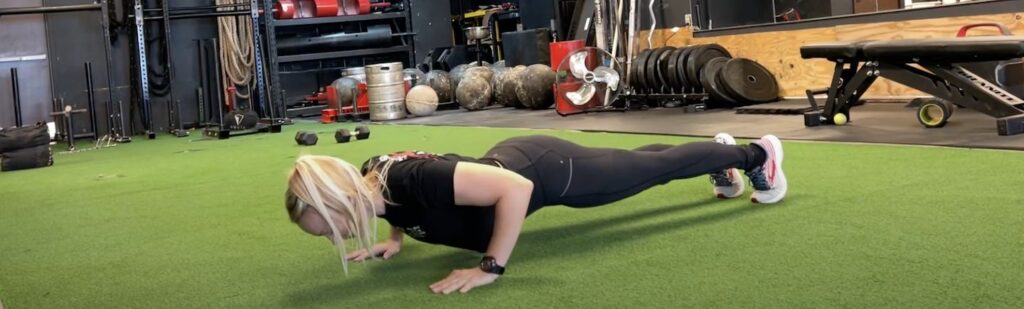

  • 5 steps to keep fitness progress
    5 Steps To Keep Progressing On Your Fitness Right Now
  • Thanksgiving friends at Big Tex Gym
    Thanksgiving Joy + Fitness Momentum (Yes, Both!)
  • Austin personal trainer Kathryn Alexander shares her clients' secret for successful holidays.
    My Clients’ Secret for Successful Holidays
  • Gifts for powerlifters: wrist wraps
    The Best Gifts for Powerlifters and What 1 Gift to Avoid
  • More Semi-Private Personal Training Options!
  • Quick Note: Exercise is Quality of Life

Filed Under: Training

Triceps Exercises for Women: Sculpt Your Arms

March 8, 2024 by Kathryn Alexander

Tricep exercises for women, from personal trainer Kathryn Alexander.

Triceps exercises for women are important for arm strength, shape and tone. Who doesn’t want sculpted upper arms, for dresses, tank tops and swimsuits? Strong triceps and arms however, go beyond just aesthetics. Triceps strength is crucial for upper body strength, which leads to increased physical ability. 

I want all my clients to feel strong and confident in their activities of daily living, and a bit beyond. I want you to be able to put your suitcase up in the luggage compartment on a plane with ease. I want you to be able to move your couch, pick up your kids, and even your big and wiggly pets.   

Kathryn Alexander, personal trainer in Austin, shares the best tricep exercises for women

Why Focus on Triceps

Strong triceps are not just about the back of your arms; they’re part of having a balanced upper body musculature. The triceps brachii plays a critical role not just in the aesthetic appeal of our upper arms but in functional movements too. Strengthening them helps not just in looking good but in boosting our body’s upper-arm strength, enhancing performance in various sports, and even in daily tasks.

From pushing open a heavy door to excelling in your overhead press, the triceps support a range of motions at the shoulder and elbow joints. This is why focusing on your triceps workout, integrating exercises like close grip presses, triceps pressdowns, and skull crushers, is important.

I’ve heard women refer to the back of the upper arm as bat wings or teacher arms. I really want you to love your arms and only joke about your arms affectionately!

Trust me: strength training your triceps is the key to toned and strong arms, increases in strength and ability, and balanced musculature for a healthy body. Read on for how to incorporate triceps exercises in your weight training for fantastic results!

Anatomy of the Triceps

The triceps brachii is a three-headed muscle located at the back of your upper arm. The triceps are responsible for extension of the elbow joint, and make up the majority of your upper arm mass. Consisting of the long head, medial head, and lateral head, this muscle group is pivotal in almost every motion involving your arms.

The long head is on the back of your arm, playing a crucial role not just in arm strength but also in shoulder joint stability. The medial head is deeper than the long and lateral heads. Meanwhile, the lateral head is on the back and side of your arm, as the name lateral implies, and gives your arms that sculpted appearance every time you extend your elbow. 

Best Tricep Exercises

Any movement that includes elbow extension will work the triceps. Triceps can be worked in compound movements, which move several joints at once, or in isolation movements.  Compound movements include close grip bench presses, and triceps dips. Isolation exercises don’t truly isolate one muscle group, but they typically act in a very small focused movement on one joint. Examples of these are triceps kickbacks and cable press downs. 

Compound exercises engage multiple muscle groups and provide the best way to build overall strength, while isolation exercises focus on the triceps for more targeted muscle activity. I recommend compound and isolation exercises for a full triceps workout. 

In no particular order, here are some of the best triceps exercises you can do. Some of these require a set of dumbbells, a cable system, or body weight. You can do many of these with a few pieces of home gym essentials. If you don’t have all this equipment and need a custom program, contact me here to discuss options!

Note: this is a list of exercises that will help you build your triceps, and at the end of this post I’ll include how-to’s for many of these.

  1. Close Grip Bench Press: This compound exercise not only targets the triceps but also engages the chest and shoulders. By keeping your hands closer together, you shift more of the workload to the triceps.
  2. Tricep Dips: These can be performed on parallel bars or a bench and are excellent for targeting the lower part of the triceps muscle. These are not a beginner exercise, so build a base of strength before working triceps dips.
  3. Skull Crushers (Lying Triceps Extensions): Done with a barbell, dumbbells, or an EZ curl bar, skull crushers focus on the triceps without much assistance from other muscle groups. This is a great exercise! One of my favorites. Sounds way scarier than it is! 
  4. Overhead Tricep Extensions: This exercise can be done standing or seated, with dumbbells or a cable machine. It specifically targets the long head of the triceps.
  5. Diamond Push-Ups: By forming a diamond shape with your index fingers and thumbs, this variation of push-ups puts more emphasis on the triceps. Close grip pushups with your elbows tucked by your side similar work triceps. Here’s a full tutorial on pushups and pushup variations.
  6. Tricep Kickbacks: When done with proper form, a tricep kickback isolates the triceps muscles effectively. It’s important to keep your upper arm stationary and only move your forearm. Here’s a whole blog post where I break down triceps kickbacks.
  7. Cable Pressdowns: A cable machine offers constant resistance throughout the movement, providing a different stimulus for muscle growth.
  8. Resistance Band Pressdowns: These are similar to cable pushdowns but use a resistance band, which can be more joint-friendly and offers resistance through the entire range of motion.
  9. JM Press: A hybrid between a close grip bench press and a skull crusher, it’s a favorite among powerlifters for building triceps strength.
  10. Triangle Push-Ups: Another push-up variation that targets the triceps by placing the hands in a triangle position under the chest.
  11. Dumbbell Tricep Extension: This can be performed with one arm or two, and it’s a great way to focus on the triceps without the support of other muscles.
  12. Dumbbell Floor Press: This is a variation of the bench press that limits the range of motion, thereby increasing the triceps activation.
  13. Bodyweight Triceps Extensions: Using a TRX or rings, or even a sturdy table, you can perform bodyweight triceps extensions to work the muscle in a different way. These are really challenging! Fun but challenging!
  14. Triceps Dips on Rings or TRX: The instability of the rings or TRX straps makes this exercise more challenging, engaging more stabilizing muscles. Remember I said dips are tough? These are the next level. Work up to these!

How To Incorporate These Triceps Exercises for Women

In your training session, I recommend doing your big, compound movements first. This means that after your warm up, you’ll do squats, deadlifts, bench press, heavy rows, etc. I like putting arm work at the end of the session, so that your arms are fresh for the aforementioned exercises. There is a time and place for most everything, but typically you won’t want to fatigue your triceps before bench pressing, or overhead pressing, for example. 

The exception is that if you are a recovering leg-aholic and haven’t done regular upper body workouts. I am kinda kidding, but the truth is that if your program has been imbalanced because you have focused so much on leg and glute goals, then you might want to put in a whole upper body session.

If that’s the case, I again suggest you do your compound movements like barbell work, rows, presses, etc. Then add in focused triceps work at the end. These exercises can be modified to fit any fitness level and can be made more challenging by increasing the weight, adding resistance, or changing the tempo of the exercise.

Generally speaking, try picking a compound exercise like the close grip bench press, and then two isolation exercises like cable press downs and skull crushers. These are general recommendations for these tricep exercises for women, but they also apply to men. Again, the differences in individual’s training will be based on goals and preferences, not gender.

Need some outdoor time with this gorgeous weather lately? Try these favorite outdoor recreation spots in Austin.

How Are These Tricep Exercises for Women Different than For Men?

The truth is, they are not very different. Like, at all. Tricep exercises for women will be the same exercises for men. The difference is based on individual’s goals, so my recommendation for incorporating these exercises is similar for men and women, actually. We all have the same origins and attachments of the muscle groups, so these exercises will work for triceps growth and strength for everybody.

However, some of these are more challenging and will require more strength. Additionally, men tend to have more testosterone, and a greater ability to put on muscle size. 

Women can absolutely do all of these exercises! If some fo these are tough for you right now, focus on increasing strength into the others. Building strength and learning exercises is a long process. It will happen, slowly but surely.

Do you need some gym motivational quotes? I got you. Here are my favorites. I tried to narrow it down but 53 was the best I could do.

How To Do These Triceps Exercises

The above list is an overview of the many triceps exercises available for you to do, but below I’ll give a few more how-to videos on specific exercises. If I’ve missed one you’d like me to cover more, please let me know!

Dumbbell Overhead Triceps Extensions

Dumbell overhead triceps extensions.

Triceps Kickbacks with Dumbbells

How to do the triceps kickbacks: a full tutorial.

triceps kickbacks with dumbbells

Cable Triceps Overhead Extensions

Cable triceps overhead extensions

Cambered Bar Triceps Press

Cambered bar tricep press

Skullcrushers with a Barbell

Skullcrushers with an EZ curl bar

Skullcrushers with Dumbbells

Skull crushers with dumbbells: a great option for home triceps work for women

Close Grip Bench Press

Close grip bench presses for triceps

Floor Press with Dumbbells

Floor press with dumbbells, for chest and tricep work

Add These Tricep Exercises into Your Workout

In conclusion, tricep exercises for women are a crucial component of a balanced workout routine. By incorporating a variety of exercises that target the triceps brachii from different angles, women can achieve strong, toned arms and improve their upper-body strength. I wish you the best tricep workouts of your life! 🙂 Remember, slowly but surely. Surely! 

This deserves more than a side note, but read this article on how to work your biceps, which comprise the rest of your upper arm musculature. If you need more pressing advice, here are the 5 best chest exercises.

Keep at it! Let me know if I can give you specific advice, of if you’d like to do a free consult to see if we are a good fit to work together toward your physique goals.

Tricep Exercises for Women

About the author

Kathryn Alexander is a strength coach and personal trainer in Austin, Texas. She loves hiking, college football, and the feel of a perfectly knurled barbell. Read more about Kathryn here.
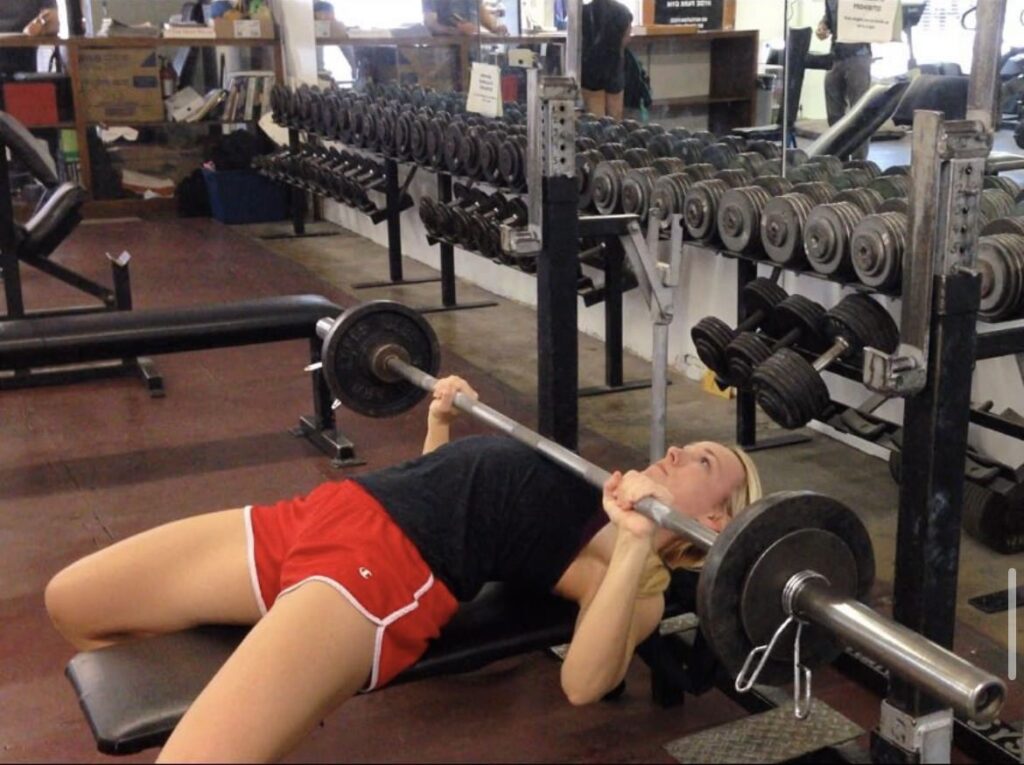

  • 5 steps to keep fitness progress
    5 Steps To Keep Progressing On Your Fitness Right Now
  • Thanksgiving friends at Big Tex Gym
    Thanksgiving Joy + Fitness Momentum (Yes, Both!)
  • Austin personal trainer Kathryn Alexander shares her clients' secret for successful holidays.
    My Clients’ Secret for Successful Holidays
  • Gifts for powerlifters: wrist wraps
    The Best Gifts for Powerlifters and What 1 Gift to Avoid
  • More Semi-Private Personal Training Options!
  • Quick Note: Exercise is Quality of Life

Filed Under: Training

Alternatives to Sit Ups: Try These Exercises Instead! 

March 1, 2024 by Kathryn Alexander

Alternatives to sit ups: try these other ab and core exercises instead of sit ups to round out your ab work and see results!

Creating a strong and stable core is a fundamental part of any fitness or strength journey. While traditional sit-ups have been a staple exercise for targeting the rectus abdominis—the muscle group that makes up those six-pack abs—they may not be the best option for everyone, especially considering the stress they can put on the lower back and hip flexors. 

alternatives to sit ups

Why Should I Do Sit Ups?

Sit ups are often part of physical selection tests for the military, FBI, and other employers. They are easy to administer, don’t require equipment, and easy to count. If you are training for one of these tests, then you must absolutely do sit ups!

I just had a client pass the FBI physical fitness test this February and I am so proud of her! You can bet we did lots of sit ups and pushups. Sit ups also work the rectus abdominis really well! If you are lean enough to see your abs, sit ups can help maintain that definition. 

Why Should I Look For Alternatives To Sit Ups?

Full range of motion sit ups can be tough on the spine, particularly in the lumbar and sacral regions. The repetitive flexion in the lower spine area can be rough on the discs, and can cause discomfort.

Will a full sit-up absolutely hurt you if you do a set? Probably not. But, doing high volume sit ups is probably not going to take you to your goal. I rely on the following exercises more than sit ups for all my clients. I only add sit ups in if they are training to pass a test, like my client I mentioned above. 

Also, sit ups don’t necessarily work the entire core. They primarily work your anterior core muscles, but your core is made up of many muscle groups, including the rectus abdominis, transverse abdominis, external obliques, and erector spinae. Sit ups don’t work all of those. 

By working your entire core, you will strengthen the deep core muscles for stronger, more stable torso. This translates into back health and functional movement. 

crunches: alternatives to sit-ups, demonstrated by Kathryn Alexander, personal trainer in Austin

The good news is that there are plenty of alternative exercises that can provide a comprehensive core workout while minimizing potential risks. Here are some effective exercises to consider incorporating into your routine.

Kinds of Ab Exercises

You can consider ab and core exercises to be rotation, anti-rotation, or flexion. Flexion exercises are probably the ones you are most familiar with. These include sit ups and crunches and primarily use your rectus abdominis, that 6 pack muscle. 

Rotation exercises include twists like Russian twists and windshield wipers. These work your obliques as well as the rest of your core musculature. Anti rotation exercises require you to resist movement by maintaining a strong core. Examples of these are planks, side planks, and Pallof presses.

Finally, there are exercises that work on maintaining stability of the torso while working hip flexors. People often describe these as working the lower abdominal muscles. Example of these are leg raises, dead bug and other Pilates-like movements. 

So, while there definitely are benefits of sit-ups, check out the best sit-up alternatives and incorporate some of those in your ab workout.

Flexion Exercises

Abdominal Crunches

Crunches are a better alternative to full sit-ups for many because they reduce the strain on the lower back and focus on the upper abdomen. Lie on your back with your knees bent and feet flat on the floor. Curl your upper half towards your knees, keeping your lower back on the floor.

You can use an Ab Mat or a towel wrapped around your back to give you greater range of motion. Be forewarned, these burn. 🙂

Crunches with an ab mat.
Crunches on flat ground

Decline Bench Crunches

These are so fun for some reason! Hook your feet under the stability bar and lean back. From here, just sit up. You can do these like a lever, with your back straight, or curl up, rounding your spine as you go. If these are easy and you are ready for a progression, you can hold a weight plate at your chest, or with arms extended toward the ceiling. 

Swiss Ball Exercises

Using a Swiss ball can enhance the engagement of the entire core due to the instability it provides. Exercises like Swiss ball crunches, pikes, and rolls-outs are great for targeting different angles of the abdominal wall and outer sides of your abdomen. These are fantastic alternatives to sit ups.

Bosu Ball Exercises

You can use the Bosu ball like the Swiss ball. Start with your belly button approximately on the middle of the Bosu ball. From here, you can do crunches, side oblique crunches, or leg lifts. 

Incorporating a variety of sit-up alternatives like these into your workout routine can lead to better results by working the muscles of the anterior core, lower abdomen, and entire core from different angles and in a more functional and controlled manner.

Not only are these exercises effective alternatives to the traditional sit-up, but they also help in reducing the undue stress on the lumbar spine and promote a stable core throughout the entire movement.

Rotation/Rotary Core Exercises

Russian Twists

Russian twists are a dynamic exercise that targets the entire core, especially the transverse abdominis, external obliques, and the muscles along your spine, including the erector spinae. To do this, sit on the ground with your knees bent, lean back slightly to engage your core, and twist your upper body from side to side.

For added resistance, hold a medicine ball or weight plate. Make sure to keep a straight line from your shoulder blades down to your hips to maintain proper form.

Windshield Wipers

Windshield wipers are an advanced exercise that not only targets your entire core but also challenges your lower back and enhances spinal stability. Lie on your back and extend your arms to form a “T” shape for stability. Raise your legs and rotate them from side to side in a controlled manner, mimicking the motion of windshield wipers.

Mountain Climbers

Mountain climbers are a functional movement that works the entire body, with a focus on the core, particularly the transverse abdominis and rectus abdominis. These are hard to define as just rotation, as they really involve some anti rotation and flexion as well. Start in an extended push-up position and alternate bringing your knees towards your chest in a quick, controlled motion. If these are hard, you can do one leg at a time instead of continuous movement of both legs at once.

Bear Crawls

I love me some bear crawls! These can be like high-school-football-punishment tough, or precise deliberate work you can do on your living room floor. You get to pick!

To do the more precise, less punishing version, set up on all fours on the floor. Keep an active, neutral, flat back. Pick your knees up off the ground about an inch and travel forward, taking very small (2 inch) steps. Reverse and travel backwards.

Here’s a whole blog post I wrote about how to do bear crawls. Below are the videos of both versions of the bear crawl.

Hip Flexion and Core Stability

Leg Raises

Leg raises are a great way to strengthen your lower abdomen and hip flexors while promoting core stability. Lie flat on your back with your legs straight, and lift them up to a 90-degree angle before slowly lowering them back down. For a more advanced version, try hanging leg raises from a pull-up bar.

Dead Bug

The dead bug is an excellent exercise for improving overall core strength and stability. Dead bugs are absolutely one of my favorite exercises, for myself and my clients. Some people think they are elementary, but they are fundamental! If you can do these well, continue to do so and they will pay you back. 

Start by lying on your back with your arms extended towards the ceiling and your knees bent at a 90-degree angle. Lower your right arm and left leg towards the ground, keeping your lower back pressed against the floor. Return to the starting position and repeat on the opposite side.

Dead bugs for core work

Flutter Kicks

This exercise is a simple yet effective way to engage the lower abs and hip flexors. Lie on your back with your legs extended and lifted a few inches off the ground. Kick your legs up and down in a fluttering motion, making sure to keep your lower back pressed to the ground.

Anti-Rotation Ab Exercises

Planks

Planks are great anti-rotation exercises. They require your whole body to work together to resist gravity. These can be done from hands or elbows. Facing the ground, maintain a straight body position from your legs through the crown of your head. Keep your back engaged so your shoulders don’t shift up into your ears, and you don’t let your low back sink toward the floor.

Note that if you have uncontrolled high blood pressure, these can be dangerous. If that’s the case, please skip these and side planks. 

Plank from elbows
Plank from hands

Side Plank

Side planks are a phenomenal unilateral exercise that strengthens the obliques, lower back, and deep core muscles. Lie on your side with your feet stacked and your right elbow directly under your shoulder. Lift your hips off the ground and form a straight line from your head to your feet. Hold the position, then switch to the left side.

Pallof Press

The Pallof press is an anti-rotation exercise that develops core strength and enhances anti-lateral and anti-rotational stability, which is crucial for the lumbar spine. Stand in a feet shoulder-width position with the cable machine or resistance band at chest height. Press the handle or band straight out in front of your chest and hold, resisting the pull of the band or cable. Pallof presses don’t look like much, but these are sneaky hard.

The Pallof press can be done with resistance bands or from a cable stack. This is Kathryn Alexander (Austin personal trainer) at Hyde Park Gym in Austin, Texas circa 2013.

Renegade Row

This compound exercise not only works the upper back, shoulders, and arms but also provides an intense core workout, especially targeting the rectus abdominus and overall core strength. Assume a plank position with a dumbbell in each hand. Row one dumbbell up towards your rib cage while balancing on the other arm, then alternate. Beyond just being an alternative to sit ups, these work your entire body. You’ll even feel these in your glutes! 

If your lower back needs strengthening, try these machines for lower back work. This is especially important if you work a desk job and sit much of the day.

ab and core exercises beyond sit ups

Try These Alternatives to Sit Ups For Yourself

As you continue on your fitness journey to six pack abs, remember that a strong core is about more than just flat abs; it’s the foundation for a functional movement, a stable core, and a healthy, active lifestyle. When your whole core is strong, your back will feel great, you’ll love your posture, and generally feel good. 

Need more? Here are the 10 best ab exercises, in my opinion, and my current favorite ab exercise.

What is your favorite core exercise? Let me know! And try these exercises in your core workouts, and let me know how you like them! 

Do You Need 1:1 Personal Training?

If you do, there are many options at different budgets. Read about all the ways I can help you on your fitness journey here.


About the author

Kathryn Alexander is a strength coach and personal trainer in Austin, Texas. She loves hiking, college football, and the feel of a perfectly knurled barbell. Read more about Kathryn here.

  • 5 steps to keep fitness progress
    5 Steps To Keep Progressing On Your Fitness Right Now
  • Thanksgiving friends at Big Tex Gym
    Thanksgiving Joy + Fitness Momentum (Yes, Both!)
  • Austin personal trainer Kathryn Alexander shares her clients' secret for successful holidays.
    My Clients’ Secret for Successful Holidays
  • Gifts for powerlifters: wrist wraps
    The Best Gifts for Powerlifters and What 1 Gift to Avoid
  • More Semi-Private Personal Training Options!
  • Quick Note: Exercise is Quality of Life

Filed Under: Training

The Best Exercise Machines for Lower Back Strength

September 7, 2023 by Kathryn Alexander

The best exercise machines for lower back strength will build muscular strength and endurance, encourage good posture, and help prevent lower back pain. Fortunately, these machines and exercises are widely available at gyms, so you can build a resilient and strong back for life.

People have many misconceptions about back exercises and what actually causes back pain. Sadly, in an effort to avoid back pain, many people choose to avoid the best exercises to build back strength, which is actually what will protect the back from pain and dysfunction.

To optimally work the lower back, you’ll want to use some of the best exercise equipment and some bodyweight exercises. Let’s cover these in detail so you can build your back strength the right way.

exercise machines for lower back - back extension
The back extension – one of the best exercise machines for lower back strength

Misconceptions About Working the Lower Back Muscles

Often, people treat any sensation in the low back with concern, avoiding all feeling in the low back at all costs. The truth is, your lower back is made of muscle just like any other muscle group. Among the lower back muscles are the erector spinea, the muscles that run vertically along your spine.

Train Your Lower Back Like You Do Other Muscles

When you train your erector spinae, they will feel fatigue and muscular soreness, just like you would feel your biceps if you did curls, or your abs if you did crunches. 

You need to train your lower back muscles like you train your other muscles. You should feel flexion and extension through your movements, and that is ok! 

Back Injury Does Not Equal Chronic Low Back Pain

People also think having a “bad back” is a curse for life. Sure, back issues are no joke and the possibility of chronic back pain is terrifying. But, the back can heal. Depending on the severity, a doctor, physical therapist and/or personal trainer can help develop a training plan or exercise routine that can take steps toward healing the back.

For instance, herniated discs are extremely common in the area of the lumbar spine. This is not a lifetime sentence! Herniated discs can heal, on their own without surgery.

The Harvard Medical School reports that 90% of pain related to a herniated disc will dissipate on its own within 6 months.

Remember, the body wants to heal itself. Blood flow and movement are good and facilitate healing, both in healthy and (most) injured situations. Obviously, please don’t go do back extensions in an emergent situation.

Your Back Is Not Fragile!

I repeat: your back is not fragile! The spine is made of 33 individual vertebra because it is MADE to articulate. It’s function is to move, and to support your movement! Of course, I hope your workout routine includes the right exercises for you and your goals, and I hope you employ proper form especially as you gain strength. 

A strong back can withstand load, impact and movement. Please do not be scared of moving your back!

Why is Lower Back Work Important?

The last misconception that people have, and often the most dangerous one, is akin to thinking that running is enough training for the lower body. Many people skip building strength in their legs because they get on the elliptical trainer, recumbent bike, or cover ground outside. 

That is not enough leg work! The lower body needs strength training, like the upper body. Strength training is not aerobic exercise.

Similarly, people often think that the elliptical machines, step machines, stationary bikes or other full body type cardio exercises are good enough back work. They simply do not build the kind of back strength and core strength that you need. 

Aerobic exercise is not a bad form of exercise; in fact, cardio has many documented and undeniable health benefits. It’s just a different form of exercise. For best results, back strength is worked by resistance training. 

Just like you work other muscle groups, you need to directly work lower back.

You might have heard that sit ups can be tough on the lower back. It’s true. Here are some alternatives to sit ups.

What Exercise Machines Are Good for the Lower Back? 

The best lower back machine works your posterior chain, meaning your glutes, hamstrings and back. Some of the best lower back machines are: 

  • back extension machine
  • reverse hyperextension
  • good morning machine by Matt Wenning 
  • Back Attack by Sorinex

All of these allow extension at the hip and coordination with the erector spinae, glutes, and hamstrings. 

How to Use Back Extension Machine

The back extension machine is mostly commonly seen as the 45 degree back extension. It’s the lesser intimidating one to start with. I actually love the horizontal back extension so much, I bought one for my garage. Both are fantastic exercise machines for your lower back, glutes and hamstrings! 

  • To perform the back extension, adjust the machine so that your hips can fold over the edge of the padding. 
  • Get situated on the machine with your heels snug against the pad behind your ankles. This is important. 
  • From here, hinge at the hip joint instead of bending in your back. 
  • Hinge at the hip joint to fold down, feeling the stretch in your hamstrings. 
  • Squeeze your glutes to return to your start position. 
  • To increase the challenge, you can hold a weight at your chest. If you aren’t there yet, just cross your arms across your chest. 

Heres a whole tutorial on the back extension.

How to do the Reverse Hyperextension

The reverse hyperextension is one of my favorite machines ever. It was invented by Louie Simmons of Westside Barbell. The reverse hyperextension is starting to make it’s way to commercial gyms, but it’s not as common yet. 

Here is how to use the reverse hyperextension: 

  • Step up and situation yourself on top of the machine.
  • Scoot back to where the end of the machine is between your hip bones and pubic bone. If you are familiar with your snatch grip, this is where the bar contacts your body. 
  • From here, hold the handles for stability and let your lower body hang off the machine at 90 degrees.
  • Keeping your quads on (knees straight), squeeze your glutes to make a big sweeping movement with your legs.
  • Return your legs to your start position. 
  • If you are doing this with weights, you can use a bit of momentum. You’ll still want to press your legs hard against the rope and squeeze your glutes at the top of the movement. 
  • Repeat for as many reps as is your goal.
Austin personal trainer Kathryn Alexander on reverse hyperextension - exercise machine for lower back
reverse hyperextension – maybe the best exercise machine for lower back!
1 leg reverse hyperextension machine for lower back
1 leg reverse hyperextension rep. You can do both legs together or one at a time.

How to Use The Good Morning Machine by Matt Wenning

  • Stand on the platform with your thighs making solid contact with the pad in front of you. 
  • Stand with your heels firmly against the pad behind your feet.
  • Set your upper back against the pad, and brace your torso so you are ready to receive the weight.
  • Unhook the weight pins with both arms.
  • Hinge forward, being sure to perform the movement as a hinge.

How to Use The Back Attack Machine by Sorinex

  • Stand on the platform with your thighs making solid contact with the pad in front of you. 
  • Stand with your ankles snug against the rollers behind them.
  • Set your upper back against the pad, and brace your torso so you are ready to receive the weight.
  • Unhook the weight pins with both arms.
  • Hinge forward, being sure to perform the movement as a hinge, like the good morning machine.

How to Add These Machines Into Your Training

Try these when you are warmed up and feeling good. I suggest doing your big lifts like squats and deadlifts before these. These will be accessory work to do before you finish your training session. 

Begin with an easy set of 8-12 repetitions. If it’s super light, increase the weight slightly. Continue doing this until you reach a good working weight. Use these lighter sets to feel and understand the exercise. 

What Other Back Exercises Should You Do?

Of course, begin by trying these exercise machines for lower back training. For best health and strength results, you’ll want to work your whole back, including your upper back as well. This is an entirely separate post (to be written!) but the synopsis is that a full back session, not just lower back, will include exercises for the latissimus dorsi, rhomboids, trapezius muscle group, rotator cuff, and rear deltoids.

The best exercises and machines for these muscle groups are: 

  • Lat pulldowns
  • Pullups or assisted pull-up machine work
  • Barbell rows
  • Rope pulls (face pulls)
  • Seated rows
  • Dumbbell rows

Try These Machines 

Add these machines into your training program, and let me know how they go! I love hearing about your training, and what you enjoy, what works, what doesn’t. Give me all the feedback! 

If I can help you plan your training or help with your fitness, please let me know! 

Related Reading

Best exercises for rear delts

How to address lower back pain from squats

It’s not a machine per se, but learn about cable squats muscles worked, and how to include them in your leg day.


About the author

Kathryn Alexander is a strength coach and personal trainer in Austin, Texas. She loves hiking, college football, and the feel of a perfectly knurled barbell. Read more about Kathryn here.
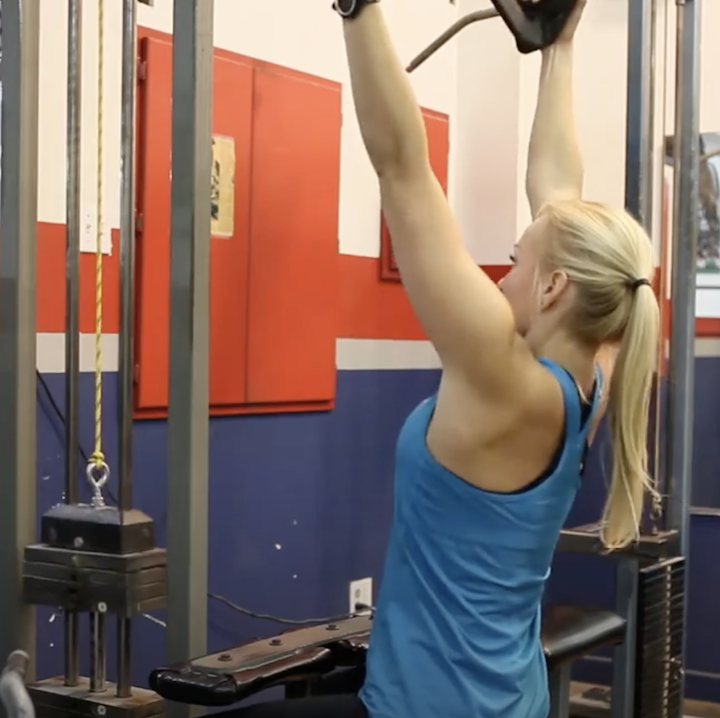

  • 5 steps to keep fitness progress
    5 Steps To Keep Progressing On Your Fitness Right Now
  • Thanksgiving friends at Big Tex Gym
    Thanksgiving Joy + Fitness Momentum (Yes, Both!)
  • Austin personal trainer Kathryn Alexander shares her clients' secret for successful holidays.
    My Clients’ Secret for Successful Holidays
  • Gifts for powerlifters: wrist wraps
    The Best Gifts for Powerlifters and What 1 Gift to Avoid
  • More Semi-Private Personal Training Options!
  • Quick Note: Exercise is Quality of Life

Filed Under: Training

Best Rear Delt Exercises: Strengthening Your Shoulders

August 23, 2023 by Kathryn Alexander

It is so important to work rear delts (deltoids), because they, like back muscles, often get overlooked for muscles that we can see. Our biceps are easy to spot, our pecs are fun to work, and everyone can agree about putting more ab work on the program. The best rear delt exercises can supplement all of those movements!

best rest delt exercises

But rear delts? We have to go out of our way to prioritize them. Pushups, dumbbell presses and bench presses work anterior delts more than rear delts. If we push more than we pull, we can create an imbalance that sets shoulders up for injury, or at least, decreased performance. 

Rear delts are crucial to work, though, because they are an essential part of the upper body and play a important role in shoulder mobility and stability. Neglecting the rear deltoids can lead to muscle imbalances and potential injuries.

Incorporating rear deltoid exercises into your workout routine can help improve posture and prevent shoulder injuries. In this article, we will discuss some of the best exercises that target the rear deltoid muscles. 

These exercises can be done with or without equipment and should be incorporate by all, from beginners to advanced lifters. By including these exercises in your routine, you can ensure that your rear deltoids are getting the attention they deserve, leading to a stronger and healthier upper body.

Need a balanced program, which includes rear delts, and other often neglected muscle groups? Check out my training programs which you can jump into now.

Understanding Rear Delt Muscles

The rear deltoids, or posterior deltoids, are one of the three muscle groups that make up the deltoids, or shoulders. The rear deltoids are located on the back of the shoulder and are responsible for shoulder extension and external rotation. In other words, they move the arm backwards and rotate the arm out.

Facepulls, one of the best rear delt exercises

Importance of Rear Delt Exercises

Rear delts are highly involved in most upper body pulling, which is an essential movement for various daily activities such as pulling a door, carrying a backpack, or even throwing a ball.

Neglecting the rear delts can lead to muscle imbalances, which can cause shoulder pain and increase the risk of injuries. Including rear delt exercises in your workout routine is essential for maintaining good posture, reducing the risk of injuries, and improving your overall athletic performance.

Benefits of Rear Delt Exercises

Strengthening the rear delts can improve your posture, reduce the risk of injuries, and increase performance in other exercises such as the bench press, overhead press, and pull-ups.

Incorporating rear delt exercises into your workout routine can help you achieve a well-rounded and balanced physique. It can also enhance your overall athletic performance and

Improved Posture

Rear delt exercises can help improve your posture by strengthening the muscles that support your shoulder blades. When these muscles are weak, your shoulders can round forward, leading to a hunched posture. By strengthening the rear deltoids, you can help pull your shoulders back and improve your posture.

Reduced Risk of Shoulder Injuries

Strong rear deltoids can help reduce the risk of shoulder injuries. When the rear deltoids are weak, the front of the shoulder can become overworked, leading to imbalances and potential injuries. By strengthening the rear deltoids, you can help balance out your shoulder muscles and reduce the risk of injuries.

Enhanced Athletic Performance

Rear delt exercises can also enhance athletic performance. The posterior deltoid is involved in many movements that are important for sports, such as throwing and pulling. By strengthening this muscle, you can improve your performance in these activities.

In the picture below, I am setting up for a long archery shot. You can see the importance of rear delts in the ability to draw the bow and hold while I aim.

rear delt exercises for archery performance
Rear delt strength is important in archery.

Balanced Physique

Finally, rear delt exercises can help create a balanced physique. Many people focus on the front of their bodies, neglecting the back. By including rear delt exercises in your workout routine, you can help create a balanced physique and avoid muscle imbalances.

Equipment Needed for Rear Delt Exercises

Rear delt exercises are important to do well and not haphazardly. Because of this, you won’t be piling on the weight or trying to go heavier heavier, every day. For this reason, you can use no equipment, light dumbbells, and cable and resistance bands. 

Rear Delt Exercises with Resistance Bands

Resistance bands are a versatile and affordable option for rear delt exercises. They come in many resistance levels and can be used for a variety of exercises, including face pulls and reverse flyes. Resistance bands are also portable, making them a great option for those who want to exercise at home or on the go. Take those babies on that vacation and get some rear delt work in on the beach or in the hotel!

Rear Delt Exercises Dumbbells

Dumbbells are another popular option for rear delt exercises. They allow for a greater range of motion and can be used for a variety of exercises, including bent-over lateral raises and reverse flyes. Dumbbells obviously come in various weights, making them a great option for all fitness levels.

best rear delt exercises
a bent over raise, a rear delt exercise with dumbbells

Cable Machines for Rear Delt Work

Cable machines are usually big and expensive, so they are more often in public gyms than home or garage gyms. Cables allow for a wide range of exercises, including face pulls and cable reverse flyes. They provide constant resistance throughout the movement, making them an effective option for targeting the rear delts.

Ancore Training System

The Ancore training system is a home cable system that is lightweight, portable, and costs a fraction of the cost of a weight plate cable system. I honestly can’t even explain how the Ancore works, but I know it works.

I have one, and I love it so much. I attach my Ancore to my squat rack, but they can be wall mounted, or mounted to anything you can get creative with. It’s a great option for pulling exercises, including rear delt exercises.

Ancore training system in my garage gym

Rear Delt Fly Machine

The rear delt fly machine is a specialized piece of equipment designed specifically for targeting the rear delts. It provides a controlled movement and allows for a greater range of motion than other equipment. There are a few variations of these. They are less common in gyms because they take up a big footprint for a very small precise movement. If you can find them, however, I encourage you to try them. 

Overall, there are a variety of equipment options available for rear delt exercises. It is important to choose equipment that is suitable for your fitness level and goals.

Best Rear Delt Exercises

Here are a few exercises to put into your routine to incorporate rear delts.

All of the following videos are of me demonstrating, and posted on my YouTube channel.

Dumbbell Rear Delt Fly

The dumbbell rear delt fly is a classic exercise that targets the rear delts, upper back, and traps. To perform this exercise: 

  • stand with your feet shoulder-width apart, holding a pair of dumbbells at arm’s length in front of your thighs
  • bend your knees slightly and hinge forward at the hips, keeping your back flat like a tabletop and your core engaged
  • lift the dumbbells out to the sides, squeezing your shoulder blades together at the top of the movement
  • lower the weights back down to the starting position and repeat for as many reps as you’d like

Seated Rear Delt Machine

The seated rear delt machine is a great option for those who prefer using machines over free weights. To perform this exercise: 

  • sit at the machine with your chest against the pad and your arms extended out in front of you
  • grasp the handles and pull them back towards your chest, squeezing your shoulder blades together at the top of the movement
  • in a controlled manner, return the handles back to the starting position and repeat for your desired number of reps

Bent Over Reverse Fly (Rear Delt Raise)

The bent over reverse fly, or rear delt raise, targets the rear delts and upper back. To perform this exercise:

  • stand with your feet shoulder-width apart, holding a pair of dumbbells at arm’s length in front of your thighs
  • bend your knees slightly and hinge forward at the hips, keeping your back flat and your core engaged
  • lift the dumbbells out to the sides, keeping your elbows slightly bent and squeezing your shoulder blades together at the top of the movement
  • lower the weights back down to the starting position and repeat for as many reps as you’d like

Bent Over Rear Delt Row

The bent over rear delt row is very similar to the bent over reverse fly, except you’ll bend at the elbow, like you are a puppet. Your elbow will extend toward the ceiling, but not your forearm. To perform the rear delt row:

  • stand with your feet shoulder-width apart, holding a pair of dumbbells at arm’s length in front of your thighs
  • bend your knees slightly and hinge forward at the hips, keeping your back flat and your core engaged
  • lift the dumbbells out to the sides, with your palms facing behind you
  • Bend at the elbows and squeeze your shoulder blades together at the top of the movement
  • lower the weights back down to the starting position and repeat for as many reps as you’d like

Reverse Pec Deck Fly

The reverse pec deck fly is a machine-based exercise that targets the rear delts and upper back. To perform this exercise:

  • sit at the machine with your chest against the pad and your arms extended out to the sides
  • grasp the handles and squeeze your shoulder blades together as you bring your arms back towards your chest
  • slowly return the rope back to the starting position and repeat for your desired number of reps

Y

The Y is a fantastic exercise that can be done with or without weight. If you do use weight, use a very light weight, like 1-3 pounds to begin. You can do this by holding a hinge position yourself, or using a bench to stabilize you. To perform the Y:

  • hinge at the hips with back neutral and straight
  • extend arms with palms facing behind you
  • bend at the elbows as if you are elbowing the ceiling
  • rotate your arms up into a “touchdown” position
  • extend your arms into a “Y shape
  • bend at the elbows, rotate arms, and straight elbows to return to the start position

Face Pull

Face pulls are an excellent exercise for targeting the rear delts, upper back, and rotator cuff muscles. These instructions are for a cable face pull, but you can do this with a securely fastened band too. To perform face pulls:

  • with arms extended, step away from the cable so there is constant tension (the plates aren’t resting on the weight stack)
  • stand in a secure stance. I prefer staggered feet
  • stand with your shoulders over your hips and not leaning way backwards
  • with elbows out to your sides, bend at the elbows to pull your hands toward your face
  • think about squeezing the back of your shoulders
  • extend your shoulders to your start position and repeat for as many reps as you’d like

Band Pullaparts

Band pullaparts are a great rear delt exercise that you can do anywhere with a band. These are so good for optimal posture. To perform this exercise: 

  • stand tall
  • extend your arms in front of you, gripping a light band
  • keep elbows straight but not locked as you press your arms straight around your side
  • I prefer palms down but you can experiment with different hand positions
  • squeeze your shoulders behind you as you make a big wide sweep with your arms
  • press until the band touches your chest
  • control the return to your start position and repeat

Example Rear Delt and Shoulder Workout

Here is a sample shoulder session that includes all angles of the shoulder: 

A1. standing dumbbell overhead press, 3×10, as a warm up

A2. Y, 2×10

B. barbell press, 5×8, progressively heavier. Rest in between!

C1. bent over rear delt raise, 4×10

C2. band pullaparts, 4×10

D1. facepull, 3×15

D2. bent over rear delt row, 3×15

Safety Tips for Rear Delt Exercises

When performing rear delt exercises, it is important to keep safety in mind to avoid injury. Shoulders aren’t delicate, but you want to be smart when working them. Here are some safety tips to keep in mind:

  • Always warm up properly before beginning any exercise routine. This will increase blood flow to the muscles and prevent injury. It also helps performance.
  • Start with lighter weights and gradually increase the weight as your strength improves.
  • Keep your movements slow and controlled. Jerky or fast movements can put unnecessary strain on your muscles and increase the risk of injury.
  • Use good form when performing exercises. Sloppy form can put unnecessary strain on your muscles and increase the risk of injury. If you are unsure of the proper form, seek guidance from a certified personal trainer. Or ask me!
  • Listen to your body. If you experience pain or discomfort during an exercise, stop immediately and consult with a doctor or physical therapist.

By following these safety tips, you can help to prevent injury and get the most out of your rear delt exercises.

Common Mistakes While Doing Rear Delt Exercises

When performing rear delt exercises, it’s important to ensure proper form to avoid injury and maximize results. Here are some common mistakes to avoid:

Using Too Much Weight

One of the most common mistakes people make when doing rear delt exercises is using weights that are too heavy. This can put unnecessary strain on the shoulders and lead to injury. Choose a weight that you can do well with good form.

Poor Posture

Another mistake people make is having poor posture during rear delt exercises. This can put additional strain on the neck and upper back, leading to discomfort and pain. It’s important to maintain proper posture throughout the exercise, keeping the chest up and shoulders back.

Not Isolating the Rear Delts

Many people make the mistake of not isolating the rear deltoids during exercises. Instead, they end up using their traps and other muscles to compensate. To properly target the rear delts, it’s important to focus on squeezing the shoulder blades together and keeping the elbows slightly bent.

Neglecting the Warm-Up

Lastly, some people neglect to include a proper warm-up when doing rear delt exercises. This can increase the risk of injury and decreased performance. It’s important to perform a few warm-up exercises before starting and to stretch the muscles afterwards to prevent injury and promote recovery.

By avoiding these common mistakes, you can ensure that you’re getting the most out of your rear delt exercises and avoid any unnecessary injuries or discomfort.

Progress Tracking for Rear Delt Exercises

Tracking progress is important any time you are training. This is easy to do when we are talking about powerlifting, or increasing the weights on specific exercises such as the squat or deadlift. Rear delt progress can be a bit harder to see, so here are some ways to track the progress of rear delt exercises:

  • Increasing reps as you increase your muscle endurance
  • Increasing the weight when you can do 10+ with impeccable form
  • Measurements
  • Fit of your clothing. If you don’t want to measure, just notice that your shirts, dresses and coats might be a bit snugger around your shoulders. Yay! This is good! 

Train Your Rear Delts to See For Yourself

Overall, understanding the importance of rear delt work can make your training and your strength much better. Find and practice the best rear delt exercises to see this progress for yourself! If you have questions, remember you can always email me, or contact me about working together.

Best of luck with your training!

Related Reading:

Best exercise machines for lower back strength

Best Dumbbell Back Exercises


About the author

Kathryn Alexander is a strength coach and personal trainer in Austin, Texas. She loves hiking, college football, and the feel of a perfectly knurled barbell. Read more about Kathryn here.
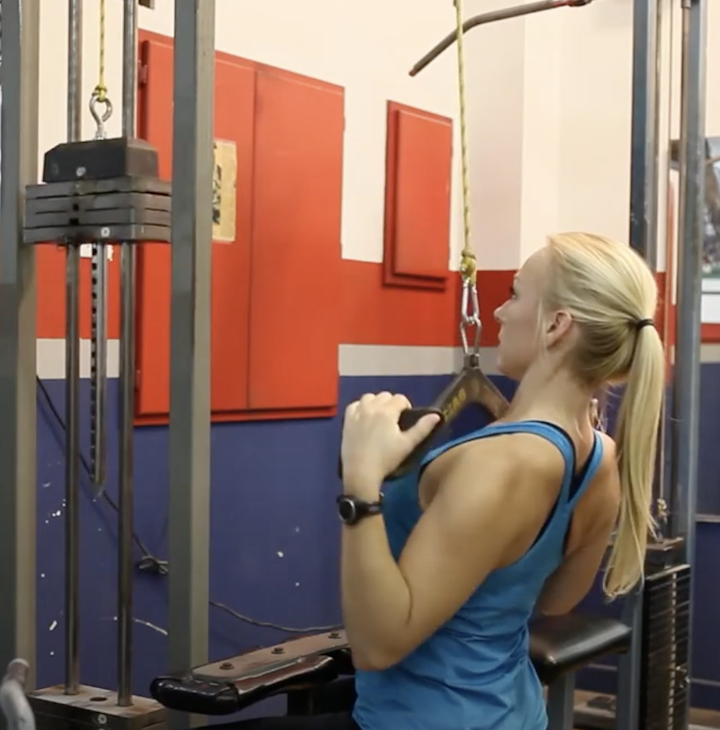

  • 5 steps to keep fitness progress
    5 Steps To Keep Progressing On Your Fitness Right Now
  • Thanksgiving friends at Big Tex Gym
    Thanksgiving Joy + Fitness Momentum (Yes, Both!)
  • Austin personal trainer Kathryn Alexander shares her clients' secret for successful holidays.
    My Clients’ Secret for Successful Holidays
  • Gifts for powerlifters: wrist wraps
    The Best Gifts for Powerlifters and What 1 Gift to Avoid
  • More Semi-Private Personal Training Options!
  • Quick Note: Exercise is Quality of Life

Filed Under: Training

Push Pull Squat Workout

August 14, 2023 by Kathryn Alexander

The push pull squat workout is a great framework for getting a complete training session. Generally I’d like you to be on a program that is well planned out, instead of randomly throwing workouts together. Following a program ensures you are getting a comprehensive training experience with no holes or gaps. 

A good program will hit on all aspects of pushes, pulls and squats, and this framework can even be applied to the random one-off workouts you do outside of a program. 

Sometimes life makes it hard to follow a program and you just have to get a workout. Maybe you are out of town, on vacation or for whatever reason, away from the equipment that you need. In this case, whip out the push pull squat to create a solid workout.

push pull squat workout

Why Push Pull Squat

One time in college, a gym friend of mine told me he had the perfect training split. I couldn’t wait to hear! We were gym nerds, going through that phase where we obsessed about finding the perfect split, the best new way to workout, etc.

“Ok, tell me!” I asked, excited about this mind-blowing new plan.

He said, “It’s chest on Monday, back & bi’s on Tuesday, shoulders and triceps on Wednesday, abs on Thursday, and chest and bi’s again on Friday!” He was giddy with excitement. 

“But what about legs?!” I asked him. It was the ultimate 20 year old boy program, with a huge gap in there where legs should be. Can you imagine not training half your body?? That’s a whole ‘nother blog post though!

He was hitting the upper body push and pull well, but skipping the entire squat.

How to Plan Your Training Split

There are several ways to plan a training program. How you decide what exercises to do in what day/training session is called a training split, by the way. A few of the common ways are by:

  • Body parts, like my friend described above
  • Anatomical location, such as anterior day, posterior day
  • Planes of movement, such as upper body push, upper body pull, etc.

I think of push pull squat as planes of movement. In my mind, a classic push is the bench press or pushup. Dumbbell presses are a great example too. The pull is a barbell or dumbbell row.
However, those examples are just in the horizontal plane of motion. A pull is also a pull-up or a lat pulldown. A push is also a dumbbell overhead press or military press.

A squat is always a good choice, so taken literally, so squats for push pull squat. You could also do a lunge, any variation. You could even deadlift, which is typically considered a lower body pull. However, the point is to get a compound lower body exercise so the deadlift works great. 

I wrote a whole blog post about training splits and which is best for you, including how many days a week to train. If you are interested in that, read here: all the details on training splits.

pullups in push pull squat workout

Examples of Push Pull Squat Workout

If you are doing a one-off workout, I would suggest picking a push, a pull, a squat, and making those your whole workout. For example, I love bench press, pull-ups, and squats, so I would do all of those to make one complete session. It would look like this: 

Warm up: light goblet squat superset with standing dumbbell press

  • Squats: warm up sets of about 5 reps, then 3 sets of 5 with 2 reps in reserve
  • Bench press: same as squats. Light warm ups, then 3 x 5
  • Pullups: 3 sets of as many as I can

Example of push pull squat with just one dumbbell: 

  • Walking lunges, 4 x 10
  • Pushups, 4 x 10
  • 1 arm dumbbell row, 4 x 10

Another example, in a full gym: 

  • Lat pulldowns, 4 x 12
  • Seated dumbbell shoulder press, 4×12
  • Front squat, 4×5

How to Implement Push Pull Squat

If you’d like to build out a whole program using the push pull squat method, a great way to do this is to build 3 full body sessions per week. These will look similar to the above examples, but will complement each other. An example of this is: 

Push Pull Squat 3 days a week

Monday

  • Military press
  • Back squat
  • Lat pulldowns or pull-ups

Wednesday

  • Bench press
  • Front squat
  • 1 arm dumbbell row

Friday

  • Dumbbell bench press
  • Lunge or deadlift
  • Pullover
squats by Kathryn Alexander, personal trainer Austin

Another way to implement push pull squat into a program is to have a dedicated push day, a dedicated pull day, and a dedicated squat day. This is a bit more of a bodybuilder style program, instead of the full body athleticism of the prior program. An example of this week is: 

Push Pull Squat Workout, each on dedicated day

Squat

  • Back squat
  • Walking lunges or BSS
  • Any leg accessories such as leg press, extensions or curls
  • I like to finish a session like this with reverse hyperextensions or back extensions, even though they don’t fit the criteria of “squat”

Push

  • Bench press
  • Seated dumbbell shoulder press
  • Lateral raise
  • Skullcrushers
  • Pushups finisher

Pull

  • Lat pulldowns
  • Pullups
  • 1 arm dumbbell row
  • Biceps curls
  • Pullover
pushups for push pull squat workout

Your Turn!

How will you implement these in your training? I love hearing how people plan their training! Let me know! Also let me know if you have questions. Message me or comment – I have time for you! Happy training 🙂


About the author

Kathryn Alexander is a strength coach and personal trainer in Austin, Texas. She loves hiking, college football, and the feel of a perfectly knurled barbell. Read more about Kathryn here.
Filed Under: Training

  • Go to page 1
  • Go to page 2
  • Go to page 3
  • Go to Next Page »

Primary Sidebar

Kathryn Alexander, personal trainer in Austin
Hi, and welcome here! -Kathryn

Did you know I make custom training plans? Tell Me More!

Recent Posts

  • 5 Steps To Keep Progressing On Your Fitness Right Now
  • Thanksgiving Joy + Fitness Momentum (Yes, Both!)
  • My Clients’ Secret for Successful Holidays
  • The Best Gifts for Powerlifters and What 1 Gift to Avoid
  • More Semi-Private Personal Training Options!

Footer

Follow

  • Email
  • Instagram
  • YouTube

Affiliate disclaimer

As an Amazon Associate I earn from qualifying purchases.

Newsletter sign up

  • Home
  • About Kathryn Alexander
  • Blog
  • Success Stories
  • Training Programs
  • Start Today

Copyright © 2025 · Genesis Sample on Genesis Framework · WordPress · Log in

  • Featured In
  • Privacy Policy
  • Resources
  • Online Personal Training
  • Personal Training
  • Training Programs