• Skip to primary navigation
  • Skip to main content
  • Skip to primary sidebar
  • Skip to footer
Alexander Training personal trainer Austin Texas

Alexander Training - personal training in Austin, Texas

Personal training in Austin, Texas and customized strength programs in Austin, Texas.

  • Home
  • About Kathryn Alexander
  • Blog
  • Success Stories
  • Training Programs
  • Personal Training

Training

The Best Exercise Machines for Lower Back Strength

September 7, 2023 by Kathryn Alexander

The best exercise machines for lower back strength will build muscular strength and endurance, encourage good posture, and help prevent lower back pain. Fortunately, these machines and exercises are widely available at gyms, so you can build a resilient and strong back for life.

People have many misconceptions about back exercises and what actually causes back pain. Sadly, in an effort to avoid back pain, many people choose to avoid the best exercises to build back strength, which is actually what will protect the back from pain and dysfunction.

To optimally work the lower back, you’ll want to use some of the best exercise equipment and some bodyweight exercises. Let’s cover these in detail so you can build your back strength the right way.

exercise machines for lower back - back extension
The back extension – one of the best exercise machines for lower back strength

Misconceptions About Working the Lower Back Muscles

Often, people treat any sensation in the low back with concern, avoiding all feeling in the low back at all costs. The truth is, your lower back is made of muscle just like any other muscle group. Among the lower back muscles are the erector spinea, the muscles that run vertically along your spine.

Train Your Lower Back Like You Do Other Muscles

When you train your erector spinae, they will feel fatigue and muscular soreness, just like you would feel your biceps if you did curls, or your abs if you did crunches. 

You need to train your lower back muscles like you train your other muscles. You should feel flexion and extension through your movements, and that is ok! 

Back Injury Does Not Equal Chronic Low Back Pain

People also think having a “bad back” is a curse for life. Sure, back issues are no joke and the possibility of chronic back pain is terrifying. But, the back can heal. Depending on the severity, a doctor, physical therapist and/or personal trainer can help develop a training plan or exercise routine that can take steps toward healing the back.

For instance, herniated discs are extremely common in the area of the lumbar spine. This is not a lifetime sentence! Herniated discs can heal, on their own without surgery.

The Harvard Medical School reports that 90% of pain related to a herniated disc will dissipate on its own within 6 months.

Remember, the body wants to heal itself. Blood flow and movement are good and facilitate healing, both in healthy and (most) injured situations. Obviously, please don’t go do back extensions in an emergent situation.

Your Back Is Not Fragile!

I repeat: your back is not fragile! The spine is made of 33 individual vertebra because it is MADE to articulate. It’s function is to move, and to support your movement! Of course, I hope your workout routine includes the right exercises for you and your goals, and I hope you employ proper form especially as you gain strength. 

A strong back can withstand load, impact and movement. Please do not be scared of moving your back!

Why is Lower Back Work Important?

The last misconception that people have, and often the most dangerous one, is akin to thinking that running is enough training for the lower body. Many people skip building strength in their legs because they get on the elliptical trainer, recumbent bike, or cover ground outside. 

That is not enough leg work! The lower body needs strength training, like the upper body. Strength training is not aerobic exercise.

Similarly, people often think that the elliptical machines, step machines, stationary bikes or other full body type cardio exercises are good enough back work. They simply do not build the kind of back strength and core strength that you need. 

Aerobic exercise is not a bad form of exercise; in fact, cardio has many documented and undeniable health benefits. It’s just a different form of exercise. For best results, back strength is worked by resistance training. 

Just like you work other muscle groups, you need to directly work lower back.

You might have heard that sit ups can be tough on the lower back. It’s true. Here are some alternatives to sit ups.

What Exercise Machines Are Good for the Lower Back? 

The best lower back machine works your posterior chain, meaning your glutes, hamstrings and back. Some of the best lower back machines are: 

  • back extension machine
  • reverse hyperextension
  • good morning machine by Matt Wenning 
  • Back Attack by Sorinex

All of these allow extension at the hip and coordination with the erector spinae, glutes, and hamstrings. 

How to Use Back Extension Machine

The back extension machine is mostly commonly seen as the 45 degree back extension. It’s the lesser intimidating one to start with. I actually love the horizontal back extension so much, I bought one for my garage. Both are fantastic exercise machines for your lower back, glutes and hamstrings! 

  • To perform the back extension, adjust the machine so that your hips can fold over the edge of the padding. 
  • Get situated on the machine with your heels snug against the pad behind your ankles. This is important. 
  • From here, hinge at the hip joint instead of bending in your back. 
  • Hinge at the hip joint to fold down, feeling the stretch in your hamstrings. 
  • Squeeze your glutes to return to your start position. 
  • To increase the challenge, you can hold a weight at your chest. If you aren’t there yet, just cross your arms across your chest. 

Heres a whole tutorial on the back extension.

How to do the Reverse Hyperextension

The reverse hyperextension is one of my favorite machines ever. It was invented by Louie Simmons of Westside Barbell. The reverse hyperextension is starting to make it’s way to commercial gyms, but it’s not as common yet. 

Here is how to use the reverse hyperextension: 

  • Step up and situation yourself on top of the machine.
  • Scoot back to where the end of the machine is between your hip bones and pubic bone. If you are familiar with your snatch grip, this is where the bar contacts your body. 
  • From here, hold the handles for stability and let your lower body hang off the machine at 90 degrees.
  • Keeping your quads on (knees straight), squeeze your glutes to make a big sweeping movement with your legs.
  • Return your legs to your start position. 
  • If you are doing this with weights, you can use a bit of momentum. You’ll still want to press your legs hard against the rope and squeeze your glutes at the top of the movement. 
  • Repeat for as many reps as is your goal.
Austin personal trainer Kathryn Alexander on reverse hyperextension - exercise machine for lower back
reverse hyperextension – maybe the best exercise machine for lower back!
1 leg reverse hyperextension machine for lower back
1 leg reverse hyperextension rep. You can do both legs together or one at a time.

How to Use The Good Morning Machine by Matt Wenning

  • Stand on the platform with your thighs making solid contact with the pad in front of you. 
  • Stand with your heels firmly against the pad behind your feet.
  • Set your upper back against the pad, and brace your torso so you are ready to receive the weight.
  • Unhook the weight pins with both arms.
  • Hinge forward, being sure to perform the movement as a hinge.

How to Use The Back Attack Machine by Sorinex

  • Stand on the platform with your thighs making solid contact with the pad in front of you. 
  • Stand with your ankles snug against the rollers behind them.
  • Set your upper back against the pad, and brace your torso so you are ready to receive the weight.
  • Unhook the weight pins with both arms.
  • Hinge forward, being sure to perform the movement as a hinge, like the good morning machine.

How to Add These Machines Into Your Training

Try these when you are warmed up and feeling good. I suggest doing your big lifts like squats and deadlifts before these. These will be accessory work to do before you finish your training session. 

Begin with an easy set of 8-12 repetitions. If it’s super light, increase the weight slightly. Continue doing this until you reach a good working weight. Use these lighter sets to feel and understand the exercise. 

What Other Back Exercises Should You Do?

Of course, begin by trying these exercise machines for lower back training. For best health and strength results, you’ll want to work your whole back, including your upper back as well. This is an entirely separate post (to be written!) but the synopsis is that a full back session, not just lower back, will include exercises for the latissimus dorsi, rhomboids, trapezius muscle group, rotator cuff, and rear deltoids.

The best exercises and machines for these muscle groups are: 

  • Lat pulldowns
  • Pullups or assisted pull-up machine work
  • Barbell rows
  • Rope pulls (face pulls)
  • Seated rows
  • Dumbbell rows

Try These Machines 

Add these machines into your training program, and let me know how they go! I love hearing about your training, and what you enjoy, what works, what doesn’t. Give me all the feedback! 

If I can help you plan your training or help with your fitness, please let me know! 

Related Reading

Best exercises for rear delts

How to address lower back pain from squats

It’s not a machine per se, but learn about cable squats muscles worked, and how to include them in your leg day.


About the author

Kathryn Alexander is a strength coach and personal trainer in Austin, Texas. She loves hiking, college football, and the feel of a perfectly knurled barbell. Read more about Kathryn here.


  • walking lunges for deadlift for lower body strength.
    The Best Lower Body Muscular Strength Exercises
  • deadlift barbell vs trap bar
    Deadlift Barbell vs Trap Bar: Which Is Better for Strength, Muscle, and Safer Pulling?
  • Things to do in Austin in April (2026)
    Things to Do in Austin in April (2026)
  • Client results and testimonials for trainer Kathryn Alexander
    Love Notes, Volume 5. Q1, 2026
  • Best garage gym fan. Drum fan in my garage gym. I love this one because it's easily portable.
    Best Garage Gym Fans 2026
  • things to do outside in Austin. Food truck park near Barton Springs
    Things to Do Outside in Austin

Filed Under: Training

Best Rear Delt Exercises: Strengthening Your Shoulders

August 23, 2023 by Kathryn Alexander

It is so important to work rear delts (deltoids), because they, like back muscles, often get overlooked for muscles that we can see. Our biceps are easy to spot, our pecs are fun to work, and everyone can agree about putting more ab work on the program. The best rear delt exercises can supplement all of those movements!

best rest delt exercises

But rear delts? We have to go out of our way to prioritize them. Pushups, dumbbell presses and bench presses work anterior delts more than rear delts. If we push more than we pull, we can create an imbalance that sets shoulders up for injury, or at least, decreased performance. 

Rear delts are crucial to work, though, because they are an essential part of the upper body and play a important role in shoulder mobility and stability. Neglecting the rear deltoids can lead to muscle imbalances and potential injuries.

Incorporating rear deltoid exercises into your workout routine can help improve posture and prevent shoulder injuries. In this article, we will discuss some of the best exercises that target the rear deltoid muscles. 

These exercises can be done with or without equipment and should be incorporate by all, from beginners to advanced lifters. By including these exercises in your routine, you can ensure that your rear deltoids are getting the attention they deserve, leading to a stronger and healthier upper body.

Need a balanced program, which includes rear delts, and other often neglected muscle groups? Check out my training programs which you can jump into now.

Understanding Rear Delt Muscles

The rear deltoids, or posterior deltoids, are one of the three muscle groups that make up the deltoids, or shoulders. The rear deltoids are located on the back of the shoulder and are responsible for shoulder extension and external rotation. In other words, they move the arm backwards and rotate the arm out.

Facepulls, one of the best rear delt exercises

Importance of Rear Delt Exercises

Rear delts are highly involved in most upper body pulling, which is an essential movement for various daily activities such as pulling a door, carrying a backpack, or even throwing a ball.

Neglecting the rear delts can lead to muscle imbalances, which can cause shoulder pain and increase the risk of injuries. Including rear delt exercises in your workout routine is essential for maintaining good posture, reducing the risk of injuries, and improving your overall athletic performance.

Benefits of Rear Delt Exercises

Strengthening the rear delts can improve your posture, reduce the risk of injuries, and increase performance in other exercises such as the bench press, overhead press, and pull-ups.

Incorporating rear delt exercises into your workout routine can help you achieve a well-rounded and balanced physique. It can also enhance your overall athletic performance and

Improved Posture

Rear delt exercises can help improve your posture by strengthening the muscles that support your shoulder blades. When these muscles are weak, your shoulders can round forward, leading to a hunched posture. By strengthening the rear deltoids, you can help pull your shoulders back and improve your posture.

Reduced Risk of Shoulder Injuries

Strong rear deltoids can help reduce the risk of shoulder injuries. When the rear deltoids are weak, the front of the shoulder can become overworked, leading to imbalances and potential injuries. By strengthening the rear deltoids, you can help balance out your shoulder muscles and reduce the risk of injuries.

Enhanced Athletic Performance

Rear delt exercises can also enhance athletic performance. The posterior deltoid is involved in many movements that are important for sports, such as throwing and pulling. By strengthening this muscle, you can improve your performance in these activities.

In the picture below, I am setting up for a long archery shot. You can see the importance of rear delts in the ability to draw the bow and hold while I aim.

rear delt exercises for archery performance
Rear delt strength is important in archery.

Balanced Physique

Finally, rear delt exercises can help create a balanced physique. Many people focus on the front of their bodies, neglecting the back. By including rear delt exercises in your workout routine, you can help create a balanced physique and avoid muscle imbalances.

Equipment Needed for Rear Delt Exercises

Rear delt exercises are important to do well and not haphazardly. Because of this, you won’t be piling on the weight or trying to go heavier heavier, every day. For this reason, you can use no equipment, light dumbbells, and cable and resistance bands. 

Rear Delt Exercises with Resistance Bands

Resistance bands are a versatile and affordable option for rear delt exercises. They come in many resistance levels and can be used for a variety of exercises, including face pulls and reverse flyes. Resistance bands are also portable, making them a great option for those who want to exercise at home or on the go. Take those babies on that vacation and get some rear delt work in on the beach or in the hotel!

Rear Delt Exercises Dumbbells

Dumbbells are another popular option for rear delt exercises. They allow for a greater range of motion and can be used for a variety of exercises, including bent-over lateral raises and reverse flyes. Dumbbells obviously come in various weights, making them a great option for all fitness levels.

best rear delt exercises
a bent over raise, a rear delt exercise with dumbbells

Cable Machines for Rear Delt Work

Cable machines are usually big and expensive, so they are more often in public gyms than home or garage gyms. Cables allow for a wide range of exercises, including face pulls and cable reverse flyes. They provide constant resistance throughout the movement, making them an effective option for targeting the rear delts.

Ancore Training System

The Ancore training system is a home cable system that is lightweight, portable, and costs a fraction of the cost of a weight plate cable system. I honestly can’t even explain how the Ancore works, but I know it works.

I have one, and I love it so much. I attach my Ancore to my squat rack, but they can be wall mounted, or mounted to anything you can get creative with. It’s a great option for pulling exercises, including rear delt exercises.

Ancore training system in my garage gym

Rear Delt Fly Machine

The rear delt fly machine is a specialized piece of equipment designed specifically for targeting the rear delts. It provides a controlled movement and allows for a greater range of motion than other equipment. There are a few variations of these. They are less common in gyms because they take up a big footprint for a very small precise movement. If you can find them, however, I encourage you to try them. 

Overall, there are a variety of equipment options available for rear delt exercises. It is important to choose equipment that is suitable for your fitness level and goals.

Best Rear Delt Exercises

Here are a few exercises to put into your routine to incorporate rear delts.

All of the following videos are of me demonstrating, and posted on my YouTube channel.

Dumbbell Rear Delt Fly

The dumbbell rear delt fly is a classic exercise that targets the rear delts, upper back, and traps. To perform this exercise: 

  • stand with your feet shoulder-width apart, holding a pair of dumbbells at arm’s length in front of your thighs
  • bend your knees slightly and hinge forward at the hips, keeping your back flat like a tabletop and your core engaged
  • lift the dumbbells out to the sides, squeezing your shoulder blades together at the top of the movement
  • lower the weights back down to the starting position and repeat for as many reps as you’d like

Seated Rear Delt Machine

The seated rear delt machine is a great option for those who prefer using machines over free weights. To perform this exercise: 

  • sit at the machine with your chest against the pad and your arms extended out in front of you
  • grasp the handles and pull them back towards your chest, squeezing your shoulder blades together at the top of the movement
  • in a controlled manner, return the handles back to the starting position and repeat for your desired number of reps

Bent Over Reverse Fly (Rear Delt Raise)

The bent over reverse fly, or rear delt raise, targets the rear delts and upper back. To perform this exercise:

  • stand with your feet shoulder-width apart, holding a pair of dumbbells at arm’s length in front of your thighs
  • bend your knees slightly and hinge forward at the hips, keeping your back flat and your core engaged
  • lift the dumbbells out to the sides, keeping your elbows slightly bent and squeezing your shoulder blades together at the top of the movement
  • lower the weights back down to the starting position and repeat for as many reps as you’d like

Bent Over Rear Delt Row

The bent over rear delt row is very similar to the bent over reverse fly, except you’ll bend at the elbow, like you are a puppet. Your elbow will extend toward the ceiling, but not your forearm. To perform the rear delt row:

  • stand with your feet shoulder-width apart, holding a pair of dumbbells at arm’s length in front of your thighs
  • bend your knees slightly and hinge forward at the hips, keeping your back flat and your core engaged
  • lift the dumbbells out to the sides, with your palms facing behind you
  • Bend at the elbows and squeeze your shoulder blades together at the top of the movement
  • lower the weights back down to the starting position and repeat for as many reps as you’d like

Reverse Pec Deck Fly

The reverse pec deck fly is a machine-based exercise that targets the rear delts and upper back. To perform this exercise:

  • sit at the machine with your chest against the pad and your arms extended out to the sides
  • grasp the handles and squeeze your shoulder blades together as you bring your arms back towards your chest
  • slowly return the rope back to the starting position and repeat for your desired number of reps

Y

The Y is a fantastic exercise that can be done with or without weight. If you do use weight, use a very light weight, like 1-3 pounds to begin. You can do this by holding a hinge position yourself, or using a bench to stabilize you. To perform the Y:

  • hinge at the hips with back neutral and straight
  • extend arms with palms facing behind you
  • bend at the elbows as if you are elbowing the ceiling
  • rotate your arms up into a “touchdown” position
  • extend your arms into a “Y shape
  • bend at the elbows, rotate arms, and straight elbows to return to the start position

Face Pull

Face pulls are an excellent exercise for targeting the rear delts, upper back, and rotator cuff muscles. These instructions are for a cable face pull, but you can do this with a securely fastened band too. To perform face pulls:

  • with arms extended, step away from the cable so there is constant tension (the plates aren’t resting on the weight stack)
  • stand in a secure stance. I prefer staggered feet
  • stand with your shoulders over your hips and not leaning way backwards
  • with elbows out to your sides, bend at the elbows to pull your hands toward your face
  • think about squeezing the back of your shoulders
  • extend your shoulders to your start position and repeat for as many reps as you’d like

Band Pullaparts

Band pullaparts are a great rear delt exercise that you can do anywhere with a band. These are so good for optimal posture. To perform this exercise: 

  • stand tall
  • extend your arms in front of you, gripping a light band
  • keep elbows straight but not locked as you press your arms straight around your side
  • I prefer palms down but you can experiment with different hand positions
  • squeeze your shoulders behind you as you make a big wide sweep with your arms
  • press until the band touches your chest
  • control the return to your start position and repeat

Example Rear Delt and Shoulder Workout

Here is a sample shoulder session that includes all angles of the shoulder: 

A1. standing dumbbell overhead press, 3×10, as a warm up

A2. Y, 2×10

B. barbell press, 5×8, progressively heavier. Rest in between!

C1. bent over rear delt raise, 4×10

C2. band pullaparts, 4×10

D1. facepull, 3×15

D2. bent over rear delt row, 3×15

Safety Tips for Rear Delt Exercises

When performing rear delt exercises, it is important to keep safety in mind to avoid injury. Shoulders aren’t delicate, but you want to be smart when working them. Here are some safety tips to keep in mind:

  • Always warm up properly before beginning any exercise routine. This will increase blood flow to the muscles and prevent injury. It also helps performance.
  • Start with lighter weights and gradually increase the weight as your strength improves.
  • Keep your movements slow and controlled. Jerky or fast movements can put unnecessary strain on your muscles and increase the risk of injury.
  • Use good form when performing exercises. Sloppy form can put unnecessary strain on your muscles and increase the risk of injury. If you are unsure of the proper form, seek guidance from a certified personal trainer. Or ask me!
  • Listen to your body. If you experience pain or discomfort during an exercise, stop immediately and consult with a doctor or physical therapist.

By following these safety tips, you can help to prevent injury and get the most out of your rear delt exercises.

Common Mistakes While Doing Rear Delt Exercises

When performing rear delt exercises, it’s important to ensure proper form to avoid injury and maximize results. Here are some common mistakes to avoid:

Using Too Much Weight

One of the most common mistakes people make when doing rear delt exercises is using weights that are too heavy. This can put unnecessary strain on the shoulders and lead to injury. Choose a weight that you can do well with good form.

Poor Posture

Another mistake people make is having poor posture during rear delt exercises. This can put additional strain on the neck and upper back, leading to discomfort and pain. It’s important to maintain proper posture throughout the exercise, keeping the chest up and shoulders back.

Not Isolating the Rear Delts

Many people make the mistake of not isolating the rear deltoids during exercises. Instead, they end up using their traps and other muscles to compensate. To properly target the rear delts, it’s important to focus on squeezing the shoulder blades together and keeping the elbows slightly bent.

Neglecting the Warm-Up

Lastly, some people neglect to include a proper warm-up when doing rear delt exercises. This can increase the risk of injury and decreased performance. It’s important to perform a few warm-up exercises before starting and to stretch the muscles afterwards to prevent injury and promote recovery.

By avoiding these common mistakes, you can ensure that you’re getting the most out of your rear delt exercises and avoid any unnecessary injuries or discomfort.

Progress Tracking for Rear Delt Exercises

Tracking progress is important any time you are training. This is easy to do when we are talking about powerlifting, or increasing the weights on specific exercises such as the squat or deadlift. Rear delt progress can be a bit harder to see, so here are some ways to track the progress of rear delt exercises:

  • Increasing reps as you increase your muscle endurance
  • Increasing the weight when you can do 10+ with impeccable form
  • Measurements
  • Fit of your clothing. If you don’t want to measure, just notice that your shirts, dresses and coats might be a bit snugger around your shoulders. Yay! This is good! 

Train Your Rear Delts to See For Yourself

Overall, understanding the importance of rear delt work can make your training and your strength much better. Find and practice the best rear delt exercises to see this progress for yourself! If you have questions, remember you can always email me, or contact me about working together.

Best of luck with your training!

Related Reading:

Best exercise machines for lower back strength

Best Dumbbell Back Exercises


About the author

Kathryn Alexander is a strength coach and personal trainer in Austin, Texas. She loves hiking, college football, and the feel of a perfectly knurled barbell. Read more about Kathryn here.


  • walking lunges for deadlift for lower body strength.
    The Best Lower Body Muscular Strength Exercises
  • deadlift barbell vs trap bar
    Deadlift Barbell vs Trap Bar: Which Is Better for Strength, Muscle, and Safer Pulling?
  • Things to do in Austin in April (2026)
    Things to Do in Austin in April (2026)
  • Client results and testimonials for trainer Kathryn Alexander
    Love Notes, Volume 5. Q1, 2026
  • Best garage gym fan. Drum fan in my garage gym. I love this one because it's easily portable.
    Best Garage Gym Fans 2026
  • things to do outside in Austin. Food truck park near Barton Springs
    Things to Do Outside in Austin

Filed Under: Training

Push Pull Squat Workout

August 14, 2023 by Kathryn Alexander

The push pull squat workout is a great framework for getting a complete training session. Generally I’d like you to be on a program that is well planned out, instead of randomly throwing workouts together. Following a program ensures you are getting a comprehensive training experience with no holes or gaps. 

A good program will hit on all aspects of pushes, pulls and squats, and this framework can even be applied to the random one-off workouts you do outside of a program. 

Sometimes life makes it hard to follow a program and you just have to get a workout. Maybe you are out of town, on vacation or for whatever reason, away from the equipment that you need. In this case, whip out the push pull squat to create a solid workout.

push pull squat workout

Why Push Pull Squat

One time in college, a gym friend of mine told me he had the perfect training split. I couldn’t wait to hear! We were gym nerds, going through that phase where we obsessed about finding the perfect split, the best new way to workout, etc.

“Ok, tell me!” I asked, excited about this mind-blowing new plan.

He said, “It’s chest on Monday, back & bi’s on Tuesday, shoulders and triceps on Wednesday, abs on Thursday, and chest and bi’s again on Friday!” He was giddy with excitement. 

“But what about legs?!” I asked him. It was the ultimate 20 year old boy program, with a huge gap in there where legs should be. Can you imagine not training half your body?? That’s a whole ‘nother blog post though!

He was hitting the upper body push and pull well, but skipping the entire squat.

How to Plan Your Training Split

There are several ways to plan a training program. How you decide what exercises to do in what day/training session is called a training split, by the way. A few of the common ways are by:

  • Body parts, like my friend described above
  • Anatomical location, such as anterior day, posterior day
  • Planes of movement, such as upper body push, upper body pull, etc.

I think of push pull squat as planes of movement. In my mind, a classic push is the bench press or pushup. Dumbbell presses are a great example too. The pull is a barbell or dumbbell row.
However, those examples are just in the horizontal plane of motion. A pull is also a pull-up or a lat pulldown. A push is also a dumbbell overhead press or military press.

A squat is always a good choice, so taken literally, so squats for push pull squat. You could also do a lunge, any variation. You could even deadlift, which is typically considered a lower body pull. However, the point is to get a compound lower body exercise so the deadlift works great. 

I wrote a whole blog post about training splits and which is best for you, including how many days a week to train. If you are interested in that, read here: all the details on training splits.

pullups in push pull squat workout

Examples of Push Pull Squat Workout

If you are doing a one-off workout, I would suggest picking a push, a pull, a squat, and making those your whole workout. For example, I love bench press, pull-ups, and squats, so I would do all of those to make one complete session. It would look like this: 

Warm up: light goblet squat superset with standing dumbbell press

  • Squats: warm up sets of about 5 reps, then 3 sets of 5 with 2 reps in reserve
  • Bench press: same as squats. Light warm ups, then 3 x 5
  • Pullups: 3 sets of as many as I can

Example of push pull squat with just one dumbbell: 

  • Walking lunges, 4 x 10
  • Pushups, 4 x 10
  • 1 arm dumbbell row, 4 x 10

Another example, in a full gym: 

  • Lat pulldowns, 4 x 12
  • Seated dumbbell shoulder press, 4×12
  • Front squat, 4×5

How to Implement Push Pull Squat

If you’d like to build out a whole program using the push pull squat method, a great way to do this is to build 3 full body sessions per week. These will look similar to the above examples, but will complement each other. An example of this is: 

Push Pull Squat 3 days a week

Monday

  • Military press
  • Back squat
  • Lat pulldowns or pull-ups

Wednesday

  • Bench press
  • Front squat
  • 1 arm dumbbell row

Friday

  • Dumbbell bench press
  • Lunge or deadlift
  • Pullover
squats by Kathryn Alexander, personal trainer Austin

Another way to implement push pull squat into a program is to have a dedicated push day, a dedicated pull day, and a dedicated squat day. This is a bit more of a bodybuilder style program, instead of the full body athleticism of the prior program. An example of this week is: 

Push Pull Squat Workout, each on dedicated day

Squat

  • Back squat
  • Walking lunges or BSS
  • Any leg accessories such as leg press, extensions or curls
  • I like to finish a session like this with reverse hyperextensions or back extensions, even though they don’t fit the criteria of “squat”

Push

  • Bench press
  • Seated dumbbell shoulder press
  • Lateral raise
  • Skullcrushers
  • Pushups finisher

Pull

  • Lat pulldowns
  • Pullups
  • 1 arm dumbbell row
  • Biceps curls
  • Pullover
pushups for push pull squat workout

Your Turn!

How will you implement these in your training? I love hearing how people plan their training! Let me know! Also let me know if you have questions. Message me or comment – I have time for you! Happy training 🙂


About the author

Kathryn Alexander is a strength coach and personal trainer in Austin, Texas. She loves hiking, college football, and the feel of a perfectly knurled barbell. Read more about Kathryn here.

Filed Under: Training

My Current Favorite Ab Exercise

July 7, 2023 by Kathryn Alexander

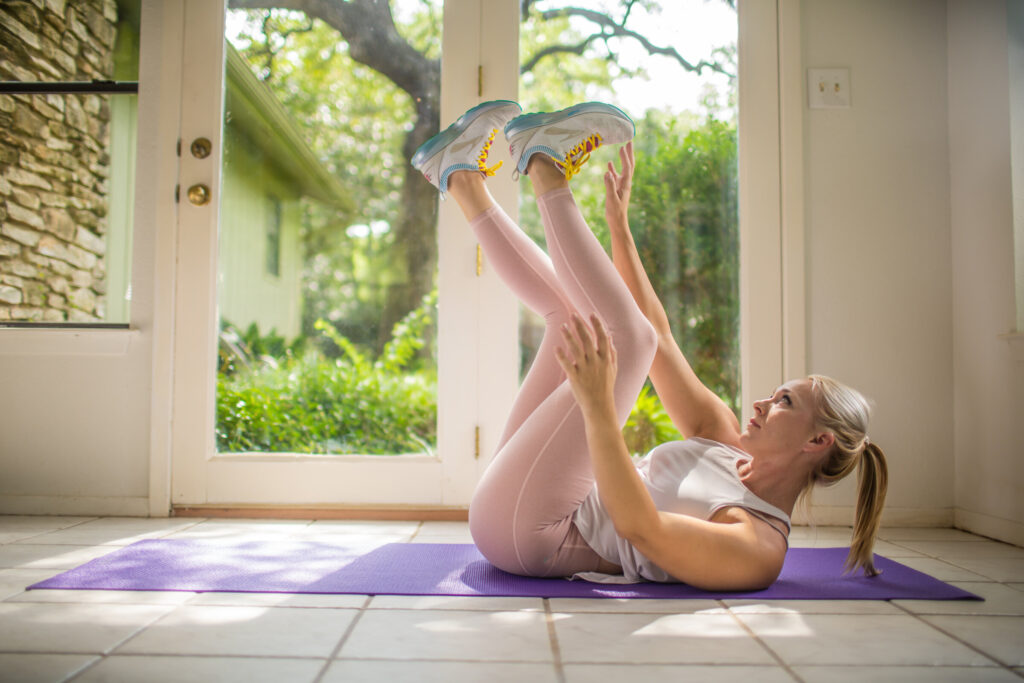
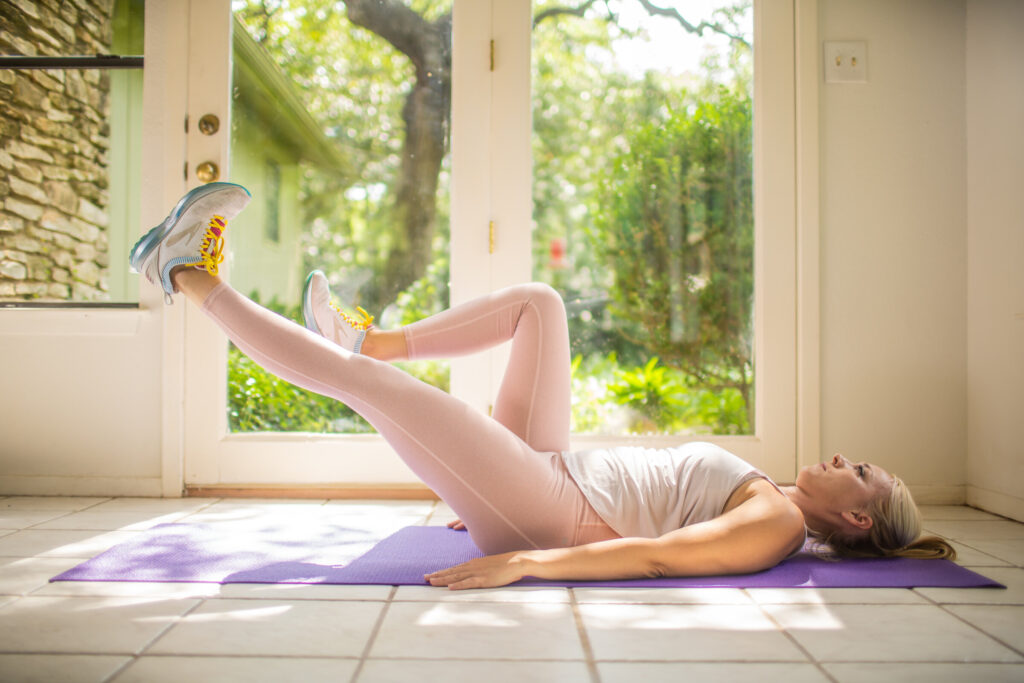
This is one of my favorite ab exercises! I call it my current favorite because I’ve been practicing it myself and with clients. You can’t do everything all the time, so I’ve been rotating this back in again. It is much more challenging than it looks and it is safe and effective. 

The Banded Leg Lift

The banded leg lift is a variation on the leg lift where you are also working your upper body. Leg lifts are usually classified as “lower abs” but the addition of the band tension on your upper body works your entire core. You’ll be working your deep abdominal muscles, the transversus, your lats, serratus, and rectus abdominis (the 6 pack muscles).

favorite ab exercise

How to do the Banded Leg Lift

First secure the band to something sturdy. Be sure it won’t slip off and pop you in the face. Please please. 🙏

From here, grab the band while you lay on your back. Don’t worry about the perfect set up distance. You can adjust in a second.

If you have a partner, have them hold the band while you lay on your back. 

Extend your arms straight, but stop short of locking your elbows out. 

Bring both your legs straight up toward the ceiling. It is ok if your knees are bent due to flexibility, but try to keep them fairly straight. 

With your arms and legs straight up, exhale and press your low back into the ground. At the same time, use your lats ( squeeze your armpits) and think about pressing your ribs into the floor. 

This is your start position. From here, shift your legs until your knees are over the bottom of your behind, not up toward your waistband. 

Now hold your left leg in place and slowly extend your right leg toward the floor. Only extend as far as you can without your low back popping off the floor. Once your right leg is back next to your left, then do a rep with your left leg. 

The hard part here is focusing on keeping your upper body tight and your low back on the floor during the whole movement of your legs. 

You can see in the above video I lose my focus around rep 3 and start moving both legs out of pattern. Ha! Try to focus on pressing your whole back into the ground, and focus a bit better than I did. 🙂

Here are my other favorite non-ab exercises, and killer hamstring strength exercises.

How to Make This Ab Exercise Tougher

You can do this alternating legs, which is where I suggest you start. Once you get the hang of that, you can do both legs together. This movement is harder, and you might have to shorten your range of motion to achieve the goal of not letting your back pop off the ground.

I suggest doing both variations, though. Even if you practice enough that this one is easy, continue to do both. Moving one leg at a time is a very natural movement pattern that is worth continuing to practice, and doing both is a good challenge.

Need more ab work? Here are exercises that will strengthen your whole core that you can incorporate into your next ab workout.

What Is Your Favorite Ab Exercise?

I’d love to know what your favorite ab exercise is! There are so many to choose from! There are a lot of ab exercises you can do at home, such as 5 of my favorites which I outline here. The others will allow you to load your abs a bit more with gym equipment. If you are in Austin and need a gym, check out my favorite Austin gyms right here.

Do you need a simple core workout you can do at home? Try these exercises, which don’t require any equipment.

Need some more core work in your life? Try this back extension machine, which is a fantastic complement to all the ab work from above!


About the author

Kathryn Alexander is a strength coach and personal trainer in Austin, Texas. She loves hiking, college football, and the feel of a perfectly knurled barbell. Read more about Kathryn here.


  • walking lunges for deadlift for lower body strength.
    The Best Lower Body Muscular Strength Exercises
  • deadlift barbell vs trap bar
    Deadlift Barbell vs Trap Bar: Which Is Better for Strength, Muscle, and Safer Pulling?
  • Things to do in Austin in April (2026)
    Things to Do in Austin in April (2026)
  • Client results and testimonials for trainer Kathryn Alexander
    Love Notes, Volume 5. Q1, 2026
  • Best garage gym fan. Drum fan in my garage gym. I love this one because it's easily portable.
    Best Garage Gym Fans 2026
  • things to do outside in Austin. Food truck park near Barton Springs
    Things to Do Outside in Austin

Filed Under: Training Tagged With: how to

Full Body Workout You Can Do Inside

July 5, 2023 by Kathryn Alexander

Y’all, it’s 107 degrees in Austin again, so you might want to move your session indoors. This is a full body workout you can do inside to escape the heat.

This full body workout focuses on calorie burn and conditioning. You’ll use medium weights but it won’t be heavy work.

full body workout you can do inside

Get Your Burn on Inside

Think of this workout like a steady flow session and rest as you need. There will be 2 parts, or circuits. Do all of the exercises in the first circuit, one time. Rest, and repeat. After you have done that circuit, you’ll begin the second circuit.

For example, you’ll do one set of reverse lunge, one set of bear crawl, one set of breaststroke, then one set of alternating toe touch. That is Circuit 1. Rest. Then repeat that circuit as many times as you’d like before beginning Circuit 2.

Each of the exercises below is a link to a how-to video.

The Exercises, Circuit 1

  • Reverse lunge
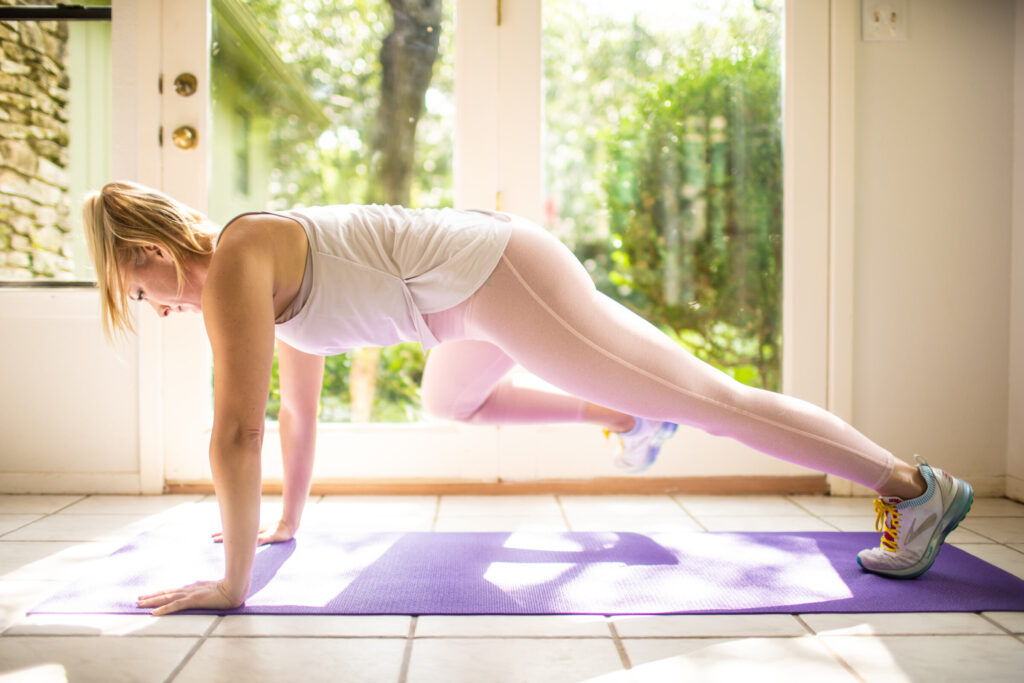
  • Bear crawl
  • Breaststroke
  • Alternating toe touch

The Exercises, Circuit 2

  • 2 arm dumbbell row
  • Squat press 
  • Windmill

Modify, Don’t Miss

I wrote earlier this week about how you can modify but not miss a workout. This is a great example! It’s really not advisable to go train in the heat, so try the above session and let me know how it goes! If you need to move a little more weight than this session allows, check out the best gyms in Austin, and pop in one for a good session.

Would you rather a custom program? If so, I take into account where you will train and what equipment you have. I will not make you do burpees or exercise outside 🙂 Let me know if you’d like to do a free consult to see if we are a good fit!

Related: Check out the best ab exercises here and easy gym mistakes to avoid.


About the author

Kathryn Alexander is a strength coach and personal trainer in Austin, Texas. She loves hiking, college football, and the feel of a perfectly knurled barbell. Read more about Kathryn here.

Filed Under: Training Tagged With: training

What is the Best Training Split?

June 27, 2023 by Kathryn Alexander

What is the best training split to do? There are many options, and luckily, many of them are effective. How do you know which one to choose? Let’s discuss! 

What is a Training Split?

A training split is the breakdown of what you exercise on what days. Common gym training splits include:

  • Push/pull/legs
  • Upper/lower
  • Full body
  • 4 and 5 day splits

There is no one best split, and you should rotate every 6-12 weeks anyway. Let’s look at these options and discuss when to best use them. 

What is the best training split?

Push/Pull/Squat

Push/pull/squat is a great 3 day split. Your push days will include upper body exercises for chest, shoulders and triceps. Pull will include back exercises (lat pulldowns, rows) biceps curls and rear delts. Finally, squat day is obviously when you work legs. You’ll want to do some quad-focused lifts, some hip dominant or posterior work, and glutes and calves. How you distribute those lifts is up to your depending on your goals. I recommend having at least one quad-dominant and one hip dominant exercise on your squat day. 

You can do this split if you’re going to the gym 3 days a week, so obviously one day would be push, one day would be pull and the final day would be squat. If you are going to the gym more than 3 days a week but still enjoy push/pull/squat, you can rotate through. For example, if you train 5 days but are doing this 3 day split, you’ll do push, pull, squat, push, pull, and then begin the next week with squats again. 

Upper/Lower Split

An upper/lower body split is fun, conceptually simple, and also flexible. This will allow you to train 2 days, 4 days or even more if you just keep them alternating. Options would be to do upper, lower, rest, repeat. Or, you could do upper, rest, lower, rest, if you’re making it to the gym 3 ish days a week.

You could even do upper, lower, upper, etc, and only rest as you need or as your schedule demands. However, If you’re training 5 days or more, you might benefit from a different program. 

Full Body Every Day

If you only have 3 days a week to lift or less, you’ll see the most progress from doing full body training each time. You’ll see a huge training effect for your time, compared to taking a whole training day for say, just arms and abs for example.

This is also great if athleticism is one of your goals, since the whole body stimulation is more like an athletic endeavor. This split allows for heavy, taxing work, because the rest days are generous. 

4-5 Day Split

Finally, if you are in the gym 4, 5 or more days a week, you could do a split that is even further broken down. This might look like chest/back/legs/arms or chest/back/hip dominant lower body/arms/anterior or quad focused legs.

I mentioned it briefly above in the push/pull/squat section, but its worth noting again that there are a few ways to categorize lower body lifts:

  • anterior or posterior 
  • hip or quad dominant
  • hamstrings & glutes or quads

An easy example of anterior movement would be seated leg extensions for your quads. Hamstrings curls would be posterior. Hip dominant refers a little more to posterior style glute and hamstrings work, such as a Romanian deadlift. An example of quad dominant would be front squats.

Compound lower body lifts like squats, deadlifts and lunges work both quads and hamstrings (anterior and posterior), basically all of the above. There are ways to focus more on one muscle group than the other by putting more emphasis on said group, but there will be involvement from all of your lower body musculature with compound movements.

How Do You Pick a Training Split?

First identify your goals, and how many days a week you would like this program to run. From there, you can choose one of the above programs. Give it a real, honest go for at least 6 weeks.
From there, you can change. Ideally, you will change or adjust every few months anyway, so give it your best. Don’t be afraid you’ll pick the wrong one. Train hard, and it will work well for you! 

Related: how much exercise do you need to do?

Let me know how it goes! I love love love hearing feedback! It helps me learn, and helps me pass on better knowledge too. 


About the author

Kathryn Alexander is a strength coach and personal trainer in Austin, Texas. She loves hiking, college football, and the feel of a perfectly knurled barbell. Read more about Kathryn here.

Filed Under: Training

10 Best Ab Exercises

June 26, 2023 by Kathryn Alexander

The “10 best ab exercises” might be one of the most googled queries, as achieving visible abs and a flat stomach is one of the most common fitness goals. 

I’m a huge believer that you should love the body you are in, and you get to set your own fitness goals. If you are looking to tighten and tone up your abs, let’s do it! 

Below I will outline what I think are 10 of the best ab exercises, both for home workouts and in the gym. These range from beginner to advanced, so know that you might have to work up to some of them. However, even the “easy” or beginner exercises can benefit even the most advanced lifters. The basics always win!

best ab exercises

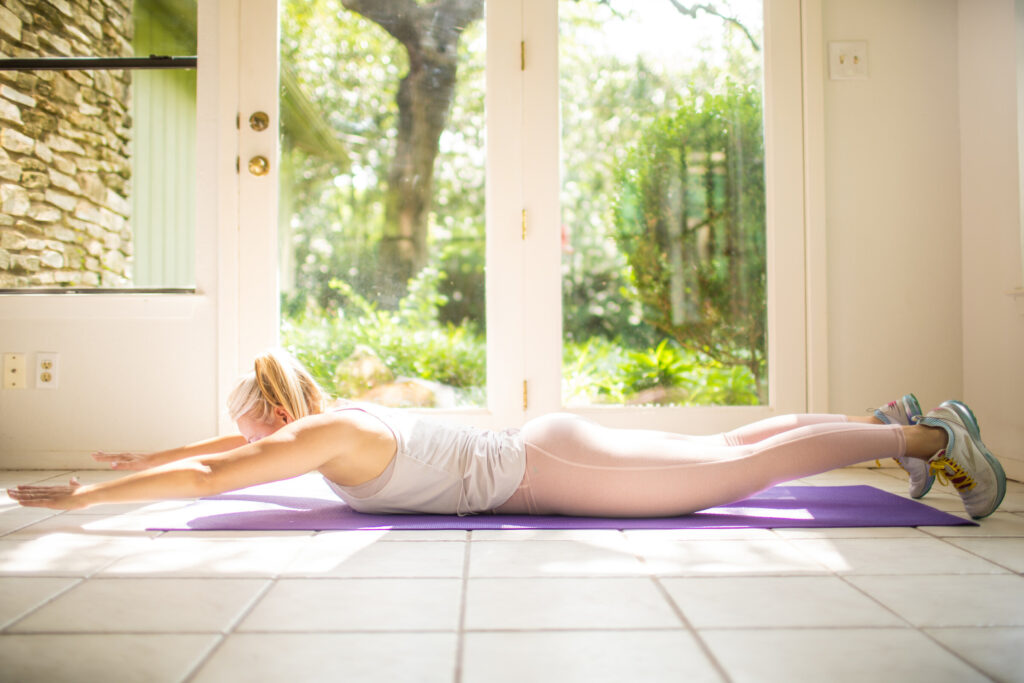
Note that this post is about ab work, not core work. Abdominal work here refers to your rectus abdominis, internal and external obliques, transverse abdominis, and hip flexors. This is as opposed to core or trunk work, which includes all of the above muscles, in addition to the muscles of the back as well. 

Best Ab Workout at Home Without Equipment

The great thing about ab work is that a lot of it can be done at home with no equipment. Abdominal work is largely about managing and controlling your movements, and you don’t always need machines and weights for that. Below is an example of one of the best at-home ab workouts.

If you have done Pilates, you’ll see a lot of similarity to the work listed below. 

Try each of these exercises to get a feel for it. From there, you can do these in one big circuit. You would do crunches, then immediately move to a plank. Bonus if you want to do a side plank, then other side, etc., until you have done all the exercises. From there, rest, and repeat the whole circuit 2+ times.

crunch
Plank
toe touch
dead bug
Turkish get up sit up

For example, it would look like (videos above): 

Crunches, 10 reps

Plank, 20 seconds. Right side plank, 20 seconds, left side plank 20 seconds.

Toe touch, 10 each side

Dead bug, 5 each side

Turkish get up sit up part, 5 each side

How to Work Abs at the Gym

The previous work was done at home, at high volume. The following exercises can be done more like traditional strength training, where you can add load and increase the challenge. One crucial factor here is resting between sets, because you are going to aim to go heavier/harder where you can. I suggest doing a set of 5-10, increasing the difficulty for the next set, resting 1-2 minutes, and repeating. 

Hanging leg raise

Slant board crunch

Pallof press

Ab wheel

GHD face up twist. Can be down without weight. In fact, start without weight.

hanging leg raise
slant board crunch
Pallof press
ab wheel
GHD twist

Tips for Abs and a Strong Core

My number one tip for effective ab work is to be deliberate and feel the exercise. Don’t just go through the motions or just get the movement done. Focus on squeezing your muscles and get the most out of each rep. Make each rep a quality rep.

Keep in mind that your diet plays a huge factor in how your abs look. The above exercises will make you core stronger. They won’t necessarily give you a visible 6-pack though, because you must also be lean enough for the muscles to show. In other words, you absolutely can have strong, developed ab muscles that don’t show because you are carrying fat on top. 

To lose that fat and allow your abs to show, be honest with yourself about where you can clean up your diet. Some big factors that can go a long way are eating enough protein, cutting out or reducing sugary drinks and alcohol, and filling up first on your protein and fruits and vegetables before other sides. 

Get other movement in as well. Whether you enjoy walking, cycling, jogging, competitive sports or HIIT, adding in other cardiovascular calorie burning methods will help your abs show too. 

Get on a good, full body training program. If you need a place to start, here are three that several of my clients are doing: Alexander Training programs.

Finally, put all this together: the best ab exercises, done the best way you can, with nutritious foods in the right amounts. You’ll be happy with the results!


About the author

Kathryn Alexander is a strength coach and personal trainer in Austin, Texas. She loves hiking, college football, and the feel of a perfectly knurled barbell. Read more about Kathryn here.


  • walking lunges for deadlift for lower body strength.
    The Best Lower Body Muscular Strength Exercises
  • deadlift barbell vs trap bar
    Deadlift Barbell vs Trap Bar: Which Is Better for Strength, Muscle, and Safer Pulling?
  • Things to do in Austin in April (2026)
    Things to Do in Austin in April (2026)
  • Client results and testimonials for trainer Kathryn Alexander
    Love Notes, Volume 5. Q1, 2026
  • Best garage gym fan. Drum fan in my garage gym. I love this one because it's easily portable.
    Best Garage Gym Fans 2026
  • things to do outside in Austin. Food truck park near Barton Springs
    Things to Do Outside in Austin

Filed Under: Training

How Much Exercise You Need To Do

June 20, 2023 by Kathryn Alexander

Establishing how much exercise you need to do can be a difficult endeavor. Like protein requirements, public health data about exercise is fairly black and white. Cookie cutter. One size fits all.

But we are not all the same size, whether we are talking about physical size, or obligations-on-the-calendar-size, or enjoyment-of-exercise size.

To find what “size” fits you, let’s discuss practical considerations for your training program. We’ll cover: 

  • How much exercise you really need to do and what to do if you don’t have much time 
  • Why you need a plan
  • Whats the best training split to use
  • How to gain muscle, spot increase, aka get a bigger butt, and not get “too bulky”
Austin personal trainer Kathryn Alexander
Austin personal trainer Kathryn Alexander does pushups at the east side track.

How Much Do You Need to Exercise?

First things first: how much do you need to exercise? My new clients ask me this all the time and it’s a very logical question. The CDC says adults need 150 minutes a week of moderate intensity aerobic physical activity or 75 minutes of vigorous exercise, and two weekly sessions of “muscle strengthening activities” of moderate or greater intensity. WHO, Harvard Health and The American Heart Association recommend generally the same, with a few more helpful guidelines like “limit the amount of time you spend being sedentary.” 

Not terrible advice. If most people followed these guidelines, they’d probably do fine. But I don’t trust the CDC, WHO, or Harvard Health after their disastrous guidelines these past two years. There are more important things to consider when you first start than what a governing body that doesn’t know your name tells you to do.

Let’s make you a plan that’s better than the one-size-fits-all aimed at billions of people.

If you take more into account than just that blanket goal, you’ll have a great chance of consistency, and therefore long term success. 

Your Current Situation

To begin, let’s consider your current situation.

  • How much time do you have to allocate toward training?
  • What can you currently do? 
  • What are your goals? 
  • What is your family history?

In athletics, it’s called strength & conditioning. Very performance based. For non-athletes, that’s lifting and cardio. Plan to do both.

We should also take into account what kind of exercise you enjoy. I’ve found with my clients that most people have a distinct preference for a strength or conditioning feel. They prefer either a heavy 2 rep deadlift set or a gut checking extended sled push & pull, all day erry day. Take that into consideration. There will be some parts you don’t love, but if you hate it all, chances are you won’t do it. 

How Much Exercise Do You Need to Do?

The CDC says you should do 150 minutes + 2 lifting sessions, but the better question is, “This week, what are you certain you can do?” Can you do a training session on 2 days? 3 days? Plan on that. Start with what fits your life now. Adjust as you go. 

Please consider practicalities: commute time, the extra time to wash/dry your hair, get dressed, redo your makeup if you’d like. Factors those variables in because this program has to work for you. 

You can say you’ll train 7 days this week, but if that’s not reality, I’d rather you say you’ll do 2. Nail it. Plan on 2 sessions, do 2. Get them done by Thursday. Then, you can adjust to more sessions a week. You’ll be much more successful this way than saying you’ll do 6 days, 7 days, or following a structure that a governing body says to follow, and then failing because it doesn’t fit in your life right now. 

There are seasons in life for everything. If you are a new mom, over committed at work, in a busy semester, it’s hard to do 4, 5, 7 days a week. Don’t look at this like a cop out. Your kids will grow up, mama, your semester from hell will end, and the job will change with time. 

Do the best you can, give yourself grace, and adjust as you go. 

Unpopular opinion, but if you only exercise twice a week for the rest of your life, that’s way better than nothing. That’s 100+ training sessions a year. Better than average, although we don’t compare ourselves to average. 

So how many times a week do you need to train? You pick that right now. Make a plan, nail it, and reassess and make another plan. You can always have an end goal in mind and work toward it, but set yourself up for success first. 

What is Your Strategy?

Sometimes all you need is a plan. The structure of having a plan will help you execute on said plan. If you need help with this please let me know. I have seen many many clients succeed in a variety of ways. We can find a way for you too!

Message me here if I can help you or if you have questions.

Related: 10 Surefire Ways to Get Enough Protein In Your Diet

The Garage Squad

Do you need a program that tells you exactly what to do? The Garage Squad is made for the independent lifter who has gym access and wants to follow a program that uses barbells and some machines.

The Garage Squad Training Program by Kathryn Alexander

About the author

Kathryn Alexander is a strength coach and personal trainer in Austin, Texas. She loves hiking, college football, and the feel of a perfectly knurled barbell. Read more about Kathryn here.

Filed Under: Training

How to Make Your Training Session Quicker

June 13, 2023 by Kathryn Alexander

Here are some options for how to make your training session quicker, if you need to hurry it up for some reason today.

I hope you are following a training plan. That is hands-down the best way to get results. if you’d like an in-depth post about why a training plan can help you, read here. In short, you’ll see increases in strength, improvements on lifts, and changes in your physique if you follow a plan. 

how to make your training session quicker

Additionally, you will always know what to do. There’s no guessing when you get to the gym. 

However, sometimes you have to make adjustments. Sometimes, traffic gets the best of you and you don’t get to the gym until later than you planned. This is called “living in Austin”. Surprise, Mopac is backed up an extra 40 minutes. 🤗

Sometimes you just get busy for a week or so and need to prioritize the lifts that are really bang for your buck. 

How do you do this without wasting your time in the gym? How do you use your time in the gym without just skipping? There are four main ways I will adjust a training session if I or a client need to get work done in less time.

Options for How to Make Your Training Sessions Faster

As I mentioned, there are several ways to speed up your session if you need to. This will depend on your goals, upcoming events (meets or beach trips), and how long your schedule will be very busy. These are meant to be short term adjustments. If you find you are frequently needing a shorter session, you might want to get on a training plan that addresses that. Here are some ideas on how to do that: link to how to exercise when you are busy: 

But, let’s say you just need to make adjustments today. Here are four ways to do that: 

At the gym, there are a few ways to get a quick workout. You can:

  1. Just do your main lift/s and skip accessory work.
  2. Just do exercises that don’t take as much time to warm up and prepare for
  3. Move quicker through your planned session (don’t adjust anything but pace)
  4. Change the type of exercise you are doing altogether. 

Do Your Main Lift/s and Skip Accessory Work

This is my favorite way to train if I need to hurry it up. This allows you to hit your main lift, which is presumably the lift you are focusing on improving and working on. In this situation, the pace of your session doesn’t change. You just end it sooner.

Begin with your regular warm up. Do not skimp on or rush the warm up. Remember, you’re still going to get your heavy, compound lift so you need to be prepared. No matter what, do not sacrifice your warm up. You’ll lift better if you warm up well neurologically and physically, and you are at lower risk of injury. 

Progress on your feeler sets or warm up sets as you would if you had all the time in the world. Let’s use the deadlift as an example. If my current program aims for me to do 3×3 @ 225 (that is, 3 sets of 3 reps at 225 pounds), then I would start with 95 pounds. I would do 3 – 5 reps. From there, I increase the weight each set until I get to 225. Then I begin my work sets. For example, I might progress like: 

1×5 @ 95

1×5 @ 135

1×3 @ 185

1×1 @ 205

3×3 @ 225.

Between my feeler sets, which are 95 – 205 pounds, I’ll rest a minute or 2. Not long. Between my work sets, I’ll rest 2-3 minutes. 

In total, this puts my warm up around 10 minutes, feeler sets around 8 minutes, and work sets 9-10 minutes. From here, I would finish with 2 sets of the back extension or reverse hyper and then head out. Boom – around 30 minutes for a big lift, which was safe and uncompromised. 

Do Exercises That Don’t Take as Much Prep Time

If you have half an hour but want to get more than one exercise in, an option is to do exercises that don’t take as much time to warm up to prepare for. In this case, you skip exercises like heavy compound movements that require a good bit of warm up, prep, and feeler sets. This would be a day where you skip your deadlifts. 

You would begin with a warm up, which you always do. Then you would do exercises that you can jump right into, or only take a couple sets to get into. An example is the push pull squat style of workout.

Let’s choose a pushup (push), dumbbell row (pull) and squat. After your general warm up of some squats, lunges, and light presses, you’d begin. 

Start with pushups and get a moderate amount. Move right into the dumbbell row with a light/moderate weight. Then squat. For this first round, I would suggest a light to moderate weight, such as the one you just rowed. From there, you can decide to bump up the next round or not. 

If you do want a bump up, then you do a few more reps on the pushup, heavier weight on the row and heavier weight on the squat. Rest as you need between rounds, and repeat. 

This is a fun one to push conditioning goals, whereas the previously mentioned deadlift session still works strength in a quick amount of time. 

Moving Faster Through Planned Session

Another option to move quicker through your session is to keep the same exercises, but skip the heaviest/hardest sets so you can move faster. Let’s go back to my deadlift day. Let’s imagine I planned to deadlift, then superset lunges and overhead presses, then superset hamstring curls and bent over rows. 

Normally, I would take my time on the deadlift session and work up to my challenging working sets. Using the number from the first example, where my goal was 225 for 3×3, today, I might just do sets of 5 all the way up to 185. This would look like: 

1×5 @ 95

1×5 @ 135

2×5 @ 185

Note that you always respect your heavy lifts. Even if it’s not as heavy for you, you always treat it like it is. Getting some good volume at lower weights, while still doing my best with form, is a good way to get good work in safely. 

This deadlift progression would shave off the last 10 minutes of the heaviest lifts, because you’re not having to rest quite as much. 

From here, you would go to the first superset and work through it. Back and forth, back and forth. Lunges and presses done. Move quickly to the curls and rows. Since you’re moving quicker and resting less, you might not go as heavy as you would have on the last set, but that’s ok. You’ll feel the work begin done! You can choose to do just two sets here if you’d like. And, boom, you’re out. Lots of work done quickly. 

Change the Type of Exercise You Are Doing

The last option if you are strapped for time is to change the type of exercise you are doing altogether. If you are going to be worried about rushing or running late to the point you do not get good exercise, then just turn it into a conditioning session.

Great options are to get on the treadmill and get some incline work in at a steady pace, or set up a circuit of sled pushes and pulls. Bonus options are the rower, ski erg, and battle ropes if you have access to these. 

In this situation I’d still recommend a light warm up of treadmill work, or squats and lunges to get your heart rate up. Then get into your work. 

This is a great option to get quality work in, and reserve your big lifts for a day when you have the time to give them the attention you want. 

Modify, Don’t Miss

Matt Wenning says, “Modify, don’t miss.” This is great advice. Modify according to make a rushed session fit your time frame. Let me know how this works for you, or if you have ways to work around busy times. I’d love to hear!

About the author

Kathryn Alexander is a strength coach and personal trainer in Austin, Texas. She loves hiking, college football, and the feel of a perfectly knurled barbell. Read more about Kathryn here.


  • walking lunges for deadlift for lower body strength.
    The Best Lower Body Muscular Strength Exercises
  • deadlift barbell vs trap bar
    Deadlift Barbell vs Trap Bar: Which Is Better for Strength, Muscle, and Safer Pulling?
  • Things to do in Austin in April (2026)
    Things to Do in Austin in April (2026)
  • Client results and testimonials for trainer Kathryn Alexander
    Love Notes, Volume 5. Q1, 2026
  • Best garage gym fan. Drum fan in my garage gym. I love this one because it's easily portable.
    Best Garage Gym Fans 2026
  • things to do outside in Austin. Food truck park near Barton Springs
    Things to Do Outside in Austin

Filed Under: Training Tagged With: training

How to Choose a Training Program

May 9, 2023 by Kathryn Alexander

Sometimes the toughest decision out there regarding your fitness is how to choose a training program. There are so many programs out there – probably hundreds of thousands! How do you find the right one for you?

To start, consider your current situation, your goals, schedule and lifestyle, and equipment availability. I’ll walk you through it. Read along to discover how to choose a training program for you.

Top 5 Reasons to Follow a Training Program

What Are Your Training Goals?

Your goals are going to be the largest determinant of which program is best for you. Before you go any further, I need to remind you that many, many programs will work for you. Lots of programs can get you where you want to be. Please do not stress about finding the right absolutely specific perfect one.

Write down your goals before you choose a training program.

First, write down what your goals are. Pen and paper. I mean it, write it down. Be honest with yourself here. Be selfish! These are your goals, your body, your time, effort, energy. You deserve to get what you want for your investment. 

Examples include:

  • Fat loss in general 
  • fat loss in specific areas
  • overall muscle gain 
  • building size or muscle definition in specific body parts
  • bigger butt
  • more toned arms
  • bigger arms, bigger calves, lol good luck just kidding 😉
  • more definition
  • increase in performance, such as faster running times
  • increasing strength, stronger squat, deadlift, bench press, clean, or snatch
  • Increase in the amount of steps each day
  • increase in time standing each day
  • increase in number of exercise sessions done per week

The list can go on and on. Make your goals very specific for you. Know that you won’t get all of them accomplished from a six week program, but you can work toward them in a methodical way.

Find a Workout Plan That Fits Your Lifestyle

Finding a workout plan or fitness routine that is compatible with your lifestyle is crucial.

Choose to do hard work but make it easy on yourself. 

If you have to drive an hour and a half to the training facility you want and you want to do it five days a week, make sure that you can maintain that. Otherwise, try to find a great gym near you or invest in a home gym. If you are into jogging and you live in northern Canada, you might want to invest in a treadmill for harsh times of winter. These are extreme examples, but the easier you can make your workout program fit your specific situation, the greater chance you have of committing to it . 

Additionally, I want you to pick some thing you enjoy. This should be good for you in the short term and long term. If lifting gives you a little post workout high, embrace that and do it. 

One summer when I was 19, I got an intense runner’s high after a specific jog I would do. It was a route that covered about 2 miles and included running stadium bleachers. I loved it and I looked forward to it. I sometimes feel a little giddy after lifting weights also. 

Some people feel like a million bucks post yoga or Pilates. Some people don’t get runner’s high, but just feel accomplished and proud that they checked their physical investment off for the day. Find what makes you happy and work that into your program. 

Remember, do try to make it fit your schedule. If you are into endurance exercises that take a large chunk of your time, you might have to schedule that on the weekend with supplemental shorter training sessions during the week. If you like to spend a good hour and a half in the gym when you lift but you also have family obligations, you might do that 3 days a week instead of 7. Or if you are looking to simply lose a few pounds, establish good habits, and stabilize your blood sugar, taking 10 minute walks a few times a day can help you more than you think. 

Read more about how to fit exercise into a busy schedule here.

Coordinate Exercise and Diet

Having an optimal diet and training program will help you toward your goals exponentially. Let me repeat that: you will get there way faster when you are eating well in addition to your physical training. Ensure that you are getting enough protein, several servings of fruits and vegetables, a day and plenty of plain water. Add those things in first. 

Then be honest with yourself about taking out the things that you know do not help you reach your goals. I’m not saying go on the strictest squeaky clean diet you’ve ever heard of. I am saying that you know the bad habits you can tone down a little bit. if you drink, maybe drink on fewer days of the week or have one less. If you’re big big into desserts, enjoy a smaller portion.

If you are into cokes and sodas, try having less or having a substitute. Sparkling water really scratches that itch for me. Experiment and see what you like. You might love tea! That would be great, since there are countless varieties out there. Try and try again, to find something that is healthy and enjoyable for you.

Whether you end up following a formal diet or just adjusting yours, a little bit know that every little bit will help you toward your goal.

Fitness Programs for Beginners

If you are a brand new beginner in the gym, I am so excited for you! It’s like you haven’t read the best book of your life! It’s like you’re just about to start the best most bingeable TV series ever. I’m so excited for you! 

I created a course just for beginners. This assumes you want to learn the ins and outs of the gym from square one. This program is very creatively titled Square One. It is six weeks and $15 because I want this to be available to everyone! 

Square 1 training program by Kathryn Alexander created for beginners learning to lift and those looking to learn how to use the gym.

See All Of My Programs Here

If you have questions, please let me know and we’ll discuss if this is a good fit for you. If you have other questions in general, about your program or what program is a good fit for you, I am happy to help! I read every email. Kathryn@kathrynalexander.com.

Happy training!


About the author

Kathryn Alexander is a strength coach and personal trainer in Austin, Texas. She loves hiking, college football, and the feel of a perfectly knurled barbell. Read more about Kathryn here.

Filed Under: Training

How to Make Time for Exercise With a Busy Schedule

May 2, 2023 by Kathryn Alexander

It can be challenging to make time for exercise with a busy schedule, but there are so many ways you can get it done! Most people are busy these days, and that is not a copout or a lie. I believe my clients when they say they are so busy that it is hard to find time to workout, because I see it. Like you, they have responsibilities and obligations in the form of jobs, work and relationships. 

Some people like to be busy all the time, because it’s just how they choose to live their life. Others are busy for a short period of time such as until a project is completed, at which point life will go back to a regular pace. 

How to Make Time for Exercise With a Busy Schedule, pushups at home
Pushups at home. Doing low equipment exercises at home is one way to make time for exercise with a busy schedule.

Whether you are steadily busy or in a push right now, take a few minutes upfront to plan how to make time for exercise in your busy schedule.

Whether you adjust how long you spend in the gym, move some training sessions to your home, or even cut down some sessions, maintaining some training in your schedule will be worth it! 

Remember, you can’t cram exercise. You can’t wait until you’re sick and then exercise for 100 hours in a row and get the benefits. You must exercise regularly. It will build strength, health, quality of life and fortuitously, help manage stress during your busy times. 

Quick Workouts

You can get an effective workout in a quicker time frame than you think, so try a quick workout instead of just skipping. Whether you are doing these short workouts in the gym, home, or even at work, identify smaller chunks of time (10-30 minutes) that you can possibly use for exercise.

Gym

At the gym, there are a few ways to get a quick workout. You can:

  1. Just do your main lift/s and skip accessory work.
  2. Just do exercises that don’t take as much time to warm up and prepare for.
  3. Move quicker through your planned session (don’t adjust anything but pace).
  4. Change the type of exercise you are doing altogether. 

Let me touch on each of these briefly to explain: 

  1. If you just do your main lift and skip your accessory workout, the pace of your session doesn’t change. You just end it sooner. An example of this would be if I only had 30 minutes to train, but I really wanted to deadlift. I would warm up well, hit my feeler sets that increase in weight, do my working sets, and then be done. Voila. Note, you should always warm up – do not sacrifice warming up for time! You won’t perform as well without a warm up, and you risk injury.
  2. Just doing exercises that don’t take as much time to warm up and prepare for is an option also. In this case, you would leave out exercises like heavy compound movements that require the time to warm up thoroughly. You’d still do a warm up! It just won’t be as involved. An example of this kind of session would be a push pull squat minimal equipment workout, where you do 3 exercises and move quickly through them. They’ll be moderate weight, high volume, and quick rest. If you click the link for push pull squat, you can see an exact session like this, and how to modify it to fit you. 
  3. Moving quicker through your planned session is a good option also. If you choose to speed up your session by moving through it faster, you’ll shorten your rest periods, and because of this shorter rest, you’ll skip the most challenging sets. For example, if I am deadlifting but still want to make the time to do accessory work, then I might skip the heaviest few sets, which require the most rest between. You do not want to rush through your heavy compound work. 
  4. Finally, you can change which type of exercise you do altogether. If you are short on time and literally don’t have the time to do multiple exercises and work around the gym, you might choose just to do some conditioning. Say I don’t have time to do my deadlifts (boo!) but I know I’ll have time tomorrow, then today I’ll get on the treadmill for an incline walk. This way I am getting good work in, and giving myself the chance to get high quality work in when I have time to do it thoroughly and safely.

At Home

If finding time to exercise means you exercise at home, that’s great too! With just one or two weights, you can do the above linked Push Pull Squat session. It’s killer, and can be briefly done in a small area. There are many examples of sessions like this, where you focus on a few exercise that can be done with little or no equipment, and do them circuit style. 

On one particularly cold day a few years ago, I decided I would not be going outside, at all, for anything. I decided to do squats, lunges, and pushups as my workout. I started doing 10 of each and resting only when I needed. Some sets felt great and I did up to 15 reps. When I fatigued, I dropped it to 5. This ended up being less than 20 minutes and I felt great.

You can do something similar. Choose exercises that are within your ability, set a timer and some great tunes, and go!

At Your Work or Desk

Depending on your work situation, you may have a gym or fitness center close to you. If this is the case, make use of it! Remember, you can get sufficient work done in about 30 minutes, 2-3 times a week. If you aren’t able to get to a gym during your workday but you would like to get movement in, don’t forget walking! Walking is so underrated! Walking is great for a whole host of things, including digestion post lunch, and stabilizing blood sugar, which wards off those afternoon energy crashes. You might even be able to walk and get steps in without changing clothes. 

If you sit all day for work, check out specifics workouts in How to Stay Fit With a Desk Job

Likewise, look for staircases. Walking stairs is legit! If you can find a safe place to walk stairs, do it! You’ll experience significant increases in metabolism and conditioning, and building muscle, ie toning the legs, as people like to say.

Make Working Out Convenient

Whether you choose to exercise at home, at the gym, or from work, set yourself up to succeed! Make it fit in your schedule, make it convenient, and commit! Be creative about how you can minimize wasted time, by adjusting your commute to avoid busy times in traffic and the gym. Also think about how you can adjust your work hours so you are in the office being productive instead of sitting on the highway.

Work Commute

I’ve seen so many creative ways to make room for exercise from my clients over the years. Some examples are: 

  • Joining a gym with a friend and doing work together instead of happy hours
  • Walking meetings instead of sitting
  • Joining a gym close to home so traffic is not prohibitive 
  • Going to the gym early to avoid traffic
  • Similarly, going to work early, and going to the gym before heading home. This has a double benefit, as you avoid the busiest hours of the gym too.

Home Gym

Exercising at home can be done with no equipment, or with just a few pieces. You can go as grand as you like in building out your home gym, or go minimal with small pieces that store easily. Links here. 

For example, my exercise program The Home Team, uses two pairs of dumbbells and a band. This way you can always have fresh workouts delivered to you to do from your living room, garage or back yard. 

Check out The Home Team here for a free week.

I recommend having a dedicated space to exercise at home, like you would have a dedicated work space if you work from home. However, if that doesn’t work for you, you can absolutely have a small storage space for 2-4 dumbbells and a band. Those can go in a corner of the room or closet very easily. 

You can even use a Bala ring, which is pretty cute, and can be left out as an accessory. I don’t make any money from this, by the way. I just thought it was so cute that I bought my mom one.

Hybrid Gym/Home Workouts

Finally one of my absolute favorite ways to structure your training is to do a hybrid of home and gym workouts. You’ll always get benefits from going to a gym, whether its by using equipment you don’t have, learning from others, or creating a supportive community for yourself. Even with the most built out home gyms, most people can find equipment they don’t have at a full gym. For example, I have spent a lot of time and money making my home gym sufficient. I still go work out at Big Tex Gym for the cable systems. 

Lat pull downs, rows, and large spaces for sled and sandbag work permit me to do back and leg work I can’t do at home. For clients who split up home and gym workouts, I suggest doing the home work that you can at home with dumbbells. Obviously, at the gym, you’ll do the work you can’t do at home. 

Big Tex Gym, one of the best gyms in Austin
Turf side at Big Tex Gym

Use Every Minute

By honestly assessing your time management, you can see where you can fit exercise in. You will also see things you can minimize or adjust. Decreasing social media, for example, can yield you some of your time back. And definitely don’t commit to another tv series! You’ll be fine if you don’t know the water cooler gossip! As a person who doesn’t watch tv, I say this with lots of love. 🙂

Most importantly, schedule your workouts, and do them. Put them on your calendar, remind your spouse and the people who need to know, that you have a commitment to yourself. 

Choose which exercises are priority for you, and do those first. It is much easier to maintain strength than to abandon it and rebuild. 

If you just don’t quit, you’ll get through your busy time. You can add more exercise in as you have time for it, and you’ll be so grateful to yourself that you never quit. 

I believe in you! Message me if this still seems impossible for you. I have the benefit of talking to hundreds of people about how they get their exercise in. kathryn@kathrynalexander.com Let’s find a way for you, too!

Are You Beginning Your Fitness Journey?

If you are brand new to the gym, my program called Square 1 takes you through exactly how to start. It tells you how many sets, reps, and what weight to start with on exercises. It’s $15 for a 6 week program, and you can message me anytime with questions. I’d be happy to help get you started, on this beginning program, or on a program custom written for you! Email me at kathryn@kathrynalexander.com or fill out this form here

About the author

Kathryn Alexander is a strength coach and personal trainer in Austin, Texas. She loves hiking, college football, and the feel of a perfectly knurled barbell. Read more about Kathryn here.


  • walking lunges for deadlift for lower body strength.
    The Best Lower Body Muscular Strength Exercises
  • deadlift barbell vs trap bar
    Deadlift Barbell vs Trap Bar: Which Is Better for Strength, Muscle, and Safer Pulling?
  • Things to do in Austin in April (2026)
    Things to Do in Austin in April (2026)
  • Client results and testimonials for trainer Kathryn Alexander
    Love Notes, Volume 5. Q1, 2026
  • Best garage gym fan. Drum fan in my garage gym. I love this one because it's easily portable.
    Best Garage Gym Fans 2026
  • things to do outside in Austin. Food truck park near Barton Springs
    Things to Do Outside in Austin

Filed Under: Training

Top 5 Reasons You Should Follow a Program

April 10, 2023 by Kathryn Alexander

1. Follow a Program to Get the Best Results

First and foremost, you should absolutely follow a program for the best results. Following a well-written program will get you closest to your goals. Random doesn’t help you. You need to practice lifts to get better at them, and you need to get better at them to progress. Will doing 100 burpees help you? No. Will 100 burpees make you stronger? No. Will doing burpees today, a few sit ups tomorrow and clean Friday give you any kind of foundation on which to build? Absolutely not. If you want to get abs, train to get abs. If you want to get better at burpees, do burpees. (But I’ll never make you do burpees.)

However, practicing the same lifts for a training block helps you strategically build. The body is extremely specific in the way it responds and adapts. To get better at something (ie, bigger, faster, stronger, more coordinated), you must practice the specific things you want to improve. Not random movement all over the map. 

Check out The Garage Squad, my barbell training program, or apply for 1:1 coaching here.

2. It Takes Away The Mental Energy of Planning

Following a good program takes away the mental energy of wondering what you’re going to lift, creating the flow of the session, and adjusting the numbers.

Humans make tens of thousands of decisions a day; some researchers suggest up to 35,000. That’s a lot! Often we have more physical energy than mental energy, especially by the end of the day, and that mental fatigue can sometimes be a block to getting your training in. If you have a plan already decided upon, you know you simply have to execute. 

3. Ensure a Time Return on Investment

Since you are investing time and effort and energy, you might as well make sure you have something to show for it! To be clear, any exercise you do will be good for your body. Even taking walks and quick workouts here and there.

But if you are really training and have serious goals, you won’t see the results you want from randomly popping into the gym and moving around some. Choose a smart program and make it work for you! 

4. Visualize Your Progress and See the Best Results

This is where training gets fun! When you follow a good program, you begin to see what you are capable of. A program with smart, steady progression gives you a view into the future. You’ll gain progress on the exercises you are practicing and workouts to compare to, so you can see the increase in weight and reps that you are doing. You can see your progress happening real time. 

Additionally, it allows you to track your progress and learn from it for the future. 

5. Camaraderie

Finally, have some camaraderie! Do a program with a friend and encourage each other through the tough times in training. It’s a great feeling to know you are in it together! One of my favorite programs to do with others is Squatober, which is the brainchild of Aaron Ausmus, owner of Pen and Paper Strength App. Thousands of people around the world commit to squatting in October, and finish with a strong PR day.

With my teams and programs on TrainHeroic, you can join a team doing the same training program as well. You each track your own numbers but you’re doing the work together. Check out this program, The Home Team, that you can do from your home. Invite your best friend or a coworker too, and start your free weeks together. 

Here are all my programs, if you’d like to find the best plan for you.

Have you experienced the difference when you commit to a plan? Which is your favorite? Let me know! Happy training!


About the author

Kathryn Alexander is a strength coach and personal trainer in Austin, Texas. She loves hiking, college football, and the feel of a perfectly knurled barbell. Read more about Kathryn here.

Filed Under: Training

How to Break Through Your Bench Press Plateau

March 13, 2023 by Kathryn Alexander

Are you stuck on your bench press? Find out how to break through your bench press plateau. If you’ve been lifting for any length of time, you might find your progress stalling. You will feel like you are doing everything right – you are putting in the work, you’re resting. Maybe you changed your program and took advice from seasoned lifters. Maybe you adjusted your technique. You still find yourself not progressing at a pace that you think would be reasonable for the effort you are putting in.

You’re in a plateau. 

Don’t stress. This is common. This is some thing that every lifter will experience. Above all, don’t quit. Keep training. Read a few of the pointers below to find out how you can work through this and come out of your plateau stronger.

how to break through bench press plateau

What is a Bench Press Plateau

If you are wondering, “why is my bench press not increasing?” let’s first address if you’re actually plateauing, or just seeing stalled progress for some reason. Sometimes when you have a few suboptimal training sessions, it can seem worse than it is. 

Ideally you are following a training schedule. This would allow you to train hard and train smart, and actually track your progress. If you are following a program and not just haphazardly winging it, yet still not seeing progress, let’s look at other factors. 

These are my favorite gyms in Austin.

Lack of sleep or poor quality sleep, lack of adequate rest, and over- or under-training can all affect your lifting progress. Every person is different and in a different phase of life, so look honestly at your weekly schedule and assess all of these factors. Consider if you also have a physically demanding job or if you have children in a busy phase of life. You might not be able to alter these things, so consider how you can optimize your time in the gym to lift enough, and rest enough. 

Ensure you are eating well too. You’ll want to make sure you are eating enough calorically, and also eating enough protein. Estimates from experts who understand lifting are around 1.2-1.6 g/kg bodyweight per day. That sometimes takes some planning but is entirely possible. 

Bench Press Plateau Break Through Tips

I hope your lifting career is a lifelong one! It certainly can be. And as such, it is a constant game of working hard, adjusting, and learning as new challenges present themselves. 

Below are a number of ideas on how to break through your bench press plateau, ranging from technical tips, programming tips, and more. 

how to break through a bench press plateau

Work your Whole Body

This one may sound counterintuitive, but to progress as a lifter, you need to work your whole body. Hopefully this is not an issue you are having, but sometimes lifters skew toward their favorite lifts and train their favorites harder.

In the long run, this will not lead to maximal growth, size, or strength. 

Make sure you are getting compound lifts such as squats and deadlifts, not just leg press and isolation machines. Ensure you are doing heavy back work as well. 

Think about it: some people are bench specialists, or deadlift specialists, but the elite ones don’t have gigantic weak spots. When have you seen a 700+ plus puller with skinny arms? I don’t know a big bench presser with tiny legs. 

Train your whole body and you’ll be happy with your progress!

Work on Technique

The bench press is highly technical and improving your technique can increase your capacity. Several technical factors of the bench press will be unique to your body and your leverages, and some will be your preference. For example, if you have a thick chest and torso, and short arms, you are made for bench pressing. If you are tall with long arms, your bench press will have many more inches to travel. 

You are given the body you are given, so in the meantime, you can choose how you would like to set up. A very narrow grip will be a harder angle to press. A wide grip allows you to be in a stronger position, and a position in which the bar has a shorter distance to travel. Most people bench at a grip wider than shoulders, but it is your choice how wide you set up. 

Likewise it is your choice how much you arch in the bench press. The arched position allows for a stronger set up, increased utilization of the lower pec muscles, and again, a shorter range of motion. The arch is safe and will allow for higher bench press numbers. It is your choice how you would like to bench on the continuum between flat back benching and a high arch. 

Finally, there are many technical angles you can work on such as specifics of your set up, arch, grip, and optimal bar path.

Specialized Lifts

Bench pressing often improves from more bench pressing, but you’ll want to add in some supplemental lifts too. Partial reps, dumbbell work, board presses and Spoto presses can help grow your bench press. 

Continue working your bench press as you have been, but experiment with adding in  some of these accessory lifts. Be sure to add in triceps work as well. Stronger triceps will help with a stronger bench press.

Change It Up

Hopefully you are following a smart program that will take you through well designed progressions. This means some of your exercise parameters will change, but you will not be going through crazy, random changes each week.

For example, to change the stimulus, you might decrease your reps as you increase in the weight. The timing of this will depend on whether you are peaking for a meet or competition. If you have plenty of time away from a competition, experiment with changing the set/rep scheme, such as moving from a 5×5 to 5×3 with heavier weights. That is just one example, any how you adjust your sets and reps will obviously depend on what you are doing now.

As accessory work after your main bench work, you can add in paused reps or tempo work. These can increase time under tension, causing a different stimulus.

Pro tip: if you are working your bench press hard, don’t neglect back! Your shoulders and lifts will thank you! Get your rows and pulls in!

Find a Program

The best thing you can do for breaking up a bench press plateau, and making progress overall, is following a good program. A program will help you workin a way that challenges you, balances you (upper/lower body, pushing/pulling), doesn’t neglect any fundamental movements or lifts, and allows you to reach your potential. 

Don’t waste your time and energy hopping around the gym and guessing about what to do. Reach out to a trainer who coaches what you want to learn, and use their hours and hours of study, coaching and experience to get where you want to go faster. Even if you budget for a few focused training sessions, a coach can help you.

Check out my programs here or message me here about your specific situation. Good luck breaking through your bench press plateau! Here’s to many more years of lifting PRs!


About the author

Kathryn Alexander is a strength coach and personal trainer in Austin, Texas. She loves hiking, college football, and the feel of a perfectly knurled barbell. Read more about Kathryn here.

Filed Under: Training Tagged With: how to

What is the Importance of a Workout Plan?

December 26, 2022 by Kathryn Alexander

Having a well written workout plan is one of the most important things to consider in your exercise routine. It is hands down the most effective way to get the best results from your time exercising. A workout plan that you follow can help you reach your goals faster and more effectively, take the brainpower and mental stress out of the process, and help you avoid blind spots to get the best out of your fitness routine. 

How Can a Workout Plan Benefit You?

We know all the reasons that exercise is worth doing: you’ll feel better, move better, look better, and stave off injury and disease. No reason not to exercise! Except that it does take time, energy, and potentially a financial investment. If you are going to put in the effort to exercise (and you should!) then you should make it worth it.

The best way to do that is to follow a well designed exercise plan to maximize your results. Read on for more information about how a workout program can help you, and how to find the best plan for you.

1 – A Workout Plan Can Help You Reach Your Goals Faster

A workout plan can help you reach your goals faster and more effectively, since it will help you work toward specific outcomes. Often, people go in the gym or go for a little pop on the elliptical, hit some machines randomly and hope they get exactly where they want to be. It doesn’t work this way; the body responds very specifically to exercise stimuli. For example, if you want to get stronger, you need to lift heavier. If you want to lose weight, you have to increase your exercise capacity and be able to exert more energy.

I receive inquiries for people from an online exercise company, and it asks people to check off their desired goals. Often people will list many goals, such as “build muscle mass”, “run a marathon”, “increase flexibility”, and “bodybuild”. These are all worthy goals, but in the short to medium term, they will compete. A well written workout program can help reach these goals, but it needs to be methodically planned. Otherwise, the process will be similar to chasing cats; chaotic and ineffective.

The bottom line is that if you are going to do the hard work (and making the time and effort for the gym is hard work!) then it should be work that takes you to your desired outcomes. 

2 – Take the Brainpower and Mental Stress Out of the Equation

Having a well programmed workout routine to follow is incredibly peaceful. A good plan will give you a roadmap to trust, so your only job is to do the hard work. It takes the brainpower and mental stress out of it for you, so you can do the work and reassess at the end of your training block. This is usually 4-12 weeks, at which point, you’ll continue to the next phase, or commit to a new program. 

Crammed for time? Check out How to Make Time for Exercise with a Busy Schedule

3 – Avoid Blind Spots in Your Workout Routine

Often, we can learn from others and their experiences. After all, we don’t know what we don’t know! If you have a well designed workout plan, you will be following a well rounded routine that includes everything you need to reach your goals.

For example, to avoid and work past back pain, you need a couple smart glute exercises. Athletes, including weekend warriors, typically need more hamstrings work than is conventionally written into general workout plans. 

Sometimes lifters do a lot of things well, but don’t lift in a balanced manner. For example, if a lifter is focused on a goal of driving their bench press up, it would behoove them to focus on back strength as well. In this case, along with chest work, a good example would be to include rows along well.

Make sure you follow a good program, and you’ll hit everything you need to feel and perform best! 

What is a Personalized Workout Plan?

A personalized workout routine or fitness plan is written specifically for you and your goals. Finding a personalized plan written by a fitness expert is a great plan to follow. If that is out of your budget or doesn’t interest you, you can find a plan online that’s written by a fitness expert for people like you. If you look on Train Heroic, for example, you can find extremely specific programs such as plans for beginners, jiu jitsu enthusiasts, people who want to build their butt or grow bigger arms, military and post military, etc. I have plans for people who sit at work all day and need to decompress, people who exercise with limited equipment, and people who train in a full gym toward strength and physique goals. 

This can be incredibly effective and cost effective as well. This way you’re not, as mentioned before, hopping around and wasting your on things that won’t take you to your goals. 

How to Find a Personalized Workout Plan

Like I mentioned in the previous paragraph, you can find any kind of training program on Train Heroic, which is an incredible training app that my clients and I love. (They aren’t paying me to say this! I just really love Train Heroic!) It features programs from experts of all kinds of strength, fitness and sport specific doctrines. 

Consider how many days a week you can commit to working out, how long each session can be, what kind of equipment you have access to, and what your goals are. Be as specific as you can. Keep those factors in mind when you are searching programs, and select one that matches you as much as possible. Often on Train Heroic, you can do the first week free, or even contact the coach directly. Research it as much as you are comfortable with to find a program that excites you. 

If you are interested in any of my programs, check them out here. If you have questions about which would be a good fit for you, feel free to email me at kathryn@kathrynalexander.com.

Are you brand new to the gym and need a plan to start? Try this 6 week program which walks you through what to do, how to do it, and how to use your gym.

Take Action and Start Your Workout Plan

Take action! Take imperfect action! I encourage you to think deeply on your goals and how you will feel when you achieve them. Then find a plan that will help you get there! Ensure it’s a good program by looking at reviews and/or talking to the coach. From there, GO GO GO! 

Take a leap of faith, put in great effort, and follow that workout plan!

Best of luck! Remember, I want to see you succeed! If I can help you at all, please let me know! 


About the author

Kathryn Alexander is a strength coach and personal trainer in Austin, Texas. She loves hiking, college football, and the feel of a perfectly knurled barbell. Read more about Kathryn here.

Filed Under: Training

Ask Kathryn: What Exercises are Best for HIIT?

November 30, 2021 by Kathryn Alexander

Let’s discuss what exercises are best for HIIT, or High Intensity Interval Training.

Often, I get great questions clients that are too good not to share. This is one, about which exercises to choose for HIIT training. This is from a client who incorporates HIIT into her program twice a week.

Are Certain Exercises Most Beneficial for HIIT Style Training?

Are there certain moves that would be most beneficial during HIIT intervals?  Could you provide suggestions to structure those sessions?

Kathryn: High Intensity Interval Training, or HIIT, is a powerful tool to drive improvements in conditioning and body composition.

HIIT involves doing highly intense intervals of hard work, unlike steady state cardio. To achieve work intervals intense enough to stimulate adaptation, you must choose exercises wisely.

If you need a primer on what HIIT is and who is a good candidate for it, check this out: HIIT Revisited.


Generally speaking, anything that gets your whole body moving works. Think big, compound, multi-joint movements like squat presses (very light weight), lunges or jumping jacks. Exercises like calf raises or biceps curls really don’t challenge you systemically, so for honest hard work, pick bigger movements.

The simplest options are movements that you can quickly and easily ramp up the intensity with. For example, running, sprinting, or biking.

If you don’t have cardio equipment or can’t go outside, there are other options.

You could pick 1-3 exercises and cycle through them. For example, during a bad weather bout pre-home gym, I did a session rotating between squats, lunges and pushups. I would do about 10 of each or until I fatigued, and then move to the next exercise until I reached my time goal.

Want to add lunges in your session? Check out this How-To blog post about lunges and the lunge variations.

Don’t overthink it! This is just about getting your body moving! Try to keep movement steady for the hard but quick interval, but you can slow down when you need.

Related: how to get in shape fast!

Your Turn for HIIT Sessions

My client asked a great question, seeking more structure for her HIIT sessions. Of course, when my clients prefer it, I specify exactly what to do, but I like to give you the option to pick your own movements. What feels fun and do-able will be different for everyone.

Pick a couple exercises, get warmed up, and put on some good music and go!

Do you need individualized help with your training? If so, message me here and let’s get your training back on track!


About the author

Kathryn Alexander is a strength coach and personal trainer in Austin, Texas. She loves hiking, college football, and the feel of a perfectly knurled barbell. Read more about Kathryn here.


  • walking lunges for deadlift for lower body strength.
    The Best Lower Body Muscular Strength Exercises
  • deadlift barbell vs trap bar
    Deadlift Barbell vs Trap Bar: Which Is Better for Strength, Muscle, and Safer Pulling?
  • Things to do in Austin in April (2026)
    Things to Do in Austin in April (2026)
  • Client results and testimonials for trainer Kathryn Alexander
    Love Notes, Volume 5. Q1, 2026
  • Best garage gym fan. Drum fan in my garage gym. I love this one because it's easily portable.
    Best Garage Gym Fans 2026
  • things to do outside in Austin. Food truck park near Barton Springs
    Things to Do Outside in Austin

Filed Under: Training Tagged With: Ask Kathryn

The Best Workout Tips

May 11, 2021 by Kathryn Alexander

Whether you are training at home or at the gym, there are things you can do to make sure you get the best session. Follow the tips below to make sure your workout counts in the best way possible!

best workout tips
best workout tips

Prepare Yourself to Have the Time for a Proper Workout/Training Session

If you are training at home, don’t do your laundry or clean your kitchen between sets. Don’t do work emails on your phone, sitting on the bench between sets. Make the time to get it done. It might have to be quick depending on the stage of your life, but focus to the best of your ability to make the minutes when you are lifting count. 

Take the Time to Get a Good Warm Up

Warm up properly! This is crucial! Warming up isn’t just about temperature. It is an increase in neurological recruitment. This means your body gets better and better at doing what you’re asking it to do. Make sure your warm up reflects what you are going to do, and that it starts light and progresses. Don’t skip your warm up! 

Don’t Stop in the Middle of your Session and Finish Later

Don’t stop in the middle of your session! You can do this with some cardio. Depending on what your goal is, cardio minutes can accumulate. But a training session is planned to be done in a certain order. You warm up, get the most dynamic and coordination-demanding exercises done first. Then do your heavy work. Next comes accessory work, then core/trunk/abs and cool down. 

You don’t want to start and stop in the middle of this. If you are consistently having to stop and re-start your sessions, a better plan would be to re-write them so they fit in your time constraints. 

Focus also on being present, and enjoying your work. I know, I know. It’s work, but you can learn to make it fun.

Rest the Right Amount of Time Between Sets

Resting an appropriate amount between sets is extremely important. How much rest is optimal depends on your goals, which you have hopefully committed to beforehand. For example, if you are training for high volume and endurance, you might rest 30-60 seconds between sets. Resting longer will change the stimulus on your body, prolonging a mediocre session, and making it less effective for your endurance goals. 

If you are training for strength, you will need to rest 2-4 minutes, or maybe longer, between heavy and challenging sets. Moving too quickly into the next set will cost you quality on the next set.

Work on Your Exercise Discipline

Exercising always feels better when you feel good at it. The more you train, the better you’ll feel, both while you’re training, and not. Remember this when you feel like quitting! To get to this point, just keep going. It’s simple but not easy. Read here about how to build your discipline so you don’t always have to rely on motivation.

Find a Supportive Environment

I absolutely love gym communities. I have found the best support, advice, friendships, and general camaraderie at gyms than anywhere else. I highly encourage you to find a community you enjoy, even if you aren’t super social. You don’t have to talk to everyone to get the benefits of a supportive environment. If you are in Austin, check out these great communities.

Another perk of gyms is that there is all kinds of great equipment that is harder to find for home. Try this back extension machine, for example, to make your big lifts stronger, and your back happier.

Tie It All In

Give these tips a go during your session, and let me know how it goes. Happy training!


About the author

Kathryn Alexander is a strength coach and personal trainer in Austin, Texas. She loves hiking, college football, and the feel of a perfectly knurled barbell. Read more about Kathryn here.

Filed Under: Training

Backyard Conditioning

April 27, 2021 by Kathryn Alexander

Sometimes you just need a backyard conditioning session. Find yourself a little bit of grass and try this session. Each exercise name is a video link.

  • squat
  • bear crawl
  • lunge
  • lateral lunge
  • windmill

Do 5-10 reps of each exercise and then move on to the next exercise. Do the whole first round with no equipment. When you have done all of the exercises, rest for 1-2 minutes and repeat. You can do the entire session with no equipment, but some of the videos show equipment being used. IF you have weights, you can use them on round 2 and later.

Round 2

If you want an increase in challenge on the second round, try squat jumps instead of squats, and Bulgarian split squats instead of lunges. Your round will look like this:

  • squat jump
  • bear crawl
  • Bulgarian split squat
  • lateral lunge
  • windmill

Aim for 3 rounds and reassess. Work hard but work smart. Listen to your body, and rest as you need.
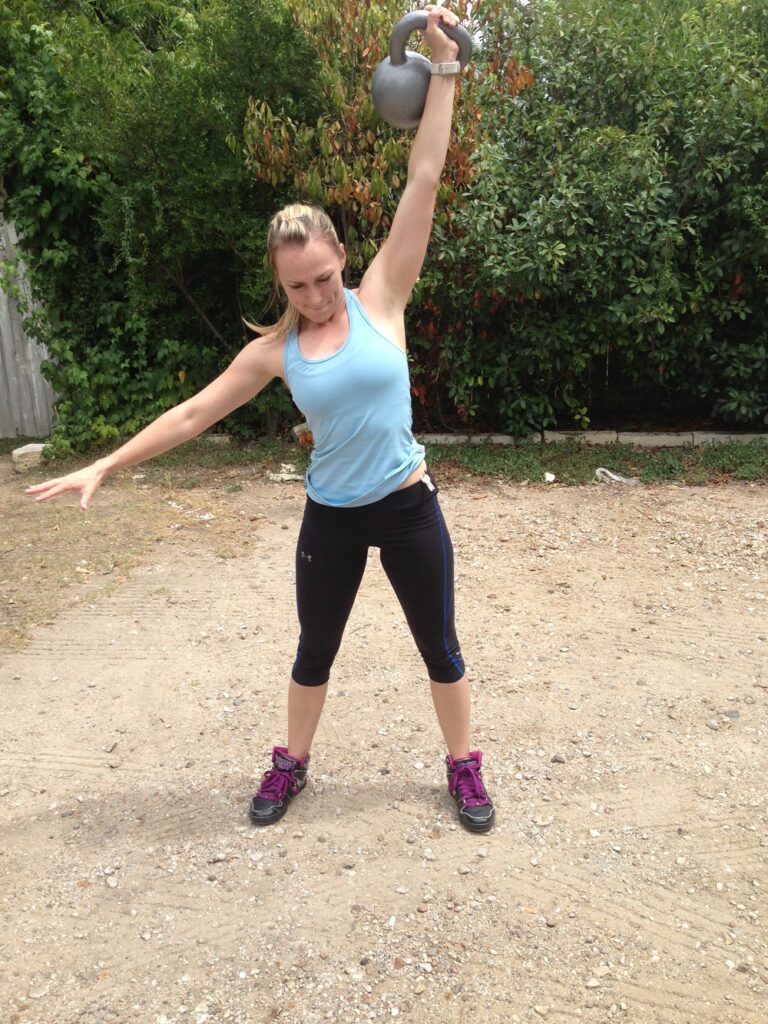
backyard conditioning Kathryn Alexander
backyard conditioning by Kathryn Alexander

Cooldown & Stretching

When you have done all the rounds you’d like, walk a few laps as your heart rate decreases. Then do the following stretches, 30 seconds per side, twice.
  • standing hip flexor stretch
  • standing hamstrings stretch
  • side stretch

About the author

Kathryn Alexander is a strength coach and personal trainer in Austin, Texas. She loves hiking, college football, and the feel of a perfectly knurled barbell. Read more about Kathryn here.
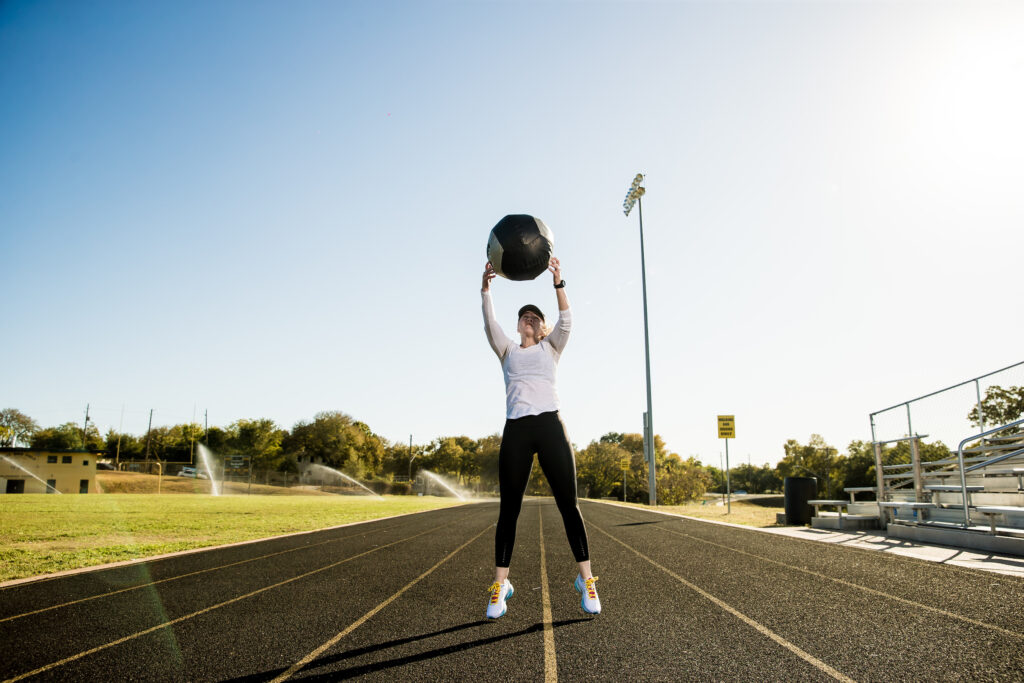
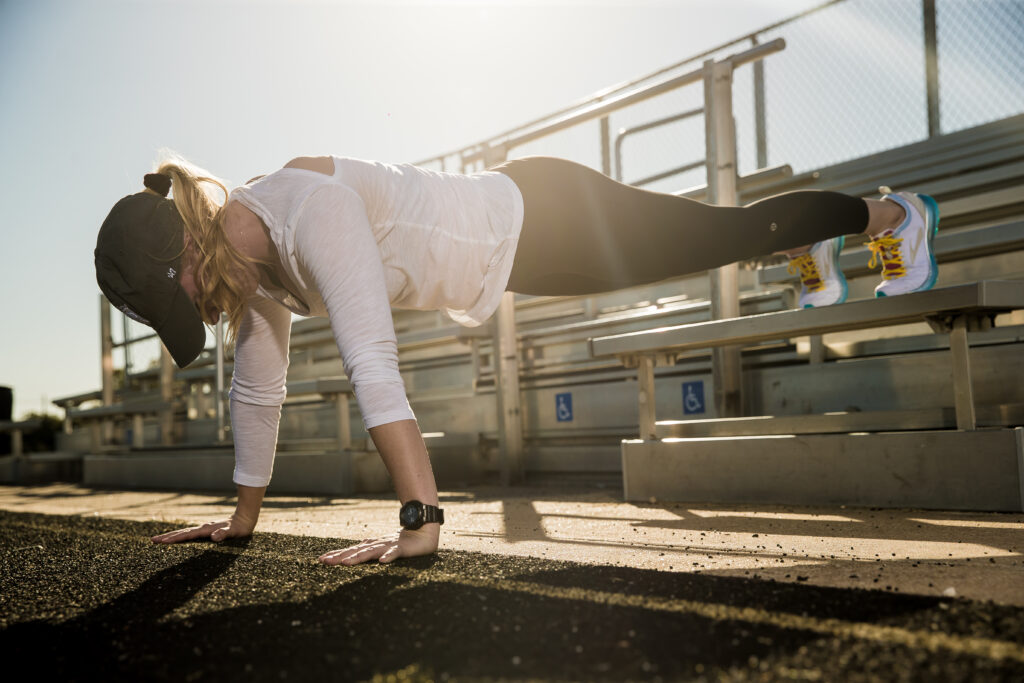
Filed Under: Training Tagged With: training

Benefits of Training Alone

April 19, 2021 by Kathryn Alexander

Exercise can be done a million ways: in a group, as a team, with your partner, a neighbor or friend. It can be intense and mission driven, or just a way to pass healthy time. Training can also be done solo, and there are a lot of benefits that come with it.

Peace and Quiet 

Or not! You get to pick. Training out alone affords you the time to take a break form the world; away from the coworkers, the kids, and your overflowing inbox. You get to pick your music, or choose no music. You get to recharge and spend time without having to be “on” at work or serving others. This is about you! 

the benefits of training alone
One of the benefits of training alone: I get to play around and do whatever I want to do!

Exercise Is Meditative

Training done properly is not rocket science, but it is not simple! You should be paying attention to the nuances of form; your grip, hand and foot placement, angles of the body. Correct set up is a procedure in itself. From there, during and after the movement, you should be collecting feedback about the tempo, control, and speed of the rep. This feedback guides the decisions about the next set.

It is truly a misnomer to call meatheads “meatheads”. Again, not rocket science, but if you are paying attention to your training, it does not leave much room for consciously ruminating about your problems. The end result is a peaceful mind and a happily exhausted body.

Awareness of the Body

Since you are more attune to your body without the distraction of working out with others, you become more aware of how you feel. You can feel illness before it truly sets in, potentially giving you the chance to head it off. I have often seen clients have an “off” day, only to discover that later they come down with a milder illness or realize allergies are about to flare up. 

the benefits of training alone
Solo training session at the track.

This isn’t to say you can’t have this benefit while training with others, but training alone heightens your ability to focus on yourself. Give yourself the gift of training alone and see how you enjoy it.


About the author

Kathryn Alexander is a strength coach and personal trainer in Austin, Texas. She loves hiking, college football, and the feel of a perfectly knurled barbell. Read more about Kathryn here.
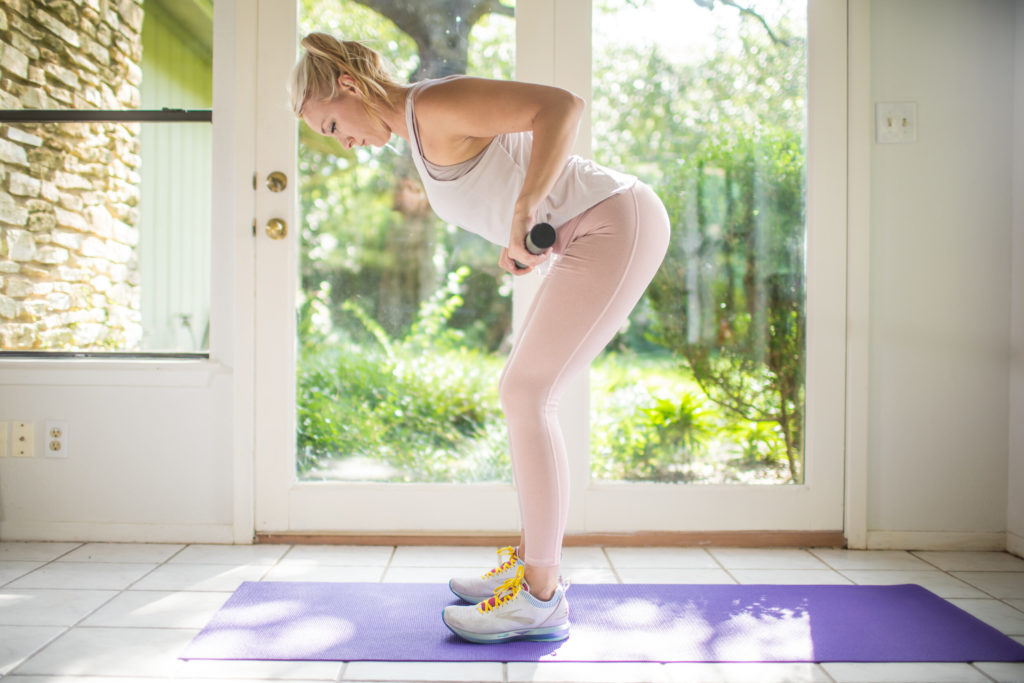
Filed Under: Training

How Often Should I Workout?

April 6, 2021 by Kathryn Alexander

People ask me this question often and want the one right answer.

There is no one right answer, but our bodies do well with frequent movement. It would be optimal to move every day.

But how you move every day is important too. You don’t need to go all-out hard every day, and going too easy every day won’t help you as much either. When you are lifting hard, heavy, or doing HIIT training (links) you’ll want to add some lower intensity days. If you are healthy and conditioned, doing all lower intensity days will decondition you.

So how many days should you exercise? It’s not rocket science, but there are lots of right answers to this question and none the same from person to person. Read on to learn about what is best for you right now.

Crammed for time? Check out How to Make Time to Workout with a Busy Schedule.

How often should I workout?

Factors to Consider

Let’s start here:

  • What are your goals?
  • Do you have a deadline for your goals?
  • What is your schedule like?

What Are Your Goals?

Do you have an event to prepare for, like an athletic competition or a wedding? Does this event require you to compete physically, or do you just want to look great? If you don’t have an event to prepare for, are your goals related to health? You might have short term health goals like reaching a certain percent of body fat, or a certain amount on your bench press. Or, you can have truly long term goals like maintaining your conditioning and balance all your life.

I encourage you to think hard about what you want, both short term and long term. “I want to be healthy” is GREAT, but pretty vague. I want to be healthy all my life too. I want to be hiking to remote natural hot springs, moving the furniture when I want, doing my own lawn work, maintaining healthy blood pressure and body composition. Think specifically about what you really want to do next year, and when you are old.

Do You Have a Deadline for Your Goals?

Like your short term and long time goals, consider if you have timelines for these. If you have an event, do you have to peak to be at your best physically? Do you want to feel good in your own skin at a reunion or beach vacation? If you have a short term goal coming up quickly and you intend to meet it, you’ll have to prioritize exercise more.

You can have short and long term goals. In fact, I recommend it. They keep you moving, and keep that sense of relevance. It’s easy to put off working toward a 10-year goal until tomorrow, but not as easy to put off working toward a beach vacation next month.

What is Your Schedule Like?

I do want you to prioritize your health at all times, but it’s important to understand that sometimes life demands a lot of your energy elsewhere. Post -injury, -surgery, -childbirth, during some school or work programs, and caring for a sick loved one, might chronically stress and drain you. In these situations, you do what you can. Your goal is to take care of your body to the extent that you can now, so you are healthy when you can push it later.

Scheduling 5 sessions a week in your busiest time in life, then missing them and feeling guilty leads to a depression spiral. Instead, be honest about what you can do. Do you have a pocket of time on Saturday mornings, and 15 minutes after the kids go to bed? In that case, you can schedule in a full training session on Saturday and quick movements a couple other days a week. Even ten minute walks once a day add up.

How Many Days Should You Workout?

The final answer is that you should consider how many days you need to workout given the proximity to your goals. Be reasonable about how much you can do. You can’t do 3 months of work in a week, so give yourself plenty of time but work hard. Likewise, keep your long term health in mind and exercise even if it’s 1 day a week.

Remember every season of you life will be different. You will be able to give more physically in some stages of life than others. If you do the best with what you have, whether it’s 2 quick sessions a week or 6, you’ll always be at your best. If you are in a period where you don’t have as much to give, do your best to take care of yourself and get through that time. When you have the time and energy, take advantage of it!

The bottom line is, do what you can even if it doesn’t feel like much. It all adds up! Email me if you have questions about your situation!


About the author

Kathryn Alexander is a strength coach and personal trainer in Austin, Texas. She loves hiking, college football, and the feel of a perfectly knurled barbell. Read more about Kathryn here.
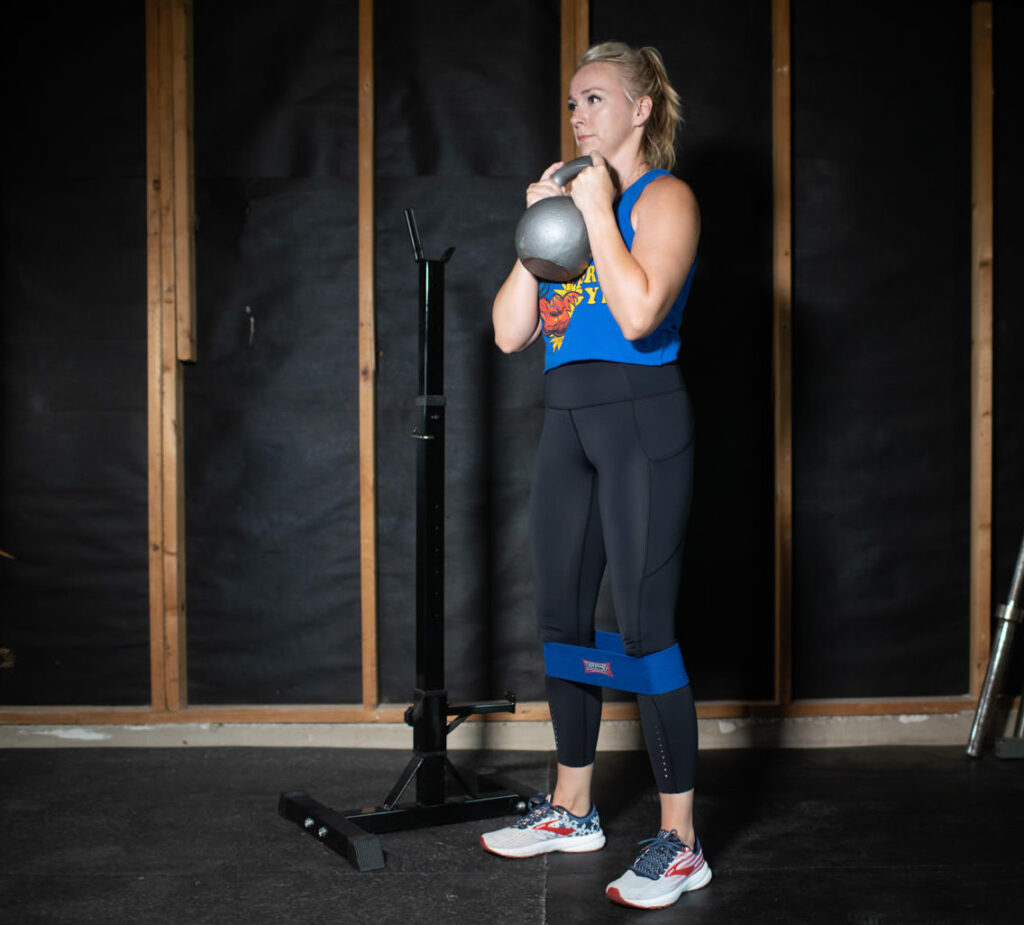
Filed Under: Training

7 Squat Variations to Make Home Sessions More Challenging

March 30, 2021 by Kathryn Alexander

Exercising with less equipment can be liberating. You can train almost anywhere and you don’t have to spend time on all the details of the session. Lift, move, go! Push, pull, squat!

The challenge is continuing to progress with fewer options. You’ll eventually reach a point where you feel like you are doing the same 5 exercises over and over. That’s ok because 1) the basics work and 2) it only takes a little bit of adjustment to break out of that.

I focus on squats on this article because you’ll find yourself doing squats often. They are bang-for-your-bucks, and universally applicable. Below are some ways you can make your squats more challenging when you’ve run out of home weights.

Also, I love squats. 🙂

Do More Reps

The easiest and perhaps most common way to challenge yourself more is to do more reps. This isn’t always the answer, especially if you have the option to go heavier on the next set. If you have used your heaviest weights though, you can add more reps per set. You can also add more sets if your sets are becoming excessively long.

7 squat variations to make home workouts more challenging

Shorten Rest Interval

Like adding more reps, you can shorten your rest interval to increase the challenge. This decrease in recovery calls on your body to do more work in a fatigued state. Doing the same amount of work in a shorter amount of time shows progress.

Use Different Implements

This advice typically refers to using dumbbells, kettlebells, bands, and barbells. At home, this takes on a whole new meaning. Need more weight? Have a willing kid hanging around? Pick ‘em up and squat! Hold them in your arms like a baby or piggyback. No children or willing partners? Load up a backpack and squat. Wear it backwards for a front squat.

Tempo Squats

A tempo squat uses a familiar set and rep scheme, the same form, and even the same implement. However, you will vary your pace by going slower at certain parts of the lift. Tempo is commonly written as 4 digits, such as 1010. This means a one second descent, no pause at the bottom, one second up, and no pause before performing the next rep. I commonly use a 5010 tempo, which means a sloowww 5 second descent, no pause at the bottom, then a regular fast ascent. This will quickly spice up a squat set!

Pause Squats

Adding a pause at the bottom of a squat is also a great way to increase the challenge without increasing weight. To properly execute a pause squat, you will do a normal squat and dead stop at the bottom. Keep generating pressure so you aren’t wobbling, dipping or rising. Once you have held your pause as long as you need, drive up from that dead stop position. It is important here to NOT dip then drive.

Using the terminology of the last example, a 5 second pause squat would be a tempo of 1510.

Suitcase Deadlift and Offset Loads

A suitcase deadlift is performed by picking up something that is parked on one side of you, like a suitcase. It is an offset load, so the demand on your trunk is to resist the imbalanced pull while. This can be performed like a deadlift or a squat. You can do a suitcase deadlift with one weight, or with two weights that do not weigh the same. Because of the offset load, your trunk works asymmetrically, which is much more of a real life situation than a crunch type movement.

How to Apply These in Your Training

Identify in your sessions where you feel under worked. You can add in one of these exercises and see how it changes your workload. You can also add one of these techniques to the last set of your training. For example, if your goblet squats have been easy, add in a pause squat on the last set. If it’s a good challenge, you can call it a day or repeat that paused set.

Let me know if you have more questions! Get creative and challenge yourself on those home sessions!


About the author

Kathryn Alexander is a strength coach and personal trainer in Austin, Texas. She loves hiking, college football, and the feel of a perfectly knurled barbell. Read more about Kathryn here.
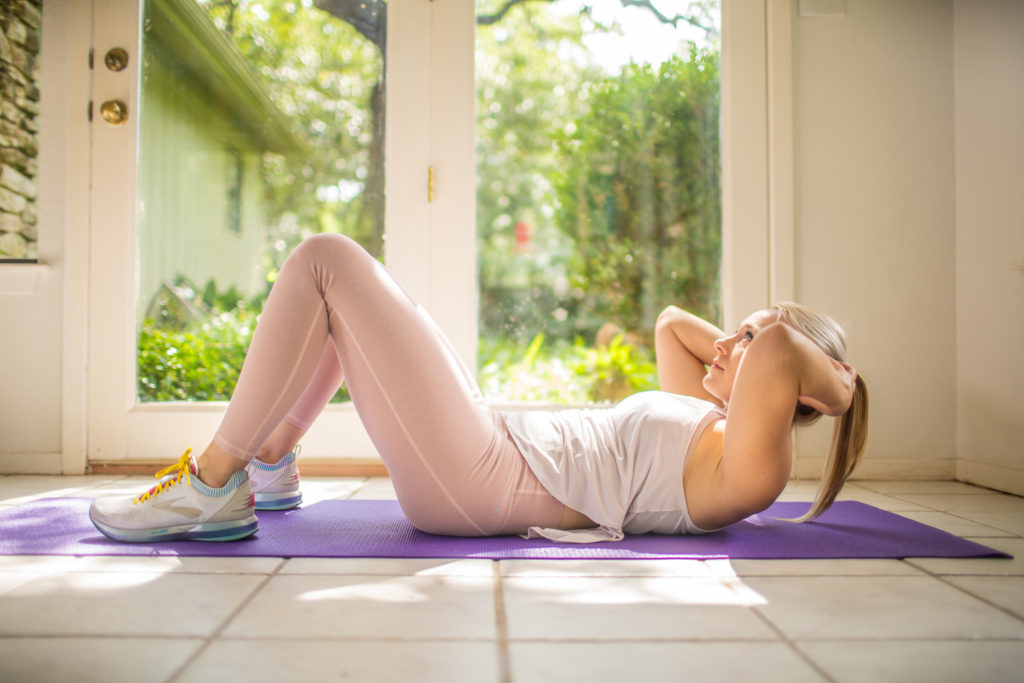
Filed Under: Training

  • « Go to Previous Page
  • Go to page 1
  • Go to page 2
  • Go to page 3
  • Go to page 4
  • Go to Next Page »

Primary Sidebar

Kathryn Alexander, personal trainer in Austin
Hi, and welcome here! -Kathryn

Recent Posts

  • The Best Lower Body Muscular Strength Exercises
  • Deadlift Barbell vs Trap Bar: Which Is Better for Strength, Muscle, and Safer Pulling?
  • Things to Do in Austin in April (2026)
  • Love Notes, Volume 5. Q1, 2026
  • Best Garage Gym Fans 2026

Did you know I make custom training plans? Tell Me More!

Footer

Follow

  • Email
  • Instagram
  • YouTube

Affiliate disclaimer

As an Amazon Associate I earn from qualifying purchases.

Newsletter sign up

  • Home
  • About Kathryn Alexander
  • Blog
  • Success Stories
  • Training Programs
  • Personal Training

Copyright © 2026 · Genesis Sample on Genesis Framework · WordPress · Log in

  • Featured In
  • Privacy Policy
  • Resources
  • Online Personal Training
  • Personal Training
  • Training Programs