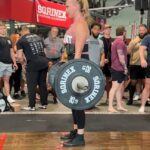
The best lower body muscular strength exercise are probably the first ones that come to your mind: squats, deadlifts, lunges. Maybe some hip thrust and spice it up with a lil heavy lunge in there.
I’ve been a trainer for 21 years, and I know there’s definitely some nuance to the question of what the best lower body strength exercises are, so let’s discuss!

What I Mean by “Strength Exercises”
The exercises I consider strength exercises in this article are ones that facilitate training with the goal of increasing maximal strength. This are typically compound exercises, which means they use multiple muscle groups at more than one joint.
These aren’t the best exercises for every goal, they’re not always the ones that feel the best, or make you feel like you’re working so hard. But they’re the best for strength.
Best Lower Body Muscular Strength Exercises for Busy Adults
If you want to get stronger, move better, and feel more capable in everyday life, lower body strength training deserves your attention.
Your lower body is made of your body’s largest muscles, and those muscle groups do a lot of heavy lifting in normal life. Standing up from a chair, carrying groceries, getting up off the floor, climbing stairs, hiking around Austin, walking your dog, picking up a kid, and staying steady when you trip on something unexpected all rely on lower body strength.
And yet, a lot of people either skip lower workouts entirely or approach them in a way that is more confusing than helpful. They bounce around between random exercises, go too light for too long, copy workout routines from people with very different goals, or think a sweaty workout with a high heart rate automatically means it was productive.
Sometimes it is productive (but it’s not usually strength training). Sometimes it is just sweaty.
The good news is that effective leg workouts do not have to be fancy. You do not need twelve machines, a two-hour session, or a punishment-based attitude. You need a smart plan, a few reliable lower-body exercises, and enough consistency to let the work add up.
Here is a practical look at the best lower body muscular strength exercises, why they matter, how to use them, and how to know when it may be worth getting help from a personal trainer.
What Are Lower Body Muscular Strength Exercises?
In plain English, lower body muscular strength exercises are exercises that help you produce more force with the muscles in your hips and legs.
That includes muscle groups like your glutes, quads, hamstrings, calves, and even parts of your core and lower back that help stabilize you during movement.
Strength-focused lower body training is different from just “feeling the burn” or doing random lower body workout circuits online. Strength training is about gradually improving your ability to move resistance well, with good form, through an appropriate range of motion.
That resistance could come from:
- Your own bodyweight
- Dumbbells or kettlebells
- Barbells
- Machines
- A smith machine
- Bands
- An elevated surface used to change the exercise setup
The goal is not just to get tired. The goal is to get stronger.
Why Lower Body Strength Matters in Real Life
This matters for athletes, sure. But honestly, it matters even more for regular adults.
A strong lower body can help with:
- Climbing stairs without feeling wrecked
- Better balance and stability
- More confidence in the gym
- Better support for your knees and hips
- Building muscle and supporting lean muscle
- Improving performance in walks, hikes, and recreational activities
- Making daily tasks easier
- Supporting long-term independence as you get older
If you live in Austin, lower body strength also carries over nicely to real life here. Hiking local trails, walking around downtown, standing at festivals, carrying coolers to the lake, getting through airport travel, and generally being active in the heat all go a little better when your legs and hips are not the limiting factor.
Also, it’s springtime right now! We are living in prime time outdoorsy season in Austin!
And for a lot of busy adults, that is the real goal. Not “train like a pro athlete.” Just feel strong enough that normal life feels easier.
The Best Lower Body Muscular Strength Exercises
Not every exercise needs to make the list. There are a lot of decent options, but a few tend to give the most return for the average adult.
Back Squat
The back squat is one of the most classic compound movements for a reason.

It trains multiple muscle groups at once, including the quads, glutes, hamstrings, and trunk. It can be excellent for building muscle, improving coordination, and increasing overall lower body strength.
That said, not everybody needs to back squat. It is a great exercise, not a moral achievement.
For some people, back squat works beautifully. For others, front squats, goblet squats, or machine-based squat patterns are a better fit based on mobility, injury history, or current fitness level.
What matters most:
- Good form
- Controlled depth
- A range of motion you can own
- Gradual loading over time
If your squat turns into a folding, wobbling, confused event every time the weight goes up, that is useful information. and you’ll want to address that.
Front Squats
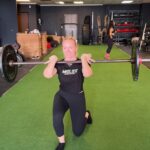
Front squats are a great option for people who want a squat variation that encourages a more upright torso.
They can be a solid choice if back squats bother your shoulders, if you want more quad emphasis, or if you simply move better in that position.
They still demand good mobility and control, but many people find them more comfortable on the lower back than a traditional back squat.
They are also humbling, which is rude but useful, ha.
Bodyweight Squat
The bodyweight squat is often treated like a beginner only move, but that misses the point.
A good bodyweight squat tells you a lot about balance, coordination, joint control, and basic movement quality. It is often the first step in teaching squat mechanics before loading the movement more aggressively.
For beginners, this is one of the best lower-body exercises to learn first. It helps build awareness of:
- Foot position
- Knee tracking
- Bracing
- Hip movement
- Depth control
And no, “just add weight” is not always the first move. Usually the smartest thing is to clean up the pattern first.
Bulgarian Split Squat
The bulgarian split squat is one of the best exercises for lower body strength, balance, and single leg control.
It trains each side independently, which can help expose strength differences between legs. It also challenges the glutes and quads in a big way and does not require huge external load to be effective.
If you have ever done these correctly, you already know they are effective!
Using an elevated surface behind you changes the position and makes the front leg do more work. For some people, this is a fantastic exercise. For others, it may require modifications based on balance, knee comfort, or hip mobility.
A split squat variation without the rear foot elevated can still be excellent.
Hip Thrusts
Hip thrusts are especially useful for targeting the glutes and building strength through hip extension.
They are popular for aesthetic goals, but they are not just for that. Strong glutes matter for performance, joint support, and overall lower body strength training.
Hip thrusts can be a smart addition if:
- You sit a lot
- You have trouble feeling your glutes in squat patterns
- You want extra glute-focused work
- You need more variety in your lower workouts
Like any exercise, they work best when done with good form and appropriate load. Randomly flinging the bar around while staring at the ceiling is not the assignment.
Romanian Deadlifts and Good Mornings
These exercises train the posterior chain, especially the hamstrings, glutes, and lower back stabilizers.
Romanian deadlifts are often a more approachable starting point for most people. They teach the hip hinge pattern, help strengthen the back side of the body, and can support muscle growth when done consistently.
Good mornings can also be effective, but they are more technique sensitive and are not usually where I would start a beginner. At least not with a barbell.
Both movements depend on:
- A controlled hinge
- A neutral torso position
- Tension through the trunk
- A safe range of motion
- Weight you can actually manage well
A lot of people turn hinge exercises into awkward squat hybrid movements. That usually means they need coaching, lighter weight, or a better setup.
Deadlift Variations
Deadlift variations deserve a place in the conversation because they build real-world strength extremely well. I mean, can you pick it up off the ground? It’s a really useful skill!
Depending on the person, that might mean:
- Conventional deadlifts
- Trap bar deadlifts
- Romanian deadlifts
- Rack pulls
These compound movements train a lot of muscle groups at once and can be excellent for building muscle and strength. They also teach you how to produce force through the floor and control weight with intent.
For many adults, a trap bar or Romanian deadlift may be more user-friendly than a heavy conventional deadlift.
Again, the best exercise is not the one that looks coolest online. It is the one you can do well, progress safely, and recover from.

Step Ups
Step ups are underrated.
They build single leg strength, challenge stability, and carry over nicely to daily life. They can also be a great option for people who are not ready for more advanced barbell work or who need joint-friendly lower body exercises.
The height of the box or bench matters. Higher is not automatically better. Sometimes an elevated surface that is too high just creates a weird compensation pattern.
A controlled step up with good form beats a sloppy high box step up every time.
Leg Press or Smith Machine Squat Variations
Free weights are great, but machines have value too.
A leg press or smith machine squat can be useful when:
- Someone is new to strength training
- Balance is a major issue
- We want more lower body loading with less technical demand
- Confidence is low
- We need a variation that feels less intimidating
These tools are not cheating. They are tools.
For some people, they are a bridge toward more advanced movement patterns. For others, they are a long-term part of effective leg workouts. That is fine.
Common Mistakes People Make With Lower Body Strength Training
A lot of frustration comes from doing plenty of work but not the right kind of work.
Mistaking Exhaustion for Progress
A high heart rate can make a workout feel productive, but strength gains come from progressive overload, quality reps, and consistency.
Being out of breath is not the same thing as getting stronger.
Using Weight That Is Too Light Forever
There is a place for light weight, especially during learning phases or rehab. But if you want real lower body strength, the load usually has to progress.
This one is huge! Don’t be scared to try the next bump up in weight!
You do not need to max out. You do need enough challenge to give your body a reason to adapt.
Ignoring Good Form
Good form is not about looking perfect. It is about moving safely and effectively enough to target the intended muscle groups and reduce unnecessary stress.
Sloppy reps make it harder to build strength well.
Copying Advanced Workout Routines
Just because something worked for a younger, highly trained person with lots of gym time does not mean it makes sense for a busy adult in Austin trying to train three days a week between work and life.
Training style should match your life, not your fantasy life.
Chasing Variety Instead of Mastery
You do not need a brand new lower body workout every week.
Sometimes people get bored because they are not seeing progress. But often, they are not seeing progress because they change exercises too often to improve anything.
Beginner Considerations
If you are newer to strength training, start with the basics and earn the right to make things more complicated later.
That usually means:
- Learning squat, hinge, lunge, and step patterns
- Using a manageable range of motion
- Starting with bodyweight or modest resistance
- Practicing control, especially on the lowering phase
- Paying attention to setup and positioning
Second negatives can be helpful here. Slowing the lowering portion of an exercise for about two seconds can improve control and help you feel where you are supposed to be working.
Beginners also need to understand that sore does not always mean effective, and not sore does not mean ineffective.
A smart beginner program should feel challenging but not chaotic.
Who This Advice Is Best For
This approach is especially useful for:
- Adults who want to get stronger without living in the gym
- Beginners who need practical guidance
- Busy professionals who want efficient workouts
- Women who want to lift without wasting time on random trends
- Adults returning to exercise after a long break
- People who want realistic, sustainable habits
- Anyone who wants to build muscle and improve function, not just burn calories
If your main goal is better movement, more strength, and more confidence, these exercises are a strong foundation.
How to Use These Exercises in a Real Workout Routine
You do not need to do all of them at once.
A solid lower body strength session might include:
- One main squat or hinge pattern
- One single-leg exercise
- One accessory movement for glutes or hamstrings
- Optional calf or core work
For example:
Sample Lower Body Workout
Main lift: Front squats or back squat
Single-leg exercise: Bulgarian split squat or step-up
Posterior chain: Romanian deadlift or hip thrusts
Accessory: Calves, glute work, or core
That is enough. That is plenty! If you feel like you want to add 6 more exercises, you’re probably not getting what you can out of each exercise.
The smartest workout routines are often less crowded than people expect.
When It Makes Sense to Get Help From a Personal Trainer
There are plenty of times when doing it yourself works fine.
But there are also times when getting help saves you a lot of time and frustration.
Working with a personal trainer can make sense if:
- You are unsure about good form
- You keep getting stuck or inconsistent
- You feel intimidated by the gym
- Your lower back, knees, or hips tend to bother you
- You do not know how to progress exercises
- You need accountability
- You want a plan that matches your fitness level and schedule
A good trainer should help you understand what to do, why you are doing it, and how to make progress without turning exercise into a second full-time job.
For busy adults in Austin, that kind of smart programming can matter a lot. There are plenty of people here trying to squeeze workouts in before work, after work, between meetings, or around family obligations, all around traffic in this town. A realistic plan beats an ideal plan you never follow.
Austin Specific Context: Why This Matters Here
Austin has a strong fitness culture, which is great. It also has a strong tendency to make people think they should already know what they are doing.
That is less great.
There are a lot of active adults here who want to feel strong enough to hike, paddle, travel, keep up with kids, or simply not feel wrecked after a long day on their feet. Lower body strength training supports all of that.
It also helps during the very normal Austin experience of walking around in the heat, parking farther away than expected, climbing outdoor stairs, or deciding a “casual” weekend activity should somehow include hills.
If you are training for real life in Austin, strong legs and hips are not extra credit.
Conclusion
The best lower body muscular strength exercises are not necessarily the flashiest ones. They are the ones that train major muscle groups effectively, fit your current fitness level, and help you get stronger in a way that actually carries over to your life.
For most people, that means focusing on a few reliable patterns: squats, hinges, split leg work, step ups, and glute focused movements like hip thrusts.
Start with good form. Use an appropriate range of motion. Progress the load over time. Keep your workout routines realistic.
And if you are tired of guessing, stuck in a cycle of random lower workouts, or not sure whether your program makes sense, that is usually a good time to get help.
You do not need a perfect plan. You need a smart one you can actually follow.
FAQ
What are the best lower body muscular strength exercises for beginners?
For beginners, some of the best options are the bodyweight squat, goblet squat, step-ups, split squats, Romanian deadlifts with light weight, and beginner-friendly hip thrusts. The best place to start depends on your movement quality, balance, and current fitness level.
Can I do these at home?
Yes! Here’s a whole blog post about how to do a home leg workout with dumbbells.
How often should I do lower body strength training?
For most adults, training the lower body two times per week is a solid starting point. That is usually enough to build strength and support muscle growth without making recovery harder than it needs to be.
Are hip thrusts better than squats?
Not better. Just different. Do both! Hip thrusts are excellent for glute focused work, while squats train multiple muscle groups in a more general way. In many cases, both can be useful in the same program.
Can I build lower body strength with light weights?
You can make progress with light weight, especially at the beginning, but eventually the resistance usually needs to increase if your goal is building muscle and improving muscular strength. The key is choosing a load that is challenging enough for the exercise and rep range.
What if lower body exercises bother my lower back?
That depends on the exercise, your technique, your current strength, and your movement limitations. Sometimes the issue is exercise selection. Sometimes it is form. Sometimes it is load. If your lower back regularly becomes the limiting factor, it is worth getting individual guidance so you can adjust the plan instead of guessing.
Work With Me!
If you are looking for a personal trainer in Austin, I’d love to talk with you! If you are not in Austin, Round Rock, or central Texas, let’s talk about online training.
Message me here for a free consult about personal training in Austin, Texas, or here for online personal training, and we’ll discuss your goals, background, equipment availability, schedule, and exercise preferences.
Let’s get you strong and healthy! 💪
About the author
Kathryn Alexander is a strength coach and personal trainer in Austin, Texas. She loves hiking, college football, and the feel of a perfectly knurled barbell. Read more about Kathryn here.